

Tiny Wire Wonders
 Science

 30 Min
 activity
This Spark challenges families to discover the incredible thinness of wires found inside everyday electronics. Through hands-on comparisons and imaginative thinking, learners will grasp the concept of nanoscale measurements and appreciate the tiny engineering that powers our world.
The lesson goal is learners will understand how incredibly small wires are inside everyday electronics by comparing them to familiar objects, including human hair. They will grasp the concept of a nanometer as a tiny unit of measurement, appreciating the precision engineering that powers our world.
What You Need
Missing something? Don't let it stop you.
The app offers easy alternatives for every item you have at home.
Learning Guide
Step-by-step guidance. No preparation required.
- 1
Breakfast Wires!5 Min
- Point to an electrical item nearby. Ask how it works and where electricity goes.
- Move on when Child identifies at least one electrical item and expresses curiosity about how electricity travels inside it.
 Photo by Andrey Matveev on Pexels
- 2
Hair-Thin or Thicker?8 Min
- Place hair and paperclip on a surface. Ask your child to observe both closely.
- Compare their thicknesses. Ask if wires in electronics are thinner than these.
- Move on when Child has observed a hair and a paperclip, compared their thicknesses, and made a prediction about how thin electronic wires might be.
 Photo by Jorge Romero on Pexels
- 3
Tiny Scales6 Min
- Ask what a 'nanometer' might measure. Define it as a super-tiny unit.
- Explain that hair is 100,000 nanometers, and chip wires are 14. Ask for their thoughts.
- Move on when Student can explain the core concept of a nanometer as a measure for extremely small things and apply it to understand the relative size of a human hair versus a microchip wire.
- 4
The Invisible Wire Challenge9 Min
- Compare hair and paperclip again. Challenge them to imagine something thousands of times thinner.
- Offer pencil and paper. Ask them to draw the thinnest line they can imagine next to the hair.
- Discuss: Is your thinnest line still thicker than a hair? How much smaller are chip wires?
- Move on when Student has completed the physical comparison and has engaged in an activity to conceptualize or represent something significantly thinner than a human hair.
- 5
Amazing Tiny Tech2 Min
- Ask what surprised them most about tiny wires and nanometers. Connect to daily tech.
- Move on when Student shares one key takeaway about the thinness of microchip wires or the concept of nanometers.
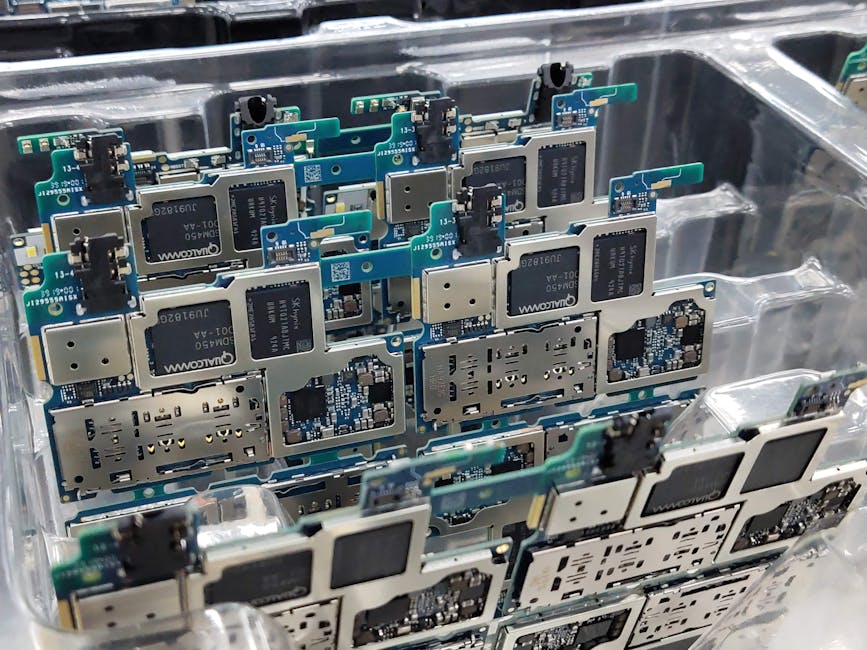 Photo by Andrey Matveev on Pexels

How small are wires in computers?
Science30 MinactivityThis Spark challenges families to discover the incredible thinness of wires found inside everyday electronics. Through hands-on comparisons and imaginative thinking, learners will grasp the concept of nanoscale measurements and appreciate the tiny engineering that powers our world.
Our Goal is learners will understand how incredibly small wires are inside everyday electronics by comparing them to familiar objects, including human hair. They will grasp the concept of a nanometer as a tiny unit of measurement, appreciating the precision engineering that powers our world.
What You Need
Missing something? In the app, Mai suggests swap ideas.
Learning Guide
Step-by-step guidance. No preparation required.
- 1
Breakfast Wires!5 Min
- Point to an electrical item nearby. Ask how it works and where electricity goes.
- Move on when Child identifies at least one electrical item and expresses curiosity about how electricity travels inside it.
Photo by Andrey Matveev on Pexels - 2
Hair-Thin or Thicker?8 Min
- Place hair and paperclip on a surface. Ask your child to observe both closely.
- Compare their thicknesses. Ask if wires in electronics are thinner than these.
- Move on when Child has observed a hair and a paperclip, compared their thicknesses, and made a prediction about how thin electronic wires might be.
Photo by Jorge Romero on Pexels - 3
Tiny Scales6 Min
- Ask what a 'nanometer' might measure. Define it as a super-tiny unit.
- Explain that hair is 100,000 nanometers, and chip wires are 14. Ask for their thoughts.
- Move on when Student can explain the core concept of a nanometer as a measure for extremely small things and apply it to understand the relative size of a human hair versus a microchip wire.
- 4
The Invisible Wire Challenge9 Min
- Compare hair and paperclip again. Challenge them to imagine something thousands of times thinner.
- Offer pencil and paper. Ask them to draw the thinnest line they can imagine next to the hair.
- Discuss: Is your thinnest line still thicker than a hair? How much smaller are chip wires?
- Move on when Student has completed the physical comparison and has engaged in an activity to conceptualize or represent something significantly thinner than a human hair.
- 5
Amazing Tiny Tech2 Min
- Ask what surprised them most about tiny wires and nanometers. Connect to daily tech.
- Move on when Student shares one key takeaway about the thinness of microchip wires or the concept of nanometers.
Photo by Andrey Matveev on Pexels
In The Mai App
Bring This Spark To Life
Same Spark, with Mai by your side
Mai Leads It
Mai leads the Spark out loud, so they can learn on their own.
Step-By-Step
Get every step with Mai's tips, one at a time, at your pace.


Quick Swaps
Missing something? Mai suggests swap ideas, so you can start now.
Beyond The Spark
After, a fun fact, a challenge and a Table Talk question.