
Tiny Wire Wonders
This Spark challenges families to discover the incredible thinness of wires found inside everyday electronics. Through hands-on comparisons and imaginative thinking, learners will grasp the concept of nanoscale measurements and appreciate the tiny engineering that powers our world.
Our goal: Learners will understand how incredibly small wires are inside everyday electronics by comparing them to familiar objects, including human hair. They will grasp the concept of a nanometer as a tiny unit of measurement, appreciating the precision engineering that powers our world.
What You Need
a strand of human hair • a paperclip • a penny • ruler • tape • tape (optional)
and this is just the baseline.
Scan to jump into the app and easily personalize this Spark to match your child's exact learning level and see how Mai will guide this lesson.
Learning Guide
A simple guide to lead you through the kickoff, the core challenge, and everything in between.
Mai’s Tips
- Comprehending Scale: The concept of 'thousands of times smaller' than a human hair can be very abstract. Don't expect perfect understanding; the goal is to introduce the idea of extreme tininess. Focus on the contrast between visible and invisible.
- Frustration with 'Invisible': Children might get frustrated trying to 'see' or 'draw' something so small. Reframe it as an 'imagination challenge' rather than a physical one. The goal is the concept of tininess, not perfect representation.
- Simplifying vs. Stretching: For younger children (4-7), focus on the basic comparison: 'much thinner than hair'. For older children (8+), introduce the actual nanometer numbers (14 nm vs. 100,000 nm for hair) and encourage thinking in ratios or orders of magnitude (e.g., 'about 10,000 times thinner than a hair').
- No Magnifying Glass Needed: This Spark is about conceptualizing what's too small to see, not about observing things under magnification. Resist the urge to bring out a microscope, as it might shift focus away from the abstract scale.
1Breakfast Wires! 5 min
Start by identifying an electrical item on or near the breakfast table. Have your child point to it and discuss how it gets its power.
- What things around our breakfast table need electricity to work?
- How do you think the electricity gets inside this (e.g., toaster)?
For younger children, focus on naming the item and pointing out where it plugs in. For older children, ask them to think about what might be inside carrying the electricity.
Know Before You Teach
- Good to know: Many everyday items use electricity, which travels through wires.
- Wires are typically made of conductive metals like copper.
- The goal is to spark curiosity about what's hidden inside these devices.
- It's working when: Child pointing to an electrical item and asking a 'how' or 'what' question.
- If they're stuck: Point to the cord of a nearby device and ask, 'What is this part for?'
- Easier: Focus only on identifying one electrical item and where its power cord goes.
- Harder: Ask them to trace the path of electricity from the wall outlet to the heating element in a toaster.
Done when: Child identifies at least one electrical item and expresses curiosity about how electricity travels inside it.

2Hair-Thin or Thicker? 8 min
Place a single strand of hair and a paperclip on a table. Have your child carefully observe both, perhaps holding them up to the light or comparing them side-by-side.
- What do you notice about how thick the hair is, compared to the paperclip?
- Which one feels thinner?
- Do you think the wires inside a phone are more like this hair, this paperclip, or something even thinner?
Younger children can simply describe what they see and feel. Older children can be prompted to articulate the differences in width and make a more thoughtful prediction about internal wires.
Know Before You Teach
- Good to know: A human hair is approximately 80-100 micrometers (or 80,000-100,000 nanometers) in diameter.
- A paperclip is much thicker, usually around 1 millimeter (1,000,000 nanometers) in diameter.
- This stage sets up the baseline for understanding much smaller scales.
- If they ask: Can we measure how thick my hair is? It's too thin for a regular ruler, but scientists use special tools to measure things that small.
- It's working when: Child making a clear verbal or gestural comparison between the hair and paperclip (e.g., 'This is so thin!').
- If they're stuck: Hold up the hair against a dark background for better visibility, or tape it to a piece of paper.
- Easier: Just focus on 'thin' vs. 'thick' for the hair and paperclip.
Done when: Child has observed a hair and a paperclip, compared their thicknesses, and made a prediction about how thin electronic wires might be.

3Tiny Scales 6 min
Introduce the idea of needing special words for super-small measurements. Let your child guess what a 'nanometer' might be. Then, define it simply:
Nanometer: A unit of measurement for extremely small things, too tiny to see with your eyes. It helps scientists measure things like parts of computer chips or even atoms.
Use analogies to grasp the scale:
- If a hair is like a big, thick rope, how small would something 100,000 times thinner be?
- Why do you think engineers need to make wires this small inside computers?
- Can you think of anything else that might be measured in tiny units like nanometers?
Younger children can focus on 'super-duper small' and that we need special words for it. Older children can try to grasp the ratio difference (e.g., 100,000 times thinner).
Know Before You Teach
- Good to know: A nanometer (nm) is one billionth of a meter (10^-9 meters).
- Microchip wires are often around 14 nanometers wide.
- Key words: Nanometer: An incredibly tiny unit of measurement, used for things too small to see even with a powerful microscope.
- It's working when: Child using words like 'super small' or 'invisible' when talking about nanometers.
- If they're stuck: Use an analogy: 'If a meter is the length of a big step, a nanometer is like trying to measure something smaller than a grain of sand on that step!'
- Easier: Focus on the idea that nanometers measure 'super, super tiny things' that we can't see.
- Harder: Challenge them to calculate roughly how many times thinner a 14nm wire is compared to a 100,000nm hair (answer: ~7000 times).
Done when: Student can explain the core concept of a nanometer as a measure for extremely small things and apply it to understand the relative size of a human hair versus a microchip wire.

4The Invisible Wire Challenge 9 min
Have your child place the hair next to the paperclip one last time. Then, challenge them to imagine or represent something thousands of times thinner than the hair.
- How could you show someone something that's too small to see?
- Could you draw a line thinner than a hair? (Provide pencil and paper)
- If you could cut this hair into 100 pieces along its width, how thin would one piece be?
For younger children, the activity might be trying to draw the thinnest line possible next to the hair, understanding it's still much thicker than a real microchip wire. For older children, encourage proportional thinking, like trying to imagine how many paperclips would fit across a room, then how many hairs across that same room, then how many microchip wires across the room.
Know Before You Teach
- Good to know: This stage is about conceptualizing, not precise measurement.
- The difficulty of representing something so small visually reinforces its true tininess.
- Even the thinnest line drawn with a pencil is still orders of magnitude thicker than a nanometer-scale wire.
- If they ask: Can I see a nanometer with a magnifying glass? No, a regular magnifying glass isn't powerful enough. You'd need a special electron microscope in a science lab.
- It's working when: Child expressing awe or frustration about the difficulty of representing such tiny scales.
- If they're stuck: Suggest drawing a very long line and saying, 'This is our hair. Now imagine trying to draw a line next to it that's invisible!'
- Harder: Ask them to describe what tools scientists might need to build with wires this thin, since human fingers are too large.
Done when: Student has completed the physical comparison and has engaged in an activity to conceptualize or represent something significantly thinner than a human hair.
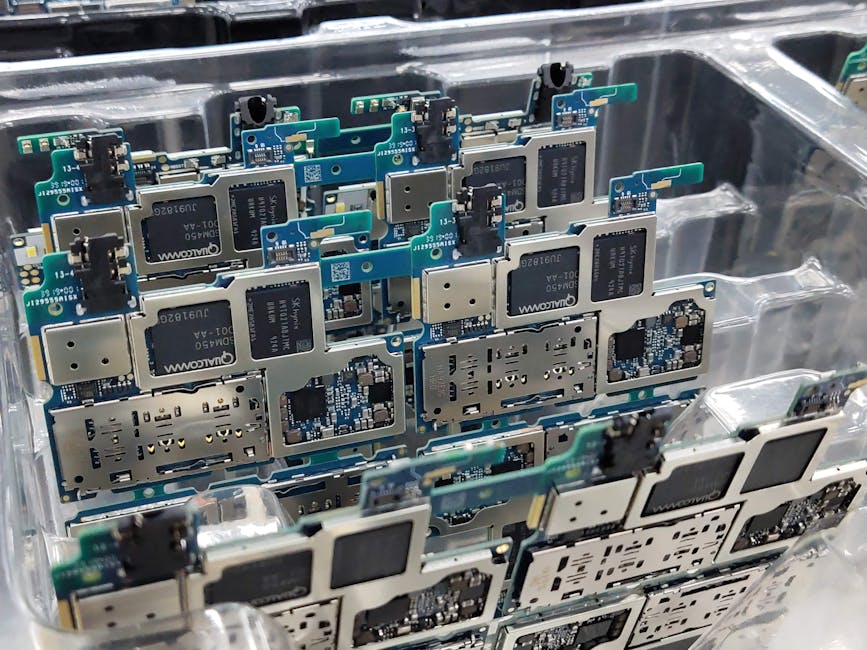
5Amazing Tiny Tech 2 min
Wrap up by celebrating their imagination and ability to think about the invisible.
- What was the most surprising thing you learned about how thin wires can be?
- How do you feel knowing that the amazing technology we use every day relies on things we can't even see?
Encourage both younger and older children to share their biggest takeaway. Younger children might focus on 'super small'; older children might mention nanometers or the specific comparison to hair.
Know Before You Teach
- Good to know: The small size of components is crucial for making powerful, portable electronic devices.
- This concept connects science to technology they use daily.
- If they ask: Why do they make them so small? The smaller the parts, the more you can fit into a device, making it more powerful and able to do more things, all while staying small enough to fit in your pocket.
- It's working when: Child making a connection between the tiny wires and the power/size of their own devices.
- If they're stuck: Ask, 'Could your phone be this small if the wires inside were as thick as spaghetti?'
- Easier: Focus on the idea that 'small wires make small, powerful things'.
- Harder: Ask them to predict what other everyday items might be improved by making their internal parts even smaller.
Done when: Student shares one key takeaway about the thinness of microchip wires or the concept of nanometers.
Beyond The Spark
Fuel their curiosity beyond the Spark with bonus extras.
Table Talk
The ability to create incredibly tiny wires and components allows us to build powerful computers and smartphones that fit in our pockets.
Did You Know?
Did you know the wires inside computer chips are so tiny, they are over 7,000 times thinner than a single strand of your hair?
Challenge
Research other things measured in nanometers, like viruses or DNA. How do their sizes compare to the wires in a microchip?
Quick Recap Quiz 4 min
Customize this quiz, add questions, or follow your child's lead! Each question has a 'Parent Tip' to help them find the answer without giving it away.
1. How thin are the wires inside a computer chip compared to a human hair?
- A little bit thicker than a hair
- Much, much thinner than a hair
Remind them of the challenge of imagining something invisible!
2. What is a nanometer used to measure?
- Things that are very, very small
- Things that are very, very long
Think about the smallest thing we talked about today.
3. Where might you find wires that are only a few nanometers thick?
- Inside a thick electrical cord for a lamp
- Inside a tiny computer chip in a smartphone
Remember, these wires are so small they help make powerful devices tiny.
4. Why is it important for engineers to make wires so incredibly thin for computer chips?
- To fit more powerful parts into a small space
- To make the computers look shiny and new
Think about how much technology fits into a small phone.
Loved This Spark?
Scan to jump into the app and explore similar Sparks in our Sparks Hub. New to Mai? Start free with 10 Sparks, no credit card needed.