

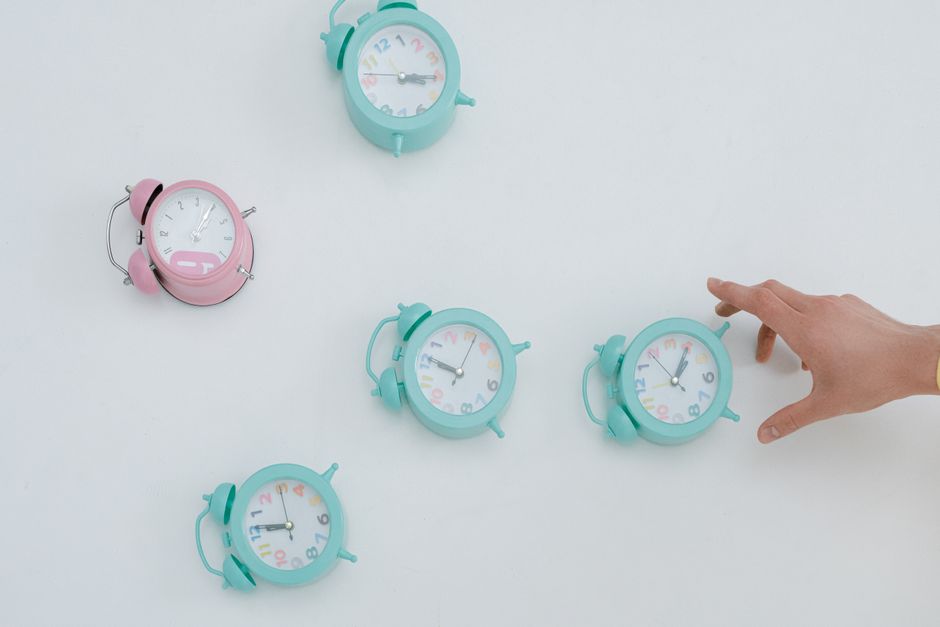
Time Travel Trick
This Spark investigates the puzzling phenomenon of a "missing" hour in spring and a "gained" hour in fall. Children will use hands-on models to track how clocks change, discovering that time isn't actually lost or found, but rather re-labeled by agreement. They'll explore how 24 hours always remain in a day.
The lesson goal is learners will understand how Daylight Saving Time makes an hour seem to 'skip' or 'repeat' on clocks, even though a day always contains 24 hours. They will discover that these time changes are simply agreements, not actual alterations in the flow of time itself.
What You Need
Missing something? Don't let it stop you. The app offers easy alternatives for every item you have at home.
Learning Guide
Step-by-step guidance. No preparation required.
- 1
Breakfast Time Warp5 Min
- Look at a clock together and discuss routines.
- Ask: 'What if an hour suddenly disappeared or appeared?'
- Move on when Student shares initial thoughts about time changes.
- 2
Build Your Day Trackers8 Min
- Provide paper, scissors, and a marker.
- Guide them to create 24 hour markers.
- Ask: 'How would we use these strips to lose or gain an hour?'
- Move on when Student has prepared 24 hour markers and predicted how to simulate time changes.
 Photo by Tara Winstead on Pexels
- 3
The Great Time Agreement6 Min
- Explain Daylight Saving Time as a clock change agreement.
- Ask: 'When we skip 2 AM, did the actual hour vanish?'
- Discuss if time itself changes or just the names we give it.
- Move on when Student explains that the hour is not truly lost but its label changes, and it's an agreement.
 Photo by Nothing Ahead on Pexels
- 4
Spring Forward, Fall Back Model9 Min
- Arrange 24 hour strips in a sequence.
- Model 'spring forward': Remove one strip (e.g., 2 AM).
- Explain how labels shift but the day's duration stays 24 hours.
- Model 'fall back': Add an extra strip or repeat an hour label.
- Discuss how an hour label is used twice, maintaining 24 total hours.
- Move on when Student successfully models both spring forward and fall back, explaining how labels change but the total day's duration does not.
Photo by SHVETS production on Pexels - 5
Time Detective Debrief2 Min
- Ask: 'What surprised you most about the missing hour?'
- Ask: 'How did your day tracker help you understand?'
- Discuss the importance of agreed-upon time.
- Move on when Student shares one key takeaway about time not being lost, but re-labeled.
 Photo by Yan Krukau on Pexels

Personalize The Spark
Add a twist your child will love, and we'll email you a printable guide made just for them. New to Mai? We'll set you up with a free 30-day guest pass so you can open it in the app.