


Sound Blend Hunt
Become a word detective! This lesson challenges children to identify and sort initial consonant blends in words, sharpening their ear for sounds and boosting reading fluency. It's a hands-on adventure into how letters team up to make unique sounds at the beginning of words.
The lesson goal is learners will discover how groups of letters work together to create unique sounds at the beginning of words. They will practice identifying these 'blend' sounds and sorting words, which will help them read new and challenging words more easily.
What You Need
Missing something? Don't let it stop you. The app offers easy alternatives for every item you have at home.
Learning Guide
Step-by-step guidance. No preparation required.
- 1
Breakfast Word Hunt5 Min
- Point to a word on a cereal box. Ask them: 'What sound do you hear at the very beginning of this word?'
- Find a word like 'Crunchy' or 'Strawberry'. Ask them: 'Do you hear just one sound at the start, or two sounds blending together?'
- Move on when Child identifies a few words starting with single sounds and attempts to hear two distinct sounds at the beginning of a 'blend' word.
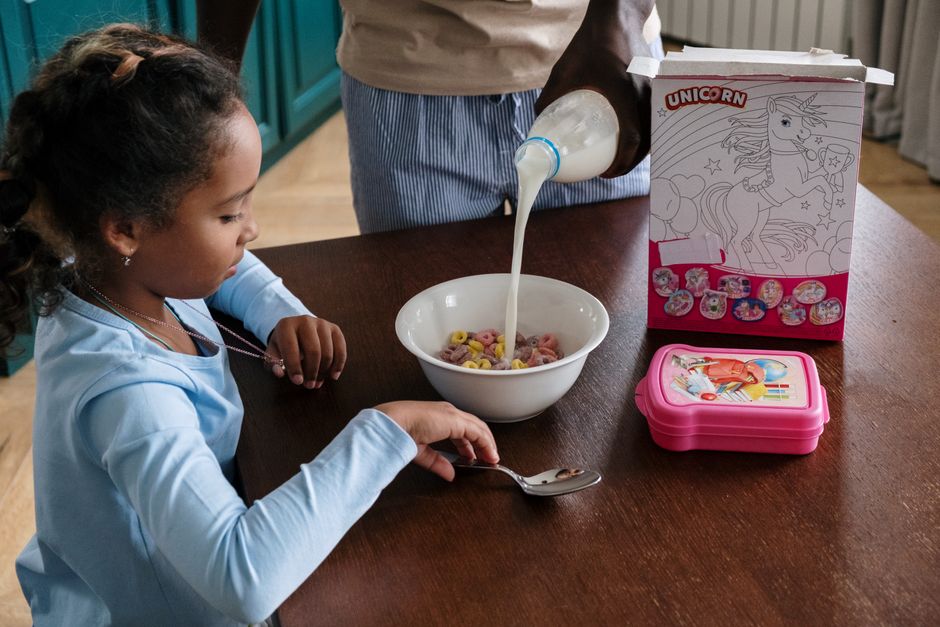 Photo by cottonbro studio on Pexels
- 2
Explore & Plan Our Blend Mission8 Min
- Lay out the cereal box, magazines, scissors, paper, and marker. Ask them: 'Where can we find lots of words to be our blend hunting ground?'
- Discuss how to collect words. Ask them: 'Once we find words, how can we keep track of the different blends we discover?'
- Move on when Materials are gathered, and the child can suggest places to find words and a basic sorting strategy.
 Photo by RDNE Stock project on Pexels
- 3
Decoding Blends: The Secret Code6 Min
- Explain: A **consonant blend** happens when two (or sometimes three!) consonants are together, and you can still hear each of their individual sounds, like /s/ and /t/ in 'stop'. This is different from /sh/ in 'ship', where 's' and 'h' make one new sound. Ask them: 'What other words can you think of that start with two sounds, not just one?'
- Move on when Student can explain what a consonant blend is in their own words and give one new example, applying the concept to a word not explicitly mentioned.
 Photo by Artem Podrez on Pexels
- 4
Blend Sorting Challenge!9 Min
- Have the child cut out several words from magazines or packaging. Encourage different word lengths.
- Write three common blends (e.g., 'bl', 'st', 'gr') on separate pieces of paper to create sorting piles.
- Ask them: 'Which blend does this word start with? Does it sound like 'bl', 'st', or 'gr'? Put it in the right pile!'
- Continue cutting and sorting. For older children, introduce a blank paper and ask them to create new blend categories as they find them.
- Optionally, have them glue their sorted words onto the category papers to create blend posters.
- Move on when Student has created at least two distinct piles of words, each beginning with a different consonant blend, and can explain why words belong in each pile.
Photo by cottonbro studio on Pexels - 5
Our Blend Discoveries2 Min
- Ask them: 'How do you think knowing about these blends will help you when you read new words?'
- Ask them: 'What was the trickiest blend to find, or the most surprising word you sorted?'
- Move on when Student shares one key takeaway about how identifying blends helps with reading or names a favorite blend they found.

Personalize The Spark
Add a twist your child will love, and we'll email you a printable guide made just for them. New to Mai? We'll set you up with a free 30-day guest pass so you can open it in the app.