


Park Math Challenge
Design a miniature park to explore how to measure the space inside it (area) and the distance around its edges (perimeter). This hands-on activity challenges you to plan carefully, measure accurately, and understand essential geometric concepts.
The lesson goal is after this lesson, learners will understand the difference between area and perimeter by applying these concepts to design a mini-park. They will be able to measure and calculate both the area and perimeter of rectangular shapes in a fun, practical way.
What You Need
Missing something? Don't let it stop you. The app offers easy alternatives for every item you have at home.
Learning Guide
Step-by-step guidance. No preparation required.
- 1
Breakfast Park Brainstorm5 Min
- Point to a cereal bowl or plate. Ask: "If this was a tiny park, what would you put inside it?"
- Ask: "How would you make sure everything fits without bumping into each other?"
- Ask: "What would you need to build around the outside to keep things inside or define its edge?"
- Move on when Student shares a few ideas for park features and mentions needing to fit things or create boundaries.
 Photo by cottonbro studio on Pexels
- 2
Explore & Plan Your Park8 Min
- Lay out paper, ruler, and pencil. Ask: "Let's draw the shape of our mini-park. What overall shape should it be?"
- Draw the main park shape. Ask: "What two or three features will your park have? Let's sketch them inside."
- Use small objects to represent park features. Ask: "How big do these parts look? How can we make sure they fit nicely?"
- Move on when Student has drawn a basic park layout with at least two features, ready to be measured.
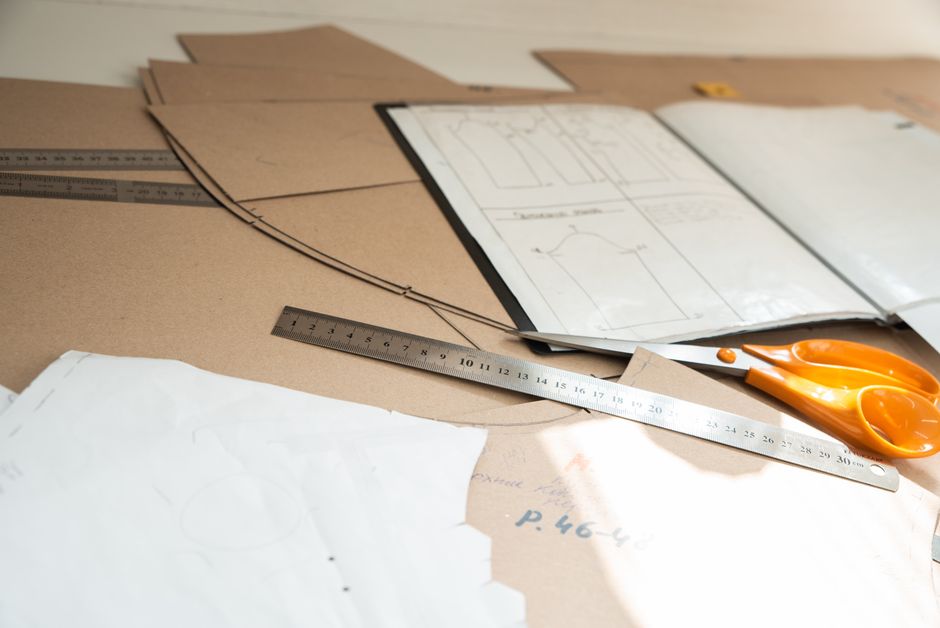 Photo by Yuliya Duzhaya on Pexels
- 3
Decoding Park Dimensions6 Min
- Point to the inside of their park. Ask: "We need a way to talk about the entire space inside your park. Any ideas what we could call it?"
- Introduce **Area**: It's the total amount of flat space a shape covers, like the carpet on the floor. We recognize it as the 'inside' part. For example, a big rug has a large area. Area is measured in 'square units'. Point to the drawn park. Ask: "So, the space for your playground, what would its area be?"
- Point to the boundary of their park. Ask: "And what about the distance all the way around the outside of your park, like a fence? What could we call that?"
- Introduce **Perimeter**: It's the total distance around the outside edge of a shape, like a fence or the baseboards in a room. We recognize it as the 'boundary' or 'outline'. For example, running around a track is measuring its perimeter. Perimeter is measured in 'units'. Point to a park feature. Ask: "If you wanted to put a little fence around your pond, what would you need to measure?"
- Move on when Student can correctly identify which term (area or perimeter) applies to the 'space inside' and the 'distance around' their park features, and explain why.
 Photo by Sedanur Kunuk on Pexels
- 4
Measure and Build Your Park9 Min
- Choose a rectangular park feature. Ask: "Let's measure the length and width of this part of your park using the ruler."
- Ask: "How would we calculate the area of this section? (Hint: Multiply length by width!)"
- Ask: "And how would we find the perimeter of this section, the distance all the way around it? (Hint: Add up all four sides!)"
- Record the calculated area and perimeter next to the park feature. Repeat for another park section. (Younger: use string to trace perimeter and measure string length; Older: perform multiplication/addition).
- Move on when Student has measured and calculated the area and perimeter for at least two different sections of their mini-park, and recorded them.
Photo by Christina & Peter on Pexels - 5
Park Masterpiece Review2 Min
- Review their completed park design. Ask: "What was the trickiest part of designing your park, and what was the most fun?"
- Ask: "Why is knowing about area and perimeter important when designing something like a park or even just arranging furniture in a room?"
- Move on when Student can share at least one thing they learned about area or perimeter, or an example of where they might be used in the real world.
 Photo by Usman AbdulrasheedGambo on Pexels
Personalize The Spark
Add a twist your child will love, and we'll email you a printable guide made just for them. New to Mai? We'll set you up with a free 30-day guest pass so you can open it in the app.