

Equal Groups Fun
Explore the foundational concepts of multiplication and division through hands-on activities with everyday objects. This lesson challenges children to make and break equal groups, discovering how these operations are connected ways to organize numbers.
The lesson goal is learners will understand that multiplication means putting equal groups together and division means splitting into equal groups. They will use everyday objects to build and break apart these groups, discovering how these two math ideas are connected like opposites. This will help them see how numbers work.
What You Need
Missing something? Don't let it stop you. The app offers easy alternatives for every item you have at home.
Learning Guide
Step-by-step guidance. No preparation required.
- 1
Breakfast Challenge: Sharing Bites3 Min
- Place 6-10 breakfast items on the table. Ask:
- - 'If we had 6 of these, how could we share them equally between two of us?'
- - 'What if we had to share them with three people? How many would each person get?'
- Move on when Student has thought about sharing and proposed a way to distribute items.
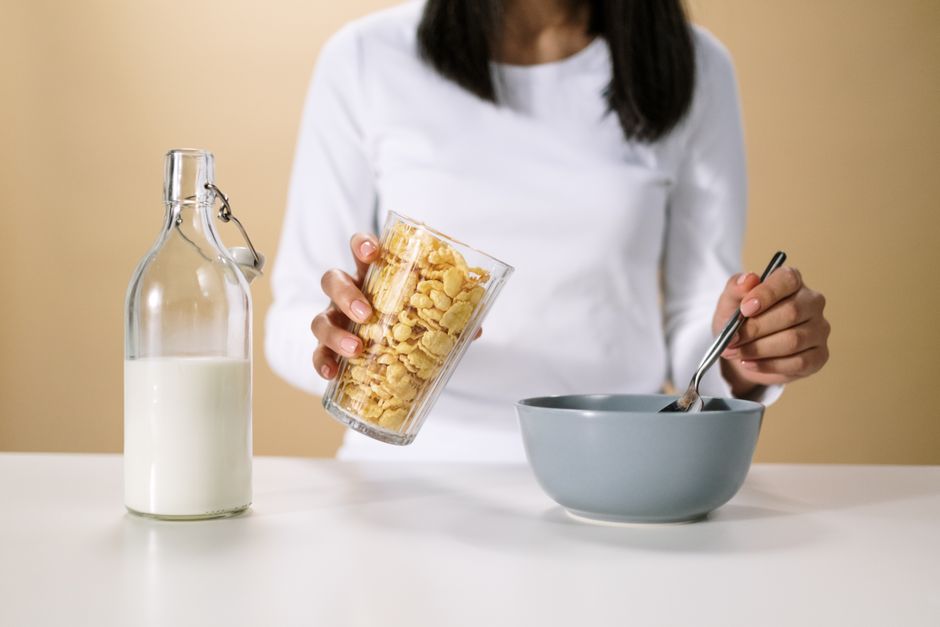 Photo by cottonbro studio on Pexels
- 2
Explore & Plan: Building with Equal Groups7 Min
- Gather a selection of small manipulatives (cereal, beans, small toys). Select a total count, e.g., 12 cereal pieces.
- Ask them to arrange the items into equal groups. Ask:
- - 'Can you arrange these 12 items into groups so each group has the same number of items?'
- - 'What does 'equal' mean when we're making groups like this?'
- - 'Can you arrange them into rows and columns, like a rectangle? What are some different rectangles you can make?'
- Move on when Student has explored different ways to group or arrange a set of objects equally and can describe their arrangements.
 Photo by cottonbro studio on Pexels
- 3
Discussion: What are we doing?8 Min
- Discuss the child's arrangements. For example, if they made 3 rows of 4 items, explain: 'When you made 3 groups of 4 items to get a total of 12, you were doing **multiplication**. Multiplication is combining equal groups to find a total.'
- Then explain: 'And when you started with 12 items and split them into 3 equal rows, you were doing **division**. Division is sharing a total into equal groups, or finding how many equal groups you can make.'
- Ask them to explain in their own words. Ask:
- - 'When you made 4 rows with 3 blocks in each row, what math word does that make you think of now?'
- - 'If you have 15 beans and you want to put 5 beans on each plate, what math word describes what you're doing?'
- - 'What do you notice about multiplication and division – do they seem connected or totally different?'
- Move on when Student can explain multiplication and division in their own words and see their connection, even if they don't use formal definitions.
 Photo by Engin Akyurt on Pexels
- 4
Activity: The Array Challenge9 Min
- Select a total number of items (e.g., 24 beans). Challenge the child to make all possible rectangular arrays.
- Ask: 'How many items are in each row, and how many rows are there? How can you write that as a multiplication problem?'
- Take a new number of items (e.g., 18 cereal pieces) and 2-6 small plates. Ask:
- - 'Can you share these 18 pieces equally among 3 plates? How many does each plate get?'
- - 'Now, what if you shared them among 6 plates? What changed?'
- - 'Can you show me a multiplication problem and then use the same items to show a division problem that uses the same numbers?'
- Move on when Student has successfully built at least two different arrays for a chosen number and demonstrated sharing a different number of items into equal groups, describing their results.
Photo by cottonbro studio on Pexels - 5
Summary: Math in the Real World3 Min
- Ask them to reflect on the activity. Ask:
- - 'What was the most surprising thing you learned or discovered about groups and sharing today?'
- - 'Can you think of a time when you might use multiplication or division when you're playing or helping around the house?'
- - 'If you wanted to teach someone else about making equal groups, what's the one thing you would tell them to remember?'
- Move on when Student shares one key takeaway about multiplication or division and provides a real-world example.
 Photo by Stephen Andrews on Pexels
Personalize The Spark
Add a twist your child will love, and we'll email you a printable guide made just for them. New to Mai? We'll set you up with a free 30-day guest pass so you can open it in the app.