
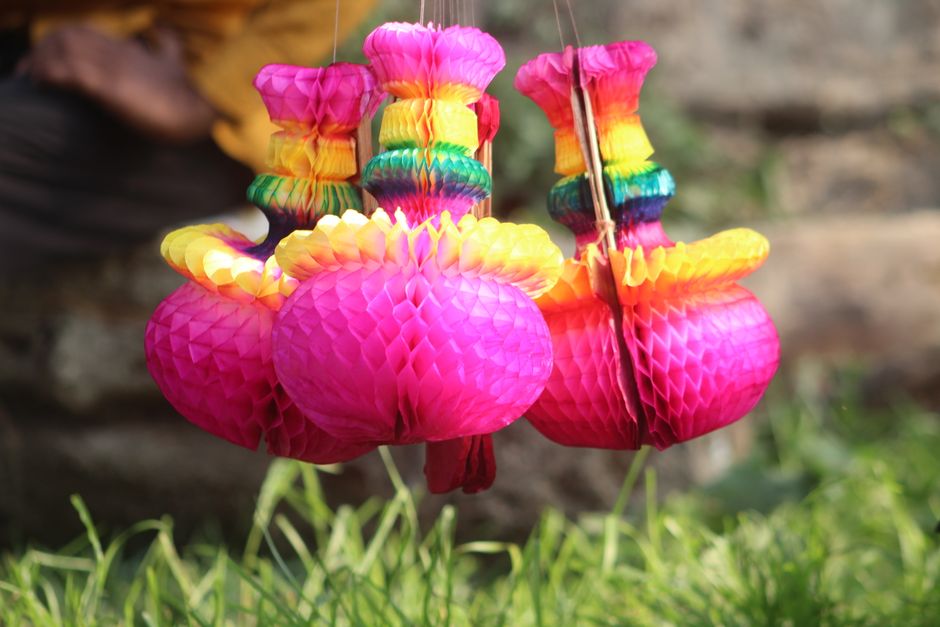
Make Diwali Shine
 Life Skills

 30 Min
 activity
Explore the meaning behind Diwali, the Festival of Lights, by designing and crafting a symbolic light decoration. This activity encourages creativity and understanding of cultural traditions through hands-on making.
The lesson goal is learners will understand the significance of light in cultural celebrations, particularly Diwali, recognizing how it symbolizes abstract concepts like good triumphing over darkness. They will apply this understanding by designing and constructing their own decorative light element using everyday materials.
What You Need
Missing something? Don't let it stop you.
The app offers easy alternatives for every item you have at home.
Learning Guide
Step-by-step guidance. No preparation required.
- 1
Breakfast Brightness5 Min
- Identify light sources around the breakfast table or kitchen.
- Move on when Child identifies several light sources and shares one thought about how light makes them feel or helps them.
 Photo by Curtis Adams on Pexels
- 2
Explore & Plan: Festival Lights8 Min
- Discuss types of lights used in celebrations.
- Lay out materials and plan your light decoration.
- Move on when Child has a basic idea or sketch for their light creation and has identified which materials they want to use.
- 3
Discussion: Light's Deeper Meaning6 Min
- Discuss the symbolic meaning of light in celebrations.
- Move on when Student can explain in their own words that light in Diwali represents good winning over something bad, and can give one example of what 'darkness' might mean metaphorically.
 Photo by Aleksandar Spasojevic on Pexels
- 4
Activity: Crafting Our Light9 Min
- Cut paper into desired shapes for your light design.
- Fold and glue paper pieces to form your decoration.
- Decorate with markers and aluminum foil.
- Move on when Student has completed their paper light decoration.
Photo by Rajan chandra saha on Pexels - 5
Summary: Our Festival of Lights2 Min
- Reflect on your finished light and its meaning.
- Move on when Student shares one key takeaway about light, Diwali, or their creation.
 Photo by Th2city Santana on Pexels
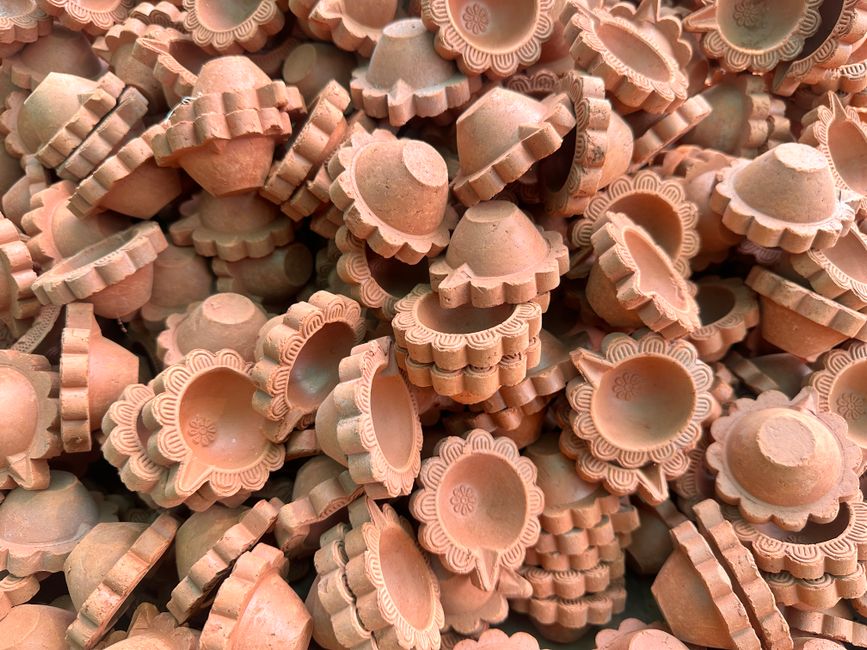

Why do people light lamps at Diwali?
Make Diwali Shine
Life Skills30 MinactivityExplore the meaning behind Diwali, the Festival of Lights, by designing and crafting a symbolic light decoration. This activity encourages creativity and understanding of cultural traditions through hands-on making.
Our Goal is learners will understand the significance of light in cultural celebrations, particularly Diwali, recognizing how it symbolizes abstract concepts like good triumphing over darkness. They will apply this understanding by designing and constructing their own decorative light element using everyday materials.
What You Need
Missing something? In the app, Mai suggests swap ideas.
Learning Guide
Step-by-step guidance. No preparation required.
- 1
Breakfast Brightness5 Min
- Identify light sources around the breakfast table or kitchen.
- Move on when Child identifies several light sources and shares one thought about how light makes them feel or helps them.
Photo by Curtis Adams on Pexels - 2
Explore & Plan: Festival Lights8 Min
- Discuss types of lights used in celebrations.
- Lay out materials and plan your light decoration.
- Move on when Child has a basic idea or sketch for their light creation and has identified which materials they want to use.
- 3
Discussion: Light's Deeper Meaning6 Min
- Discuss the symbolic meaning of light in celebrations.
- Move on when Student can explain in their own words that light in Diwali represents good winning over something bad, and can give one example of what 'darkness' might mean metaphorically.
Photo by Aleksandar Spasojevic on Pexels - 4
Activity: Crafting Our Light9 Min
- Cut paper into desired shapes for your light design.
- Fold and glue paper pieces to form your decoration.
- Decorate with markers and aluminum foil.
- Move on when Student has completed their paper light decoration.
Photo by Rajan chandra saha on Pexels - 5
Summary: Our Festival of Lights2 Min
- Reflect on your finished light and its meaning.
- Move on when Student shares one key takeaway about light, Diwali, or their creation.
Photo by Th2city Santana on Pexels
In The Mai App
Bring This Spark To Life
Same Spark, with Mai by your side
Mai Leads It
Mai leads the Spark out loud, so they can learn on their own.
Step-By-Step
Get every step with Mai's tips, one at a time, at your pace.


Quick Swaps
Missing something? Mai suggests swap ideas, so you can start now.
Beyond The Spark
After, a fun fact, a challenge and a Table Talk question.
More Sparks Like This
If they loved this one, they might love these too
- Life SkillsShoe Tying HeroThis challenge helps children master the essential life skill of tying shoelaces. By exploring knots and loops, they'll learn the practical steps needed to secure their shoes, fostering independence and fine motor skills.Try This Spark
 How can I tie my shoes myself?
- Life SkillsFamily Time CapsuleThis lesson challenges your family to design and create a special time capsule. You'll work together to choose meaningful items that capture who you are right now, learning about history, self-reflection, and collaboration along the way.Try This Spark
 What will future us want to see?
- Life SkillsCook Our Family FeastLearn how to plan and prepare a family recipe from scratch. This challenge helps you develop teamwork and practical cooking skills, leading to a delicious meal for everyone to enjoy.Try This Spark
 Can you cook a new family meal?
 How do wingless spiders travel far?
 ScienceSpiders' Electric Sky JourneyThis lesson explores the incredible journey of baby spiders, revealing how these tiny creatures travel vast distances without wings. Through hands-on experiments, families will discover the invisible forces that help spiders 'fly' miles into the sky, fostering curiosity about the natural world and hidden science.Try This Spark
- MathBillions of BladesDive into the world of large numbers and area by designing a mini park. You'll learn how to estimate huge quantities, like the number of grass blades on a football field, by breaking down big problems into smaller, manageable steps, all while exploring concepts of scale and measurement.Try This Spark
 How many blades on a field?
- Social StudiesYour Vote Matters!Explore how every single vote can be critical in an election. Through hands-on simulations, families will discover the power of individual choices and learn about electoral outcomes decided by the slimmest of margins.Try This Spark
 How many elections were decided by one vote?
 How many miles does a bird fly south?ScienceBirds' Epic Winter JourneyExplore the incredible distances birds travel to escape winter. Children will visualize and compare the migration routes of different birds, from a local robin to the amazing Arctic Tern, understanding the scale of these epic journeys.Try This Spark
- MathBuild Multiplication FunDiscover multiplication as a quick way to count groups! You'll use everyday items to build different multiplication puzzles and games, making math tangible and fun. This lesson emphasizes understanding 'groups of' and 'rows of' instead of just memorizing facts.Try This Spark
 What's a super-speedy way to count?
 What hidden patterns do leaves reveal?ScienceLeaf Detective MissionExplore the hidden details of leaves through active observation and creating leaf rubbings. This challenge encourages children to look closely at the natural world around them, noticing patterns, textures, and unique features that often go unnoticed, transforming everyday leaves into fascinating scientific subjects.Try This Spark