
Your Vote Matters!
Explore how every single vote can be critical in an election. Through hands-on simulations, families will discover the power of individual choices and learn about electoral outcomes decided by the slimmest of margins.
Our goal: Learners will simulate an election using physical votes to see how candidates win or tie. They will understand that a single vote can change the outcome and how important it is for everyone to participate in democratic processes.
What You Need
Small objects • Small containers • Paper • Pencil • Small objects (beans, coins, paper clips) • 2-3 small containers (bowls, cups)
and this is just the baseline.
Scan to jump into the app and easily personalize this Spark to match your child's exact learning level and see how Mai will guide this lesson.
Learning Guide
A simple guide to lead you through the kickoff, the core challenge, and everything in between.
Mai’s Tips
- Counting accuracy: The power of this activity comes from the precise counting. Encourage younger children to count in groups of 2 or 5, and older children to double-check their tally. If counting feels like a chore, turn it into a race or a challenge to find the exact number.
- Misconception: Children often feel their single vote is insignificant in a large pool. The point of the activity is to visually demonstrate the 'swing' potential of even one vote, showing how 'just one' can be the difference between winning and losing.
- Simplify: For younger children, start with fewer total votes (e.g., 5-7 votes total) and only two candidates. The concept of 'more than half' is easier to grasp with smaller numbers. The goal is the visible shift, not complex arithmetic.
- Enhance: For older children, introduce the idea of percentages or electoral college concepts (e.g., groups of votes from different 'districts'). Have them calculate the percentage of votes each candidate received and discuss what constitutes a 'mandate' (a clear win by a large margin).
For The Grown-Up
- Try this: Have them simulate a close election where shifting just one 'vote' changes the winner, showing how even a single vote has the potential to decide the outcome.
- Explain it like this: Voting is like a tug-of-war. Each vote is a pull on the rope. Sometimes, just one more pull can make the difference between winning and losing.
- A big question to ask: If two candidates had the exact same number of votes, how would you decide who wins? Is there a perfectly fair way to break a tie?
1Breakfast Choice Vote 5 min
Point to 2-3 items on the breakfast table (e.g., a box of cereal, a fruit bowl, a type of jam). Ask each child to quickly pick their 'favorite' for breakfast tomorrow.
- Which of these would you vote for for breakfast tomorrow?
- What makes that your top choice?
Know Before You Teach
- Good to know: This stage links personal preferences to the concept of choice, a fundamental aspect of voting.
- If they ask: Can I pick something that isn't here? For this quick vote, let's just choose from what's on the table, like in a real election where candidates are already chosen.
- It's working when: Child shows clear enthusiasm for their choice.
- If they're stuck: Suggest a silly or unusual breakfast option to spark a choice.
- Easier: Just ask for their favorite, don't ask for a reason.
- Harder: Ask them to imagine they have to convince someone else to vote for their choice.
Done when: Student expresses a preference and a reason for it.

2Explore & Plan Our Election 8 min
Introduce the idea of holding a mock election to decide tomorrow's breakfast. Guide them to brainstorm what they'll need for 'votes' (small objects) and 'candidates' (labeled containers). Help them select two distinct breakfast options (e.g., 'Pancakes' vs. 'Waffles') as candidates.
- If we were going to have a real election for tomorrow's breakfast, what would we need to make it fair?
- What could we use as 'votes'? And how would we show who the 'candidates' are?
- How will we make sure everyone's vote counts?
Know Before You Teach
- Good to know: This stage translates the abstract idea of an election into a concrete, hands-on plan.
- A fair election needs clear rules, defined choices (candidates), and a way to register preferences (votes).
- If they ask: Why can't we just say what we want? For a small group, that works, but in big groups, voting helps make sure everyone's voice is counted equally and fairly.
- Key words: Candidate: A person or choice someone can vote for in an election.
- Key words: Vote: A way to show your choice or preference in an election.
- It's working when: Child actively participates in suggesting materials or methods.
- If they're stuck: Suggest specific items like 'beans for votes' or 'cups for candidates' to prompt their thinking.
- Easier: Provide all materials and simply ask them to pick which items represent votes and which are candidates.
- Harder: Ask them to design a complete voting system, including how to handle secret ballots or multiple rounds.
Done when: Students have identified materials for votes and candidates, chosen candidates, and have a basic plan for how to vote.

3Understanding the Outcome 6 min
Explain that a majority means 'more than half' of the votes. A tie means two candidates have the exact same number of votes. Discuss a simple scenario to illustrate these.
- If 10 people vote in an election, what is the smallest number of votes you need to get more than half? (Answer: 6)
- What happens if two candidates each get 5 votes? What would you call that?
- How important do you think one single vote is in an election like that?
Know Before You Teach
- Good to know: A tie means no clear winner, often requiring specific tie-breaking rules.
- Even with large numbers, understanding what a 'majority' looks like is key.
- If they ask: What if nobody gets a majority? That's a great question! Sometimes, a second vote happens between the top two candidates, or there are other special rules for that.
- It's working when: Child can correctly identify the majority number for a small set (e.g., 6 for 10 votes).
- If they're stuck: Use fingers or small objects to physically demonstrate 'more than half' for a very small number.
- Easier: Focus only on the concept of 'more' for winning, rather than 'more than half'.
- Harder: Ask them to calculate the percentage needed for a majority if there were 100 votes.
Done when: Student can explain 'majority' and 'tie' in their own words and understands that a winner needs more votes than any other candidate.
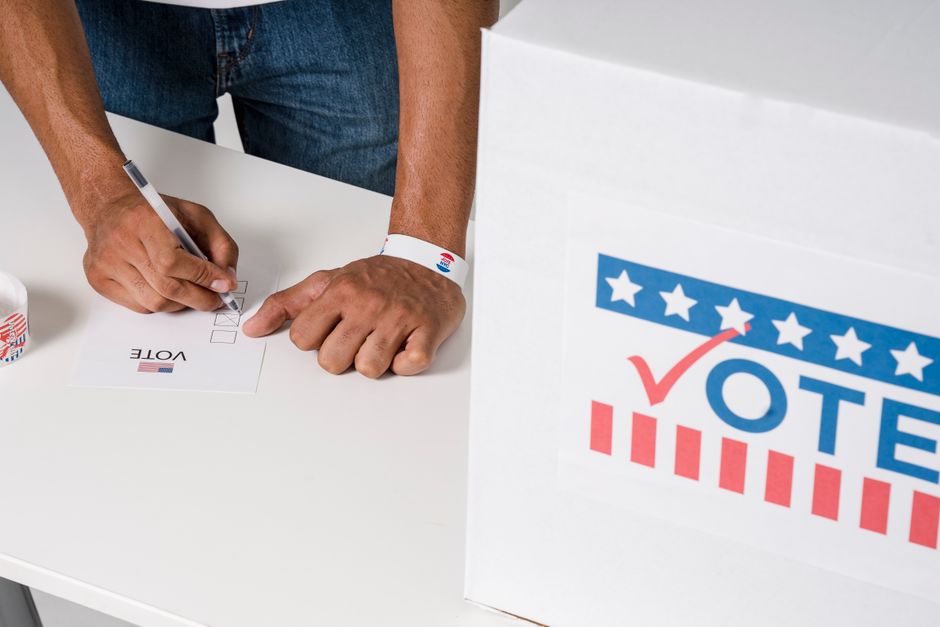
4The Deciding Vote Simulation 9 min
Have them label the containers as candidates. Distribute an equal number of small objects (votes) to each person. Everyone casts their votes into their chosen candidate's container. Collaboratively count the votes for each candidate and record the totals on paper. Observe the outcome. Then, instruct them to physically move just ONE vote from the winning candidate's container to the losing candidate's container. Recount and discuss the new outcome.
- Which candidate got the most votes? Who won our election?
- What if we moved just one vote from the winner to the other candidate? What would happen then?
- How does changing just one vote make you feel about each individual vote?
Know Before You Teach
- Good to know: This stage provides the direct, hands-on evidence of a single vote's impact.
- Accurate counting is crucial for fair electoral outcomes.
- Many real-world elections are decided by very small margins, highlighting the importance of each ballot.
- If they ask: Did my vote really matter? Yes! When you changed that one vote, you saw how it could shift the outcome. Even if it's not always obvious, every vote has that potential.
- It's working when: Child expresses surprise or realization when a single vote changes the outcome.
- If they're stuck: If counting is difficult, have them group votes into sets of two or five before adding them up.
- Easier: The parent does most of the counting aloud, with the child verifying only the final numbers.
- Harder: Challenge them to create a scenario where the election is guaranteed to be decided by only one vote.
Done when: Students have successfully conducted a mock election, counted votes, identified a winner, and demonstrated how shifting one vote can alter the outcome.

5The Power of One 2 min
Prompt them to reflect on the simulation and the real-world significance. Share the fact about the Virginia State Legislature election in 2017, where control was decided by a single vote.
- What did you learn about elections by doing this activity?
- Does knowing that one vote can change things make you think differently about elections?
- Why do you think it's important for everyone to vote?
Know Before You Teach
- Good to know: Individual votes contribute to the collective decision.
- Understanding electoral systems encourages civic engagement and critical thinking about democracy.
- If they ask: Why did that one election in Virginia matter so much? Because control of a whole state's government was decided by that single vote, impacting many laws and decisions for millions of people.
- It's working when: Child connects their simulation experience to the idea of real-world voting.
- If they're stuck: Relate it to a specific outcome in their life, like choosing a game or activity, and ask if their choice mattered there.
- Easier: Focus on the feeling that 'my choice matters', rather than the specific mechanics of an election.
- Harder: Ask them to brainstorm other situations where a single choice or opinion can have a big impact.
Done when: Student shares at least one insight about the importance of individual votes or the election process.
Beyond The Spark
Fuel their curiosity beyond the Spark with bonus extras.
Table Talk
The outcome of elections, even local ones, affects decisions about schools, parks, and roads in your community, showing how voting directly impacts daily life.
Did You Know?
Did you know that in 2017, just one single vote decided which political party would control all the laws for an entire state in Virginia?
Challenge
What if we had three candidates? How would we decide a winner then, especially if no one got a clear majority? Design a 'run-off' system for your next election.
Quick Recap Quiz 4 min
Customize this quiz, add questions, or follow your child's lead! Each question has a 'Parent Tip' to help them find the answer without giving it away.
1. What does it mean if a candidate wins by 'majority'?
- They got fewer votes than their opponent.
- They got more than half of all the votes.
Remind them that 'majority' is a specific term for getting more than half, not just more than anyone else.
2. In a very close election, how much can one single vote change the outcome?
- It can decide who wins or loses.
- It usually makes no difference at all.
Refer back to the simulation where they saw one vote literally flip the outcome.
3. If two candidates get the exact same number of votes, what is that called?
- A landslide
- A tie
Recall their earlier discussion on election vocabulary.
4. Why is it important to count votes very carefully in an election?
- Because every vote matters and a small mistake can change the winner.
- Because it makes the counting take longer and be more exciting.
Connect back to the precision needed in their own mock election and the real-world stakes.
Loved This Spark?
Scan to jump into the app and explore similar Sparks in our Sparks Hub. New to Mai? Start free with 10 Sparks, no credit card needed.