Your Brain's Sweet Spot
This lesson explores why our brains react differently to sweet, salty, and sour tastes. Children will conduct a taste test, discover the evolutionary reasons behind our preferences, and then design a simple snack station that considers these brain signals.
Our goal: Learners will discover the unique roles of sweet, salty, and sour tastes in the body. They will then explain why the brain prioritizes sweet for fast energy and apply this understanding to design a smart snack station.
What You Need
Small fruit piece (e.g., apple slice, berry) • Salt • Lemon wedge • Small plates or bowls • Pinch of salt
and this is just the baseline.
Scan to jump into the app and easily personalize this Spark to match your child's exact learning level and see how Mai will guide this lesson.
Learning Guide
A simple guide to lead you through the kickoff, the core challenge, and everything in between.
Mai’s Tips
- Mindset focus: The goal here is not to label foods as 'good' or 'bad', but to understand the signals they send to our brain. Frame it as decoding ancient survival messages.
- Taste sensitivity: Some children are very sensitive to sour. Advise them to just touch the lemon to their tongue or skip tasting if they're uncomfortable; the concept can still be discussed.
- Simplifying explanation: If the 'evolutionary reason' is too abstract, focus on 'what the body needs right now'. For sweet: 'quick power for running/playing'. For salty: 'building blocks for bones/muscles'. For sour: 'tells us to be careful, like when something is not ready to eat'.
- Sensory engagement: Encourage descriptive language beyond 'yummy'. Ask 'What does it feel like?', 'How does your mouth react?', 'Does it make you want more?' for each taste.
For The Grown-Up
- A common mix-up: Children often believe they like sweet foods simply because they taste good, without connecting it to the body's need for energy or evolutionary survival mechanisms.
- Try this: After tasting the sweet sample, ask them 'How does this make your body feel? Does it feel like something you'd want if you were really tired or needed to run fast?' Then after salty, 'Does this feel like it would give you the same kind of burst of energy?' This helps them feel the different signals.
- A big question to ask: If all foods gave the exact same amount of energy, do you think our brains would still prefer sweet tastes more than salty ones?
1Breakfast Tastes & Brain Signals 5 min
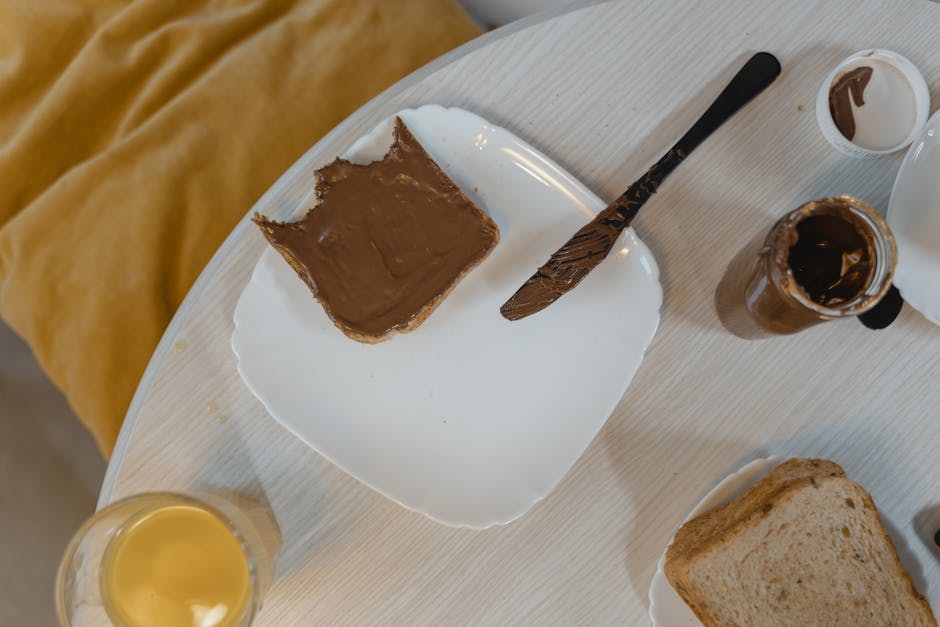
Start by drawing attention to something sweet or salty readily available at breakfast. Engage the child by making a game of identifying tastes and considering why those tastes exist. This sets the stage for exploring brain signals.
Know Before You Teach
- Good to know: Taste is primarily detected by taste buds on the tongue, which send signals to the brain.
- Humans are generally wired to prefer sweet and salty tastes due to their historical importance for survival.
- If they ask: Why do some people like spicy food? Spicy isn't really a taste, but a pain signal! Some people enjoy that sensation, but it doesn't have the same survival signal as sweet or salty.
- If they're stuck: If they only say 'good' or 'bad', prompt with 'Is it sweet, salty, sour, or something else?'
- Easier: Focus only on sweet and salty items they can easily identify.
- Harder: Ask them to describe the texture and smell of the breakfast items, and how that might also influence their preference.
Done when: Child identifies at least one sweet and one salty item from breakfast and shares their initial thoughts on why they might like those tastes.

2Explore & Plan Our Taste Test 8 min
Discuss the three primary tastes: sweet, salty, and sour. Guide the children to predict the 'message' each taste gives to their brain and gather the simple taste test materials. This planning step builds anticipation and engages critical thinking.
Know Before You Teach
- Good to know: The five basic tastes are sweet, sour, salty, bitter, and umami.
- Sweetness often indicates the presence of sugars, a primary energy source.
- Saltiness indicates essential minerals like sodium.
- If they ask: What about bitter tastes? Bitter often signals something poisonous or spoiled, so our bodies usually try to avoid it unless we learn to like it, like coffee or dark chocolate!
- Key words: Prediction: Making a guess about what you think will happen based on what you already know.
- It's working when: Child making a clear prediction about which taste will be most appealing for energy, and giving a simple reason.
- If they're stuck: Offer choices: 'Do you think sweet, salty, or sour will give you more energy to run fast?'
- Easier: Focus solely on predicting between sweet and salty, as sour might be too complex for very young children.
- Harder: Challenge them to guess which taste might be most important for long-term survival versus immediate energy.
Done when: Child predicts which taste (sweet, salty, or sour) the brain might 'prefer' for a specific reason, and materials are ready for tasting.

3Brain's Taste Code: Sweet, Salty, Sour 6 min
After tasting, explain the core evolutionary purpose of each taste. Sweet means fast energy, salty means vital minerals, and sour means potential warning. Emphasize that the brain's strong reward for sweet comes from its need for quick, efficient fuel.
Know Before You Teach
- Good to know: Sweet tastes trigger a strong pleasure response in the brain due to the high energy content of sugars.
- Salty tastes are crucial for nerve and muscle function, and maintaining fluid balance.
- Sourness is often caused by acids and can signal unripe fruit or spoiled food, acting as a protective mechanism.
- If they ask: Why do I sometimes crave salty snacks? Your body might be telling you it needs more minerals, like sodium! Just like with sweet, it's a signal to get something important.
- Key words: Calories: Units of energy found in food that our bodies use to move, think, and grow.
- Key words: Minerals: Important nutrients (like tiny building blocks) that our body needs to work properly, found in some foods.
- If they're stuck: Relate it to a familiar scenario: 'If you were very hungry and needed energy right now, which taste would help you feel better fastest?'
- Easier: Keep the explanation very simple: 'Sweet means power! Salty means building! Sour means be careful!'
- Harder: Ask them to consider if there are times when a sour taste might not be a warning (e.g., yogurt, kombucha) and what that implies.
Done when: Student can explain the basic function of sweet, salty, and sour tastes for the body in their own words, without reciting the examples they were given, and can connect the brain's preference for sweet to energy.

4Build Your Brain-Smart Snack Station 9 min
Help the children categorize the tasted items and other snacks into three labelled sections: 'Fast Fuel' (sweet), 'Body Builders' (salty), and 'Warning!' (sour). This hands-on activity reinforces the learned concepts and connects them to practical choices.
Know Before You Teach
- Good to know: Categorizing foods by their primary taste and the signal they send can help in making mindful food choices.
- An independent snack station encourages autonomy and can be designed with these taste signals in mind to promote balanced choices.
- Toddlers often need easy access to small, healthy snacks throughout the day.
- If they ask: Can snacks be both sweet and salty? Yes! Many foods have a mix of tastes. We're thinking about the strongest signal it sends to our brain.
- It's working when: Child accurately placing the tested items and suggesting other appropriate snacks for each category.
- If they're stuck: Suggest drawing simple pictures for each category if writing labels is too hard (e.g., a lightning bolt for 'Fast Fuel').
- Easier: Parent can label the categories, and the child just places the items. Focus on just two categories: 'Power Snacks' (sweet/salty) and 'Careful Snacks' (sour).
- Harder: Ask them to consider a 'Balanced Brain Snack' category – what kinds of foods would go in there that offer a mix of good things without too much of one signal?
Done when: Student has successfully sorted the tasted items into their brain-signal categories and identified at least one additional snack for each category.

5Smart Snacking for Our Brains 2 min
Conclude by reflecting on how understanding taste signals can inform snack choices. Encourage them to articulate one key takeaway about their brain's preferences.
Know Before You Teach
- Good to know: Understanding food science, like taste perception, empowers individuals to make informed decisions about nutrition.
- Mindful eating involves being aware of what and why we eat, connecting physical signals with food choices.
- If they ask: Does this mean I should never eat sweet things? Not at all! It means you understand why your brain loves them and can decide when that quick energy is most helpful, like before playing!
- It's working when: Child articulating one new idea they learned about their brain and tastes.
- If they're stuck: Prompt with a choice: 'Did you learn more about why your brain likes sweet, or why it sends warnings for sour?'
- Easier: Have them just point to their favorite category from the snack station and say why they like it.
- Harder: Ask them to think about how this understanding might influence someone making food choices for a baby or a very busy adult.
Done when: Student shares one key takeaway about how their brain reacts to different tastes or how this knowledge might influence snack choices.
Beyond The Spark
Fuel their curiosity beyond the Spark with bonus extras.
Table Talk
Understanding how taste influences food choices is key for nutritionists and food scientists who design healthy, appealing meals.
Did You Know?
A sweet taste triggers exactly two times more reward signals in your brain than salt!
Challenge
What if you had to design a snack for an astronaut who needs quick energy for a spacewalk, but also needs to avoid anything too sticky or crumbly? What tastes would you focus on?
Quick Recap Quiz 4 min
Customize this quiz, add questions, or follow your child's lead! Each question has a 'Parent Tip' to help them find the answer without giving it away.
1. What does a sweet taste mainly signal to our brain?
- Warning, don't eat this!
- Quick energy for our body!
Remind them what their brain gets from a sugar rush.
2. If something tastes very sour, what might our brain be trying to tell us?
- This might be a warning, like it's unripe or spoiled.
- This will give us lots of minerals we need!
Think about what very sour things (like unripe berries) can mean.
3. Why does our brain often send stronger 'reward' signals for sweet things?
- Because salty foods are always bad for us.
- Sweet foods provide very fast and efficient energy.
Connect it back to what sweet foods offer the body very quickly.
4. Knowing what our brain likes for quick energy, what kind of snack might be good before playing a sport?
- A banana or an apple.
- A very sour pickle.
Consider which option gives the body fast-acting fuel.
Loved This Spark?
Scan to jump into the app and explore similar Sparks in our Sparks Hub. New to Mai? Start free with 10 Sparks, no credit card needed.