
World of Books: Count!
This Spark challenges families to explore the incredible number of books in the world, starting from their own bookshelves. Through counting, estimation, and discussion, learners will grasp the vastness of human knowledge and creativity, culminating in creating their own story journal to contribute to their personal world of books.
Our goal: Learners will estimate and compare quantities of books, starting from their own shelves and expanding to global totals. They will grasp the vast scale of human knowledge and creativity, connecting their personal reading and writing experiences to the broader world of literature.
What You Need
Their own books • Paper • Pencils • Crayons
and this is just the baseline.
Scan to jump into the app and easily personalize this Spark to match your child's exact learning level and see how Mai will guide this lesson.
Learning Guide
A simple guide to lead you through the kickoff, the core challenge, and everything in between.
Mai’s Tips
- Grounding the abstract: By having children physically count their own books, even a small number, you give them a concrete baseline to then understand much larger, abstract numbers like those in a library or the whole world.
- Mind the 'big number' trap: Children often use 'a lot' to mean anything beyond immediate counting. When they hear '100,000' or '130 million', they might not truly grasp the difference. Emphasize the jump in scale rather than the exact digits. For instance, point out how 100,000 is like having 2,000 personal shelves of 50 books each.
- Simplifying large numbers: If the scale is overwhelming, focus on comparison: 'If you have 50 books, a library has 2,000 times that many!' Or use time: 'If you read one book a day, it would take you almost 360 years to read all the books in just one big library!'
- Journal as personal connection: The Story Journal isn't about summarizing a book. It's about personalizing the concept of 'books' and 'stories'. It reinforces that each individual book, even their own experience of it, is a valuable part of the larger 'world of books'.
1My Book Nook 3 min
Engage the child with a book at the breakfast table or a recent read. Ask for their initial thoughts on how many books they own.
- What book did we read recently that you really liked?
- How many books do you think are on your favorite shelf or in your room?
Know Before You Teach
- Good to know: This stage sets a personal baseline for 'how many books'.
- The exact number isn't important; the act of estimating is.
- Children might initially think 'a lot' without a concrete number.
- If they ask: Why do we need to count them? It helps us get a picture in our mind of how many stories there are, so we can then imagine even bigger numbers.
- It's working when: Child offering a number, even a small one, as an estimate.
- If they're stuck: Suggest counting books from a specific, smaller area, like 'the books on your nightstand'.
- Easier: Focus on identifying their absolute favorite book and talking about it.
- Harder: Ask them to categorize their books (e.g., fiction, non-fiction, picture books) and estimate counts for each category.
Done when: Child makes an initial estimate of books they own or on a shelf, and is ready to explore further.
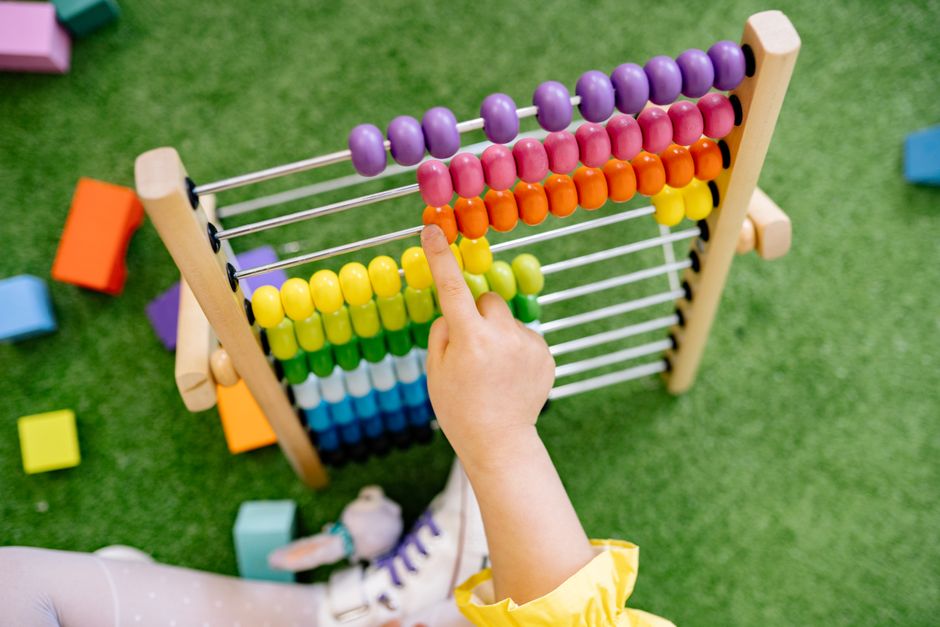
2Explore & Plan: Counting Our Collection 7 min
Have the child gather a stack of their favorite books and count them. Then, ask them to predict the number of books in a public library, comparing it to their own count.
- Gather some of your favorite books from your room.
- Let's count them together! How many did we find?
- Do you think a big library has more books than your house? How many more?
Know Before You Teach
- Good to know: A large public library contains approximately 100,000 distinct book titles.
- This number is vastly greater than a typical home collection.
- This stage builds on the personal count to introduce a larger, but still manageable, scale.
- If they ask: How can a library have so many? Libraries collect books from many different authors and publishers over many, many years, sharing them with lots of people.
- It's working when: Child showing surprise or curiosity about the jump in numbers from their home to a library.
- If they're stuck: If counting all their books is too much, suggest counting just one shelf and then estimating the rest. For the library, ask 'Do you think it has 100 books, or 1,000, or even more?'
- Easier: Just count 5-10 books together and state that libraries have 'a really, really, really lot more'.
Done when: Child has physically counted some of their books and offered a prediction for a library's size.

3Discussion: From Shelf to World 7 min
Reveal the actual number of books in a large library (100,000). Discuss what 'the world's books' means and ask for a prediction for that number. Then, reveal the global total (130 million) and explain the concept of scale.
- A big library actually has about 100,000 books! How does that compare to our count?
- What do you think it means to talk about 'the world's books'?
- How many books do you think there are in the whole world?
- The world actually has about 130 million distinct books! That's a huge 'scale'!
Know Before You Teach
- Good to know: The concept of 'scale' helps to make sense of these enormous differences in quantity.
- If they ask: Is that all the books ever? Yes, that's an estimate of all the different books ever published that we know about. It's truly a global library!
- Key words: scale: How big or small something is compared to other things, helping us understand very large or very tiny numbers.
- It's working when: Child expressing awe or difficulty in comprehending the immense global number, indicating they're grasping the scale.
- If they're stuck: Use an analogy: 'Imagine all the grains of sand on a beach – that's how many books!' Or focus on comparing library to world: 'If a library is a big house, the world's books are like a whole city of houses!'
- Easier: Simplify the numbers to 'hundreds, thousands, millions' without getting stuck on the exact digits, focusing on the concept of 'much, much bigger'.
- Harder: Ask them to think about why there are so many books in the world (e.g., people in different countries, different languages, different subjects, stories from long ago).
Done when: Child has discussed the concept of scale and understands the difference between their collection, a library, and the world's books.

4Activity: My Story Journal 10 min
Guide the child to create their own Story Journal. They will choose a favorite read-aloud book and create the first entry, drawing or writing about it.
- Pick your favorite book you've read recently.
- Let's start making your Story Journal! You can draw a picture, or write about your favorite part.
Know Before You Teach
- Good to know: It encourages reflection and appreciation for individual books.
- This activity reinforces the idea that every story read or created adds to a personal 'library'.
- If they ask: Do I have to write a whole summary? No, this journal is for your personal connection. You can draw your favorite part, write one feeling, or just list characters. It's your way to remember this special book.
- Key words: Story Journal: A special notebook or collection of papers where you record your thoughts, feelings, or drawings about the books you read.
- It's working when: Child choosing a book and engaging creatively with the journal entry (drawing, writing, or describing their connection).
- If they're stuck: Offer specific prompts: 'What was the funniest part?' 'Who was your favorite character?' 'What color does this book make you think of?'
- Easier: Focus only on drawing a picture of their favorite character or a scene from the book, with minimal writing.
- Harder: Encourage them to think about what the author might have been trying to tell them, or to write a short 'review' for the book.
Done when: Child has created the first page of their story journal, representing a book they've read.

5Summary: My Place in the World of Stories 3 min
Encourage the child to share their journal entry and reflect on the Spark. Ask them what surprised them and how their personal reading connects to the vast world of books.
- Tell me about your Story Journal entry. What did you create?
- What was the most surprising thing you learned about books today?
- How does making your own journal make you feel about all the books in the world?
Know Before You Teach
- Good to know: This stage helps consolidate the learning by connecting the large scale to personal experience.
- The journal becomes a tangible representation of their ongoing engagement with books.
- If they ask: Will I ever read all the books? Probably not all 130 million, but you'll read many wonderful ones! And every book you read opens up new ideas and adventures.
- It's working when: Child verbally expressing a sense of wonder, or connecting their journal to the larger concept of many books.
- If they're stuck: Ask 'If you could add any book to the world's collection, what kind of story would it be?'
- Harder: Ask 'How do you think knowing there are so many books might change how people think about writing new ones?'
Done when: Child shares one key takeaway or thought about the vastness of books and their personal connection to reading.
Beyond The Spark
Fuel their curiosity beyond the Spark with bonus extras.
Table Talk
Estimating and understanding large numbers is crucial for scientists, statisticians, and even librarians who manage vast collections.
Did You Know?
Did you know there are nearly 130 million different books?
Challenge
Create a 'book census' for your entire home. How many books do you think are in each room? Count them to see how close your estimates were!
Quick Recap Quiz 4 min
Customize this quiz, add questions, or follow your child's lead! Each question has a 'Parent Tip' to help them find the answer without giving it away.
1. If you have 50 books, and a library has 100,000 books, which has a larger collection?
- Your house has more
- A library has more
Remind them that 100,000 is much bigger than 50.
2. How does counting your own books help you understand how many books are in the world?
- It gives you a starting point to compare with bigger numbers.
- It shows you that there aren't many books in the world.
The idea is to use what they know to grasp the unknown.
3. What does creating a Story Journal help you do?
- Learn how to bind a book.
- Remember and celebrate the books you've read.
The journal is for personal reflection on stories, not bookbinding skills.
4. Why is it important to learn about 'scale' when talking about numbers of books?
- It helps us understand very large numbers by comparing them.
- It helps us read books faster.
Scale is about understanding magnitudes, not speed.
Loved This Spark?
Scan to jump into the app and explore similar Sparks in our Sparks Hub. New to Mai? Start free with 10 Sparks, no credit card needed.