
Why Vote Tuesday?
Discover the fascinating history behind why elections are held on Tuesdays! This Spark guides your family through setting up a simple election at home to make a group decision, then explores the historical reasons for our national election day, linking travel, religion, and farming life from 1845.
Our goal: Learners will understand how an election works by participating in a family vote. They will also discover the historical reasons why Election Day falls on a Tuesday.
What You Need
Paper • Pencils • Bowl • Spoon • Bowl or box
and this is just the baseline.
Scan to jump into the app and easily personalize this Spark to match your child's exact learning level and see how Mai will guide this lesson.
Learning Guide
A simple guide to lead you through the kickoff, the core challenge, and everything in between.
Mai’s Tips
- Historical Context: The core of this Spark is understanding the historical constraints that led to Tuesday voting. Emphasize the slow travel by horse and the importance of Sunday church to make the 'why' clear and memorable.
- Fairness in Voting: Children might focus on their preferred outcome. Guide them to understand that the process of voting (secrecy, one vote per person, counting fairly) is as important as the result, teaching respect for the collective decision.
- Simplifying Travel: If the concept of 1845 travel is hard to grasp, ask them to imagine walking to a friend's house versus driving. Then extend that to a much longer journey by horse, highlighting the time commitment.
- Mixed-Age Engagement: For younger children, focus on the 'choice' aspect and the simple sequence of travel (Sunday church, Monday travel, Tuesday vote). For older children, delve deeper into the 'why' behind the travel constraints and the significance of a national election day.
1Breakfast Choices 5 min
Start by pointing to a common breakfast item, like a spoon. Ask the child to think about choices. For younger children, focus on simple 'this or that' choices. For older children, ask about choices that affect others. The goal is to connect everyday choices to the idea of making decisions.
Know Before You Teach
- Good to know: Choices are part of everyday life, from small personal decisions to big group decisions.
- This stage aims to connect personal choices to the idea of group decision-making.
- If they're stuck: Ask about two options for breakfast: 'Did you choose cereal or toast?'
- Harder: Ask them to explain how one of their choices might affect someone else in the family.
Done when: Child identifies a choice made at breakfast and shares it.

2Explore & Plan Our Election 8 min
Guide the family to choose a simple, low-stakes item to vote on. Discuss how to make the vote fair and secret. Help them gather paper, pencils, and a bowl for ballots. Explain what a 'ballot' is. Younger children can draw their choice; older children can write it. The goal is to prepare for a fair election.
Know Before You Teach
- Good to know: An election is a formal way for a group to make a decision.
- A ballot is the physical way a voter expresses their choice.
- If they ask: Why can't we just shout out our choice? For big decisions, keeping votes secret helps people feel safe to choose what they really want, without feeling pressured.
- It's working when: Family agreeing on a topic to vote on and understanding how to create ballots.
- If they're stuck: Suggest two very different, fun options for voting, like 'Pizza for dinner' vs. 'Tacos for dinner'.
- Easier: Parent writes the options on the ballots and the child circles or points to their choice.
- Harder: Have the child suggest rules for how the election should be run to ensure fairness.
Done when: The family has decided on an election topic and gathered materials for voting.

3The Tuesday Mystery 6 min
Introduce the concept of a fixed 'Election Day'. Ask them to guess why Tuesday. Then, guide them through the historical context: people traveled by horse (slow), Sunday was for church (couldn't travel), Monday was for travel to the county seat, leaving Tuesday for voting. Explain that this was decided in 1845. The goal is to understand the historical reasons for Tuesday.
Know Before You Teach
- Good to know: In 1845, most people lived in rural areas and traveled by horse.
- Sunday was a day of rest and church, making travel impossible.
- If they ask: Why don't we change it now? Changing a national law is a big process, and while some people want to, the tradition has stayed.
- Key words: Election Day: A specific day set aside for voting in official elections.
- If they're stuck: Draw a simple timeline: Sunday -> Monday -> Tuesday, and ask what activity fits each day for a farmer going to vote.
- Easier: Focus on just one reason: 'They couldn't travel on Sunday because of church, so they needed another day.'
- Harder: Ask them to think about how modern transportation might change the 'best' day to vote today.
Done when: Child can explain the basic historical reasons for Tuesday as Election Day in their own words.
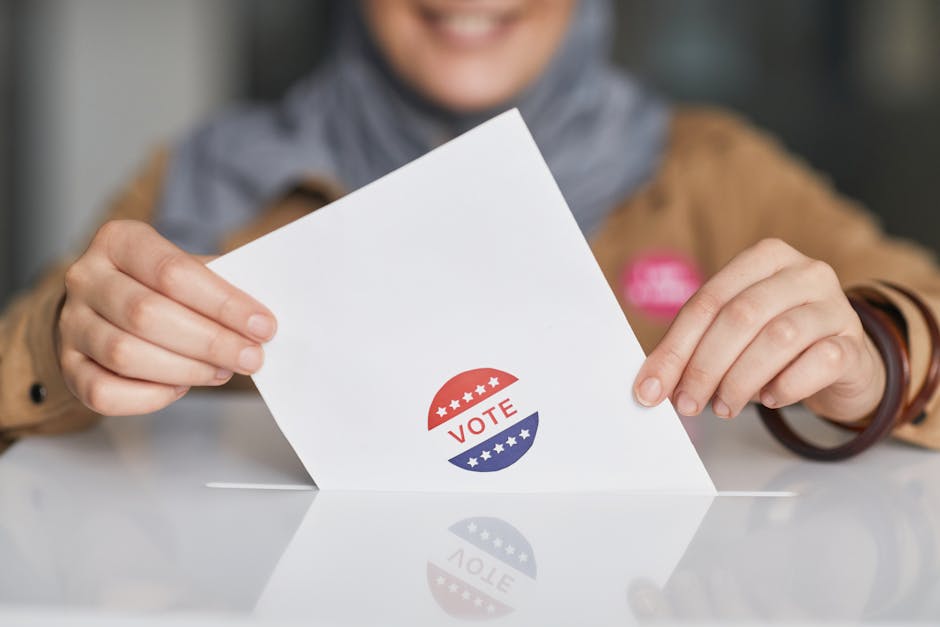
4Our Family Election 9 min
Facilitate the election. Ensure everyone gets a ballot and understands how to mark their choice. Emphasize secrecy. After all ballots are cast, help count them. For younger children, count aloud together. For older children, they can practice tallying. Announce the winning choice. The goal is to experience the voting process.
Know Before You Teach
- Good to know: The act of voting involves marking a choice, keeping it secret, and submitting it.
- The outcome is based on the majority of votes.
- If they ask: What if my choice doesn't win? That can happen! But everyone got to have their say, and now the group has made a decision together. Next time, it might be different!
- It's working when: Child actively participating in marking their ballot and observing the counting process.
- If they're stuck: If a child is reluctant to vote, suggest they draw a picture representing their choice instead of writing words.
- Easier: Parent counts all the votes while the child points to each one. Focus on 'more' versus 'less'.
Done when: The family election has been completed, votes counted, and a winner announced.

5Reflecting on Our Vote 2 min
Celebrate their participation. Ask them to reflect on the process and the historical facts. Reinforce the idea that voting is a way for groups to make decisions. Ask what they found most interesting or surprising. The goal is to consolidate learning and connect it to real-world decision-making.
Know Before You Teach
- Good to know: Voting is a fundamental part of democratic decision-making.
- Historical context often explains current practices.
- Reflection helps solidify learning and connect it to broader concepts.
- If they ask: Does everyone in the world vote on Tuesdays? No, different countries have different election days and different reasons for them! That's a great question to explore more.
- It's working when: Child expressing an opinion or a new piece of information they found interesting.
- If they're stuck: Prompt with a choice: 'Did you find the voting part more interesting, or the history part?'
- Easier: Ask them to draw their favorite part of the Spark.
- Harder: Ask them to imagine they are designing an election day for a new country – what day would they pick and why?
Done when: Child shares one key takeaway about voting or Election Day.
Beyond The Spark
Fuel their curiosity beyond the Spark with bonus extras.
Table Talk
Understanding voting helps citizens participate in their communities and make collective decisions that shape society.
Did You Know?
The law making Tuesday Election Day was passed way back in 1845, almost 180 years ago!
Challenge
Research other countries' election days and find out if they have different historical reasons for their choices.
Quick Recap Quiz 4 min
Customize this quiz, add questions, or follow your child's lead! Each question has a 'Parent Tip' to help them find the answer without giving it away.
1. What is a 'ballot' in an election?
- The person who counts votes
- The paper where you mark your choice
Remind them of the paper they used to mark their choice during the family election.
2. Why was Monday important for voters in 1845?
- It was the day they traveled to vote
- It was the day they celebrated the winner
Think about how long it took to get to town if you were on a farm far away.
3. What was the main reason people didn't travel on Sunday to vote in 1845?
- Roads were too muddy on Sundays
- Sunday was reserved for church and rest
Recall what people typically did on Sundays a long time ago.
4. What does voting help a group do?
- Make a fair decision together
- Let only one person decide
Think about what happened in your family election when everyone voted.
Loved This Spark?
Scan to jump into the app and explore similar Sparks in our Sparks Hub. New to Mai? Start free with 10 Sparks, no credit card needed.