
Whose Columbus Story?
This lesson challenges learners to explore how historical events, like the arrival of Columbus in the Americas, can be understood and represented from multiple viewpoints. It emphasizes critical thinking about historical narratives and the importance of diverse perspectives. No advance preparation is needed.
Our goal: In this spark, your learner will define and recognize different historical perspectives, create representations of a historical event from contrasting viewpoints and discuss the importance of understanding multiple narratives in history.
What You Need
Large paper • Drawing supplies
and this is just the baseline.
Scan to jump into the app and easily personalize this Spark to match your child's exact learning level and see how Mai will guide this lesson.
Learning Guide
A simple guide to lead you through the kickoff, the core challenge, and everything in between.
Mai’s Tips
- The core of this lesson is NOT about judging historical figures, but about the process of historical interpretation. If the child gets stuck on 'good' vs. 'bad', steer them back to 'what did they see/feel/want?'
- A common misconception is that history is a fixed set of facts. This lesson aims to show that while facts are important, their interpretation and presentation create different narratives. If a child insists on 'the right answer,' prompt them with: 'Are facts all there is to a story, or are feelings and experiences important too?'
- If the concept of 'historical perspective' isn't landing, simplify it to 'different points of view' or 'looking at the same thing from different angles.' Use a very simple, shared experience like a recent meal or a TV show they both watched and ask: 'What was your favorite part? What was my favorite part? Why might they be different?'
- Encourage younger children to use simple stick figures, colors, and basic symbols, focusing on emotions (happy, scared, curious) and concrete objects (boat, house, trees). For older children, push for more complex ideas like motivations, consequences, and values for each group.
For The Grown-Up
- A common mix-up: Children often believe there's only one 'right' way to tell a historical story, and that historical accounts are purely objective facts without interpretation.
- Try this: Present two simplified, contrasting accounts of a recent shared experience (e.g., a family trip, a school event) focusing on different details and emotions. Ask the child which story is 'more true' or 'more correct.' Guide them to see that both contain facts but highlight different things based on who is telling the story.
- Explain it like this: Understanding history is like looking at a famous statue from different angles. From one side, you see the face; from another, the back. It's the same statue, but each view gives you new information and a different feeling about it. You need to walk all around it to get the full picture.
- A big question to ask: If all history is told from someone's perspective, can we ever truly know 'what happened' exactly, or only 'what was remembered and recorded'?
1Introduction 5 min
Open the lesson by asking the child to think about stories or events where different people had different experiences or memories. This helps them connect to the idea of 'perspective' in a personal way.
Done when: The student has shared an example of different perspectives and engaged with the idea.

2Explore & Plan 8 min
Introduce the activity of creating two 'perspective maps' and guide the child in gathering materials and brainstorming initial ideas for how each perspective might be represented. This stage sets the groundwork for their hands-on exploration.
Done when: Materials are gathered, and the child has brainstormed initial ideas for each perspective.

3Discussion 6 min
Teach the concept of 'historical perspective.' Guide the child to understand that history is seen through different eyes, shaped by experiences, and that both viewpoints can hold valid elements of truth. The definition of historical perspective is key here. Historical Perspective: This is looking at a past event or time through the eyes of different people who lived through it, or people who think about it now. You recognize it when different groups describe the same event by focusing on different details, using different words, or having different feelings (like whether something was good or bad). For example, a family might remember a picnic: one person remembers the fun games, another remembers the ants. Both are true but focus on different things. It's important because people have different backgrounds, knowledge, and values, which change how they understand and remember events.
Done when: Student can explain in their own words what a 'historical perspective' means and why it's important.
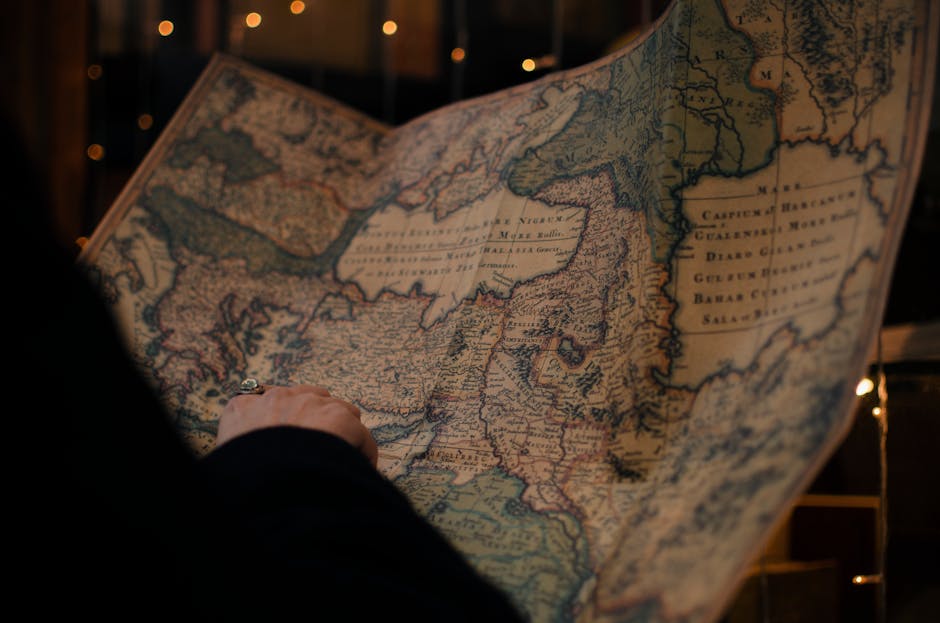
4Activity 9 min
Facilitate the hands-on creation of the two perspective maps. Encourage creativity in representing each viewpoint using drawings, symbols, and minimal words. Step back and let the child lead the artistic expression, offering guidance only when needed.
Done when: The child has completed drawings for both the European and Indigenous perspectives on their paper.

5Summary 2 min
Guide a reflection on the activity and the main takeaway about understanding history through multiple perspectives. Reinforce the value of diverse voices in historical accounts.
Done when: Student shares one key takeaway about historical perspectives or the importance of multiple viewpoints.
Beyond The Spark
Fuel their curiosity beyond the Spark with bonus extras.
Table Talk
Understanding different perspectives is crucial in many jobs, from journalists reporting news to lawyers presenting cases, and even scientists collaborating on discoveries.
Challenge
Research a different historical event, like the first Thanksgiving or the building of a local landmark, and create three different perspective maps: one from a common narrative, one from a less common one, and one from a completely unexpected viewpoint (e.g., an animal's perspective).
Quick Recap Quiz 4 min
Customize this quiz, add questions, or follow your child's lead! Each question has a 'Parent Tip' to help them find the answer without giving it away.
1. What does 'historical perspective' mean?
- Only knowing one true version of history
- Understanding a past event from different viewpoints
Remind them that history is like a story with many storytellers.
2. Why is it important to study history from many perspectives?
- To get a more complete and fair understanding
- To choose which side was right or wrong
Discuss how listening to everyone helps us learn more.
3. If two people have different perspectives on the same historical event, does that mean one of them is wrong?
- Yes, there is only one correct way to see history
- No, both can be true based on their experiences
Emphasize that different experiences lead to different truths.
4. When you read a history book, what question is it good to ask yourself?
- 'Who wrote this book and what was their perspective?'
- 'Is everything in this book 100% correct?'
Explain that authors also have perspectives that shape what they write.
Loved This Spark?
Scan to jump into the app and explore similar Sparks in our Sparks Hub. New to Mai? Start free with 10 Sparks, no credit card needed.