Where's My Hour?
Explore the mystery of the 'missing' or 'extra' hour that appears and disappears from our clocks twice a year. This Spark helps families understand how Daylight Saving Time works and why we agree to change our clocks.
Our goal: Learners will discover how clocks adjust for Daylight Saving Time each spring and fall. They will understand that a day always contains 24 hours despite these changes, realizing that time is a shared human agreement rather than something lost or found.
What You Need
Clock • Paper • Pen or pencil
and this is just the baseline.
Scan to jump into the app and easily personalize this Spark to match your child's exact learning level and see how Mai will guide this lesson.
Learning Guide
A simple guide to lead you through the kickoff, the core challenge, and everything in between.
Mai’s Tips
- Abstract concept: The idea of time as an 'agreement' rather than a physical entity is highly abstract for children. Focus on the practical aspect of clock numbers changing and what it means for daily routines, rather than getting bogged down in philosophical debates about time.
- Misconception alert: Children often interpret 'missing' as truly gone or 'extra' as truly added. Reinforce that the sun still rises and sets in the same physical rhythm; we are just shifting the human-made labels we put on those moments. Use the 'street name' analogy from the mind trap to clarify.
- Simplify: If the timeline drawing is too complex, use a simple daily routine. 'If bedtime is 8 PM and we spring forward, it suddenly feels like 9 PM. But are you actually more tired?' Or use a simple calendar: 'If we decide to call Tuesday 'Wednesday' for one day, does Monday disappear? No, we just changed the name.'
For The Grown-Up
- A common mix-up: Children often believe that time is a tangible substance that can physically disappear or be created, rather than a system of measurement and agreement.
- Try this: Ask them to compare how long the sun is up (the actual daylight) on a DST day versus a standard time day. 'Does the sun actually stay in the sky for one less hour when we spring forward?' They can observe that the physical amount of daylight remains consistent for that day of the year, even as the clock time changes.
- Explain it like this: Time is like naming streets. If we decide to rename 'Main Street' to 'Elm Street,' Main Street doesn't disappear; we just call it something different. The street itself is still there, in the same place.
- A big question to ask: If everyone on Earth agreed to move their clocks forward 12 hours tomorrow, would the sun still rise at the same actual moment?
1What Time Is It? 5 min
Point to a clock in the room and discuss its function. Introduce the mystery of changing clocks.
- Look at our clock. What time does it say right now?
- Why do we have clocks? What do they help us do?
- Have you ever noticed that sometimes all the clocks change, like an hour vanishes or an extra one appears? How do you think that happens?
Know Before You Teach
- Good to know: Clocks measure the passage of time in standardized units (hours, minutes, seconds).
- Most people rely on clocks for daily routines like school, meals, and bedtime.
- If they ask: Who invented clocks? People have used many ways to tell time for thousands of years, like sundials and water clocks. Mechanical clocks started appearing around the 13th century in Europe.
- It's working when: The child points to the clock and reads the time, even if approximate.
- If they're stuck: Ask what would happen if nobody knew what time it was. How would we meet up?
- Easier: Focus on just the hour hand and whether it's 'daytime' or 'nighttime' hours.
- Harder: Ask them to estimate how many hours have passed since they woke up this morning.
Done when: Child notes the current time and expresses initial curiosity about why clocks change.
2Changing the Clocks 8 min
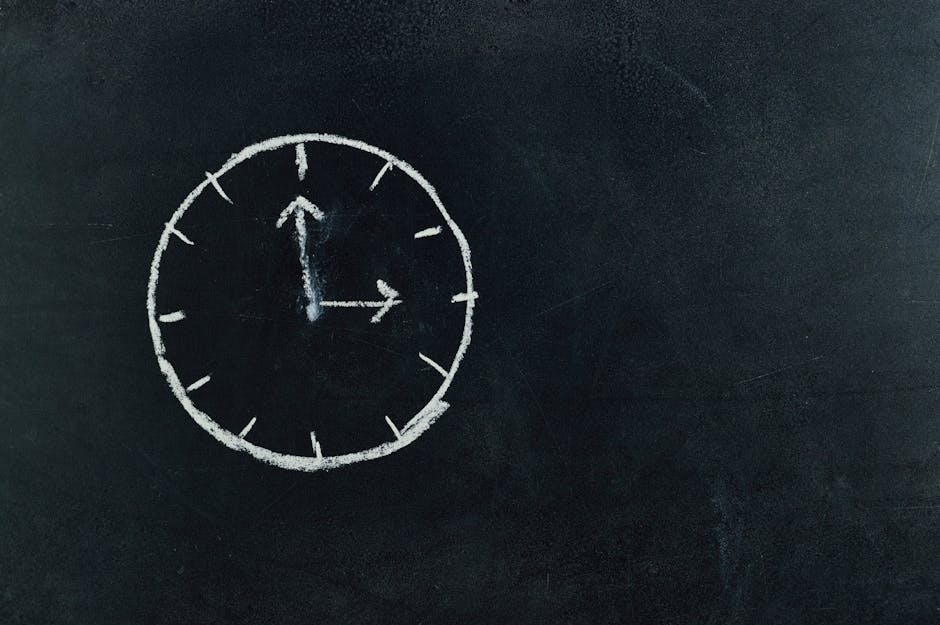
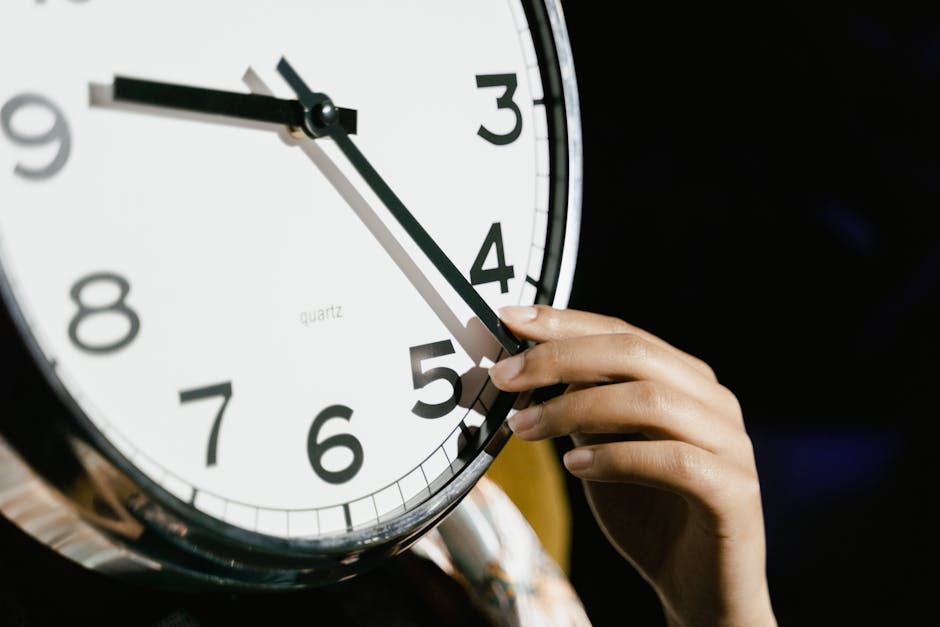
Explain 'spring forward' and 'fall back.' If possible, have them physically adjust an analog clock to visualize the changes.
- In spring, we 'spring forward' an hour. What does that mean for the numbers on the clock?
- If we jump from 2 AM to 3 AM, how would that make us feel the next morning?
- In fall, we 'fall back' an hour. What does that mean?
- If we go from 2 AM back to 1 AM, how would that feel for sleeping?
Know Before You Teach
- Good to know: This happens in the early morning hours, often while people are asleep, to minimize disruption.
- Key words: Spring forward: When we move clocks one hour ahead in the spring.
- If they're stuck: Use a digital clock and just show them what it looks like when 2:00 changes to 3:00, or 2:00 changes back to 1:00.
- Easier: Focus only on 'spring forward' and how it makes the morning feel shorter.
- Harder: Ask them to predict which season (spring or fall) might feel like they lost sleep and which might feel like they gained sleep.
Done when: Child understands the concept of moving clocks forward and backward by one hour and can describe the immediate effect on a timeline.
3The Missing Hour Mystery 6 min
Ask the child's initial theory about the hour. Then, explain Daylight Saving Time as a human agreement, not a physical change to time itself. The goal is to shift daylight to suit human schedules.
- When we 'spring forward,' where do you think that hour actually goes? Does it just vanish?
- When we 'fall back,' where does that extra hour come from? Is the day suddenly longer?
- We call this changing of the clocks 'Daylight Saving Time.' It's like everyone in our country agrees to call 2 o'clock '3 o'clock' in the spring, and then call 2 o'clock '1 o'clock' in the fall. We don't change the actual amount of time, just what we call it.
- Why do you think we all agree to do this? (Hint: Think about sunshine in the evening.)
Crib Sheet for Grown-Ups: Daylight Saving Time is a social agreement to adjust clock times seasonally, typically to extend daylight into the evening. The physical 24-hour rotation of Earth doesn't change; only the human-assigned labels for those hours do. The hour isn't lost or created; it's simply skipped or repeated in the numbering system. This concept can be tricky, but the key is that it's a convention, like agreeing on which side of the road to drive. Deeper physics of time aren't expected at this stage.
Know Before You Teach
- Good to know: Daylight Saving Time (DST) is an annual practice of advancing clocks during warmer months.
- The primary reason for DST is to make better use of daylight, typically by shifting an hour of morning daylight to the evening.
- If they ask: Does everyone do Daylight Saving Time? No, it's used in about 70 countries, mostly in temperate regions. Some places, like Arizona in the US, don't observe it.
- Key words: Daylight Saving Time: A time when we change our clocks to make better use of daylight, usually by moving an hour from the morning to the evening in spring and summer.
- It's working when: The child uses words like 'agreement,' 'changing the name,' or 'shifting' when describing the hour.
- If they're stuck: Use an analogy: 'Imagine we decided to call the color blue 'green' for a whole season. Does blue disappear? No, we just changed its name for a while.'
- Easier: Focus on the idea that the sun still rises and sets at the same 'real' time, but our clocks say a different number.
- Harder: Ask them to think about who benefits from having more daylight in the evening (e.g., people who want to play outside after work/school).
Done when: Child can explain that the hour isn't physically lost or gained, but that its label changes by agreement.
4Timeline of a Day 9 min
Guide the child to draw a simple 24-hour timeline. Then, draw two more timelines to illustrate the 'spring forward' and 'fall back' changes, showing that the total 24 hours remain, but the labels shift.
- Let's draw a line to represent a whole day, from midnight to midnight. Mark the important parts of your day on it, like morning, afternoon, and night.
- Now, let's draw another timeline for a 'spring forward' day. If we jump from 2 AM to 3 AM, what number gets skipped? But is the line itself shorter? Does the sun still rise and set at the same actual moments?
- For an older child: Let's mark specific events, like breakfast at 7 AM. If we spring forward, when does breakfast feel like it's happening by the new clock time?
- Now, let's try 'fall back.' If we go from 2 AM back to 1 AM, what hour appears twice? Is the line longer now?
Know Before You Teach
- Good to know: The 'missing' hour in spring means one hour label (e.g., 2 AM) is skipped.
- If they ask: Is it always 2 AM when the clocks change? Yes, it's typically set for 2 AM local time in most places that observe it because that's usually the quietest time of day with the least impact on schedules and businesses.
- If they're stuck: Use building blocks: use 24 blocks to represent a day. When 'springing forward,' remove one block but then immediately replace it, showing the total number of blocks (hours) stays the same.
- Easier: Draw a very simple timeline with just 'morning,' 'afternoon,' 'evening,' and point out how the labels shift without changing the lengths of those sections.
- Harder: Have them mark a specific event (e.g., a TV show at 7 PM) on both the standard time and DST timelines and discuss how its 'clock time' shifts.
Done when: Child has drawn timelines illustrating how the clock labels shift during DST transitions without changing the 24-hour length of the day.

5Our Time Agreement 2 min
Reflect on the discovery that time is a shared agreement. Discuss what else we agree on as a society.
- So, what did we discover about that 'missing' or 'extra' hour? Was it ever truly gone, or did it just change its name?
- What did you find most surprising about how Daylight Saving Time works?
- Can you think of other things that we all agree on, even if they're not physical things?
Know Before You Teach
- Good to know: Many aspects of society, like traffic laws or currency value, are also shared agreements.
- If they ask: Why don't we just get rid of Daylight Saving Time? Some people think it's still useful for energy saving or extending evening activities, while others find it disruptive. There's a big debate about whether to keep it or stop it!
- It's working when: The child connects the concept of time change to other agreements they know (e.g., rules in a game, traffic lights).
- Easier: Focus on the simple idea: 'The hour didn't disappear, we just started calling it a different number!'
- Harder: Ask them to consider the pros and cons of having Daylight Saving Time versus keeping the clock the same all year.
Done when: Child shares one key takeaway, such as 'the hour isn't lost, we just call it something different' or 'time is something we all agree on'.
Beyond The Spark
Fuel their curiosity beyond the Spark with bonus extras.
Table Talk
Airline schedules, international business meetings, and global communication all depend on understanding time zones and how they adjust for Daylight Saving Time.
Did You Know?
Every spring, over a billion people in 70 countries skip exactly one hour of time!
Challenge
Research which countries observe Daylight Saving Time and which do not. Create a world map showing the differences.
Quick Recap Quiz 4 min
Customize this quiz, add questions, or follow your child's lead! Each question has a 'Parent Tip' to help them find the answer without giving it away.
1. When we 'spring forward' for Daylight Saving Time, what happens to one hour?
- It disappears forever.
- It gets skipped on the clock.
Remind them about physically moving the clock hands forward, skipping a number.
2. When we 'fall back' for Daylight Saving Time, what happens to one hour?
- It gets repeated on the clock.
- It magically appears from nowhere.
Think about moving the clock hands backward, so you see the same number twice.
3. Does Daylight Saving Time change the actual total length of a day (24 hours)?
- Yes, some days become 23 or 25 hours long.
- No, the day is always 24 hours long; only the clock labels change.
Remember the timelines you drew; the line itself didn't get shorter or longer.
4. Why do people agree to change clocks for Daylight Saving Time?
- To shift daylight hours into the evening for certain seasons.
- To make the sun rise earlier every day.
Think about why you might want more daylight in the evening during summer.
Loved This Spark?
Scan to jump into the app and explore similar Sparks in our Sparks Hub. New to Mai? Start free with 10 Sparks, no credit card needed.