
Warmth Jar Wonders
This activity challenges families to create personalized 'Warmth Jars' using simple materials, embodying the spirit of giving and holiday cheer. Learners will explore how thoughtful, handmade gifts carry special meaning and spread joy. They'll design and build their own decorative jars to share light and warmth.
Our goal: Learners will understand how thoughtful, personalized gifts carry special meaning and spread joy. They will practice creative expression by designing and building a unique decorative jar that represents the spirit of holiday warmth and giving.
What You Need
Glass jars • Tissue paper • White glue • Paintbrushes • Flameless tea lights
and this is just the baseline.
Scan to jump into the app and easily personalize this Spark to match your child's exact learning level and see how Mai will guide this lesson.
Learning Guide
A simple guide to lead you through the kickoff, the core challenge, and everything in between.
Mai’s Tips
- Glue application: The goal isn't perfect smoothness, but rather the act of mindful creation. Encourage them to experiment with glue thickness and paper placement. If the glue is too thick, it can rip the tissue paper, so suggest dabbing rather than dragging the brush too hard.
- Meaning over perfection: The nuance easily missed is that the 'perfection' of the craft isn't the Spark; it's the intention and personalization. If a child gets frustrated by a crinkled piece of paper, gently redirect them to focus on the overall message of warmth and care their jar will convey.
- Simplify for younger kids: For younger children, pre-tear tissue paper into simpler shapes or strips. Instead of asking for a complex design plan, simply ask them to pick their favorite colors and arrange them however they like, focusing on the joy of creating something colorful.
- Drying time: White glue needs time to dry, especially if layers of tissue paper are thick. It might be best to let the jars dry for a few hours or overnight before adding the flameless candle, otherwise, the paper might shift or get damaged.
For The Grown-Up
- Watch out: White glue can dry a little cloudy if applied too thickly or in large globs. Advise using thinner coats, smoothing out paper to avoid air bubbles, and allowing each section to dry a bit if layering heavily.
- A common mix-up: Children might think a gift's value comes from its size or if it's store-bought, rather than the thought and effort put into it.
- Try this: Before the activity, ask them to think of the best gift they ever received. Then ask if it was the most expensive or biggest. Guide them to consider if it was special because someone knew them or put effort into it, then link that to why their jar might be special to someone.
- Explain it like this: Making a personalized gift is like baking a favorite cake from scratch for someone special instead of buying one from the store. Both are good, but one shows a lot more of your unique care and effort, making it taste even sweeter (or feel warmer).
- A big question to ask: If you give someone a perfect store-bought gift they love, but you spent no time thinking about it, is that still a truly 'thoughtful' gift?
1Introduction 5 min
Start by sparking a conversation about memorable gifts. Have them think about what made those gifts special, encouraging reflection beyond just the item itself. The goal is to set the stage for understanding thoughtfulness.
Know Before You Teach
- Good to know: Gifts that evoke strong positive emotions are often those with personal meaning, not necessarily high monetary value.
- If they ask: Can I have a really expensive gift then? Expensive gifts can be nice, but this Spark is about how the thought and effort behind a gift makes it truly special, more than its price.
- It's working when: Child describing the feeling a gift gave them, not just the item itself.
- If they're stuck: Share an example of a simple, handmade gift you received that was very meaningful and explain why.
- Easier: Focus on 'favorite' things: 'What is your favorite toy? If someone made you a tiny version, would that be special?'
- Harder: Ask them to imagine giving a gift: 'If you had to give a gift to someone you don't know very well, what would be the challenge in making it special?'
Done when: Child shares an example of a special gift and explains why it was meaningful.
2Explore & Plan 8 min
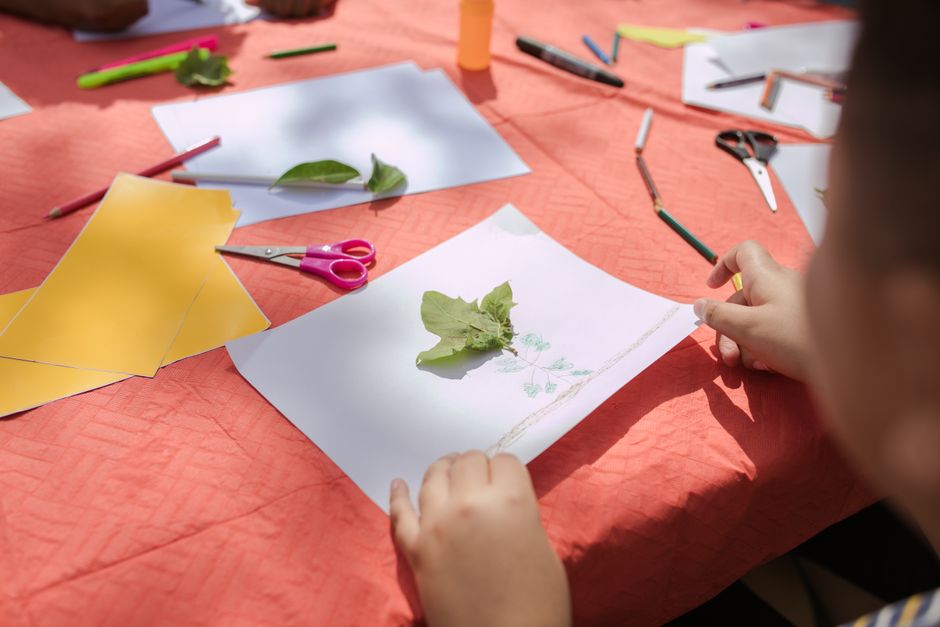
Lay out all the materials. Guide the child to think creatively about how to use them to represent warmth and joy. Encourage them to consider colors, shapes, and what feelings they want their jar to evoke. Ask specific questions about their design choices before they start gluing.
Know Before You Teach
- Good to know: The choice of colors and shapes can greatly influence the perceived 'warmth' or 'mood' of an object.
- Planning ahead in crafts helps in visualizing the final outcome and making deliberate choices.
- If they ask: Can I just put colors randomly? You can! But if you're trying to make it feel warm or like someone special, think if there's a reason you'd choose those colors. What feeling do you want your jar to give?
- It's working when: Child articulating a reason for their color or shape choices (e.g., 'These are happy colors,' or 'This reminds me of Grandma's scarf').
- If they're stuck: Suggest looking at holiday decorations for inspiration. 'What colors make you feel warm and cozy?'
- Easier: Provide pre-cut shapes or just strips of paper and let them focus on color choice. Ask, 'Which color makes you feel happiest?'
- Harder: Challenge them to create a specific scene or symbol using the tissue paper on their jar, like a snowflake or a tree outline.
Done when: Student has a basic plan for their jar design (colors, shapes, general theme).

3Discussion 6 min
Explain Personalized Gifting clearly: what it is, how to recognize it, examples, and why it matters. Then, connect this idea to their own jar designs, asking how their personal choices demonstrate thoughtful giving.
Know Before You Teach
- Good to know: Personalized Gifting emphasizes the relationship and thoughtfulness over monetary value.
- Children are capable of understanding abstract concepts like 'thought' and 'care' when grounded in concrete examples.
- If they ask: So store-bought gifts are bad? Not at all! Store-bought gifts can be wonderful, especially if they are chosen very carefully with the person in mind. Personalized gifting is about the intention behind the gift, whether handmade or thoughtfully chosen.
- Key words: Personalized Gifting: Making a gift unique for someone specific, showing you know and care about them.
- It's working when: Child connecting their own specific design choices (e.g., 'I used blue because it's Mom's favorite') to the idea of personalized gifting.
- If they're stuck: Give a very simple example: 'If I made you a cookie, would it feel more special if I remembered you like chocolate chips, or just gave you a plain one?'
- Easier: Focus on just one aspect: 'Does using your friend's favorite color make it feel more like their gift?'
- Harder: Ask them to think of a gift they'd personalize for an animal or a fictional character, explaining their choices.
Done when: Student can explain Personalized Gifting in their own words and connect it to their jar design choices.

4Activity 9 min
Facilitate the crafting. Show them how to apply glue and press the tissue paper. Emphasize that there’s no single 'right' way. Encourage them to take their time and enjoy the process of bringing their personal vision to life. Supervise glue use, ensuring it's not too thick.
Know Before You Teach
- Good to know: Thin layers of glue and paper work best for transparency and adhesion.
- Patience is key for the glue to set without slipping.
- It's working when: Child experimenting with different ways to place paper or apply glue, showing engagement with the process.
- If they're stuck: Suggest starting with larger pieces of paper first to cover more area, then adding smaller details.
- Easier: Pre-cut larger, more robust shapes (e.g., from construction paper) that are less prone to tearing. Help them with the glue application.
- Harder: Challenge them to create a pattern or a specific image using overlapping pieces of tissue paper, requiring more precision.
Done when: Student has fully decorated their jar with tissue paper and it's set aside to dry.

5Summary 2 min
Ask them to share their finished (or drying) jars. Focus on the creative process and the meaning behind their personalized creation. Reinforce the concept of sharing warmth and light through thoughtful actions.
Know Before You Teach
- Good to know: Reflection helps solidify learning and connect actions to outcomes and feelings.
- Sharing creations fosters a sense of pride and accomplishment.
- If they ask: Can I give it to someone right now? That's wonderful! It's important to let the glue dry completely so it lasts. Maybe we can wrap it up nicely once it's dry!
- It's working when: Child expressing pride in their work and articulating how their jar represents warmth or their personal touch.
- If they're stuck: Ask leading questions: 'What was the hardest part? What was the most fun part?'
- Easier: Focus on the visual appeal: 'What colors make your jar look the warmest?'
- Harder: Ask: 'How do you think the person receiving this jar will feel when they see it and know you made it especially for them?'
Done when: Student shares one key takeaway about personalized giving or their creative process.
Beyond The Spark
Fuel their curiosity beyond the Spark with bonus extras.
Table Talk
Event planners and gift shop owners often use principles of personalized gifting to create memorable experiences and products that resonate deeply with customers.
Did You Know?
The glow from a single candle can be seen up to 1.6 miles away on a clear night!
Challenge
Design a 'Warmth Jar' for a pet or a favorite stuffed animal, thinking about what colors or textures they might appreciate.
Quick Recap Quiz 4 min
Customize this quiz, add questions, or follow your child's lead! Each question has a 'Parent Tip' to help them find the answer without giving it away.
1. What makes a gift feel truly special?
- How expensive it is
- The personal touches and thought put into it
Remind them of the discussion about what made their memorable gift special.
2. What does 'Personalized Gifting' mean?
- Making or choosing a gift specifically for one person
- Buying the most popular gift from a store
Refer back to the definition discussed in Stage 3: it's about making it unique for someone.
3. If you make a Warmth Jar for a friend, what makes it personal?
- Using colors you like best
- Using their favorite colors or things that remind you of them
Encourage them to think about making it special for the friend, not just for themselves.
4. Why does adding personal touches matter when giving a gift?
- It shows you care and know the person well
- It makes the gift look fancier
Prompt them to consider the feeling the recipient gets when they receive a personalized gift.
Loved This Spark?
Scan to jump into the app and explore similar Sparks in our Sparks Hub. New to Mai? Start free with 10 Sparks, no credit card needed.