
Vote For Breakfast!
Explore how we make fair decisions together by holding a family vote for breakfast. This activity introduces the basic principles of voting, fairness, and how a group can make choices that represent everyone's voice.
Our goal: Learners will understand that voting is a fair way for groups to make choices, especially when people have different ideas about what to do. They will learn how a majority opinion guides decisions and how everyone's voice contributes, even those in the minority. They will also practice participating in a simple voting process.
What You Need
Breakfast cereals (2-3 kinds) • Small items for votes • Paper or whiteboard • Markers or pens • Milk • Bowls and spoons
and this is just the baseline.
Scan to jump into the app and easily personalize this Spark to match your child's exact learning level and see how Mai will guide this lesson.
Learning Guide
A simple guide to lead you through the kickoff, the core challenge, and everything in between.
Mai’s Tips
- Disappointment alert: A child whose choice doesn't win might be genuinely upset. This is a real-world consequence of democratic decision-making. Don't dismiss their feelings, but gently guide them to understand that their voice still mattered in the process and the decision was made fairly. Focus on participation over outcome.
- Focus on process: The goal is not just to pick a breakfast, but to understand the process of fair decision-making. Encourage discussion about 'why' voting is important and 'how' it makes a decision fair, rather than just tallying numbers.
- Simplify for younger children: For very young children (4-5), focus primarily on the act of choosing and placing their 'vote,' and the concept that the 'most' choices wins. Use visual cues and simple language. Skip complex discussions about 'minority' or 'tying rules'.
- Deepen for older children: For older children (10+), challenge them to think about different voting systems (e.g., ranked choice, or why some votes might matter more in certain situations), or discuss how this simple vote compares to larger-scale elections.
For The Grown-Up
- A common mix-up: Children often believe that their personal preference is the 'best' or 'right' choice, and struggle to see the value in a collective decision that doesn't align with their individual want.
- Explain it like this: Imagine decision-making is like building a tower with blocks. If only one person picks all the blocks, the tower might be exactly what they want, but others might not like it. When everyone gets to pick a block, you build a tower that everyone helped create, even if it's not exactly what any single person imagined.
- A big question to ask: If the most popular breakfast cereal wins, is that always the 'best' choice for everyone in the family, or just the most popular?
1Breakfast Dilemma! 5 min
Place 2-3 different breakfast options (e.g., cereal boxes) on the table. Start by asking children what they want for breakfast and observe if there are differing preferences. Introduce the challenge of making a choice when not everyone agrees.
- Younger children: Ask them to point to or name their favorite breakfast item.
- Older children: Ask them to explain why they prefer a certain item.
- Ask them: "What do you want for breakfast today?"
- Ask them: "What happens when we all want something different? How do we usually decide?"
Know Before You Teach
- Good to know: Starting with a real, immediate dilemma makes the lesson relevant.
- If they ask: Can't we just have what I want? Sometimes we can, but when everyone wants something different, it's hard to make everyone happy if only one person gets their way. How can we make it fair for everyone?
- It's working when: Children expressing clear preferences and perhaps slight frustration if their choice isn't immediately picked.
- If they're stuck: If they struggle to identify a problem, exaggerate the different preferences dramatically or introduce a new, conflicting option.
- Easier: Limit the choices to just two options for simpler decision-making.
- Harder: Ask older children to articulate why their preferred choice is 'best' and what might happen if everyone chose only their 'best' option.
Done when: Children express their breakfast preferences and acknowledge that choosing can be difficult when there are different wants.

2Explore & Plan: The Voting Board 8 min
Introduce the idea of 'voting' as a fair way to make decisions. Create a simple 'voting board' by writing or drawing each breakfast option. Distribute small items to serve as votes. Explain that each person gets one vote, which they will place next to their preferred choice. Discuss how you will count the votes.
- Younger children: Help draw pictures of the breakfast items.
- Older children: Help write the names of the items and brainstorm methods for counting votes.
- Ask them: "How can we make sure everyone gets a fair say?"
- Ask them: "If everyone got one 'vote', how could we show our choices?"
- Ask them: "What will happen after everyone places their vote?"
Know Before You Teach
- Good to know: Voting is a structured way to gather and compare preferences.
- If they ask: Why can't we just yell out what we want? Yelling can be noisy and sometimes people don't hear everyone. Voting helps us make sure every voice is heard clearly, and we can easily count everyone's choice.
- Key words: Voting: When everyone gets to pick what they want, and we count up all the choices to see what the group wants most.
- It's working when: Children actively helping create the voting board or enthusiastically choosing their voting tokens.
- If they're stuck: If they're hesitant, demonstrate how to set up the board yourself and place a mock vote or two to get them started.
- Harder: Have older children design the voting board themselves, including how they will visually represent the votes (e.g., tally marks, bar graph).
Done when: The voting board is set up with breakfast options, voting tokens are understood, and the children have a basic plan for how to vote and count.
3What Makes a Fair Choice? 6 min
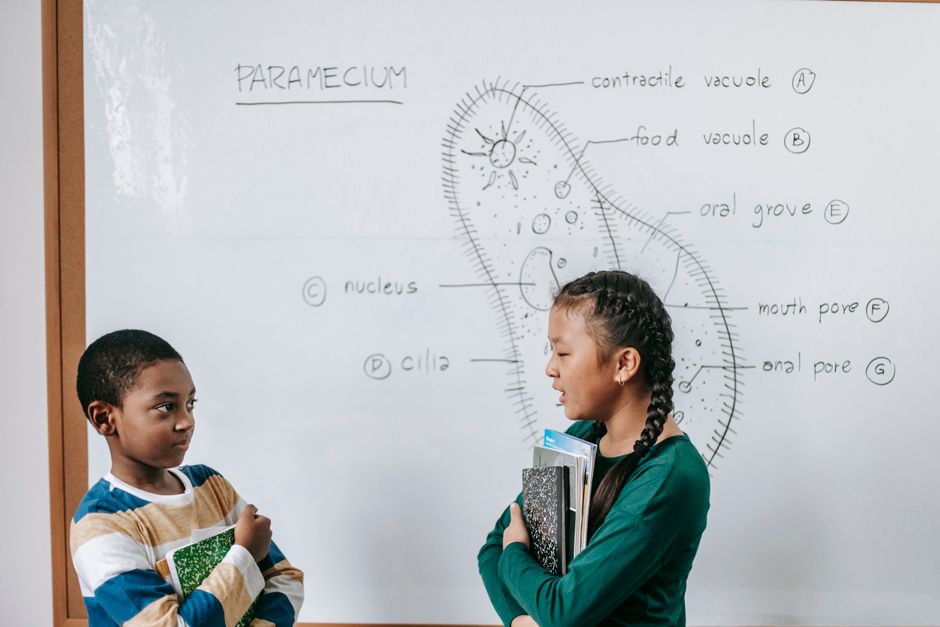
Before voting, discuss what 'fairness' and 'voting' mean. Fairness is about making sure everyone is treated equally and gets a chance to share their opinion. You can recognize it when rules apply to everyone, and everyone has a voice. It's important because it builds trust and respect. Voting is a way for a group to make a decision by having each person choose their preferred option. The choice with the most votes is usually the one the group goes with.
- Younger children: Observe the tallying process.
- Older children: Discuss potential challenges of voting, like ties.
- Ask them: "What does it mean for a decision to be 'fair'?"
- Ask them: "Why do people vote instead of just letting one person decide?"
- Ask them: "If many people vote for one thing, what do we call that? (The majority). And what about the choices that get fewer votes? (The minority)."
- Ask them: "Can you think of another time a group might need to vote to make a fair decision?"
Know Before You Teach
- Good to know: Fairness in decision-making means everyone has an equal opportunity to express their preference.
- Voting gives power to the group (the majority) while still respecting individual choices (minority).
- Key words: Majority: The choice that gets the most votes.
- Key words: Minority: The choice that gets fewer votes.
- It's working when: Children using the words 'fair' or 'not fair' in their discussion.
- If they're stuck: Use a tangible example: 'Imagine if only one person always chose the game we play; would that feel fair to everyone else?'
- Easier: Focus only on the concept of 'fairness' as 'everyone gets a turn/say,' without introducing 'majority' or 'minority'.
- Harder: Ask older children if a 'fair' outcome always feels 'good' to everyone, and why or why not. Discuss how it might feel to be part of the minority.
Done when: Student can explain in their own words what 'fairness' means in the context of decision-making and what 'voting' is. They understand the idea of a 'majority' as the most popular choice.

4Cast Your Vote! 9 min
Have each family member place their 'vote' (small item) next to their preferred breakfast choice on the board. Emphasize that it's their personal decision. Once all votes are cast, guide the children in counting the votes for each option. Clearly identify which breakfast option received the most votes (the 'majority' winner).
- Younger children: Physically place their vote and help move tokens into piles for counting.
- Older children: Help count the votes, write down the totals, and identify the majority winner.
- Ask them: "Which breakfast item got the most votes?"
- Ask them: "What does that mean for what we eat today?"
- Ask them: "Did any choices get very few votes? What does that tell us?"
Know Before You Teach
- Good to know: The act of casting a vote is a symbolic expression of choice.
- Counting votes visually demonstrates the concept of majority rule.
- If they ask: Can I vote for more than one? To make it fair, everyone gets one vote, so their one favorite choice gets counted. If you voted for more than one, it wouldn't be equal.
- If they're stuck: If a child is reluctant to vote, remind them their choice is private until counting, and that it's important for everyone to participate.
- Harder: Challenge older children to predict the outcome before counting or ask them to devise a system for clearly tracking each vote visually.
Done when: All votes are cast, counted, and the winning breakfast item is clearly identified. Everyone understands why that item won.
5Reflecting on Our Choice 2 min
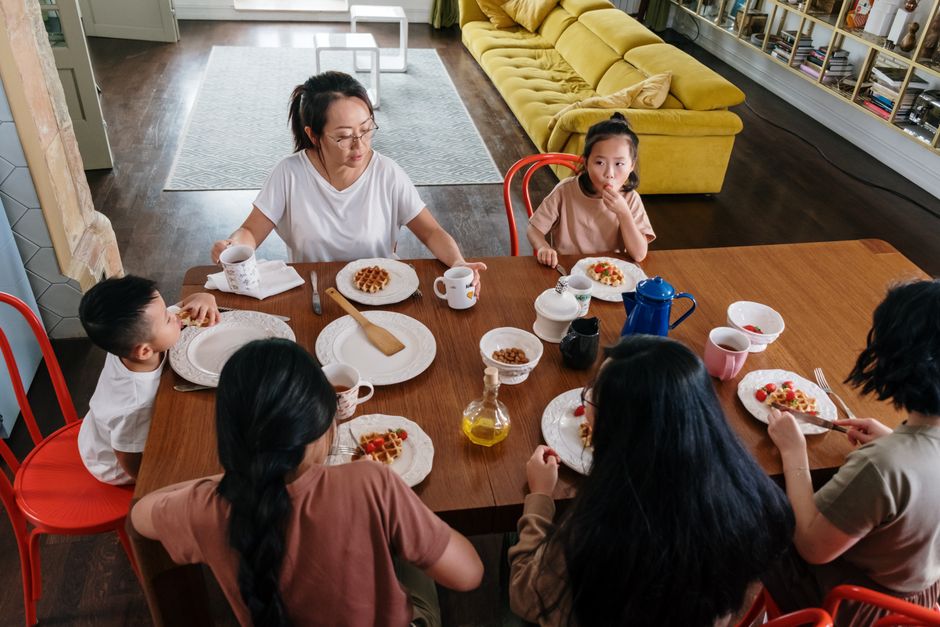
Serve and enjoy the chosen breakfast. While eating, reflect on the voting process. Ask how everyone felt about the outcome, especially those whose choice didn't win. Reiterate that even when their choice isn't selected, their participation is important for a fair group decision.
- Younger children: Name the winning breakfast item.
- Older children: Discuss if they think the process was fair, even if their choice didn't win.
- Ask them: "How did it feel to vote and then see the winner?"
- Ask them: "What did we learn about making choices when many people are involved?"
Know Before You Teach
- Good to know: Reflection helps cement learning and connect it to broader experiences.
- Understanding that fair processes are important even when personal outcomes aren't ideal is a key takeaway.
- It's working when: Children sharing their feelings or insights about the process, even if brief.
- If they're stuck: Revisit a specific moment in the activity: 'What was your favorite part of making our decision today?'
- Easier: Ask simply, 'Was our breakfast choice fair today?' and accept a yes/no answer.
Done when: Student shares at least one thought about the voting process or the fairness of the outcome.
Beyond The Spark
Fuel their curiosity beyond the Spark with bonus extras.
Table Talk
Governments and communities use voting to choose leaders and decide on important rules that affect everyone.
Did You Know?
Did you know that in ancient Greece, people voted by dropping colored pebbles into jars?
Challenge
What if there was a tie? Brainstorm ways to break a tie fairly, or create a 'second round' of voting between the tied options.
Quick Recap Quiz 4 min
Customize this quiz, add questions, or follow your child's lead! Each question has a 'Parent Tip' to help them find the answer without giving it away.
1. Why did we use voting to choose breakfast today?
- To let one person decide quickly.
- To make a fair choice when people had different ideas.
Remind them of the initial 'dilemma' and how voting helped resolve it respectfully.
2. What does 'fairness' mean in our breakfast vote?
- Everyone gets one vote and their say counts.
- The loudest person always gets their way.
Focus on equal opportunity and having a voice, not just the outcome.
3. If a breakfast cereal got the most votes, what do we call that group?
- The 'minority'.
- The 'majority'.
Reinforce that 'majority' means 'most' or 'bigger group'.
4. Besides choosing breakfast, what's another real-world example where voting helps make a fair decision?
- Choosing a class president or a mayor.
- A parent telling a child what to do.
Connect the small family decision to bigger community and government decisions.
Loved This Spark?
Scan to jump into the app and explore similar Sparks in our Sparks Hub. New to Mai? Start free with 10 Sparks, no credit card needed.