
The Rube Goldberg Challenge
Design and build your very own chain reaction machine using everyday objects! This challenge is all about creativity, problem-solving, and understanding how one small action can lead to a spectacular series of events.
Our goal: In this spark, your learner will design a multi-step chain reaction using simple machines and household items, apply concepts of cause and effect to predict and observe physical interactions and practice problem-solving and perseverance through iterative design and testing.
What You Need
Cardboard Tubes • Books • String • Small Balls • Dominoes • Spoons • Plastic Cups • Small Item • Small Bell • Tape • Scissors
and this is just the baseline.
Scan to jump into the app and easily personalize this Spark to match your child's exact learning level and see how Mai will guide this lesson.
Learning Guide
A simple guide to lead you through the kickoff, the core challenge, and everything in between.
Mai’s Tips
- Encourage failure as a learning opportunity. When a part doesn't work, ask 'What did we learn about how that object moves or pushes?' instead of 'What went wrong?'
- For younger learners, keep the machine simpler (2-3 steps). For older learners, challenge them to incorporate more complex transfers of energy or to solve a more specific, tricky 'end task'.
1Introduction 5 min
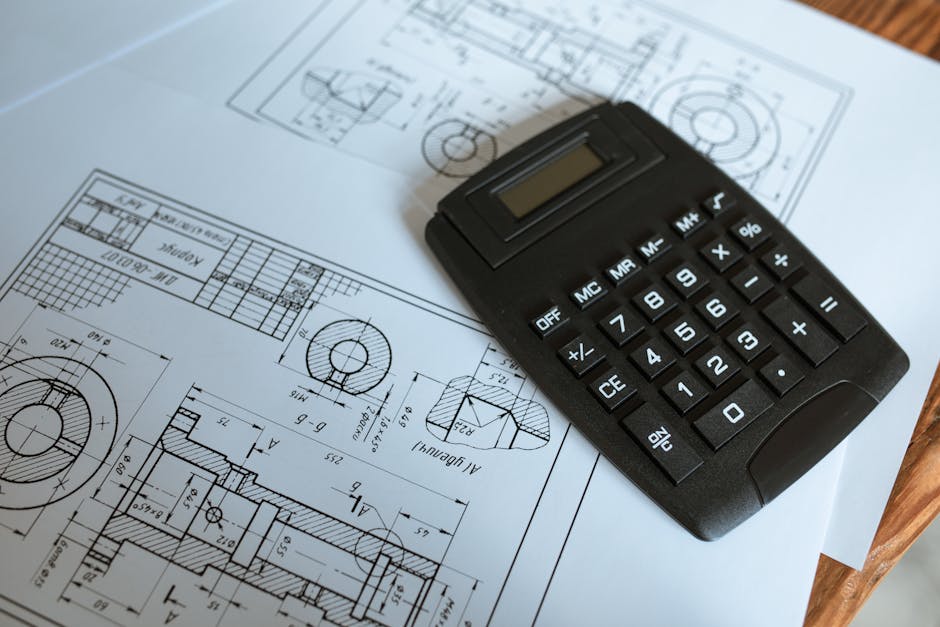
Start by explaining that a Rube Goldberg machine is a device designed to do a very simple task in a super complicated, silly, multi-step way using everyday objects. It's all about how one thing triggers the next. Then, introduce "cause and effect": when one thing (the cause) makes another thing happen (the effect). For example, kicking a ball (cause) makes it roll (effect). The opposite would be things happening randomly without a clear trigger. Understanding cause and effect helps us predict what will happen next. Ask: "What's an example of cause and effect you've seen today?" and "Have you ever seen something like a Rube Goldberg machine before?"
Done when: Student understands the basic concept of a Rube Goldberg machine and cause and effect.
2Explore & Plan 8 min
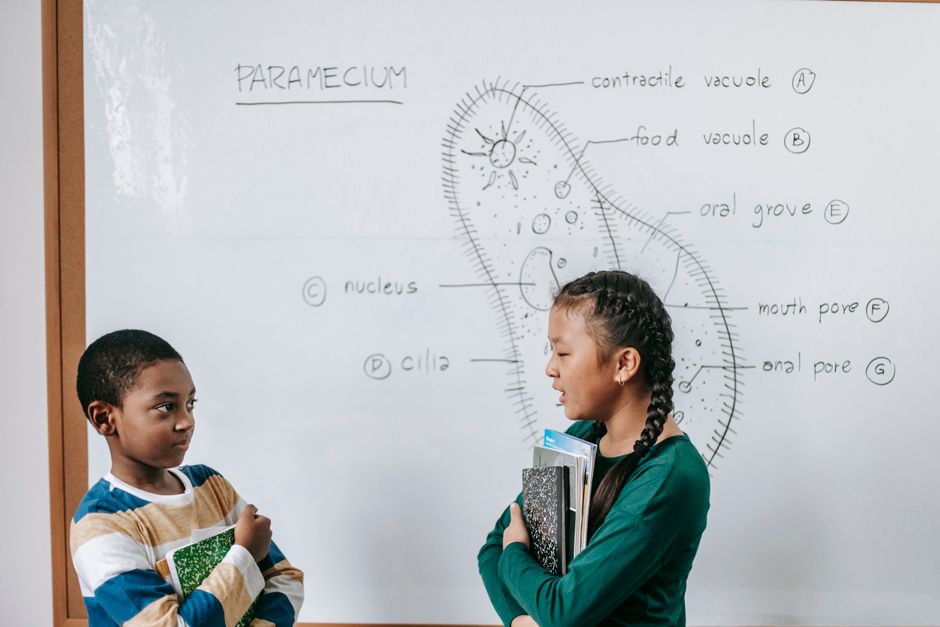
Work with your child to brainstorm a simple "end goal" for their machine, such as dropping a small item or hitting a bell. Ask: "What simple job will our machine do?" Next, encourage them to identify potential materials from around the house, like cardboard tubes, books, or small balls (see the 'Essentials' list for ideas). Ask: "What amazing household items could we use?" Help them sketch out a basic plan for their chain reaction, focusing on sequences by asking: "If this happens, then what?" Finally, gather all the selected materials together, making sure everything is ready for building.
Done when: Student has chosen a simple end goal and has a preliminary, even if rough, plan for their machine, and materials are gathered.
3Discussion 6 min
Review the brainstormed plan with your child. Ask specific questions to prompt thinking about their design choices and to encourage predicting outcomes. For example, ask: "Why did you choose to use the book here?" and "What will happen right after the ball rolls down this tube?" Encourage them to think about potential difficulties by asking: "What might be a challenge with this part of the design?" This helps them focus on how different parts will interact and practice early problem-solving.
Done when: Student can articulate how at least two steps in their planned machine will interact and can identify a potential challenge.
4Activity 9 min
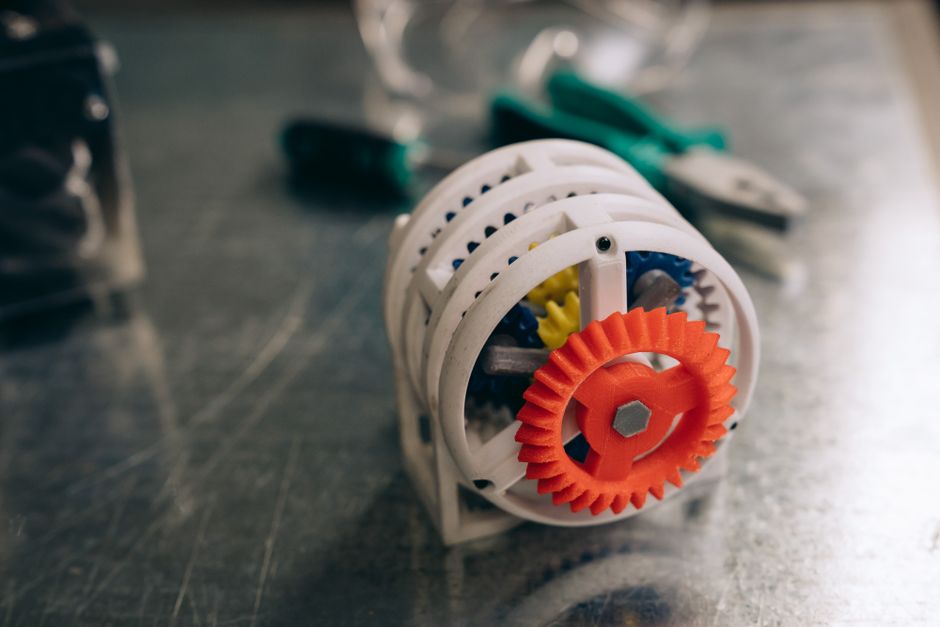
Now it's time to build! Encourage your child to start constructing their Rube Goldberg machine following their plan. Provide assistance with any tricky parts, like cutting tape with scissors (ensuring adult supervision for safety) or holding objects steady, but make sure your child leads the design and construction process. Emphasize the importance of testing each segment as they build it, rather than waiting until the end. Ask: "What will be your first step?" and encourage them to make adjustments as needed.
Done when: Student has constructed a multi-step Rube Goldberg machine (even if small) and has attempted to run it at least once.

5Summary 2 min
Celebrate your child's effort and ingenuity! Ask them to describe their machine and what they learned throughout the process. Ask: "What was the most surprising thing you learned or discovered today?" and "What was your favorite part of the whole process?" Reinforce the concepts of cause and effect, problem-solving, and perseverance. Perseverance means to keep trying even when things are difficult or don't work the first time – it helps us succeed. Problem-solving means figuring out how to fix something that isn't working or achieve a goal – it helps us invent and improve. Ask: "What did you have to change or fix along the way?"
Done when: Student shares at least one insight or favorite part from the building process.
Beyond The Spark
Fuel their curiosity beyond the Spark with bonus extras.
Table Talk
Engineers and designers use similar principles of planning, testing, and iterating to build everything from cars to roller coasters.
Challenge
Try to make your machine trigger a second, completely different Rube Goldberg machine, or integrate a simple pulley or lever into one of the steps!
Quick Recap Quiz 4 min
Customize this quiz, add questions, or follow your child's lead! Each question has a 'Parent Tip' to help them find the answer without giving it away.
1. What is the main idea of a Rube Goldberg machine?
- To do a simple task in the simplest way possible.
- To do a simple task in a very complicated and creative way.
Remind them about the 'overly complicated' aspect we discussed earlier.
2. When one thing makes another thing happen, what is that called?
- Cause and effect
- Start and stop
Think about what caused the ball to move, and what effect that had.
3. What is a good strategy when building a complicated machine like this?
- Build everything at once and hope it works.
- Plan it out and test each step as you go.
Ask them if they tested parts of their machine. Did that help?
4. What important skill did you practice when your machine didn't work the first time?
- Problem-solving and perseverance
- Giving up and starting a new project
Remind them of the changes they made and how they kept trying.
Loved This Spark?
Scan to jump into the app and explore similar Sparks in our Sparks Hub. New to Mai? Start free with 10 Sparks, no credit card needed.