
The Great Breakfast Barter!
Ever wondered how people got what they needed before money existed? This lesson explores the concept of value, trade, and fairness through a hands-on bartering activity using everyday breakfast items. Discover how different things can be worth different amounts to different people.
Our goal: Learners will understand how different items hold different value to people and practice making fair exchanges. They will learn to identify the worth of goods from various perspectives and explain the fundamental principles of trade and fairness in a hands-on way.
What You Need
Breakfast cereal • Fruit • Small toys • Plates/bowls • Cups • Milk • Breakfast items
and this is just the baseline.
Scan to jump into the app and easily personalize this Spark to match your child's exact learning level and see how Mai will guide this lesson.
Learning Guide
A simple guide to lead you through the kickoff, the core challenge, and everything in between.
Mai’s Tips
- Subjective Value: Remind the parent that a child's 'value' for an item can be very personal and not based on monetary cost. This is key to understanding bartering; one child might value a small toy over a piece of fruit, while another might do the opposite. Don't try to impose 'correct' value.
- Facilitation, Not Direction: The goal is for the children to lead the trades. The parent's role is to ask guiding questions like 'What do you think is fair?' or 'How can you convince them?' rather than suggesting specific trades or correcting their perceived value of items. Let them experience the challenge of negotiation.
- Simplifying for Younger Kids: If a younger child is struggling, reduce the number of items available for trade or simplify the choices. You could also start with a very clear, easy swap like 'your banana for my apple' to demonstrate the core concept before opening it up to more complex negotiation.
- Scaling for Older Kids: For older children, encourage more complex negotiations (e.g., trading multiple smaller items for one larger item, or trying to achieve a specific 'collection' of items). Challenge them to think about how they present their offer or how to persuade the other party.
Prep Before Session 5 min
- Gather various breakfast items (fruit, cereal) and a few small toys/household objects.
- Place a small plate or bowl in front of each participant.
- Distribute an initial set of items to each person, ensuring variety.
1Breakfast Bounty 5 min
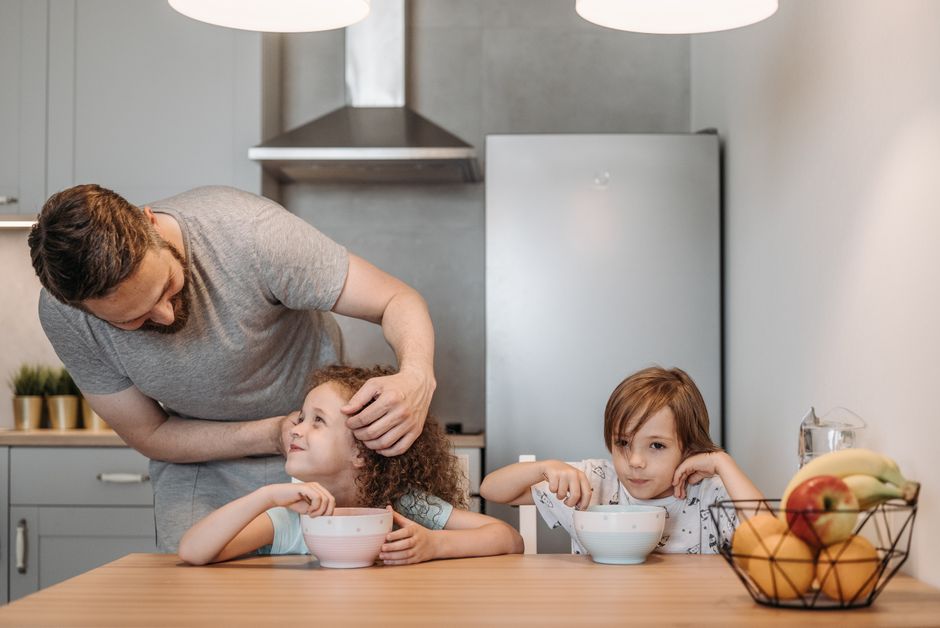
Start by having breakfast items on the table, along with a few small household objects or toys you've gathered. Invite the children to look at what everyone has. Encourage them to share their preferences and consider what others might want. Younger children can point and say 'mine!' or 'yummy!'. Older children can articulate reasons.
Know Before You Teach
- Good to know: This stage introduces the idea of 'having' and 'wanting' as the basis for trade.
- If they ask: Can I eat my favorite thing right now? Yes, you can! We're just thinking about them for now, but they're still yours.
- It's working when: Children pointing to items they like or dislike, and showing interest in what others have.
- If they're stuck: If children aren't engaging, ask direct comparisons: 'Do you like the apple or the banana more?'
- Easier: Focus on just one or two items for comparison.
- Harder: Ask them to imagine they could only keep one item and had to trade the rest.
Done when: Children have identified their favorite breakfast item and considered what they might be willing to part with.
2What's It Worth To You? 8 min
Explain the concept of 'barter' as direct exchange without money. Guide the children to identify items they would be willing to trade and what they desire from others. Have them think about why certain items hold different value for different people. Younger children can simply indicate preferences; older children can start explaining their reasoning.
Know Before You Teach
- Good to know: It relies on a 'double coincidence of wants' – both parties must want what the other has.
- The concept of value is flexible and personal in barter.
- If they ask: But why can't we just use money? Imagine a time before money was invented! How would people get food or clothes then? Bartering was the solution.
- If they're stuck: Suggest a simple hypothetical trade: 'If I wanted your apple, what would you want from me?'
- Easier: Provide very different items so preferences are clear (e.g., a sweet treat vs. a savory one).
- Harder: Ask them to explain why their item might be more valuable than another item from their perspective.
Done when: Children understand 'barter' as direct exchange without money and can identify items they'd like to trade.

3The Art of the Deal 6 min
Introduce 'trade' as the general act of exchanging things and 'fairness' as a key element. Guide a discussion on what makes a trade fair, emphasizing mutual satisfaction. Trade is giving something and receiving something else. Fairness in trade means both people feel happy with what they received. It's important because it builds trust and encourages more trades. Younger children can respond with 'yes' or 'no' to fairness; older children should articulate why.
Know Before You Teach
- Good to know: Trade is a broader term than barter; it includes exchanges with money.
- Fairness is crucial for successful and repeated trade interactions.
- Fairness doesn't mean equal value, but mutually agreeable value.
- If they ask: Is it fair if I get more pieces than they do? It can be, if both of you are happy with the trade! Sometimes one big thing is traded for several small things.
- Key words: Trade: The act of giving something and receiving something else in return.
- It's working when: Children discussing the terms of a hypothetical trade and expressing whether they feel it's balanced.
- If they're stuck: Offer an obviously unfair scenario (e.g., trading a big cookie for a tiny crumb) and ask if it's fair.
- Easier: Focus on whether both people are 'happy' with the trade.
- Harder: Ask them to explain how fairness builds trust between people who trade.
Done when: Student can explain the concepts of trade and fairness in their own words, applying them to potential scenarios.

4Let's Make a Deal! 9 min
Set up the bartering space and instruct children to negotiate trades for items they want. Step back and observe their interactions, only interjecting with guiding questions to help them think about fairness and strategy. Younger children may need more direct guidance in suggesting simple swaps. Older children should be encouraged to lead the negotiations independently.
Know Before You Teach
- Good to know: Negotiation involves making offers and counter-offers.
- Observing others' preferences helps in making successful trades.
- The goal is mutual benefit, not 'winning' by getting the most.
- If they ask: What if no one wants what I have? That can happen! Sometimes you have to be creative and offer more, or look for someone who has a different need.
- It's working when: Children communicating their offers and listening to counter-offers, making physical exchanges of items.
- If they're stuck: Suggest a possible trade for them to initiate: 'Maybe [Child A] would trade their banana for your grapes?'
- Easier: Model a very simple trade first, showing the give-and-take.
- Harder: Challenge them to try to get a specific item from someone who doesn't seem to want to trade it easily.
Done when: Children successfully complete at least one barter transaction and understand the concept of a mutually beneficial exchange.
5Reflect and Connect 2 min
Lead a reflective discussion on their bartering experience, focusing on what they learned and how it felt. Prompt them to connect the concepts of trade and fairness to real-world situations. Younger children can share their favorite new item. Older children can discuss negotiation tactics and the importance of mutual agreement.
Know Before You Teach
- Good to know: Reflecting on experiences solidifies learning.
- Trade is fundamental to how societies function globally.
- The skills of negotiation and understanding others' perspectives are valuable in many areas of life.
- If they ask: When do adults trade things? Every day! When you buy something at a store, you're trading money for goods. Even when people exchange ideas or help each other, it's a form of trade.
- It's working when: Children expressing enjoyment or frustration with the process, and being able to articulate one aspect of what they learned.
- If they're stuck: Ask them to simply show you what they ended up with and what they started with.
- Easier: Ask 'What was your favorite part of trading?'
- Harder: Ask 'What was one challenge you faced while trading, and how did you overcome it?'
Done when: Student shares one key takeaway about trade, barter, or fairness.
Beyond The Spark
Fuel their curiosity beyond the Spark with bonus extras.
Table Talk
Countries all over the world trade goods and services with each other every single day, just like you traded breakfast items, to get what they need and want.
Did You Know?
Did you know that the word 'salary' comes from the Latin word for salt? Roman soldiers were sometimes paid in valuable salt!
Challenge
Try another round of bartering, but this time, set a goal for each person, like 'get at least two pieces of fruit' or 'get something red'. This adds a layer of strategy to the negotiation.
Quick Recap Quiz 4 min
Customize this quiz, add questions, or follow your child's lead! Each question has a 'Parent Tip' to help them find the answer without giving it away.
1. What is it called when you swap things directly without using money?
- Buying
- Bartering
Remind them that bartering is specifically about swapping items, not using coins or bills.
2. If you trade your apple for a banana, and both you and your friend are happy, was that a fair trade?
- Yes, because you both agreed and are happy.
- No, because apples and bananas are different.
Fairness in trade is about mutual satisfaction, not identical items.
3. Why do people trade things with each other?
- To get things they need or want that they don't have.
- To get rid of everything they own.
Focus on trade as a way to fulfill needs and desires.
4. What could happen if people didn't trade fairly?
- They might not want to trade with each other again.
- They would trade even more often.
Discuss how trust and willingness to trade are built on fairness.
Loved This Spark?
Scan to jump into the app and explore similar Sparks in our Sparks Hub. New to Mai? Start free with 10 Sparks, no credit card needed.