
Story Architect Adventure
Discover the essential building blocks of any exciting story: characters, setting, and plot. Challenge yourself to design and create your very own mini-adventure by bringing these elements to life with imagination and creativity.
Our goal: In this spark, your learner will identify the main components of a story: character, setting, and plot, explain the role of each story element in creating a narrative and construct a simple story using tangible representations of story elements.
What You Need
Paper • Crayons • Scissors • Display Device
and this is just the baseline.
Scan to jump into the app and easily personalize this Spark to match your child's exact learning level and see how Mai will guide this lesson.
Learning Guide
A simple guide to lead you through the kickoff, the core challenge, and everything in between.
Mai’s Tips
- Encourage your child to describe their drawings and their story ideas aloud during the activity; this strengthens their narrative skills and vocabulary.
- If your child struggles with imagining a 'plot' (what happens), suggest a simple problem (e.g., character is lost, needs to find something, meets someone new) to help spark their imagination.
Prep Before Session 15 min
- Read through the entire lesson plan to understand the flow and key concepts.
- Gather paper, crayons, and scissors for the activity.
1Introduction 5 min
Begin by sparking their imagination about storytelling. Ask them to think about what makes a story exciting and real. Encourage them to brainstorm freely, prompting them with questions to explore their ideas:
* 'Who would be in your dream story?'
* 'Where would it take place?'
* 'What makes a story feel real and exciting to you?'
Listen to their initial thoughts without correction, allowing them to explore their ideas. This stage helps them connect to their own understanding of narratives. They are done when they share at least one idea about what makes a story.
Know Before You Teach
- Good to know: Engaging characters, interesting locations, and exciting events are what often make stories memorable and enjoyable.
- A story doesn't need to be long or complex to be exciting; even a simple idea can be a great start.
- If they ask: What's a story? A story is like an adventure you can read, hear, or watch, where someone does something somewhere.
- It's working when: The child offers an imaginative idea for a character, setting, or event.
- If they're stuck: Ask about their favorite character from a book or movie they love.
- Easier: Offer two very different types of characters, like 'a talking cat or a brave explorer,' for them to choose from.
- Harder: Ask them to describe not just who, but also what kind of personality their dream character might have.
Done when: Student shares at least one idea about what makes a story.
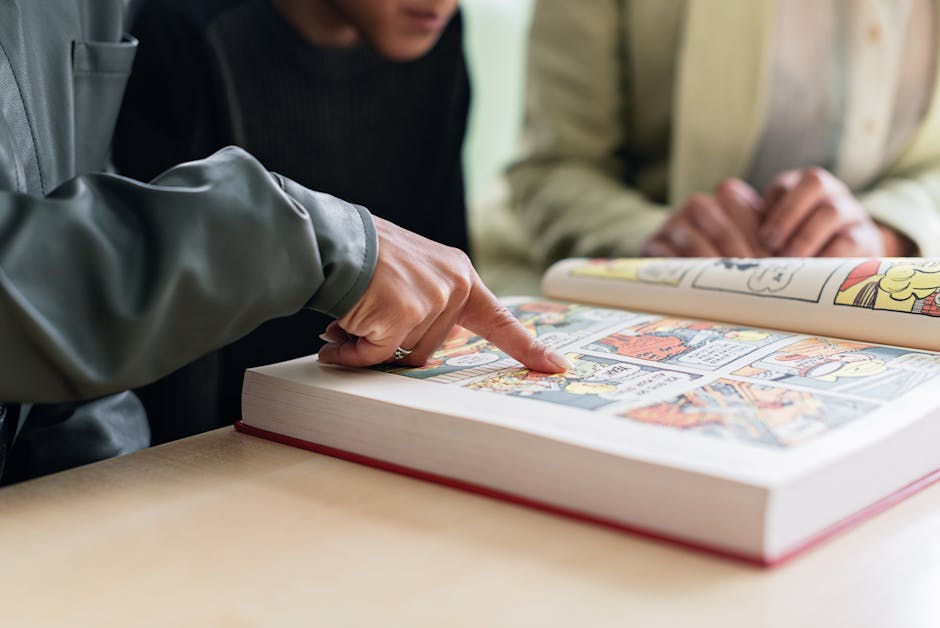
2Visual Learning: Story Blocks 8 min
Direct their attention to the screen and the image presented. Ensure they are actively observing. Guide their exploration of the image, pointing to different parts if they seem uncertain. Ask open-ended questions to encourage detailed observation:
* 'What do you notice here?'
* 'What colors do you see?'
* 'What stands out to you in the picture?'
* 'Who do you think are the important 'people' or 'things' in this picture?'
Encourage them to take their time and describe what they see. They are done when they engage with the image and describe a few elements they notice.
Know Before You Teach
- Good to know: Visual details in an image can give clues about who a story is about, where it's happening, and what might be going on.
- There isn't one single 'right' answer when observing; different people notice different things.
- If they ask: What am I supposed to see? Just tell me what catches your eye first, or something interesting you notice.
- It's working when: The child points to specific elements in the image and describes them.
- If they're stuck: Point to a clear object or person in the image and ask, 'What is this thing/person doing?'
- Easier: Focus only on asking about the colors or one big object they see.
- Harder: Ask them to describe the overall mood or feeling the picture gives them.
Done when: Student engages with the image and describes a few elements they see.

3Discussion 6 min
Engage them in a discussion about the image, focusing on key story elements. Introduce and explain core vocabulary:
A character* is the person, animal, or imaginary being the story is about. They are the 'who' of the story, making it interesting by their actions and personality.
The setting* is where and when the story takes place. It's the 'where' and 'when,' giving the story a place to unfold and feel real.
The plot* is the series of events or things that happen in the story. It's the 'what happens,' creating the adventure or problem.
Ask them to identify these elements in the picture:
* 'Can you tell me about the main character you spotted in the image?'
* 'And what about the setting – where does this story seem to be happening?'
* 'What do you think might happen next based on what you see in the picture?'
Encourage them to articulate their observations. If they struggle, ask clarifying questions like 'Why do you say that?' or 'What in the picture makes you think it's a [character/setting/plot]?' They are done when they can identify a character, a setting, and a potential event from the image.
Know Before You Teach
- Good to know: Characters, setting, and plot are the three most fundamental elements that make up every complete story, whether it's a book, a movie, or a game.
- Understanding these parts helps us both enjoy stories more and create our own.
- If they ask: Can characters be animals? Yes, many stories have animals, like talking bears or brave dogs, as their main characters.
- It's working when: The child attempts to use the words 'character,' 'setting,' or 'plot' when discussing the image.
- If they're stuck: Ask them about the main character in a very well-known story they love, like 'The Three Little Pigs' or 'Little Red Riding Hood'.
- Easier: Only focus on having them identify the character and setting from the image, skipping the plot element for now.
- Harder: After identifying the character, ask them to guess one thing that character wants or needs based on the picture.
Done when: Student can identify a character, a setting, and a potential event from the image.

4Activity 9 min
Prepare for the hands-on activity by setting out the required materials: paper, crayons, and scissors. Encourage them to brainstorm their story ideas before starting to draw. Remind them there's no 'right' way to be creative and simple drawings are perfect. They can cut out their drawings with scissors if they wish to make them more tangible. Guide them through building their story elements:
1. Character: Have them draw their main character. Ask: 'What kind of character will you create first? Who are they? What do they look like? What do they like to do?'
2. Setting: Next, have them draw or arrange a small space for their story's setting. Ask: 'Where does your character live, like a special treehouse or a cozy cave?'
3. Plot Idea: Finally, have them imagine and draw one exciting thing that happens to their character in their setting. Ask: 'What one exciting thing happens to start their adventure?'
They are done when they have completed their drawings or creations for their character, setting, and an initial plot idea.
Know Before You Teach
- Good to know: Drawing your own story elements helps to solidify the understanding of these concepts and empowers creativity.
- The goal is to visualize the ideas, not to create a perfect drawing.
- If they ask: What if I can't draw well? Simple shapes, stick figures, or even just writing a word for your idea is perfect; it's about the idea, not perfect art.
- It's working when: The child draws or describes a distinct character, a place, and a single event.
- If they're stuck: Suggest drawing a character based on their favorite toy or a setting based on their favorite room at home.
- Easier: Provide pre-drawn simple character outlines or setting backdrops they can color in or add details to.
- Harder: Ask them to draw their character making a choice or showing an emotion, and explain what is happening.
Done when: Student has completed their drawings/creations for their character, setting, and initial plot idea.

5Summary 2 min
Celebrate their effort and creativity in building their story elements. Reinforce the concept that they are now 'Story Architects' and understand how all stories are built. Ask open-ended questions to encourage reflection on their learning and process:
* 'How did it feel to be the architect of your own story?'
* 'What was your favorite part of bringing your character, setting, and plot to life?'
* 'What did you learn today about how stories are built?'
Connect their activity to the stories they hear or read, emphasizing that these elements are always present. They are done when they share one key takeaway or their favorite part of the lesson.
Know Before You Teach
- Good to know: Being a 'Story Architect' means you understand how to put together the basic pieces that make up any narrative.
- All the stories they read or watch were built by someone using these same building blocks.
- Key words: Story Architects: People who design and build stories by choosing characters, settings, and what happens.
- It's working when: The child can articulate one thing they liked about the activity or one new idea they learned.
- Easier: Ask them to simply show you their favorite drawing they made today.
- Harder: Ask them to explain how their character, setting, and plot idea work together to start an adventure.
Done when: Student shares one key takeaway or a favorite part of the lesson.
Beyond The Spark
Fuel their curiosity beyond the Spark with bonus extras.
Table Talk
Writers, movie directors, and even game designers use these exact story elements every day to create all the amazing tales we love.
Challenge
Create a second character for your story and imagine how they meet or interact with your first character, adding a new twist to your adventure!
Quick Recap Quiz 4 min
Customize this quiz, add questions, or follow your child's lead! Each question has a 'Parent Tip' to help them find the answer without giving it away.
1. What do we call the main 'person' or 'animal' in a story?
- A background
- A character
Remind them who the story is about.
2. Where does a story take place?
- The setting
- The plot
Ask: 'If you're in a park, is that where the story is happening?'
3. What do we call all the things that happen in a story?
- The characters
- The plot
Help them remember that the plot is the 'what happens next'.
4. Why is it important to have characters and a setting when you start a story?
- To know who the story is about and where it happens.
- To make the story really long.
Focus on the basics: 'Who' and 'Where' are key.
Loved This Spark?
Scan to jump into the app and explore similar Sparks in our Sparks Hub. New to Mai? Start free with 10 Sparks, no credit card needed.