
Spooky Fun Lanterns
This challenge invites learners to design and create a unique Halloween decoration that captures the spirit of 'spooky-fun'. Through hands-on crafting, they'll explore creative expression while understanding how design choices influence mood.
Our goal: Learners will understand how to identify and combine elements that create a 'spooky-fun' aesthetic. They will be able to design and construct a unique decorative lantern, explaining how their choices of materials, light, and shadow create different visual effects and moods.
What You Need
Empty clear jar or container • Tissue paper • Construction paper • Scissors • Glue • Markers • LED tealight or small flashlight • Optional decorations
and this is just the baseline.
Scan to jump into the app and easily personalize this Spark to match your child's exact learning level and see how Mai will guide this lesson.
Learning Guide
A simple guide to lead you through the kickoff, the core challenge, and everything in between.
Mai’s Tips
- Drying Time: Some glues, especially white school glue, can take a while to dry completely. If the child is keen to test immediately, suggest using tape for some elements, or a glue stick, or have a backup container ready for another try if they get frustrated waiting.
- Safety First: Always remind children about handling scissors safely. For glass jars, ensure they are stable and not likely to be knocked over, especially by younger children. Emphasize only using battery-operated lights, never real flames.
- Simplifying for age: For very young children (4-6), focus heavily on the 'fun' aspect. Pre-cut some basic shapes (circles for eyes, triangles for teeth) and let them focus on arranging and gluing. The discussion about light and shadow can be very simple: 'See how the light changes the look of your design?'
- Stretching for age: For older children (10+), challenge them to create more intricate cut-outs or multiple layers for complex shadow effects. Ask them to consciously manipulate light and shadow to create a specific emotional effect (e.g., 'Can you make it look more mysterious with shadow?'). Have them explain the physics of light blocking and diffusion in their own words.
1Introduction 5 min
Begin by asking the child about Halloween and decorations. Gauge their current understanding of 'spooky' and 'fun' in this context.
Know Before You Teach
- Good to know: Halloween traditions often involve decorating homes with themed objects.
- The concept of 'spooky-fun' balances mystery or eeriness with playfulness.
- It's working when: Child shows curiosity about Halloween decorations or expresses a desire to create.
- If they're stuck: Ask them about their favorite Halloween costumes or treats to spark interest.
- Easier: Focus only on 'fun' if 'spooky' feels too complex for them.
- Harder: Ask them to identify specific elements in existing decorations that create 'spooky' vs. 'fun'.
Done when: Student shares initial thoughts about Halloween decorations and the concept of 'spooky-fun'.
2Explore & Plan 8 min
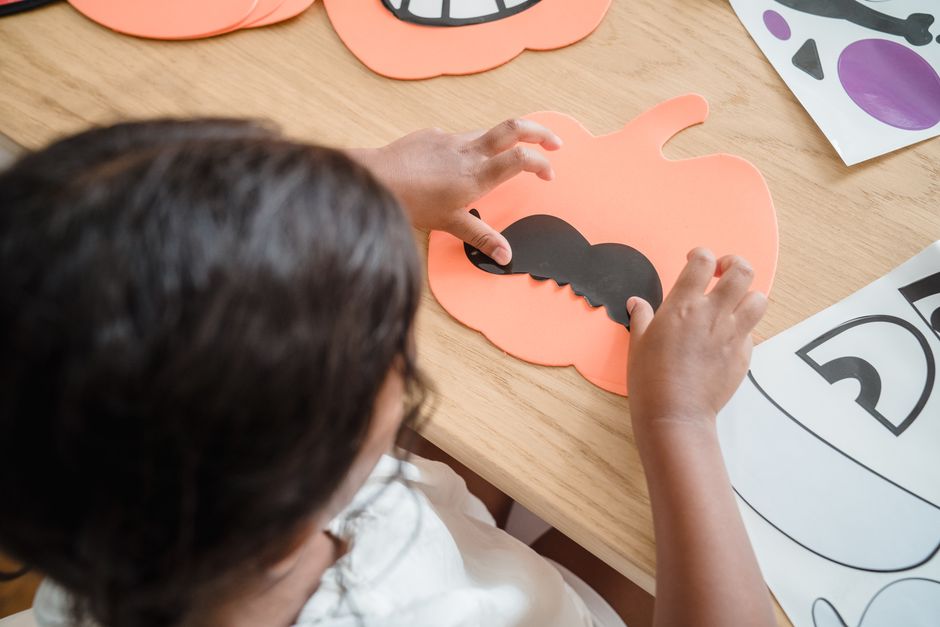
Introduce the core concept of 'spooky-fun' and guide the child in planning their lantern design using the available materials.
Know Before You Teach
- Good to know: Design choices (colors, shapes, textures) directly influence the mood of an object.
- It's working when: Child points to specific materials or shapes and explains how they contribute to 'spooky' or 'fun'.
- If they're stuck: Suggest combining two contrasting elements, like a dark bat shape with bright, friendly googly eyes.
- Easier: Provide pre-cut shapes and focus on assembling. Let them choose colors based on simple 'happy'/'mysterious' feelings.
- Harder: Challenge them to create a character that is only spooky-fun, avoiding anything purely scary or purely silly.
Done when: Student understands 'spooky-fun' and has a plan for their lantern design, choosing materials accordingly.

3Discussion 6 min
Deepen the understanding of how light and shadow specifically contribute to the 'spooky-fun' effect, connecting it to the child's design.
Know Before You Teach
- Good to know: Shadows are formed when an opaque object blocks light.
- Diffused light occurs when light passes through a translucent material, scattering it softly.
- Both shadows and diffused light can be used to create mood and special effects.
- If they ask: What's the difference between translucent and opaque? Translucent materials let some light through, making it spread out, like wax paper. Opaque materials block all light, making a clear shadow, like thick cardboard.
- It's working when: Child makes a connection between a material choice (e.g., tissue paper) and how light will pass through it.
- If they're stuck: Use a flashlight and your hand to demonstrate a shadow. Then shine it through a piece of tissue paper to show diffused light.
- Easier: Focus only on shadows: 'What shapes would make a cool shadow on the wall?'
- Harder: Ask them to predict the type of shadow (sharp, blurry) or diffused light (bright, dim) different materials will create.
Done when: Student can explain how shadows and diffused light contribute to the 'spooky-fun' effect, connecting it to their design.

4Activity 9 min
Guide the child through the hands-on creation of their lantern, offering support while encouraging independent work. Emphasize safety with tools.
Know Before You Teach
- Good to know: Crafting involves sequential steps and precise manipulation of materials.
- Iterative design allows for adjustments and improvements during the building process.
- If they ask: What if it doesn't look exactly like my plan? That's okay! Sometimes the best ideas happen when you're making things. What new 'spooky-fun' thing could we add now?
- It's working when: Child independently cuts, glues, and decorates according to their plan, or makes thoughtful adjustments.
- If they're stuck: Break down a complex step into smaller, manageable actions, or offer to help with a difficult cut.
- Easier: Pre-cut all shapes and focus entirely on arranging and gluing. Use a glue stick for less mess and faster adhesion.
- Harder: Challenge them to use layering with different materials to create depth or a more complex shadow effect.
Done when: Student has completed decorating their lantern and is ready to test it.
5Summary 2 min
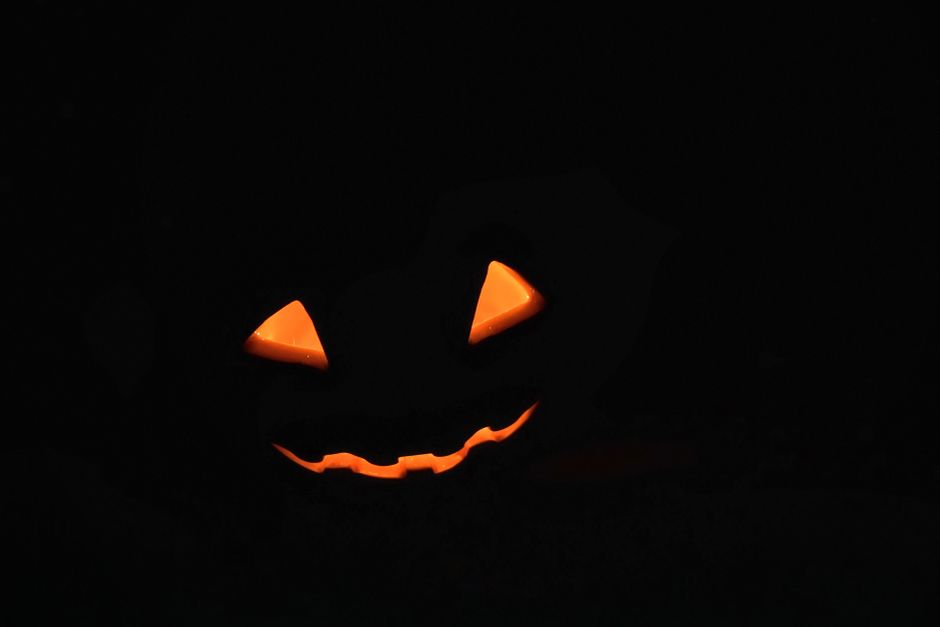
Celebrate the child's finished lantern and reflect on their learning and creative choices. Use the LED light to highlight the effect.
Know Before You Teach
- Good to know: Art and design evoke emotional responses.
- Reflection helps consolidate learning and encourages metacognition (thinking about thinking).
- If they ask: Why did my light look different than I thought? That's a great observation! What do you think might have caused it? Maybe the material was thicker, or the light source was closer?
- It's working when: Child articulates an observation about their lantern's appearance or their creative process.
- If they're stuck: Prompt with a 'Would you describe your lantern as more spooky, or more fun, or both?'
- Easier: Ask for one simple word to describe how their lantern looks or feels.
Done when: Student shares one key takeaway about their lantern or the process.
Beyond The Spark
Fuel their curiosity beyond the Spark with bonus extras.
Table Talk
Designers and artists use light and shadow every day to create moods and direct attention in movies, plays, and even store displays.
Did You Know?
A battery tealight stays cool to the touch because it turns much more of its energy into light, while a candle flame turns most of its energy into heat. That is why it is the safe choice inside a paper lantern.
Challenge
Create a 'spooky-fun' shadow puppet show using your lantern as a light source and new cut-out characters.
Quick Recap Quiz 4 min
Customize this quiz, add questions, or follow your child's lead! Each question has a 'Parent Tip' to help them find the answer without giving it away.
1. What makes something 'spooky-fun'?
- Only things that are scary
- A mix of mysterious and playful
Remind them of the definition: a bit eerie but also friendly and not truly scary.
2. What happens when light shines on an object and makes a dark shape?
- It creates a shadow
- It makes the object disappear
Prompt them to think about what happens when their hand is in front of a flashlight.
3. Which material would make light spread out softly (diffused)?
- Thick black paper
- Thin tissue paper
Ask them to imagine light through a window with curtains versus no curtains.
4. Why do we use LED lights instead of real candles in our lanterns?
- Because they are safer and won't cause a fire
- Because they are brighter
Emphasize safety with fire.
Loved This Spark?
Scan to jump into the app and explore similar Sparks in our Sparks Hub. New to Mai? Start free with 10 Sparks, no credit card needed.