
Spooktacular Halloween Design
Get ready to unleash your creativity and plan the most amazing Halloween celebration ever! This challenge will have you designing costumes, decorating ideas, and even a trick-or-treating strategy, all while learning real-world planning skills.
Our goal: Learners will understand how to brainstorm creative ideas for a multi-part event, like a Halloween celebration. They will be able to develop a detailed plan, demonstrating the importance of planning and prioritization for bringing their spooky visions to life.
What You Need
Paper • Pencils • Crayons/Markers
and this is just the baseline.
Scan to jump into the app and easily personalize this Spark to match your child's exact learning level and see how Mai will guide this lesson.
Learning Guide
A simple guide to lead you through the kickoff, the core challenge, and everything in between.
Mai’s Tips
- Managing Enthusiasm: Children often have grand, imaginative ideas. This challenge encourages them to think big, but the prioritization step (Stage 3) is key for gently guiding them toward what's realistically achievable. If they resist narrowing down, ask, 'If you could only pick one thing to make happen this Halloween, what would it be?' to help them understand trade-offs.
- Spotting Overwhelm: If a child seems overwhelmed by too many ideas or the detailing process, it might be that their working memory is overloaded. Instead of asking them to detail three things, suggest focusing on just one detail at a time, or offer a partially worked example ('What if we start with the hat for your wizard costume?').
- Simplifying for Younger Learners: For younger children, planning can be concrete. Focus on just one category (e.g., 'What costume do you want to wear and what will we need to make it?'). You can use physical objects or pictures to help them visualize rather than relying purely on drawing or writing. 'Easier' for them might be choosing from 2-3 options you provide, rather than generating all ideas themselves.
- Encouraging Detail for Older Learners: For older children, push for more specific details. Instead of 'a ghost costume,' ask 'What kind of ghost? How will it float? What material would be best?' For the trick-or-treating route, have them consider factors like safety, distance, and house density, not just 'go to houses.'
For The Grown-Up
- A common mix-up: Children often believe that all ideas are equally achievable, regardless of time, resources, or effort. They might think 'planning' is just thinking of ideas, not choosing and detailing them realistically.
- Try this: After they brainstorm a very ambitious plan (e.g., 'I want to be a robot, our house will be a haunted castle, and I'll visit 100 houses!'), ask them to imagine exactly what they'd need for just ONE part of that (e.g., the robot costume). As they list materials or steps, they often self-correct or realize the effort involved, leading them to naturally start prioritizing or simplifying.
- Explain it like this: Planning is like following a recipe to bake a cake. You need to know the ingredients (your ideas), the steps (what you'll do), and the order (when you'll do it). If you don't plan, your cake might not turn out the way you hoped, or you might forget a key ingredient!
- A big question to ask: Is it better to have a 'perfect' plan that might be impossible to achieve, or a 'good enough' plan that you can definitely make happen?
1Your Ultimate Halloween Challenge! 5 min
To kick off the challenge, ask your child about their favorite Halloween things and experiences. Focus on building excitement for creating their own ideal celebration.
Know Before You Teach
- Good to know: Halloween traditions vary greatly by family and region.
- Children often associate Halloween with specific events like trick-or-treating, costumes, or spooky stories.
- If they ask: Can we really do all these things? We're going to plan your dream Halloween today! Then we can see which parts are most important to try to make happen.
- It's working when: Enthusiastic sharing of ideas and memories, visible excitement.
- If they're stuck: Ask open-ended questions like 'What was the funniest Halloween you ever had?' or 'If you could have any costume, what would it be?'
- Easier: Focus only on one favorite aspect of Halloween (e.g., just costumes or just candy).
- Harder: Ask them to describe their 'perfect' Halloween in vivid detail, including senses (what it smells, sounds, feels like).
Done when: Child enthusiastically shares several favorite aspects of Halloween.

2Brainstorming Our Spooktacular Plan 8 min
Introduce the idea of 'planning' as thinking ahead. Guide your child to brainstorm ideas for costumes, decorations, and trick-or-treating. Explain that planning helps us achieve goals and not forget important things.
Know Before You Teach
- Good to know: Planning is a fundamental life skill that involves thinking ahead to organize tasks and achieve goals.
- Brainstorming is a key part of planning, where all ideas are welcomed without immediate judgment.
- If they ask: Do I have to do all these ideas? Right now, we're just collecting ideas! We'll choose our favorites later. No idea is too silly or too big for brainstorming.
- It's working when: A diverse range of ideas (even silly ones), initial enthusiasm for generating options.
- If they're stuck: Offer a prompt for each category: 'What's the scariest costume you can think of?' 'What would make our house look super spooky?' 'What's the best street for candy?'
- Easier: Provide picture cards of different Halloween items (costumes, decorations, candy) and have them sort their favorites.
- Harder: Ask them to consider who else might be involved (family, friends) and what their ideas for Halloween might be.
Done when: Child has brainstormed at least 2-3 ideas for each of the three Halloween categories.
3Making Our Plan Work! 6 min
Help your child understand 'prioritization' by guiding them to choose their favorite or most feasible ideas from their brainstormed lists. Emphasize that choosing helps focus energy.
Know Before You Teach
- Good to know: Resources (time, money, materials) are always limited, necessitating choices.
- Prioritization helps ensure that the most important or impactful goals are met first.
- Making trade-offs is a part of prioritization.
- If they ask: But I want to do ALL my ideas! It's wonderful to have so many creative ideas! We can still hold onto all of them, but today we're picking the ones that feel most important to make sure they definitely happen.
- It's working when: The child making a clear choice, even if reluctantly, and being able to explain why they picked certain ideas over others.
- If they're stuck: Present it as a fun challenge: 'If you had to pick just one costume to win a prize, which would it be?' or 'Which decoration would make the biggest difference?'
- Easier: Limit their choices to two ideas per category that you help them select.
- Harder: Ask them to justify their top choices based on criteria like 'most fun,' 'easiest to make,' or 'most unique.'
Done when: Child has selected a top 1-2 prioritized ideas for each of the three categories.
4Bringing Our Halloween Plan to Life 9 min
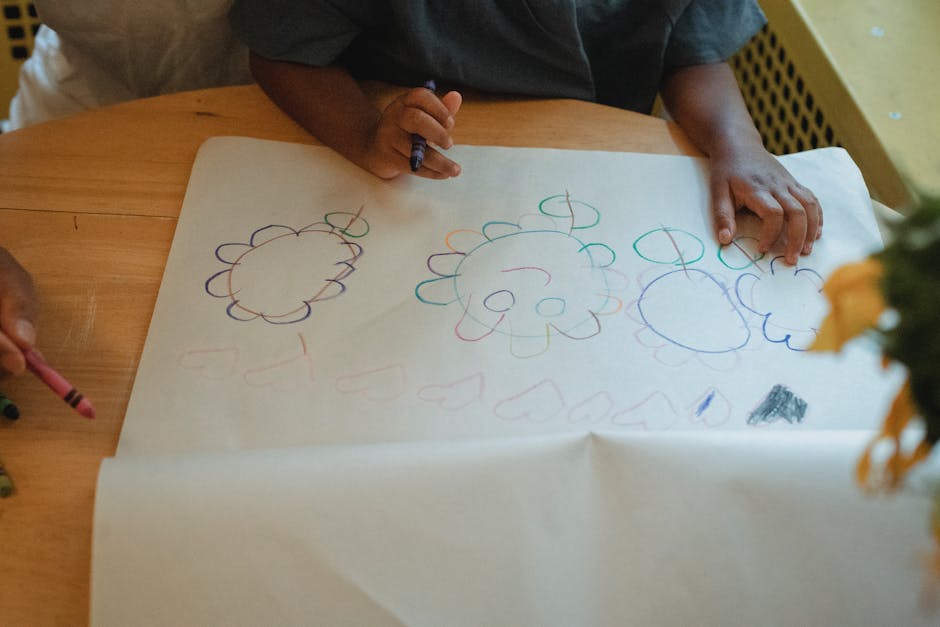
Provide materials and guide your child to detail their chosen ideas. Encourage sketching or writing specifics for one item in each category, such as a costume, decoration, and trick-or-treat route.
Know Before You Teach
- Good to know: A detailed plan helps visualize the final outcome and identify potential challenges.
- Breaking down a large idea into smaller, actionable steps makes it less daunting.
- If they ask: Do I have to draw it perfectly? No, this isn't about perfect drawing! It's about getting your idea onto paper so we can see the details and remember what you imagined.
- It's working when: Engagement with the task, adding details that weren't in the initial brainstorm (e.g., 'my ghost needs googly eyes').
- If they're stuck: Offer to start a sketch for them, or ask very specific questions: 'What color is it? Does it have pointy ears? Where would we put the lights?'
- Easier: Focus on just one category (e.g., only the costume) and use simpler descriptions or stick figures. You could also help draw for them while they dictate details.
- Harder: Challenge them to think about the 'materials list' or 'time needed' for each detailed item, pushing them further into realistic planning.
Done when: Child has detailed at least one idea from each category (costume, decoration, and trick-or-treating strategy) on paper.

5Our Masterpiece of a Plan! 2 min
Celebrate your child's completed Halloween plan. Encourage them to share their favorite parts and reflect on what they learned about the planning process.
Know Before You Teach
- Good to know: Reflection helps consolidate learning and build self-awareness.
- Sharing accomplishments builds confidence and communication skills.
- The planning process itself is valuable, regardless of the outcome of the plan.
- If they ask: Can we do this plan for real? This is a fantastic plan! The next step would be to look at what we need and when we need to do it. What part of your plan would be most fun to try first?
- It's working when: The child proudly presenting their plan, articulating what they enjoyed or found challenging in the process.
- If they're stuck: Ask 'What was one new thing you thought of today?' or 'What did you like best about making your own Halloween plan?'
- Easier: Simply have them point to their favorite part of the plan and say why.
- Harder: Ask them to identify one step of their plan that might be difficult to execute and how they might solve that challenge.
Done when: Child shares their favorite part of their Halloween plan or a key takeaway about planning.
Beyond The Spark
Fuel their curiosity beyond the Spark with bonus extras.
Table Talk
Learning to plan helps us organize events, manage projects at work, and even schedule our daily lives effectively.
Did You Know?
Trick-or-treating spread across the United States in the late 1940s and 1950s, once candy was no longer rationed after World War II.
Challenge
Design a Halloween party invitation that incorporates elements from your plan and makes people excited to come!
Quick Recap Quiz 4 min
Customize this quiz, add questions, or follow your child's lead! Each question has a 'Parent Tip' to help them find the answer without giving it away.
1. What is the main reason we make a plan before doing something big like Halloween?
- To make sure we have lots of random ideas.
- To organize our ideas and know what to do next.
Remind them that planning helps turn ideas into actions, step-by-step.
2. If you have 10 great costume ideas but only time for 1, what skill do you use to choose?
- Prioritization.
- Imagination.
Guide them to remember that 'prioritization' means picking what's most important.
3. You planned your trick-or-treating route. What's a good way to check if your plan makes sense?
- Just go outside and see what happens.
- Imagine walking the route and notice any problems.
Prompt them to think about 'testing' a plan, even if it's just mentally, before doing it for real.
4. Why might it be helpful for a baker to plan a cake recipe before starting to bake?
- To make sure they have all ingredients and know the steps.
- So they can change their mind about the cake while baking.
Relate it back to practical steps and avoiding mistakes.
Loved This Spark?
Scan to jump into the app and explore similar Sparks in our Sparks Hub. New to Mai? Start free with 10 Sparks, no credit card needed.