
Spiders' Electric Sky Journey
This lesson explores the incredible journey of baby spiders, revealing how these tiny creatures travel vast distances without wings. Through hands-on experiments, families will discover the invisible forces that help spiders 'fly' miles into the sky, fostering curiosity about the natural world and hidden science.
Our goal: Learners will investigate how light objects move without being touched, understanding basic electrostatic force. They will discover how baby spiders use natural electric fields to travel long distances through the air.
What You Need
Balloon • Tissue paper • Wool sweater • Cereal • Hair/Wool sweater
and this is just the baseline.
Scan to jump into the app and easily personalize this Spark to match your child's exact learning level and see how Mai will guide this lesson.
Learning Guide
A simple guide to lead you through the kickoff, the core challenge, and everything in between.
Mai’s Tips
- Discovery First: Allow children to experiment with the balloon and paper before you offer a full explanation of electrostatic force. Their curiosity from seeing things move 'magically' will make the explanation more impactful.
- Observational Nudge: If children are struggling to see the effect, remind them to make the tissue paper pieces very small and to bring the balloon very close, but not touching, to the paper. Sometimes a quick rub on a dry cloth can boost the static charge if hair isn't working well.
- Simplifying Static: If the concept of 'charge' is too abstract, you can simplify it to 'sticky energy' or 'invisible pull' that the balloon picks up. Focus on the observable effect rather than a deep dive into atomic physics.
- Balloon Handling: Remind children not to put the balloon in their mouths or try to pop it, especially younger ones. Ensure they rub it on dry surfaces only for best static generation.
1Breakfast Table Wonders: The Tiny Traveler 5 min
Begin by drawing attention to a small item on the breakfast table, like a piece of cereal or a crumb. This helps ground the abstract idea of tiny things traveling far. Encourage children to think broadly about how small things move and whether they can travel great distances without wings. Facilitate a short discussion, accepting all ideas.
Know Before You Teach
- Good to know: Many small animals have surprising ways to travel.
- Spiders don't have wings but can travel vast distances.
- If they ask: Do spiders have tiny parachutes? Not exactly parachutes made of fabric, but their silk can act a bit like one, especially with wind or electric forces.
- It's working when: Child shows curiosity about how something tiny can move far.
- If they're stuck: Ask them to imagine their own superpower for traveling without flying or walking.
- Easier: Focus on 'how far' a tiny crumb could go in the house.
- Harder: Ask them to consider the challenges a tiny creature faces when traveling long distances.
Done when: Student engages with the question and offers initial thoughts on how tiny things might travel.

2Explore & Plan: Invisible Movers 8 min
Shift the focus to spiders. Ask what they already know about how spiders move or what they create. Introduce the challenge: making a lightweight object move without touching it or blowing on it. Have them brainstorm materials (balloon, tissue paper, hair) and predict what might happen when these materials interact. This sets up the experiment for Stage 4.
Know Before You Teach
- Good to know: Spiders produce silk, which is very light and strong.
- Invisible forces can sometimes move objects without direct touch.
- It's working when: Child suggests materials for the experiment and makes a prediction.
- If they're stuck: Give hints: 'What about something light? What if we rub things together?'
- Easier: Just let them choose any light material and predict if it will move.
- Harder: Ask them to explain why certain materials (like silk vs. a rock) would be better for traveling by invisible forces.
Done when: Student identifies materials and makes a prediction about how they might get a light object to move invisibly.

3Discussion: The Electric Ride 6 min
After the child's initial explorations (or before the main activity if you prefer to explain first), define electrostatic force. Explain it's an invisible push or pull between things with electric charges. Use relatable examples like hair sticking to a balloon or static cling from laundry. Then, guide them to connect this concept to how spiders might travel using such invisible forces. Ensure they understand that 'charge' isn't visible, but its effect is.
Know Before You Teach
- Good to know: Electrostatic force is an invisible force of attraction or repulsion between charged objects.
- The Earth has a natural electric field that interacts with charged objects.
- If they ask: What is an electric charge? It's like a tiny, invisible property that matter can have, which makes it attract or push away other charged matter. Think of it like opposite sides of a magnet pulling together.
- It's working when: Child uses the term 'invisible force' or 'electric pull/push' when discussing how spiders move.
- If they're stuck: Relate back to the examples: 'How does the balloon make your hair stick up? Could a spider use that same 'stickiness'?'
- Easier: Focus on the idea of an 'invisible push or pull' without dwelling on 'electric charge'.
- Harder: Ask them to think about how this force is different from wind pushing something.
Done when: Student can explain what electrostatic force is in simple terms and connect it to how spiders might use it for travel.

4Activity: Making Our Spider Silk Fly 9 min
Guide the children through the static electricity experiment. Have them rub the balloon vigorously on their hair (or a wool sweater) to build up a charge. Then, slowly bring the balloon near small pieces of tissue paper, a thread, or even a very fine stream of water. Encourage them to observe what happens and try different distances or materials. Younger children can focus on making the paper 'dance,' while older children can try to explain why it's happening.
Know Before You Teach
- Good to know: Rubbing materials together can create static electricity (a buildup of electric charge).
- Opposite charges attract, causing light objects to move towards a charged object.
- If they ask: Why does it only work with certain things? Some materials are better at building up or holding an electric charge than others. Also, the object being attracted needs to be very light.
- It's working when: Child successfully makes the tissue paper move and expresses surprise or understanding.
- If they're stuck: Ensure the balloon is rubbed vigorously enough and that the pieces of paper are small and light. Make sure hands are dry.
- Easier: Focus on the sensory experience of making the paper 'dance' and the magic of it.
- Harder: Challenge them to see how far away they can still make the paper move, or to test different materials (e.g., a feather, a piece of string).
Done when: Student successfully moves the lightweight material using static electricity from the balloon.
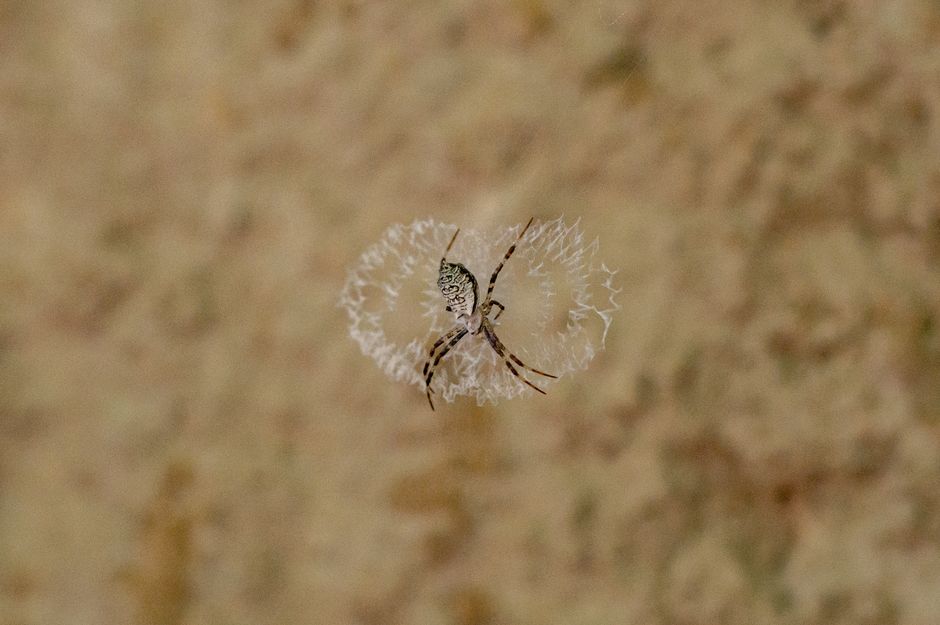
5Summary: The Three-Mile Journey 2 min
Conclude by celebrating their success with the experiment and revealing the astounding fact of how far baby spiders can travel using these forces. Ask reflective questions to help them connect what they observed to the real-world phenomenon. Younger children can simply express their awe; older children can discuss the implications of such invisible forces.
Know Before You Teach
- Good to know: Baby spiders can travel up to three miles high using atmospheric electric fields.
- This travel method is called 'ballooning' even though no actual balloons are involved.
- If they ask: Do they get blown away really far, or can they control it? While they do drift, they can sometimes sense when to release their silk to catch the best electric currents, giving them some control over their direction and landing.
- It's working when: Child expresses wonder or asks a follow-up question about invisible forces in nature.
- If they're stuck: Ask what other invisible things in the world might be helping animals or plants.
- Easier: Ask them to simply say what was the 'coolest' thing they learned today.
- Harder: Ask them to think about the advantages and disadvantages for a spider to travel three miles high.
Done when: Student shares one key takeaway or expresses surprise about the concept.
Beyond The Spark
Fuel their curiosity beyond the Spark with bonus extras.
Table Talk
Scientists are studying how insects and spiders use atmospheric electric fields, which could even inspire new tiny flying robot designs.
Did You Know?
Did you know some baby spiders can float as high as 3 miles in the sky?
Challenge
What other light, small objects can you find around the house that might be moved by the static balloon? Experiment and see!
Quick Recap Quiz 4 min
Customize this quiz, add questions, or follow your child's lead! Each question has a 'Parent Tip' to help them find the answer without giving it away.
1. How do baby spiders travel long distances without wings?
- They flap their legs really fast.
- They use electric fields in the air.
Remind them about the invisible force that moved the paper without touching it.
2. What is the invisible force that made the tissue paper stick to the balloon?
- Electrostatic force
- Gravity
Think about the special name for the 'sticky energy' the balloon picked up.
3. What helps spider silk interact with the air's electric field?
- Tiny wings on the silk.
- Electric charges it picks up.
Remember how the balloon picked up something invisible from rubbing?
4. How high can a baby spider travel using this method?
- Up to three miles high.
- Only a few feet off the ground.
Recall the surprising fact about their maximum travel height.
Loved This Spark?
Scan to jump into the app and explore similar Sparks in our Sparks Hub. New to Mai? Start free with 10 Sparks, no credit card needed.