Sleep: Your Dream Years
Discover how much of our lives we spend sleeping by charting a typical day and scaling it up to a lifetime. This activity helps us visualize time management and the importance of rest in a fun, tangible way.
Our goal: Learners will discover how much of their life is dedicated to sleep by charting a typical day and scaling it up over years. They will also gain an understanding of daily time management and the importance of rest through creating a personal routine chart.
What You Need
Plain paper • Markers • Child-safe scissors • Glue stick • Clock with hands • Breakfast cereal box
and this is just the baseline.
Scan to jump into the app and easily personalize this Spark to match your child's exact learning level and see how Mai will guide this lesson.
Learning Guide
A simple guide to lead you through the kickoff, the core challenge, and everything in between.
Mai’s Tips
- Scaling Time: The jump from a day to a year to a lifetime is very abstract. Don't expect perfect understanding of the large numbers. The goal is to grasp the proportion – that sleep takes up a significant chunk.
- Focus on Visuals: For younger learners especially, the visual representation (the chart) is key. Encourage drawing over writing. The act of physically dividing the paper and drawing helps them internalize the concept of time allocation.
- No Judgment: The chart is a tool for understanding, not a judgment of how they spend their time. Emphasize that all activities, including rest, are important parts of a healthy routine.
- Daily Context: If they struggle to recall their routine, use a clock with hands or recall specific parts of yesterday (e.g., 'What did you do after school?') to help them build their mental timeline.
1What Does Your Day Look Like? 5 min
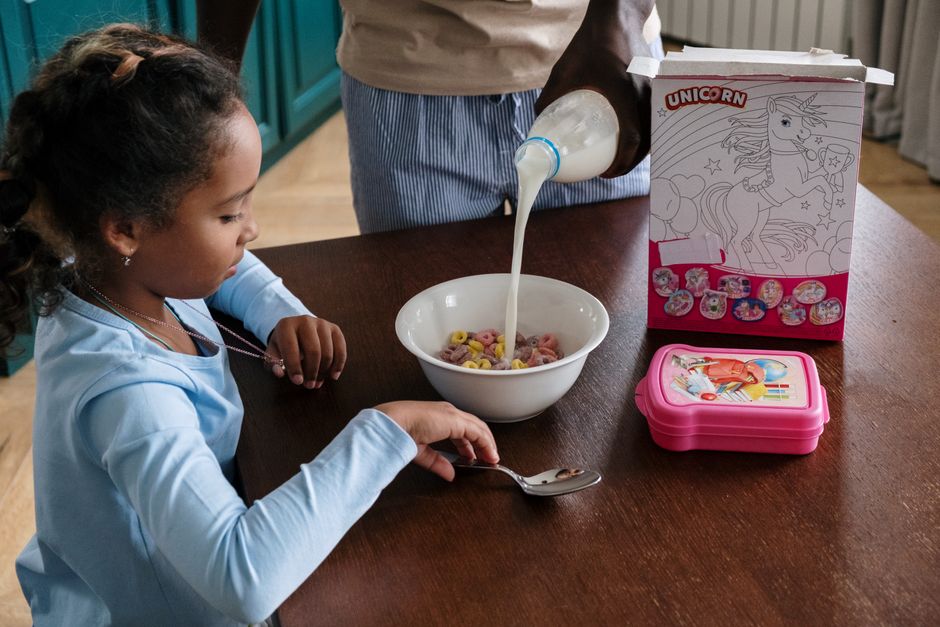
Have your child look at a common breakfast item, like a cereal box. Discuss their morning routine using this item as a starting point. Ask about what they do every day from waking up until now. For younger children, keep it simple, focusing on 2-3 actions. For older children, encourage them to think about the order and how one activity leads to another.
Know Before You Teach
- Good to know: Children's daily routines are often very structured, even if they don't realize it.
- Starting with a tangible item helps ground the discussion in their immediate experience.
- If they ask: Why do I have to do the same things every day? Routines help us know what to expect and make sure we get everything important done, like eating and sleeping!
- If they're stuck: Ask about one specific thing they did this morning: 'What was the very first thing you did after getting out of bed?'
- Easier: Focus on only 2-3 key morning activities (e.g., wake up, eat, get dressed).
- Harder: Ask them to estimate how long each morning activity takes.
Done when: Child describes at least 3 parts of their typical daily routine.
2Map Your 24 Hours 8 min
Discuss how to create a visual map of a full 24-hour day. Guide them to think about how to divide a piece of paper to represent the hours. Ask them to identify the longest continuous activity in their day, which is usually sleep. For younger children, focus on recognizing the big blocks of time (play, eat, sleep). For older children, encourage them to think about how many hours each activity takes.
Know Before You Teach
- Good to know: A 24-hour day is a fundamental unit of time.
- Sleep is typically the longest continuous block of time in a day for most individuals.
- If they ask: Do I have to do school on my chart? Yes, include all the big things you do during the day. It's your personal map!
- If they're stuck: Suggest drawing a big circle like a clock and thinking about how to divide it into sections.
- Easier: Help them draw a simple horizontal line divided into three parts: 'morning,' 'afternoon,' 'night' and ask what happens in each.
- Harder: Challenge them to think of 2-3 different ways to visually represent a 24-hour day (e.g., circular, linear, block).
Done when: Child has brainstormed how to represent a 24-hour day visually and identified sleep as a major daily activity.

3The Big Sleep Count 6 min
Explain 'average' as a typical amount and 'proportion' as a part of a whole. Guide your child to understand that if we sleep 8 hours out of 24, that's one-third of the day. For younger children, simply state the 1/3 proportion. For older children, help them calculate. Then, present the lifetime sleep number based on this proportion. Ensure you state the answer clearly after they've made their guess.
Know Before You Teach
- Good to know: The average person sleeps approximately 8 hours out of 24, which is one-third of the day.
- The concept of 'average' helps generalize patterns across many people.
- If they ask: Why do we sleep so much? Sleep helps your body grow, your brain learn and remember things, and gives you energy for the next day!
- Key words: Proportion: How much of one thing there is compared to the total amount, like how big your sleep slice is compared to the whole day pie.
- It's working when: The child making a guess about lifetime sleep that acknowledges it's a significant amount.
- If they're stuck: Use a physical object like an apple and cut it into three pieces to demonstrate 'one-third'.
- Easier: Focus on the 'one-third of the day' concept, and simply state the 26 years without detailed calculations.
- Harder: Ask them to calculate how many days a year are spent sleeping if we sleep 8 hours a day (365/3 ≈ 122 days).
Done when: Student can explain that a large portion of a day is spent sleeping and predicts (even if inaccurately) how much of a lifetime that would be.

4Build Your Routine Chart 9 min
Have your child create their visual daily routine chart. Provide paper, markers, scissors, and glue. Encourage them to draw or write different activities in sections on the paper, making sure to highlight the time spent sleeping. Younger children can draw simple pictures for activities. Older children can use more detail, write times, or even create a timeline.
Know Before You Teach
- Good to know: Allocating a specific section for sleep reinforces its importance.
- Using simple drawings or symbols makes the chart accessible and engaging for all ages.
- If they ask: Do I have to make it perfect? No, just make it clear enough so that you know what each part is. The effort is what matters!
- It's working when: The child actively drawing or writing different activities, especially ensuring sleep is represented as a large section.
- If they're stuck: Suggest drawing simple stick figures or symbols instead of detailed pictures for each activity.
- Easier: Pre-draw the sections on the paper for them and have them only fill in the activities with drawings or single words.
- Harder: Challenge them to create a key or legend for their chart, explaining what each color or symbol means.
Done when: Child has a completed visual daily routine chart with activities and a clear section for sleep.

5Your Lifetime of Zzz's 2 min
Have your child look at their completed chart. Ask them what they noticed about how they spend their time, especially focusing on the amount of sleep. Reflect on the '26 years of sleep' fact. For younger children, ask what they liked most about their chart. For older children, ask what new ideas they have about managing their time or why sleep is so important.
Know Before You Teach
- Good to know: Reflection helps consolidate learning and connect new information to personal experiences.
- Acknowledging the significance of sleep promotes self-care awareness.
- Visual tools can lead to new insights about daily routines.
- If they ask: What's the best time to go to sleep? Everyone is a little different, but most kids your age need about 9-11 hours of sleep to feel their best!
- It's working when: The child expressing surprise or a new understanding about sleep or time management.
- If they're stuck: Ask them what color they used for sleep and why, to get them talking about that section.
- Easier: Ask if they can name one thing they do every day that is important.
- Harder: Ask them how they might change their daily routine based on what they learned, or what they might tell a friend about sleep.
Done when: Student shares one key takeaway or thought about sleep or their daily routine.
Beyond The Spark
Fuel their curiosity beyond the Spark with bonus extras.
Table Talk
Understanding how we spend our time helps us make choices about priorities, like getting enough rest for health and focus, and is a key skill for time management.
Did You Know?
Did you know that whales and dolphins sleep with one half of their brain at a time, keeping one eye open to stay alert?
Challenge
Create a new chart for a weekend day, or design an 'ideal' daily routine. How would it be different?
Quick Recap Quiz 4 min
Customize this quiz, add questions, or follow your child's lead! Each question has a 'Parent Tip' to help them find the answer without giving it away.
1. About how much of a 24-hour day does the average person spend sleeping?
- Half of the day
- One-third of the day
Remind them of the 8 hours out of 24 calculation from Stage 3.
2. What is the best way to show how you spend your time each day?
- Tell someone your list of activities
- Draw a chart or map of your day
Refer back to the chart they just made and how visuals help us understand.
3. Why is it important to include sleep when you plan your day?
- It's the only time nothing important happens
- It helps your body and brain rest and grow
Discuss what sleep does for us (energy, learning, mood).
4. If you live for 78 years, approximately how many years might you spend sleeping?
- About 26 years
- About 78 years
Recall the large number from the 'Big Sleep Count' discussion.
Loved This Spark?
Scan to jump into the app and explore similar Sparks in our Sparks Hub. New to Mai? Start free with 10 Sparks, no credit card needed.