
Sink or Float Challenge!
This lesson challenges young learners to become detectives, predicting and testing which everyday objects will float and which will sink. It encourages observation and critical thinking through hands-on water play. Together, you'll discover the surprising science behind floating objects.
Our goal: In this spark, your learner will predict whether common objects will float or sink in water, observe and describe the behavior of objects placed in water and begin to understand simple concepts related to buoyancy through experimentation.
What You Need
Bowl • Water • Small Toy • Pebble • Leaf • Crayon • Small Block Of Wood • Coin • Cork
and this is just the baseline.
Scan to jump into the app and easily personalize this Spark to match your child's exact learning level and see how Mai will guide this lesson.
Learning Guide
A simple guide to lead you through the kickoff, the core challenge, and everything in between.
Mai’s Tips
- Encourage your child to use their own words to describe what they see happening. Their unique observations are valuable!
- If a child struggles to predict, ask them to compare two objects. 'Which one feels heavier in your hand, the leaf or the pebble? Do you think heavy things float or sink?'
Prep Before Session 10 min
- Find a clear bowl or small bin.
- Fill the bowl with water, about halfway.
- Collect 3-4 small, safe household objects (e.g., a plastic toy, a pebble, a leaf, a crayon, a small block of wood, a coin, a cork).
- Set up a space where water can spill safely, like a kitchen counter or outside.
1Introduction 5 min
Introduce the exciting world of "floating" and "sinking." Floating means an object stays on top of the water, like a toy boat, while sinking means it goes down to the bottom, like a heavy stone. Some things float, and some things sink because of how they are made and how much water they push out of the way.
* "Have you ever seen a toy boat floating on water, or a stone sinking to the bottom?"
* "What do you think 'float' means?"
* "What do you think 'sink' means?"
* "Why do you think some things float and others sink?"
Done when the child shows curiosity and grasps the basic difference between 'float' and 'sink'.
Know Before You Teach
- If they ask: Why does a boat float? Boats float because they are designed to push a lot of water out of the way, and they are mostly filled with air, which is lighter than water.
- It's working when: The child uses their hand to show 'up' for float and 'down' for sink when asked.
- If they're stuck: Hold up a light toy and a heavy spoon and ask, 'Which one do you think would float?'
- Easier: Only use actions: 'Show me what float looks like' and 'Show me what sink looks like' with their hands.
- Harder: Ask them to spot something in the room that floats, and something that sinks (e.g., 'Does your teddy bear float or sink in the bath?').
Done when: Student shows curiosity and understands the basic idea of 'float' vs. 'sink'.

2Explore & Plan 8 min
Help the child gather the necessary materials: a clear bowl filled with water, and 3-4 small household objects like a plastic toy, a pebble, a leaf, a crayon, a small block of wood, a coin, or a cork. Encourage them to touch and feel each object. Before testing, ask the child to make a "prediction" – a guess about what will happen – for each object.
* "Let's gather our detective tools: a bowl of water and some small objects."
* "What do you think 'prediction' means? It's a guess about what will happen!"
* "Before we put it in the water, what do you predict will happen to this [object name]?"
* "Will it float like a duck or sink like a rock?"
Done when all materials are gathered and the child has made a prediction for at least two objects.
Know Before You Teach
- If they ask: Are we going to build a boat? Not today, but we're going to be scientists and test if different things can float or sink, just like boats do!
- Easier: You make the prediction for each object, and the child gives a thumbs up (float) or thumbs down (sink) if they agree.
- Harder: Have the child sort the objects into two groups on the table: 'I think these will float' and 'I think these will sink' before any testing.
Done when: Student has gathered materials and made a prediction for at least two objects.
3Discussion 6 min
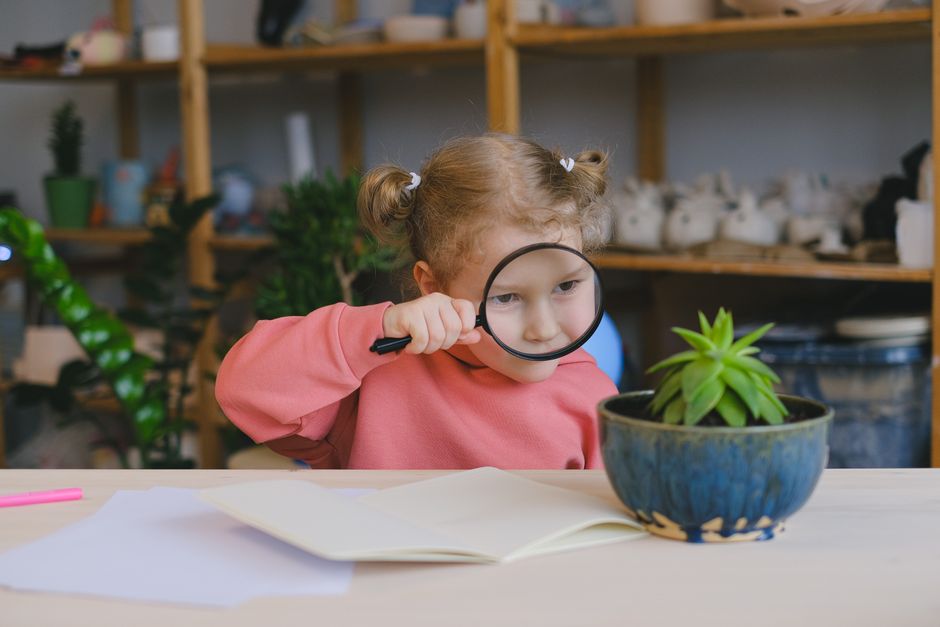
Encourage the child to explain the reasoning behind their predictions. Listen gently to their thoughts without correcting them, helping them articulate their initial ideas.
* "Why do you think the [object 1] might float/sink?"
* "And what about the [object 2], why do you think it might float/sink?"
* "Does one feel heavier or lighter in your hand than the other?"
Done when the child has offered a reason, even a simple one, for their predictions for at least two objects.
Know Before You Teach
- Good to know: Some objects have air inside them, which can make them float even if they seem a bit heavy.
- It's working when: The child points to a specific feature of the object (like its size or how it feels) when explaining their guess.
- If they're stuck: Offer two reasons: 'Do you think it will float because it's light, or sink because it's heavy?'
- Easier: You provide simple reasons for their predictions, like 'That feels light, so maybe it will float.'
- Harder: Ask them to find two objects that are about the same size but they think will do different things, and explain why.
Done when: Student has offered a reason (even a simple one) for their predictions for at least two objects.
4Activity 9 min
Supervise closely as the child carefully places each chosen object into the water, one by one. Encourage them to watch very carefully to observe its behavior. Ensure the area is safe for water play.
* "Carefully put the [object name] into the water."
* "Watch very, very closely! What happened?"
* "Did it float to the top or sink to the bottom?"
* "Was that what you thought would happen?"
Done when the child has tested all chosen objects and carefully observed their behavior.
Know Before You Teach
- Good to know: Scientists always watch very closely to see exactly what happens during an experiment.
- The way an object is placed in water (gently or dropped) usually doesn't change whether it floats or sinks, but it's still fun to observe.
- If they ask: Why did it splash? It splashed because you put it in quickly and pushed some water out! Did it float or sink after the splash?
- It's working when: The child leans in or squints their eyes to get a better look at an object in the water.
- If they're stuck: Gently guide their hand to place the object in the water, narrating 'watch what happens very carefully'.
- Easier: You place all the objects in the water while the child watches and reports what they see.
- Harder: After an object floats or sinks, ask them to try to make it do the opposite (e.g., 'Can you make the floating leaf sink without pushing it down?').
Done when: Student has tested all chosen objects and observed their behavior.

5Summary 2 min
Celebrate the child's efforts and the interesting discoveries made during the challenge. Ask them to reflect on their observations and gently guide them to connect their small experiment to larger real-world examples.
* "What was the most surprising thing you saw today?"
* "What did you learn about floating and sinking?"
* "Can you think of something big that floats, like a giant ship?"
* "How do you think it stays up?"
Done when the child shares at least one observation or learning from the activity.
Know Before You Teach
- Good to know: Density is a scientific way of describing how much 'stuff' is packed into a certain amount of space; objects less dense than water will float.
- If they ask: Can I float? Yes, you can! When you lie flat in the water, you spread out and push more water away, which helps you float.
- It's working when: The child points to an object they tested and says, 'This floated!' or 'This sank!'
- If they're stuck: Point to one object from the activity and ask, 'Do you remember what happened with the [object name]?'
- Easier: Just ask, 'What was your favorite thing we put in the water today?'
- Harder: Ask, 'If we had a big feather and a small rock, what do you predict would happen with them?'
Done when: Student shares one observation or learning from the activity.
Beyond The Spark
Fuel their curiosity beyond the Spark with bonus extras.
Table Talk
Engineers and boat builders use the science of floating to design ships that carry people and goods all over the world.
Challenge
Find some more objects in the house and predict if they'll float or sink, then test them! Can you find something that floats that you thought would sink?
Quick Recap Quiz 4 min
Customize this quiz, add questions, or follow your child's lead! Each question has a 'Parent Tip' to help them find the answer without giving it away.
1. What does it mean for something to FLOAT?
- Go to the bottom
- Stay on top
Remind them of the objects that stayed on top of the water.
2. What does it mean for something to SINK?
- Go to the bottom
- Stay on top
Ask them where the pebble went when you put it in the water.
3. If a tiny boat can float, what helps it stay on top?
- It is very, very heavy.
- It pushes water away to make space.
Talk about how boats are shaped to 'hug' the water and stay up.
4. Why do big ships that carry cars float?
- Their special shape and air inside helps them float.
- They are made of super light invisible material.
Remind them that even big, heavy things can float if they are shaped right and have air inside.
Loved This Spark?
Scan to jump into the app and explore similar Sparks in our Sparks Hub. New to Mai? Start free with 10 Sparks, no credit card needed.