
Shoelace Mystery Solved
Ever wonder why your shoelaces always come undone, especially when you're running? This spark challenges you to understand the hidden forces at play when you walk and run, and then use that knowledge to tie the most secure knot possible. Get ready to put your detective skills to the test and master a lifelong skill!
Our goal: Learners will understand the powerful forces that cause shoelaces to untie during activity. They will then master a secure knot technique and explain how friction keeps it tight, ensuring their shoes stay tied for good.
What You Need
An old shoe • Shoelaces
and this is just the baseline.
Scan to jump into the app and easily personalize this Spark to match your child's exact learning level and see how Mai will guide this lesson.
Learning Guide
A simple guide to lead you through the kickoff, the core challenge, and everything in between.
Mai’s Tips
- Focus on the why: This lesson isn't just about tying shoes, it's about understanding why they untie and how to prevent it using physics concepts. If the child is struggling with the tying motion, simplify by focusing on just one part of the knot, but keep asking about the forces involved.
- Common misconception: Children often think laces just 'randomly' come undone or they 'didn't tie it right'. The nuance here is helping them see that invisible forces from their own movement are actively pulling the knot apart, not just passive failure. Emphasize that the knot has to actively resist these forces.
- Simplify/Harden: For younger children, focus on the 'push and pull' of forces and the 'stickiness' of friction, and practice the simplest knot. For older children, introduce the specific numbers (7 units of gravity) and challenge them to explain why a 'square knot' is stronger than a 'granny knot' in terms of friction points and force distribution.
1Introduction - The Breakfast Table Mystery 5 min
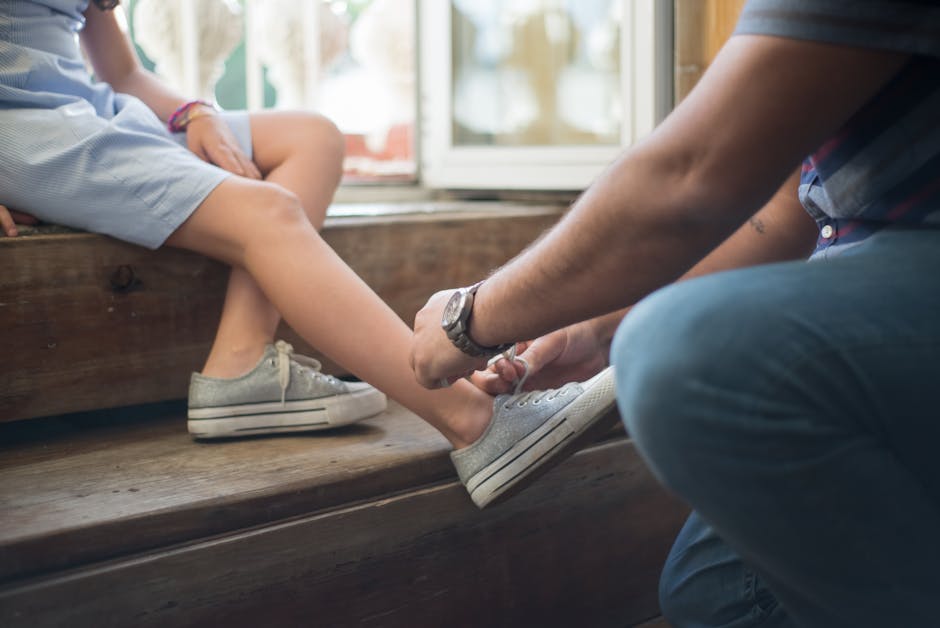
Start by having the child notice their own shoelaces (if wearing shoes) or a pair of laces on a shoe nearby. Ask them to share their experiences with untied laces and brainstorm initial ideas about why they might come undone.
- Have you ever had your shoelaces come undone when you were running or playing?
- Why do you think that happens? What makes them untie themselves?
Know Before You Teach
- Good to know: Shoelaces untie due to forces applied during movement, not magic.
- Children often perceive untying as accidental or due to poor tying skill.
- If they ask: Does it happen to everyone? Yes, even grown-ups have untied shoelaces! It's a common challenge because of how shoes and feet move.
- It's working when: Child shows curiosity about the mechanism of untying.
- If they're stuck: Ask about other things that come apart unexpectedly, like a button or a buckle.
- Easier: Just focus on identifying any instance of laces coming untied, without deep analysis.
Done when: Child shares an experience with untied laces and offers an initial guess about why they untie.
2Explore & Plan - Predicting the Untie 8 min
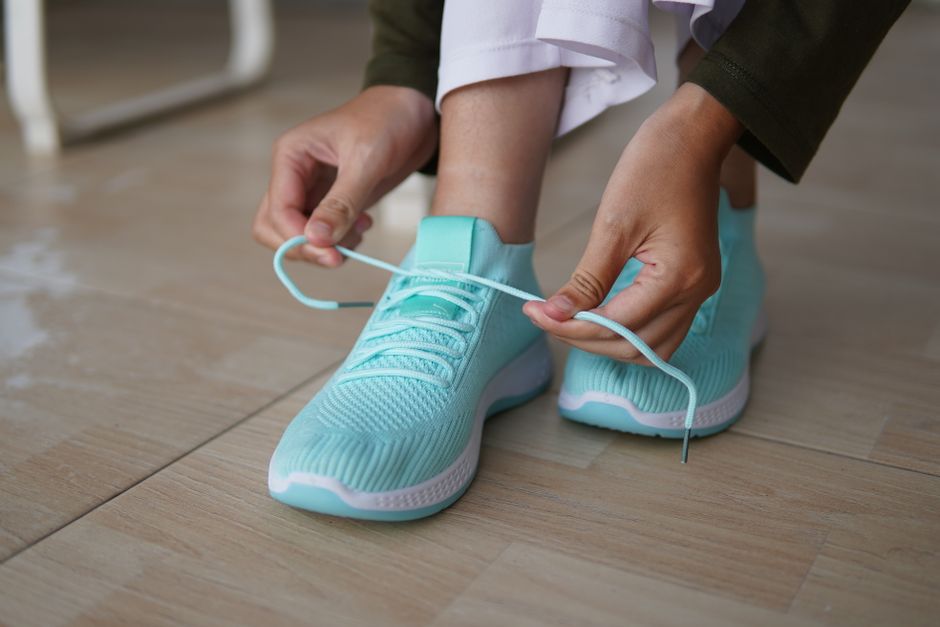
Lay out the shoelaces and the practice shoe (or substitute). Have the child examine the laces, pull on them, and try to make sense of their structure. Ask them to predict what actions or forces might cause a tied knot to loosen and eventually untie.
- What do you notice about how these laces are made? Are they smooth or bumpy?
- If you tied a knot, what do you think would make it loosen or come undone?
- What makes a knot stay tight?
Know Before You Teach
- Good to know: Laces have texture (friction) that helps them hold a knot.
- Movement creates tension and rubbing that can loosen a knot.
- If they're stuck: Suggest they try pulling on a loosely tied knot to see how it comes apart.
- Easier: Focus only on whether the laces feel 'strong' or 'weak' when pulled.
- Harder: Ask them to hypothesize what kind of lace material would be best for staying tied and why.
Done when: Child has examined the laces/shoe and made at least one prediction about how laces untie.
3Discussion - The Forces at Play 6 min
Here's what's happening: A force is a push or a pull that makes things move or change. You can see a force when something starts to move or changes direction. If a ball is rolling, a force made it move. Friction is a special kind of force; it's the 'stickiness' or 'grip' between two things that are rubbing. It's why your shoes don't slide on the floor. Without friction, things would just slip and slide! When you walk or run, many forces act on your shoelaces. When your foot hits the ground, it lands with about 7 times the force of gravity, and that stomp loosens the knot. Then each swing of your leg whips the loose ends and pulls the knot apart. Scientists found it takes both: the stomp alone or the swing alone didn't untie it. It's a constant tug-of-war!
- Can you think of a time you felt a push or a pull, like a force?
- How does friction help your shoes stick to the ground?
- How do you think running might create a 'force' on your shoelaces?
Know Before You Teach
- Good to know: Friction is a force that opposes motion between surfaces.
- If they ask: Is gravity a force? Yes! Gravity is the force that pulls everything down towards the center of the Earth.
- Key words: Friction: the invisible 'grip' or resistance when two surfaces rub together.
- It's working when: Child uses 'push', 'pull', or 'rub' in their explanation of forces and friction.
- If they're stuck: Use a simple 'tug-of-war' analogy: forces are pulling, friction is holding.
- Easier: Focus on the idea that 'shaking' or 'bumping' creates forces that loosen the knot, and 'stickiness' keeps it together.
- Harder: Discuss how the direction of the forces (e.g., side-to-side vs. up-and-down) affects the knot differently.
Done when: Student can explain the role of forces (push/pull from movement) and friction (holding the knot) in shoelace stability, even if in simple terms.
4Activity - Tying for Durability 9 min
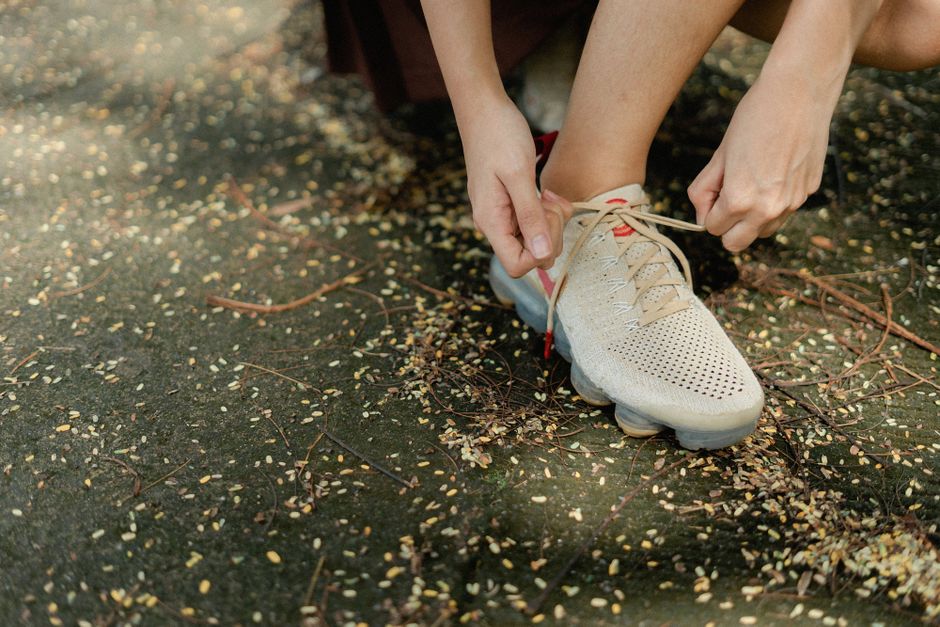
Guide the child through the process of tying a shoelace. You can use a common rhyme (like 'bunny ears') or method, focusing on making the initial knot tight and ensuring the loops are pulled firmly. Encourage repetition and practice. Younger children should focus on the basic motions of the knot. Older children can work on making a tight, even knot, and trying different methods to see which feels most secure.
- As you tie, how can you make sure the knot is really tight?
- What makes one part of the knot 'grip' onto another?
Know Before You Teach
- Good to know: A tight initial knot and firm loops increase friction within the knot.
- Consistent practice helps develop the motor skills for secure tying.
- It's working when: Child shows improved dexterity and confidence in tying, aiming for tightness.
- If they're stuck: Break the tying into smaller steps, focusing on one loop at a time. Guide their hands gently.
- Easier: Focus on just making the initial 'crossed knot' tight, then try to make just one loop, not the full bow.
- Harder: Challenge them to try tying with one hand, or tying a 'double knot' and explaining why it's more secure.
Done when: Student successfully ties a shoelace using the practiced method, with reasonable tightness and security.

5Summary - The Smart Shoelace 2 min
Celebrate the child's accomplishment. Ask them to reflect on what they learned about forces and friction, and how it applies to their everyday experience with shoes.
- What was the most surprising thing you learned about your shoelaces today?
- How will understanding forces and friction help you tie your shoes better now?
- What new skill did you master?
Know Before You Teach
- Good to know: Understanding the 'why' makes the 'how' more effective and memorable.
- It's working when: Child connects the tying skill back to the concepts of force and friction.
- If they're stuck: Ask them to describe their best-tied knot – what made it strong?
- Easier: Ask them to simply demonstrate tying their shoes confidently.
- Harder: Ask them to teach you the science of why laces untie, using their own words and examples.
Done when: Student shares one key takeaway about shoelaces, forces, or friction.
Beyond The Spark
Fuel their curiosity beyond the Spark with bonus extras.
Table Talk
Understanding how forces and friction affect objects is crucial in engineering, from designing safer roads to building resilient structures.
Did You Know?
When you run, your foot hits the ground with about 7 times the force of gravity. That stomp loosens the knot, and the swinging laces pull it apart. It takes both!
Challenge
Design your own shoelace tying rhyme or song that explains the forces at play, then teach it to someone else!
Quick Recap Quiz 4 min
Customize this quiz, add questions, or follow your child's lead! Each question has a 'Parent Tip' to help them find the answer without giving it away.
1. What causes shoelaces to untie while you're running?
- Invisible magic
- Forces from movement
Remind them about the pushes and pulls of running, like foot strikes and leg swings.
2. What is the 'grip' that helps a knot stay tight?
- Friction
- Gravity
Recall how friction makes things 'sticky' or resist sliding, like tires on the road.
3. If a shoelace knot feels loose, what's likely happening?
- It has too much friction
- Forces are overcoming friction
Think about the tug-of-war between the forces pulling on the laces and the friction holding them.
4. How can you make your shoelace knot more secure?
- Tie it tightly and evenly
- Tie it very loosely
Connect back to the activity – what made your practiced knot strong?
Loved This Spark?
Scan to jump into the app and explore similar Sparks in our Sparks Hub. New to Mai? Start free with 10 Sparks, no credit card needed.