
Secret Agent Chemistry
This lesson turns everyday red cabbage into a secret spy tool, revealing hidden chemistry in your kitchen. Discover how liquids can change color based on their chemical properties, and use this knowledge to create invisible ink that only a family member can reveal! Needs 15 minutes of adult prep first: steep chopped red cabbage in hot water, then strain and cool it to make the indicator liquid.
Our goal: In this spark, your learner will observe and describe chemical reactions using a natural pH indicator, predict and test the acidity or basicity of common kitchen liquids and apply knowledge of pH to create and reveal an invisible ink message.
What You Need
Red Cabbage • Water • Heat-Safe Bowl • Kettle • Strainer • Clear Cups • Lemon Juice • Baking Soda • White Paper • Cotton Swabs • Paintbrush
and this is just the baseline.
Scan to jump into the app and easily personalize this Spark to match your child's exact learning level and see how Mai will guide this lesson.
Learning Guide
A simple guide to lead you through the kickoff, the core challenge, and everything in between.
Mai’s Tips
- Safety First with Food Clues: When discussing acids tasting sour or bases tasting bitter, emphasize that this is a clue for familiar foods like lemons or baking soda. Explicitly remind the child that they should never taste unknown chemicals, especially during an experiment. This prevents accidental ingestion of non-food items if they extend the exploration.
- Stain Alert: Red cabbage juice can stain fabric, countertops, and hands. It's crucial to work on a wipeable surface (like a tray or newspaper) and have paper towels handy. Mention this at the start of Stage 2 as they are setting up the cups to prevent accidents before they happen.
- Invisible Ink Troubleshooting: If the baking soda message isn't completely vanishing, suggest using less baking soda or more water for a thinner solution next time. If the reveal is too faint, suggest writing the message twice over the same spot for a stronger concentration. If no other family member is available for the reveal, you can take on the role yourself, emphasizing the surprise element as you 'discover' the hidden message.
- Pre-Lesson Prep is Key: The success of this lesson hinges on having the red cabbage indicator completely prepared and cooled before the session begins. Hot indicator liquid can be a safety hazard, and a warm solution might not produce as vibrant color changes. Plan for the 15-20 minutes of steeping and cooling time required.
Prep Before Session 15 min
- Chop about a quarter of a red cabbage.
- Place chopped cabbage in a heat-safe bowl or pitcher.
- Pour hot water over the cabbage until fully covered.
- Let steep for 10-15 minutes until water is deep purple.
- Strain the liquid to remove cabbage pieces.
- Let the liquid cool completely.
1Introduction 5 min
Before the session begins, ensure you have chopped about a quarter of a red cabbage, steeped it in hot water until it turned deep purple, strained the liquid to remove cabbage pieces, and let it cool completely. This cooled purple liquid is your pH indicator for the lesson.
To start the mission, tell your child you have a top-secret mission to uncover hidden chemistry. Ask them to be a super detective and brainstorm ideas. Encourage them to think creatively, reassuring them there are no wrong answers.
Ask them: "What kind of magical liquid do you think could change its color all on its own, just by adding something to it?"
Then ask: "What are your initial thoughts, secret agent?"
Done looks like: Your child has offered at least two guesses about how a liquid might change color, showing initial curiosity and engagement.
Know Before You Teach
- Good to know: It contains a special pigment called anthocyanin that reacts to the chemical properties of other liquids.
- If they ask: What is a secret agent? A secret agent is like a special detective who solves mysteries using clever tools and observations.
- If they ask: Is it really magic? It might look like magic, but it's actually science! The liquid has a natural ingredient that acts like a detector.
- Key words: pH indicator: a special liquid that changes color when it mixes with different substances to show if they are acidic or basic.
- It's working when: The child uses their imagination, offering at least two distinct and creative ideas.
- If they're stuck: Ask if they've ever seen a drink change color, like when you add lemon to tea.
- Easier: Offer two specific liquids (e.g., lemon juice, milk) and ask if either might make the cabbage juice change color.
- Harder: Ask them to predict if adding a fizzy drink or a sweet drink might make the liquid change color, and why.
Done when: Student has offered at least two guesses about how a liquid might change color, showing initial curiosity and engagement with the spy mission theme.
2Explore & Plan 9 min
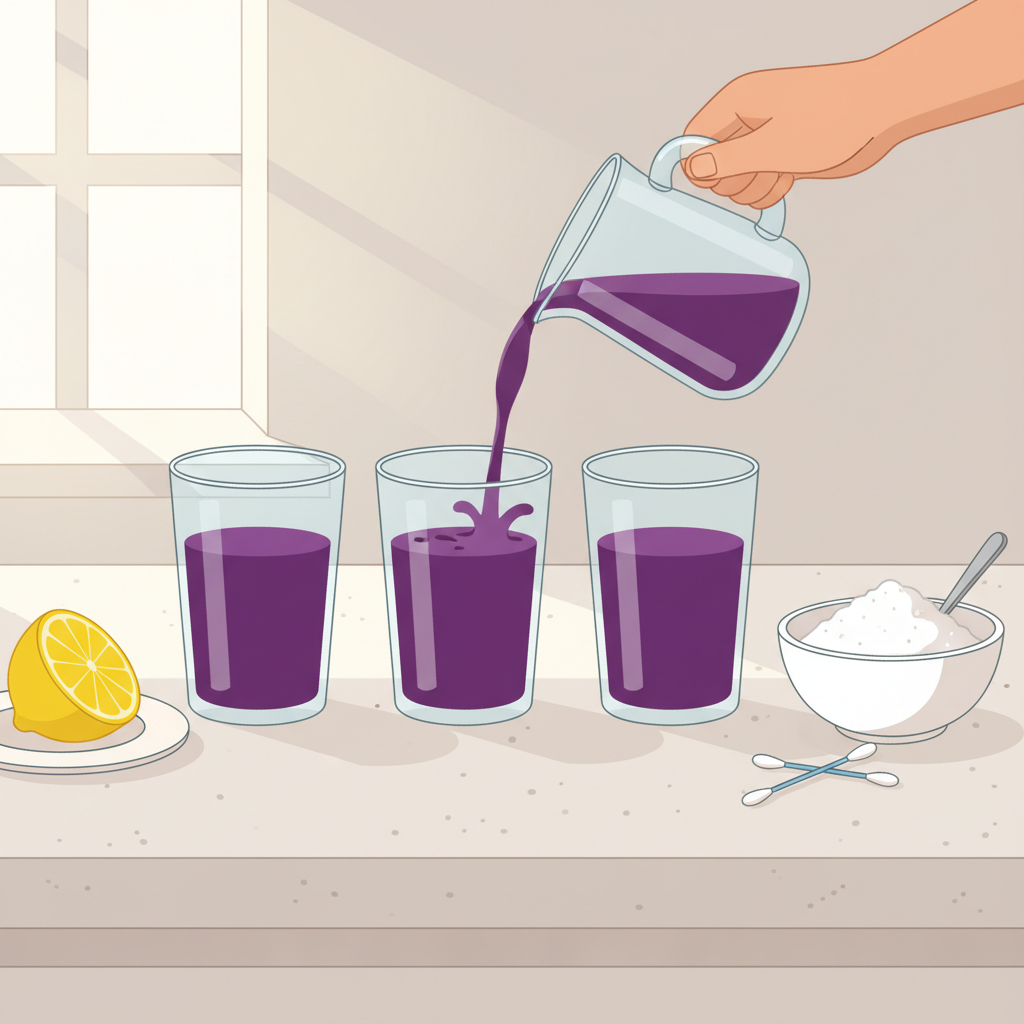
First, a safety reminder: red cabbage juice can stain fabric and surfaces, so work on a wipeable surface and have paper towels ready. Also, remind your child not to taste unknown chemicals. Help your child set up the lab by having them pour roughly equal amounts of the cooled purple cabbage juice into three clear cups. Designate one cup as the 'control' – it will remain untouched so you can compare the original color.
Next, ask for predictions: "What do you think will happen when you add a squeeze of lemon juice to Cup 2?"
Then ask: "And what about when you add a spoonful of baking-soda water to Cup 3?"
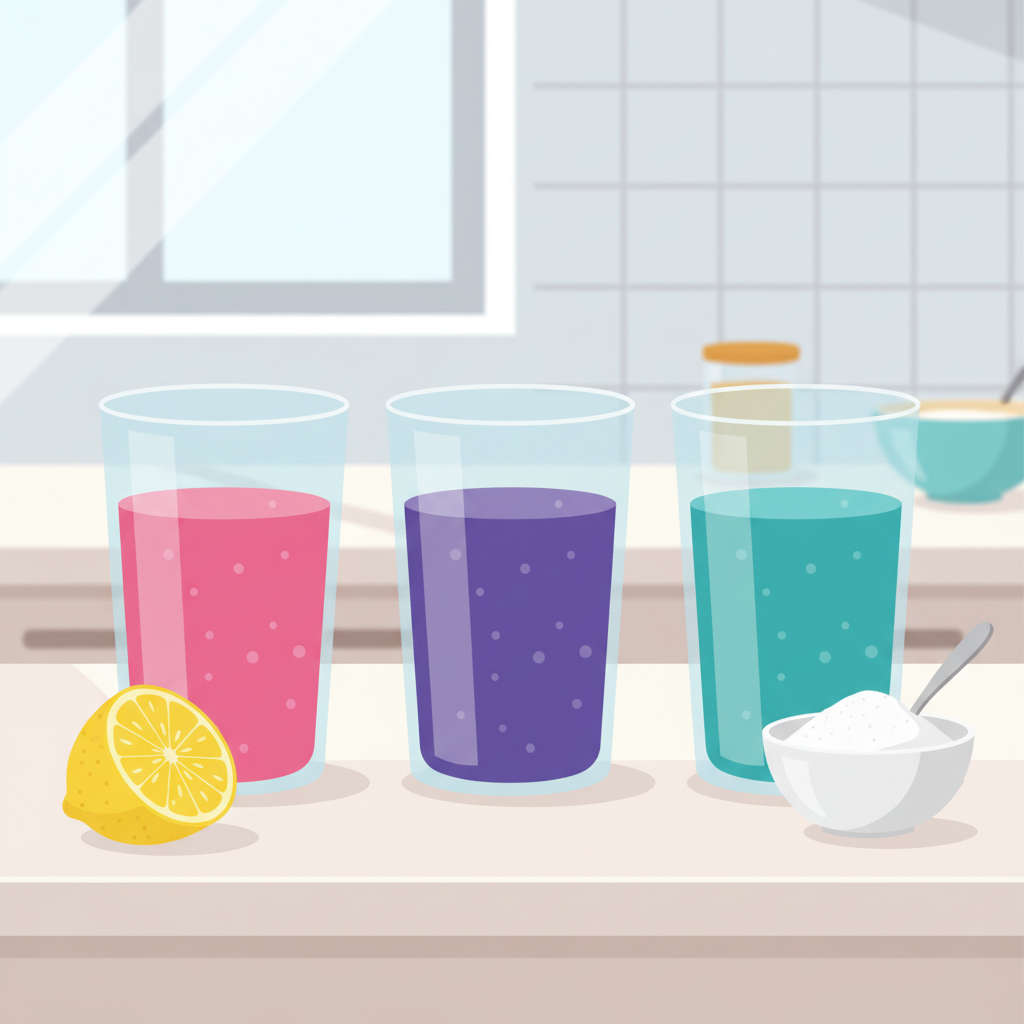
Guide them to add a squeeze of lemon juice to Cup 2 and a spoonful of baking-soda solution to Cup 3. Observe the color changes together.
Done looks like: Your child has correctly set up three cups with cabbage juice, made and verbalized a prediction for both lemon juice and baking soda effects, and then observed the actual color changes in both cups.
Know Before You Teach
- Good to know: Acids and bases cause different specific color changes in the red cabbage indicator.
- Key words: control: a part of an experiment that stays the same so you can compare everything else to it.
- Key words: prediction: a thoughtful guess about what will happen, based on what you already know or expect.
- It's working when: The child carefully pours the liquids and verbally states their predictions before adding the lemon juice and baking soda solution.
- If they're stuck: Ask them to describe the colors they see in each cup and how they are different from the control.
- Harder: Ask them to draw or write down their color predictions for each cup before adding the liquids.
Done when: Student has correctly set up three cups with cabbage juice, made and verbalized a prediction for both lemon juice and baking soda effects, and then observed the actual color changes in both cups.
3Discussion 6 min
Encourage your child to articulate their reasoning about the color changes you just observed.
Ask them: "When you added the lemon juice and it turned pink, do you think the lemon juice added the pink color, or do you think it changed something that was already there in the cabbage juice?"
Then ask: "What makes you say that?"
Explain that Acids are substances that often taste sour, like lemons or vinegar, and they make the cabbage juice turn pink or red. Bases are the opposite; they often feel slippery, like soap, or taste a bit bitter, like baking soda, and they make the cabbage juice turn blue or green. The cabbage juice has a special molecule that changes its shape, and its color, depending on the tiny charged particles around. This is why the color changed.
Now, have your child choose another common kitchen liquid to test (e.g., milk, soda, dish soap solution).
Ask: "What other liquid from the kitchen do you think we could test?"
And ask: "Based on what you just learned, what color do you predict it will turn?"
Help them test their chosen liquid carefully and observe the result.
Done looks like: Your child explains in their own words whether the color was 'added' or 'changed' based on evidence, correctly identifies acids and bases from the initial tests, and successfully picks and predicts the color change for one new kitchen liquid.
Know Before You Teach
- Key words: molecule: a tiny particle, too small to see, that everything around us is made of.
- It's working when: The child attempts to explain that the color was changed rather than added, and uses the terms 'acid' and 'base' correctly in context.
- If they're stuck: Point to the pink cup and ask: 'Do you remember what we called the liquid that made this color?'
- Harder: Ask them to explain why some liquids taste sour (acids) or feel slippery (bases) using their own words.
Done when: Student explains in their own words whether the color was 'added' or 'changed' based on evidence, correctly identifies acids and bases from the initial tests, and successfully picks and predicts the color change for one new kitchen liquid.
4Activity 9 min
Help your child prepare the invisible ink: mix a little baking soda with a tiny amount of water – just enough to make a runny paste or thick liquid. This is their invisible ink.
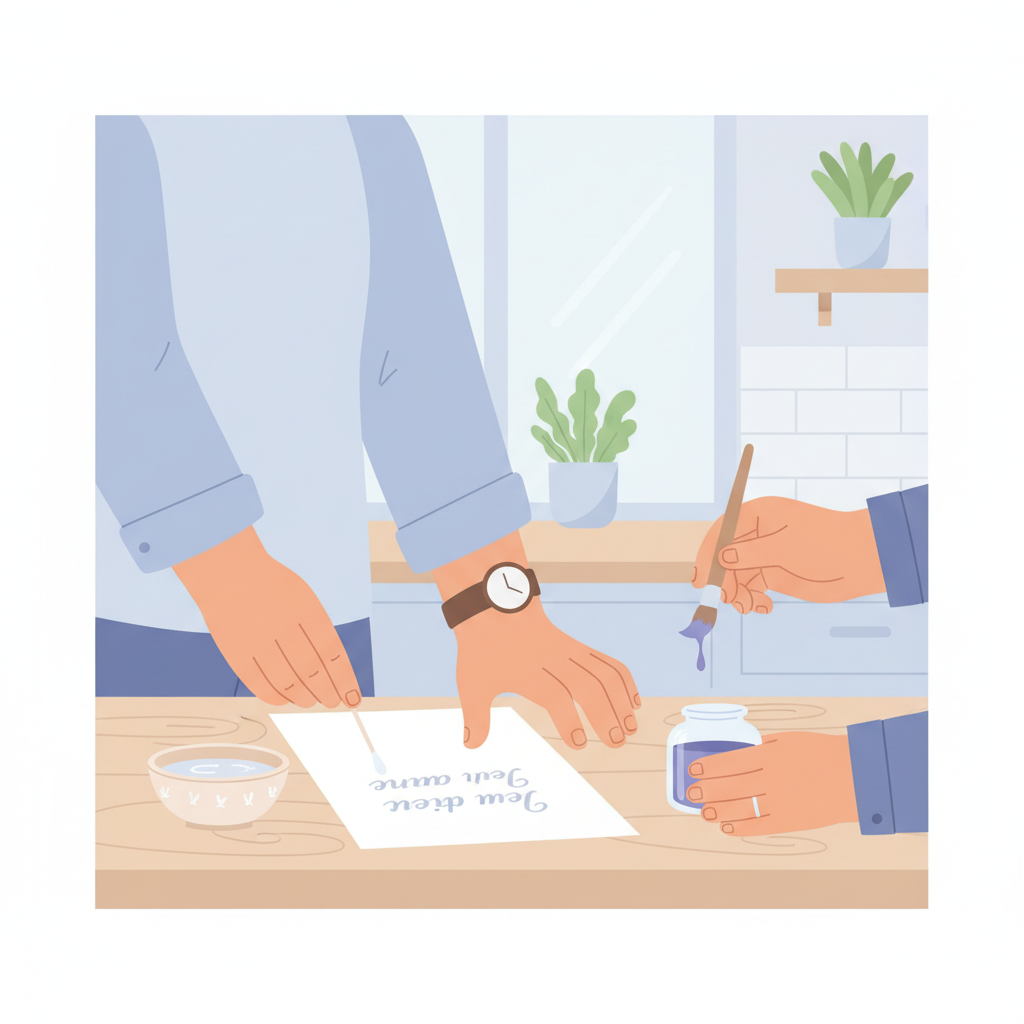
Guide them as they dip a cotton swab into the baking soda ink and write a short, secret message on a piece of white paper. Ensure they let the paper dry completely until the message vanishes and is totally invisible.
Now, for the reveal: provide the blank-looking paper and a paintbrush loaded with cabbage indicator to another family member (or you can play the role yourself). Have the family member paint the cabbage indicator over the paper to reveal the message, emphasizing the surprise element.
If the baking soda message isn't vanishing, suggest using less baking soda or more water next time. If the reveal is too faint, suggest writing the message twice over the same spot for a stronger concentration.
Done looks like: Your child has successfully written an invisible message using baking soda ink, allowed it to dry and vanish, and then had a family member reveal the message using the cabbage indicator.
Know Before You Teach
- Good to know: The message needs to be fully dry before it can be revealed to ensure it's truly invisible.
- If they ask: Why does the baking soda disappear when it dries? When the water evaporates, the tiny baking soda crystals that are left are too small and clear to be seen easily on the white paper.
- Key words: invisible ink: a special writing fluid that you can't see until another secret chemical is added to reveal it.
- It's working when: The child carefully writes a message and patiently waits for it to dry, showing excitement when the message is revealed.
- If they're stuck: Ask them to describe what they are hoping will happen when the cabbage juice is painted on the paper.
- Easier: You prepare the baking soda solution for them, and they just use the cotton swab to write.
- Harder: Have them try to write a more elaborate secret message or a drawing using the invisible ink.
Done when: Student has successfully written an invisible message using baking soda ink, allowed it to dry and vanish, and then had a family member reveal the message using the cabbage indicator.

5Summary 1 min
Celebrate your child's success in the mission! Encourage them to reflect on their experience.
Ask them: "What surprised you the most about our secret spy mission today?"
Then ask: "How is it cool that a simple vegetable can be such a powerful chemistry detector?"
Emphasize that this same principle is used in many real-life situations, such as soil test kits, pool test strips, and medical tests. Remind them that the color change isn't magic, but a molecule reacting to its surroundings.
Done looks like: Your child has reflected on what surprised them and articulated one key takeaway about the lesson, such as how the indicator works or its real-world uses.
Know Before You Teach
- Good to know: The color change in the red cabbage juice is a 'chemical reaction,' not magic, where substances interact and change.
- If they ask: Are there other things that change color like this in science? Yes, some flowers like hydrangeas actually change color depending on how acidic or basic the soil they grow in is.
- It's working when: The child uses words like 'acid,' 'base,' or 'indicator' in their reflection, or connects the experiment to a real-world use.
- If they're stuck: Ask them if they found the color changes themselves surprising, or the invisible ink activity more surprising.
- Easier: You remind them of one specific real-world use and ask them to explain how it's similar to what they did.
- Harder: Ask them to imagine another place where knowing if something is an acid or a base might be important.
Done when: Student has reflected on what surprised them and articulated one key takeaway about the lesson, such as how the indicator works or its real-world uses.
Beyond The Spark
Fuel their curiosity beyond the Spark with bonus extras.
Did You Know?
The special color-changing molecule in red cabbage juice is called 'anthocyanin,' and it's the same type of molecule that gives blueberries, grapes, and even some flowers their vibrant colors!
Challenge
Become a 'pH tester' for a day! Take your cabbage juice and carefully test three more liquids from around the house (like soap, milk, or soda). Predict their colors first, then test them! What new acids or bases did you find?
Quick Recap Quiz 4 min
Customize this quiz, add questions, or follow your child's lead! Each question has a 'Parent Tip' to help them find the answer without giving it away.
1. What does red cabbage juice help us detect?
- Temperature changes
- Acids and bases
Remind your child what the main purpose of the cabbage juice was in the experiments.
2. What color does lemon juice (an acid) make the cabbage indicator turn?
- Blue-green
- Pink-red
Think back to the first liquid you tested and its color.
3. What color does baking soda water (a base) make the cabbage indicator turn?
- Blue-green
- Pink-red
Recall the second liquid tested and its resulting color.
4. What real-world items use a similar color-change science principle?
- Alarm clocks
- Pool test strips
Consider the examples Mai mentioned in the summary, specifically about testing water or soil.
Loved This Spark?
Scan to jump into the app and explore similar Sparks in our Sparks Hub. New to Mai? Start free with 10 Sparks, no credit card needed.