Scale It Down
In this hands-on challenge, you'll apply proportional reasoning to design and build a miniature scale model of a piece of furniture from your home. You'll practice careful measurement and problem-solving to create a perfectly proportioned small-scale replica.
Our goal: In this spark, your learner will apply proportional reasoning to scale down real-world objects, accurately measure dimensions and choose an appropriate scale and construct a 3D model based on scaled measurements.
What You Need
Ruler • Pencil • Cardboard • Scissors
and this is just the baseline.
Scan to jump into the app and easily personalize this Spark to match your child's exact learning level and see how Mai will guide this lesson.
Learning Guide
A simple guide to lead you through the kickoff, the core challenge, and everything in between.
Mai’s Tips
- Encourage the child to teach YOU how they calculated their scaled dimensions. This reinforces their understanding.
- If the child struggles with precise cuts or assembly, remind them that building models often involves trial and error, and patience is key. Focus on the learning process, not just a perfect end product.
Prep Before Session 8 min
- Gather a ruler, pencil, and scissors.
- Find a few sheets of sturdy cardboard (e.g., cereal boxes, file folders).
- Optional: Find tape or glue if available for assembly.
1Introduction 5 min
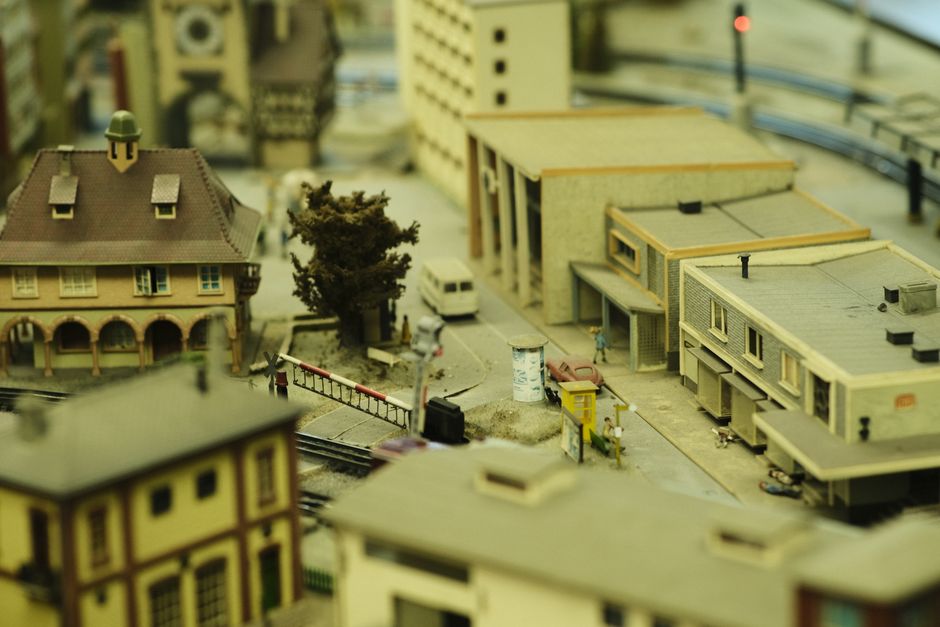
Welcome the child to the challenge. Explain that a scale model is a miniature or enlarged copy of a real object, like a toy car or an architect's building model, where all parts are kept in perfect proportion. This helps us visualize and plan things that are too big or too small to interact with directly. Ask:
"What do you think a 'scale model' means?"
"Why might it be useful to make a smaller version of something big?"
"Have you encountered any models before, like toy cars, maps, or even in video games?"
Introduce the term scale: This is the ratio that tells you how much smaller or larger the model is compared to the real thing. For example, a 1:10 scale means the model is one-tenth the size of the real object. Ask: "In your own words, what does 'scale' mean to you?"
Done looks like: The child engages with the questions and shows a basic understanding of scale models and their purpose.
Know Before You Teach
- Good to know: Scale models are miniature or enlarged copies that maintain the original object's proportions.
- If they ask: Is a map a scale model? Yes, a map is a 2D scale model of a landscape or an area, showing distances and features in proportion.
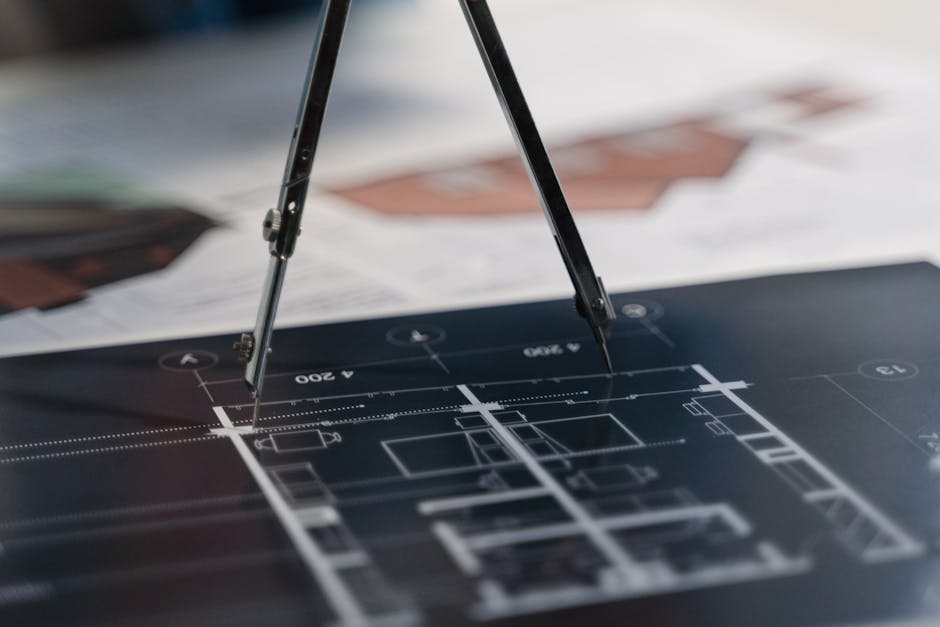
- If they ask: Is a drawing a scale model? Only if the drawing accurately shows the proportions of the real thing; a sketch usually isn't, but an architectural blueprint is.
- Key words: scale: The ratio that tells you how much bigger or smaller the model is compared to the actual object.
- It's working when: The child points to a toy or a map and explains how it relates to a real-life object.
- If they're stuck: Show an example like a toy car and a picture of its real-life counterpart; ask what's similar and what's different about their sizes.
- Harder: Ask them to estimate the scale of a common object, like a toy car, compared to a real car (e.g., 'Do you think it's 1:10 or 1:100?').
Done when: Student engages with the concept of scale models and understands their purpose.

2Explore & Plan 8 min
Have the child choose one piece of furniture in their home—like a chair, a table, or a shelf—that they want to turn into a miniature model. Guide them to select something that has clear, measurable dimensions and isn't overly complex. Ask:
"How would you go about making a smaller version of it that still looks exactly right?"
"What important measurements do you think you'll need to take from the real furniture?"
"Why is it important to measure height, width, and depth?" (if they don't mention these).
Introduce ratio in simple terms: A ratio compares two numbers, like how many parts of one thing there are compared to another (e.g., 2:1). When we scale, we keep these ratios consistent to ensure the model looks correct.
Done looks like: The child has chosen a piece of furniture and can explain which dimensions (height, width, depth) they will need to measure.
Know Before You Teach
- Good to know: Choosing a simple piece of furniture with clear lines will make it easier to create an accurate first model.
- If they ask: Can I make a model of my bike? A bike has many curved and complex parts, which might be too tricky for a first-time scale model; a simpler object like a chair or table would be better to start.
- It's working when: The child points to a rectangular piece of furniture and indicates its height, width, and depth with their hands.
- If they're stuck: Offer a limited choice of two or three simple furniture items (e.g., a stool, a small box, a bookshelf) to pick from.
- Easier: Provide a pre-selected, very simple object (e.g., a rectangular box) and help them identify which lines represent height, width, and depth.
- Harder: Ask them to choose a furniture item with at least one non-rectangular part (e.g., a rounded tabletop) and discuss how they might simplify it for the model.
Done when: Student has chosen a piece of furniture and articulated a plan for measuring it and understanding a 'scale' concept.

3Discussion 6 min
Have the child explain their chosen furniture and their initial thoughts on how they will measure it. Introduce scale factor: This is the number you multiply or divide by to change the size of an object while keeping its proportions correct. For example, to make something 10 times smaller, your scale factor is 1/10 (you divide by 10).
Present the example: "If your real furniture is 100 centimeters tall, and you want your model to be 10 centimeters tall, what's the relationship between those numbers?" Guide them to understand this is a 1:10 ratio or dividing by 10. Ask:
"How will knowing this scale factor help you with all the other measurements of your furniture?"
"If you wanted to make it half the size, what number would you divide by?"
"Why is it important to use the same scale factor for all measurements (height, width, depth)?"
Done looks like: The child can explain how to choose a consistent scale (e.g., 1:10) and apply it to all dimensions of their model.
Know Before You Teach
- If they ask: Why can't I just guess the sizes for the model? If you guess, the parts of your model would likely end up looking out of proportion, like a chair with legs that are too short for its seat.
- If they ask: What if I wanted to make the model bigger instead of smaller? You would use a scale factor greater than 1, like multiplying by 2 if you wanted to make it twice as large.
- It's working when: The child correctly explains that if you divide the height by 10, you must also divide the width and depth by 10.
- If they're stuck: Provide a physical ruler and a simple object; physically demonstrate dividing a length by 2 or 10 and show the result.
- Easier: Give them a pre-determined scale factor (e.g., 'we will make everything 10 times smaller') and focus only on performing the division.
- Harder: Ask them to propose two different scale factors (e.g., 1:5 or 1:20) and discuss which one would be more practical for their chosen furniture and available cardboard.
Done when: Student can explain how to choose and apply a consistent scale (e.g., 1:10) to all dimensions.

4Activity 9 min
Gather the necessary materials: a Ruler, Pencil, Cardboard (a few sheets, sturdy enough to build with, like a cereal box or file folder), and Scissors. Supervise the child while using scissors for safety. Guide the child through building their miniature furniture:
1. "Using your scaled dimensions, carefully measure and mark your cardboard."
2. "Cut out the pieces for your miniature furniture. Think about how the real furniture is constructed and try to replicate that."
3. "Assemble your pieces using tape or glue (if available) to create your 3D scale model." Encourage independent problem-solving if pieces don't fit perfectly; remind them that model building often involves trial and error.
4. "Once assembled, compare your model to the real furniture. How well did you do?"
Ask: "What do you think was the trickiest part of constructing your tiny furniture?"
Done looks like: The child has completed the physical construction of their scale model.
Know Before You Teach
- Good to know: Thinking about how the real furniture is put together helps in figuring out how to construct the model.
- If they ask: My line isn't perfectly straight, does it matter? Do your best to be accurate, but small imperfections are normal in model building; it won't ruin your model.
- If they ask: How do I make a rounded part from cardboard? For this first model, you can either simplify rounded parts into straight lines or try cutting out several flat, slightly curved pieces and layering them.
- It's working when: The child uses the ruler to measure and marks the cardboard with reasonable care before cutting.
- If they're stuck: Model how to measure and mark one dimension on the cardboard, then demonstrate how to cut it safely with scissors.
- Easier: Provide pre-drawn lines for one or two simple, rectangular pieces of the model for them to cut out.
- Harder: Challenge them to include one small, distinct detail from the original furniture, like a specific joint or a drawer handle, using extra cardboard pieces.
Done when: Student has completed the physical activity of building their scale model.
5Summary 2 min
Start by praising the child's effort and their completed miniature model. Ask guiding questions to reflect on the process and their learning:
"How do you feel about the process of designing and building your scale model?"
"What did you learn today about measuring and scaling?"
"What was the trickiest part, and how did you overcome it?"
"Where else in the real world do you think understanding scale and proportion is super important?" (Help them connect this to professions like architecture, engineering, or even art and design).
Done looks like: The child shares at least one key takeaway from the lesson and can connect the concepts of scale and proportion to real-world applications.
Know Before You Teach
- Good to know: Reflecting on the building process helps to reinforce what was learned and identify problem-solving successes.
- If they ask: Could we do this with something else, like a person? Yes, you could make a scale model of a person, like an action figure, as long as you measure their proportions correctly.
- If they ask: Is making clothes like this? Yes, clothing designers use scaled patterns based on body measurements to create garments that fit correctly.
- It's working when: The child connects the concept of scale to a real-world application, such as building houses or designing cars.
- If they're stuck: Prompt with examples: 'Do you think pilots use scale models of airplanes to practice flying?' or 'How do people build very tall buildings without making mistakes?'
- Easier: Focus on just one question, such as 'What was one new thing you learned today about building or measuring?'
Done when: Student shares one key takeaway from the lesson and connects it to real-world applications.
Beyond The Spark
Fuel their curiosity beyond the Spark with bonus extras.
Table Talk
Architects, engineers, and city planners use scale models to visualize and test designs before building full-size structures.
Challenge
Create a second piece of furniture for your miniature room, but this time use a different scale (e.g., if you used 1:10 before, try 1:5 or 1:20) and observe how the different scales affect the model's size.
Quick Recap Quiz 4 min
Customize this quiz, add questions, or follow your child's lead! Each question has a 'Parent Tip' to help them find the answer without giving it away.
1. If a real car is 4 meters long, and a toy car is a 1:10 scale model, how long is the toy car?
- 40 centimeters
- 10 centimeters
Hint: 1 meter = 100 centimeters. Divide the real length by the scale factor.
2. What does a 1:5 scale mean?
- The model is 5 times smaller than the real object.
- The model is 1 unit smaller than 5 units of the real object.
Hint: Think of the colon as 'to' – 1 unit of the model 'to' 5 units of the real.
3. Why is it important to use the same scale (e.g., 1:10) for ALL measurements (height, width, depth) when building a scale model?
- To save time during construction.
- To ensure the model looks proportionally accurate.
Hint: What would happen if one part was scaled differently from another?
4. Which profession MOST commonly uses scale models to plan their projects?
- Architect
- Chef
Hint: Think about designing buildings or large structures.
Loved This Spark?
Scan to jump into the app and explore similar Sparks in our Sparks Hub. New to Mai? Start free with 10 Sparks, no credit card needed.