Rhyme Detective Challenge
This lesson challenges young learners to become 'rhyme detectives' by finding pairs of words that sound alike. Through hands-on exploration with common objects, children will develop an ear for phonetic patterns and build early literacy skills.
Our goal: In this spark, your learner will identify rhyming words based on their ending sounds, sort common objects into rhyming pairs and express understanding of what makes words rhyme.
What You Need
Toy Cat • Small Hat • Toy Car • Star Cutout • Toy Ball • Small Block
and this is just the baseline.
Scan to jump into the app and easily personalize this Spark to match your child's exact learning level and see how Mai will guide this lesson.
Learning Guide
A simple guide to lead you through the kickoff, the core challenge, and everything in between.
Mai’s Tips
- For this age group, focus on the sound of the rhyme rather than explaining spelling rules. Emphasize listening and vocalizing.
- If the child struggles, don't correct directly. Instead, say the rhyming words aloud with exaggerated ending sounds and ask, 'Do you hear that sound?'
Prep Before Session 10 min
- Find a small toy hat and a toy cat.
- Locate a toy car and a star-shaped object.
- Gather a small ball and a building block.
- Place all six items in a designated spot for easy access before the lesson begins.
1Introduction 5 min
Engage your child by introducing the concept of words that sound alike. Observe their initial reaction and encourage them to think creatively without providing direct answers.
Rhyming words are like sound buddies! They sound super similar at the end. Listening for these similar sounds helps us hear patterns in words, which is a key part of learning to read!
Ask them:
"Have you ever noticed how some words just sing together?"
"What do you think makes two words sound like they're buddies?"
Done: Your child shows initial curiosity or offers a guess about how words sound similar.
Know Before You Teach
- Good to know: Rhyming words share the same ending sound, even if their spellings are different.
- This activity helps children develop 'phonological awareness,' which is the ability to hear and play with the sounds in words.
- Key words: Rhyming words: Words that sound the same at the end, like 'cat' and 'hat'.
- It's working when: Child attempts to make a 'singing' sound or offers a guess related to word sounds.
- If they're stuck: Say 'fox' and 'box' and ask, 'Do these words sing together?'
- Easier: Tell them directly, 'Rhyming words are words that sound the same at the very end.'
- Harder: Ask the child to come up with two words they think might be 'sound buddies' before hearing your examples.
Done when: Child expresses initial curiosity or makes a guess about rhyming.

2Explore & Plan: Gather Your Rhyme Clues! 8 min
Help your child gather the specific objects needed for the activity. If a particular item isn't available, substitute it with one from the suggested list. Once all items are collected, place them in front of your child. Encourage them to connect the objects to the idea of 'sound friends' or 'rhyme detectives'.
Ask them:
"What do you think we might do with these items?"
"How could these be our 'sound friends' for our mission?"
Done: All six specified objects (or acceptable substitutes) are gathered and placed in front of your child, ready for the next step.
Know Before You Teach
- Good to know: These everyday objects are chosen because their names are simple words, making it easier to hear their sounds.
- Using physical objects helps young children connect abstract sounds to something they can touch and see.
- If they ask: Why do we need these specific things? These are our clues for our rhyme detective mission! Their names are words we can listen to for those 'singing' sounds.
- Key words: Rhyme detectives: We are like special investigators, but instead of looking for clues, we are listening for words that sound alike!
- It's working when: Child shows excitement about the objects or the 'detective' idea.
- If they're stuck: Have the child pick up and name each object as you point to it.
- Easier: You can name each object for your child as you place it down.
- Harder: Ask your child to find one more object in the room that they think might be a good 'sound friend' clue.
Done when: All materials are gathered and placed in front of the child, and they are ready for the next step.

3Discussion 6 min
Ask your child to pick up the 'HAT' and 'CAT'. Have them say each word aloud clearly, emphasizing the ending sounds. Model listening carefully for those sounds. Repeat this process with the 'CAR' and 'STAR'.
Rhyming words have the same 'ending sound'. That's the part you hear at the very end of the word. Paying attention to these ending sounds helps us find which words are 'sound buddies'.
Ask them:
"Do HAT and CAT sound the same at the end?"
"How about CAR and STAR? What do you notice about their sounds?"
"Which part of the word sounds the same?"
Done: Your child can identify that the example words (CAT/HAT, CAR/STAR) have similar ending sounds.
Know Before You Teach
- Good to know: It helps to say the words slowly and stretch out the ending part to make the common sound more obvious.
- If they ask: Does 'dog' rhyme with 'cat'? Let's listen! 'Dog' ends with '-og' and 'cat' ends with '-at'. Do those sound like 'sound buddies' at the end?
- Harder: Ask them to try and think of another word that rhymes with 'HAT' or 'CAR' after you've discussed those pairs.
Done when: Child can identify the similarity in the ending sounds of the provided examples (e.g., 'cat' and 'hat').
4Activity 9 min
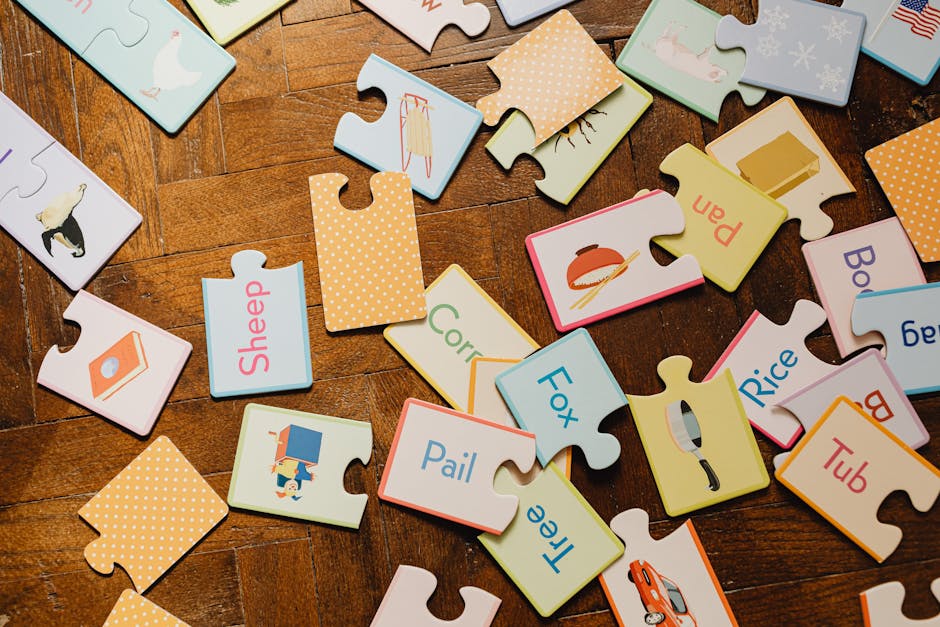
Guide your child to begin sorting the objects. Encourage them to pick up one item, say its name, and then try to find another item that sounds just like it at the end. A 'rhyming pair' means two words that have the same ending sound. Your mission is to find these pairs!
If they struggle, prompt them by saying one word and asking, "Which one of these sounds like [word]?" Avoid directly pairing items for them. Celebrate their successful matches as they find them.
Ask them:
"Can you put all the rhyming friends together in pairs?"
Done: Your child has successfully sorted most of the objects into three rhyming pairs (CAT/HAT, CAR/STAR, BALL/BLOCK).
Know Before You Teach
- Good to know: Finding rhymes strengthens 'auditory discrimination,' the skill of noticing small differences and similarities in sounds.
- It's working when: Child attempts to match objects based on sound, even if not always correct.
- Easier: Begin by only presenting two objects that rhyme (like 'HAT' and 'CAT') and ask them to make the pair first.
Done when: Child has successfully grouped most of the objects into rhyming pairs.

5Summary 2 min
Praise your child's effort and success in finding the rhyming pairs. Engage them in a short reflection about the activity. Rhyming words add a fun musical quality to songs and poems, making them more enjoyable to listen to and remember!
Ask them:
"How did it feel to find all those sound friends?"
"Where else do you think we might hear rhyming words, maybe in a song or a book?"
Done: Your child shares at least one thought or observation about rhyming words or where they might find them.
Know Before You Teach
- If they ask: Why do people make up rhyming words in songs? Because it makes them sound fun and catchy, and helps us remember them easily!
- It's working when: Child verbally expresses a thought or points to a book or toy where they might hear rhymes.
- If they're stuck: Sing a line from a familiar nursery rhyme, like 'Twinkle, twinkle little STAR, how I wonder what you ARE,' and ask if they heard any 'sound buddies.'
- Easier: Tell them, 'Rhyming words make songs and stories sound extra fun!'
- Harder: Ask them to try and create a two-word rhyme using their own name or a friend's name.
Done when: Child shares one key takeaway.
Beyond The Spark
Fuel their curiosity beyond the Spark with bonus extras.
Table Talk
Songwriters and poets use rhyming words to make songs catchy and poems fun to read!
Challenge
Can you think of a new word that rhymes with 'moon' or 'tree'? How many rhyming words can you say?
Quick Recap Quiz 4 min
Customize this quiz, add questions, or follow your child's lead! Each question has a 'Parent Tip' to help them find the answer without giving it away.
1. Which words rhyme with each other?
- cup, table
- dog, frog
Remind them to listen to the very end of each word.
2. What makes words rhyme?
- They sound the same at the end
- They start with the same letter
Say a rhyming pair like 'cat' and 'hat' and ask 'Which part sounds the same?'
3. If 'star' rhymes with 'car', what rhymes with 'cat'?
- dog
- hat
Prompt them to say 'cat' aloud and listen for that ending sound. What other word has the 'at' sound?
4. Where can we hear rhyming words?
- In songs and poems
- Only in school
Ask if they can think of any songs they know that have rhyming words.
Loved This Spark?
Scan to jump into the app and explore similar Sparks in our Sparks Hub. New to Mai? Start free with 10 Sparks, no credit card needed.