
Picture Story Adventure
This lesson challenges children to become master storytellers using simple picture prompts. They will create their own visual cues and then weave them into imaginative narratives, focusing on key story elements like character, setting, and plot. It's a hands-on way to spark creativity and develop narrative skills.
Our goal: Learners will understand how to use visual cues to spark imaginative ideas for stories. They will be able to apply core story elements like character, setting, and plot to develop their own creative and coherent short narratives.
What You Need
Paper • Scissors • Crayons or Markers • Old Magazines or Newspapers
and this is just the baseline.
Scan to jump into the app and easily personalize this Spark to match your child's exact learning level and see how Mai will guide this lesson.
Learning Guide
A simple guide to lead you through the kickoff, the core challenge, and everything in between.
Mai’s Tips
- Embrace Imperfection: For younger children, the drawings for story cards don't need to be masterpieces. The goal is imagination, not artistic skill. Encourage quick sketches or even just shapes that represent an idea (e.g., a circle for a sun, a blob for a monster). If they get stuck trying to draw 'perfectly,' offer to draw a simple shape for them to start.
- The 'What If' Question: If a child gets stuck connecting their story cards or developing a plot, the most powerful prompt is 'What if...?'. For example, 'What if the cat found the house, but the door was locked?' or 'What if the car could fly, but only on Tuesdays?' This helps them move past a creative block and explore new directions.
- Flexibility with Elements: While character, setting, and problem/goal are core, don't rigidly enforce them. If a child's story naturally focuses more on a rich setting with less defined characters at first, that's okay. The goal is to build narrative fluency, and they can refine their understanding of elements over time. Gently guide them towards including all elements without shutting down their initial creative flow.
- Story as a Conversation: Encourage storytelling as a collaborative conversation. If one child is narrating, another can interject with 'And then...' or suggest a detail. This is especially helpful in mixed-age groups, allowing younger children to contribute small ideas and older children to weave them into a larger narrative. The parent's role is to facilitate this creative back-and-forth.
1Breakfast Story Starter 5 min
Start by having your child look at an everyday object on the breakfast table. This sparks their imagination and connects learning to their immediate environment.
- Ask them: "What's on the table right now that looks interesting?"
- Then ask: "If that [object name] could talk, what's one secret adventure it would tell you it had?"
Know Before You Teach
- If they ask: Does it have to be a true story? No, this is all about making things up! The wilder the better.
- It's working when: Child shows curiosity and starts to verbalize imaginative ideas about the object.
- If they're stuck: Suggest a few specific objects (e.g., 'What about that spoon? What's its adventure?') or offer a silly idea to get them started.
- Easier: Focus on just one word to describe the object's 'adventure' (e.g., 'fast', 'sleepy', 'lost').
- Harder: Ask them to describe the object's personality based on its imagined history.
Done when: Child shares at least one imaginative idea or short sentence about a breakfast item.
2Picture Your Story 8 min
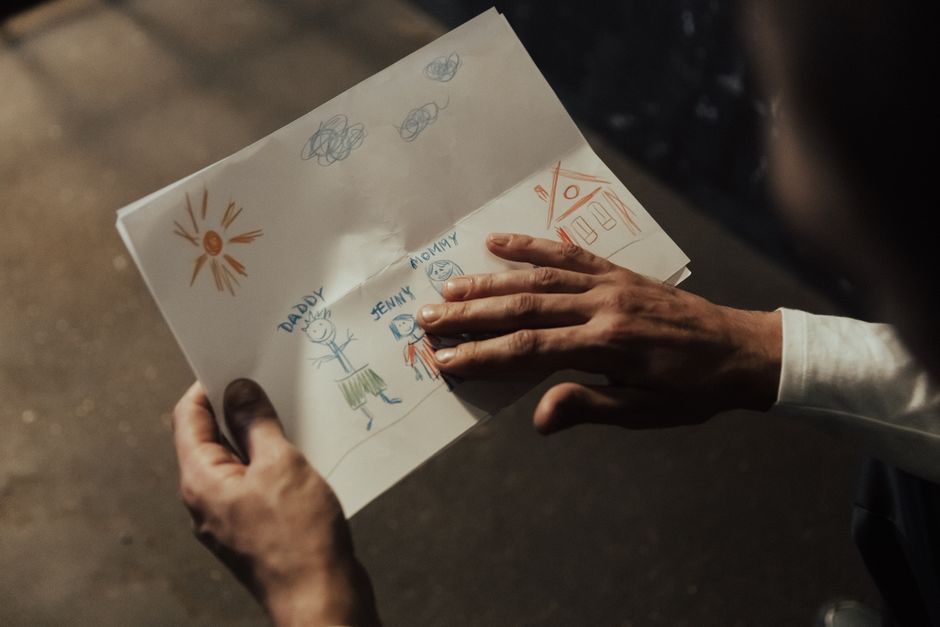
Gather the art supplies needed for this stage. Guide your child to create 3-5 picture cards, either by drawing simple images or cutting them from magazines. The goal is to have a diverse set of prompts.
- Younger children can draw simple shapes or colors, or cut out large, obvious pictures. Ask: "What's a picture you think would be fun to put in a story?"
- Older children can draw more detailed objects or cut out images that evoke a mood or action. Ask: "What kind of picture would make someone curious about what happens next?"
- Discuss each card: "What kind of story do you think this picture could start?"
Know Before You Teach
- Good to know: Visual prompts can be powerful tools for generating story ideas.
- Creating one's own prompts gives ownership and boosts creativity.
- If they ask: Do my pictures have to be good drawings? Not at all! Simple drawings or even just shapes work perfectly. It's about the idea behind the picture.
- Key words: Story cards: Small pictures or drawings that you use to help you think of ideas for a story.
- It's working when: Child is engaged in drawing/cutting and shows enthusiasm for their creations.
- If they're stuck: Offer specific drawing ideas (e.g., 'How about a tall tree?' or 'Let's draw a funny monster') or provide a magazine for easier cutting.
- Easier: Parent can draw simple outlines for the child to color in, or let the child just choose pictures from a magazine.
- Harder: Challenge them to create cards for different categories: a character card, a setting card, and an object card.
Done when: Child has created 3-5 simple picture cards (drawn or cut out) to use as story prompts.

3What Makes a Story? 6 min
Introduce the three core elements of a story. Start by asking for their ideas, then provide the definitions clearly with examples. Reinforce understanding by having them identify these elements in a familiar story.
- Ask them: "What do you think every good story needs to have?"
- Character: "A character is who the story is about – it can be a person, an animal, or even a talking toy! They are the ones who do things and feel things in the story."
- Ask: "Who is the main character in the story of 'The Three Little Pigs'?"
- Setting: "The setting is where and when the story happens. Is it in a forest? In space? During the day or at night?"
- Ask: "Where does the story of 'The Little Mermaid' mostly take place?"
- Problem or Goal: "Every story has a problem the character needs to solve, or something they really want to achieve. This is what makes the story exciting!"
- Ask: "What problem does Cinderella have that she wants to solve?"
Know Before You Teach
- Good to know: Understanding these elements helps in both creating and analyzing stories.
- If they ask: Can a story have more than one character? Absolutely! Many stories have lots of characters, but usually there's one main character we follow the most.
- It's working when: Child can point to a picture card and identify one of the story elements it could represent.
- If they're stuck: Use a very familiar story (like 'The Three Little Pigs') and ask specific questions about its character, setting, and problem to guide them.
- Harder: Ask them to identify a character's motivation (why they want to achieve their goal) in a familiar story.
Done when: Student can identify a character, setting, and problem/goal in a simple familiar story or from one of their own cards.

4Build a Wild Tale! 9 min
Guide your child through creating their own story using their cards and the story elements. Encourage them to tell the story out loud. For younger children, focus on a simple sequence; for older children, prompt for more detail.
- Younger children: Help them pick two cards and say one sentence for each, connecting them. Ask: "Who is in your story? Where are they? What happens first? What happens next?"
- Older children: Encourage them to pick three cards and weave a narrative with a clear beginning, middle, and end, including a character's motivation and a resolution. Ask: "What does your character learn or how do they change by the end?"
- Once they've started, step back and let them lead, offering prompts if they get stuck: "And then what happened?" or "How did they feel about that?"
Know Before You Teach
- Good to know: Stories have a structure, often with a beginning, middle, and end.
- Connecting disparate ideas (from cards) requires creative thinking and problem-solving.
- If they ask: What if my cards don't make sense together? That's the fun part! You get to invent how they connect. Maybe the cat always wanted to visit that house, or the tree magically grew a key to the car.
- It's working when: Child attempts to link cards and story elements into a coherent sequence, even if simple.
- If they're stuck: Suggest a 'bridge' phrase like 'And then...' or 'Suddenly...' to move the story along, or ask 'What happens next with [character]?'
- Easier: Focus on describing what is happening in each card individually, then try to link just two cards with one sentence.
- Harder: Challenge them to introduce a 'twist' or an unexpected event in the middle of their story, or to create a clear resolution to the problem.
Done when: Student tells a complete story using at least two of their picture cards, incorporating a character, a setting, and a problem/goal.

5Share Your Adventure 2 min
Conclude by having your child reflect on their creative process and share their favorite parts. This reinforces their learning and celebrates their effort.
- Ask them: "What was your favorite part of the story you created today?"
- Or ask: "What was the most surprising thing that happened in your story?"
- For older children: "What did you find challenging about putting all the story pieces together?"
Know Before You Teach
- Good to know: Reflecting on creative work helps consolidate learning and build self-awareness.
- Sharing stories fosters communication skills and builds confidence.
- If they ask: Can I tell my story to someone else later? Yes, absolutely! Sharing stories is a wonderful way to bring them to life even more. You can tell anyone you like!
- It's working when: Child expresses a clear thought about their experience, whether it's about fun, challenge, or a specific part of their story.
- If they're stuck: Rephrase the question to be very specific: 'What was the funniest part of your story?' or 'Which character was your favorite to invent?'
- Easier: Ask them to simply point to their favorite story card and say why they liked it.
- Harder: Ask them what they might do differently next time they create a story, or what new picture cards they'd want to make.
Done when: Student shares one key takeaway or a favorite part from their storytelling experience.
Beyond The Spark
Fuel their curiosity beyond the Spark with bonus extras.
Table Talk
Authors, filmmakers, and game designers all use these same story elements to create the captivating narratives we love to read, watch, and play.
Did You Know?
Did you know that some of the very first stories were told with pictures painted on cave walls thousands of years ago?
Challenge
Create a 'story map' for your tale! Draw a simple path and add small pictures or words along the way to show what happens at each stage of your character's journey.
Quick Recap Quiz 4 min
Customize this quiz, add questions, or follow your child's lead! Each question has a 'Parent Tip' to help them find the answer without giving it away.
1. Which part of a story tells us WHO the story is about?
- The Setting
- The Character
Remind them that the character is the 'who' in the story, the one doing the actions.
2. If a story takes place 'in a dark forest at midnight,' what story element is that?
- The Setting
- The Problem
The setting tells us 'where' and 'when' the story happens.
3. What do we call what the main character wants to achieve or the challenge they face?
- The Ending
- The Problem or Goal
This is what drives the story forward and makes it interesting!
4. Why are picture cards helpful when you want to make up a story?
- They spark new ideas and help you imagine.
- They tell you exactly what to say.
Pictures are great starting points, but you still get to create the story yourself!
Loved This Spark?
Scan to jump into the app and explore similar Sparks in our Sparks Hub. New to Mai? Start free with 10 Sparks, no credit card needed.