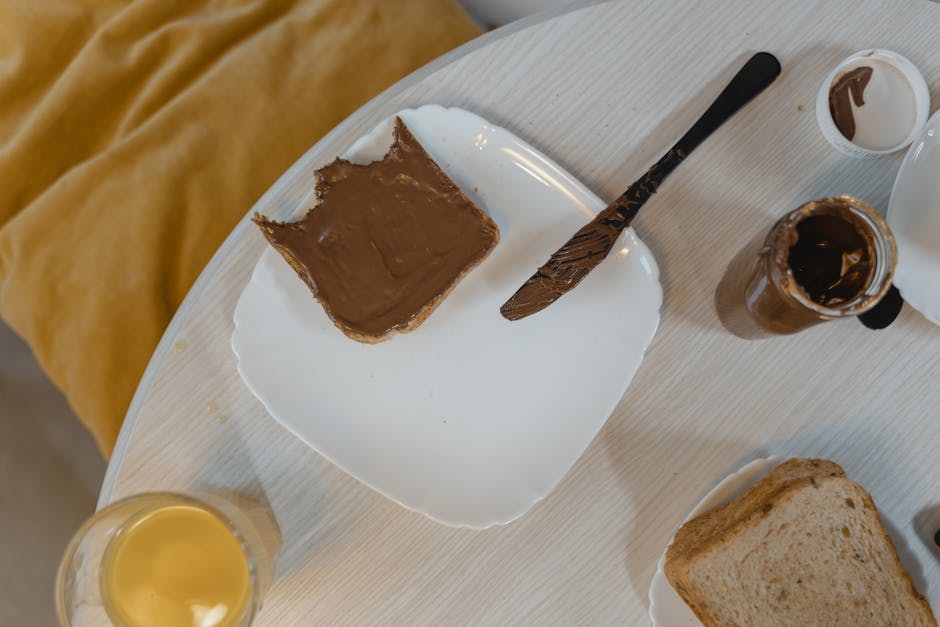
Perfect Snack Symmetry
Discover the beauty of balance and mirror images by exploring symmetry in everyday objects around your home. You'll learn what makes something symmetrical and even create your own perfectly balanced snack! No special preparation or purchases are needed for this lesson.
Our goal: Learners will understand the concept of symmetry and be able to identify symmetrical objects in their surroundings. They will also learn how to create their own symmetrical designs, including a perfectly balanced snack, by recognizing and applying the idea of a line of symmetry.
What You Need
Piece of toast • Apple • Small candies • Plate • Knife • Small plate • Fruit slices • Crackers
and this is just the baseline.
Scan to jump into the app and easily personalize this Spark to match your child's exact learning level and see how Mai will guide this lesson.
Learning Guide
A simple guide to lead you through the kickoff, the core challenge, and everything in between.
Mai’s Tips
- Discovery over instruction: Let the child physically manipulate the items and make observations first. The concept of symmetry should emerge from their hands-on experience, not be told to them before they explore.
- The 'line' is key: Children might grasp that things match, but often miss the imaginary 'line' that creates the mirror image. Gently guide them to visualize or draw this line on a piece of paper (e.g., folding paper to see the crease) as the crucial element of symmetry.
- Simplify: If the child is struggling to create perfect symmetry, suggest focusing on just two items, or simply matching one side to the other without worrying about the overall design. For older kids, challenge them to articulate WHY an object is asymmetrical if it doesn't work.
- Food prep: For younger children, have all food items pre-cut and ready to arrange. For older children, you can involve them in the safe cutting of soft fruits like bananas or apples (with supervision).
Prep Before Session 5 min
- Gather a piece of toast, an apple, some crackers or small cookies, and small candies or berries.
1Introduction 5 min
Have your child look at objects around them, perhaps on the breakfast table. Ask them to point out and describe anything that appears 'balanced' or 'even'. For younger children, accepting a pointer or a single word is fine; for older children, encourage a more detailed description of what makes it look balanced.
Ask them: "What do you notice about how your cereal flakes are sitting in your bowl? Does anything look special or 'just right' to your eyes?"
Know Before You Teach
- Good to know: Symmetry is about visual balance, which is often pleasing to the eye.
- If they ask: Why does this look 'just right'? It looks that way because both sides are the same, like they're matching!
- It's working when: Child pointing to or describing objects like a full piece of toast, a round plate, a symmetrical fruit.
- If they're stuck: Gently guide their attention to a clearly symmetrical item like a whole cracker or a piece of toast, asking 'What do you notice about this?'
- Easier: Point out one specific symmetrical item and ask if they can see how its sides match.
- Harder: Ask an older child to find something that looks 'unbalanced' and explain why.
Done when: Child identifies at least one object that appears balanced or even.

2Explore & Plan 8 min
Gather a piece of toast, an apple slice (pre-cut safely), and a cracker. Have your child take each item and try to visually split it in half so both sides look identical. Encourage physical actions like folding the toast. As they find things that split evenly, introduce the idea of a 'line of symmetry' (the imaginary fold line) and explain that these items are 'symmetrical'.
Ask: "Can you imagine a line that cuts this toast in half so both sides look exactly the same?" Then: "What if we tried it with this apple slice? Could you split it into two identical halves?"
Know Before You Teach
- Good to know: Many everyday objects are symmetrical. Some are not, and recognizing asymmetry helps define symmetry.
- The act of physically (or mentally) folding helps internalize the concept of a 'line of symmetry'.
- If they ask: Can I eat it? Yes, after we explore it and see if it's perfectly symmetrical!
- Key words: Symmetrical: When something can be split into two halves that are perfect mirror images of each other.
- Key words: Line of Symmetry: The imaginary line where you would fold a symmetrical object so both sides match perfectly.
- If they're stuck: Demonstrate with a simple piece of paper: fold it exactly in half and show how the two sides match.
- Easier: Focus on only one or two items, like a cracker and a piece of toast, and let them only fold/imagine folding.
- Harder: Ask an older child to predict if an item will be symmetrical before trying, and explain their reasoning.
Done when: Child successfully identifies a 'split' that creates two matching halves for at least one object, and can point out the imaginary 'line'.

3Discussion 6 min
After they've explored, ask them what they noticed about the items that split evenly. Let them describe it in their own words first. Then, clearly define: "Symmetry is when one half of something is a perfect mirror image of the other half. You can fold it in half, and both sides match perfectly. The fold line is called the line of symmetry." Explain that this balance is visually pleasing and common in nature and design. Ask them to think of other examples, like their own body or a butterfly.
Ask: "What did you discover about how some things can be split? What made them special?" Then: "Can you think of other things in our home that would split perfectly in half like that?"
Grown-up Crib Sheet: Symmetry is a geometric property where an object or image is identical on both sides of a central line (a line of symmetry) or point. It's about 'mirror-image' balance. A deeper concept is rotational symmetry, where an object looks the same after a rotation, but that's beyond this lesson's scope.
Know Before You Teach
- Good to know: Symmetry is a fundamental concept in geometry and is found widely in nature, art, and architecture.
- There can be more than one line of symmetry (e.g., a square has four, a circle has infinite).
- If they ask: Is my face symmetrical? If you drew a line down the middle, your eyes, ears, and nose would be in a very similar spot on both sides! Many living things have symmetry.
- It's working when: Child using their own words to describe matching halves or 'mirror images' when defining symmetry.
- If they're stuck: Revisit the physical objects from Stage 2. Ask, 'What happened when you folded the toast? Did it look the same on both sides?'
- Easier: Focus only on the 'matching halves' aspect, not needing a formal definition of 'line of symmetry'.
- Harder: Ask an older child to think of an example of something that is definitely NOT symmetrical and explain why.
Done when: Student can explain the concept of symmetry in their own words (e.g., 'one side looks like the other side when you fold it') and apply it to a new, unmentioned object.

4Activity 9 min
Provide a plate and an assortment of small, edible items (e.g., cut apple pieces, cracker halves, blueberries, small candies). Challenge your child to arrange these items to create a symmetrical design on their plate. For younger children, focus on simply matching items on both sides of a central imaginary line. For older children, encourage them to plan a more complex design, perhaps aiming for multiple lines of symmetry or explaining their choices. Supervise if any cutting is involved.
Ask: "How will you make sure both sides of your plate look exactly the same?" Then: "What will be your line of symmetry for this snack?"
Know Before You Teach
- Good to know: Creating symmetry requires careful planning and observation of spatial relationships.
- If they ask: Does it have to be perfect? We're trying our best for perfect, but the most important thing is that you're thinking about balance and trying to make the sides match!
- It's working when: Child consciously placing items to mirror each other, making adjustments, or describing their plan.
- If they're stuck: Suggest starting with a single item in the middle (e.g., an apple slice) and building outwards, one item at a time, making sure to place a matching item on the other side of the imaginary line.
- Easier: Provide only two types of food items and ask them to just make a simple top-bottom or left-right mirror.
- Harder: Challenge an older child to create a design with a specific number of items on each side, or to incorporate multiple lines of symmetry.
Done when: Student has created a clearly symmetrical food arrangement on their plate.

5Summary 2 min
Congratulate your child on their symmetrical creation. Encourage them to reflect on the concept of symmetry and where else they might encounter it in their daily life, connecting it beyond just food. Celebrate their observations and creativity.
Ask: "What was the most surprising thing you learned about symmetry today?" Then: "Where else in the world, or even in our bodies, do you think we might find this kind of perfect balance or symmetry?"
Know Before You Teach
- Good to know: Reflecting on learning helps solidify memory and connect new knowledge to prior experiences.
- If they ask: Is a tree symmetrical? A tree trunk might have some symmetry, but the branches usually grow in many different directions, so the whole tree usually isn't perfectly symmetrical like your snack.
- It's working when: Child making connections to other objects or areas (e.g., 'my house', 'my dog', 'cars').
- If they're stuck: Prompt with categories: 'What about animals? Do you think they are symmetrical?' or 'What about buildings?'
- Easier: Accept any observation about symmetry they recall from the lesson.
- Harder: Ask an older child to explain why symmetry might be important for something like an airplane or a bridge.
Done when: Student shares one key takeaway about symmetry or names a new place they might find it.
Beyond The Spark
Fuel their curiosity beyond the Spark with bonus extras.
Table Talk
Architects and designers use symmetry to create beautiful and stable buildings, bridges, and art.
Did You Know?
Did you know that every snowflake is a unique symmetrical masterpiece, with six perfect arms that are mirror images of each other?
Challenge
Can you create a snack that has MORE THAN ONE line of symmetry? (Like a square cracker that you could split top-to-bottom AND side-to-side!)
Quick Recap Quiz 4 min
Customize this quiz, add questions, or follow your child's lead! Each question has a 'Parent Tip' to help them find the answer without giving it away.
1. Which of these objects is usually symmetrical?
- A crumpled piece of paper
- A butterfly
Remind them that symmetry means one side is a mirror image of the other.
2. What do we call the line that divides a symmetrical object into two matching halves?
- A line of symmetry
- A dividing line
This is the special math word for that 'fold' line.
3. If you cut a round apple perfectly through its center, how many symmetrical halves would you get?
- One half
- Two halves
Think about what happens when you slice it right down the middle.
4. Why might an artist use symmetry in their painting?
- To make it look balanced and harmonious
- To make it look messy and chaotic
Think about how symmetry makes things feel when you look at them.
Loved This Spark?
Scan to jump into the app and explore similar Sparks in our Sparks Hub. New to Mai? Start free with 10 Sparks, no credit card needed.