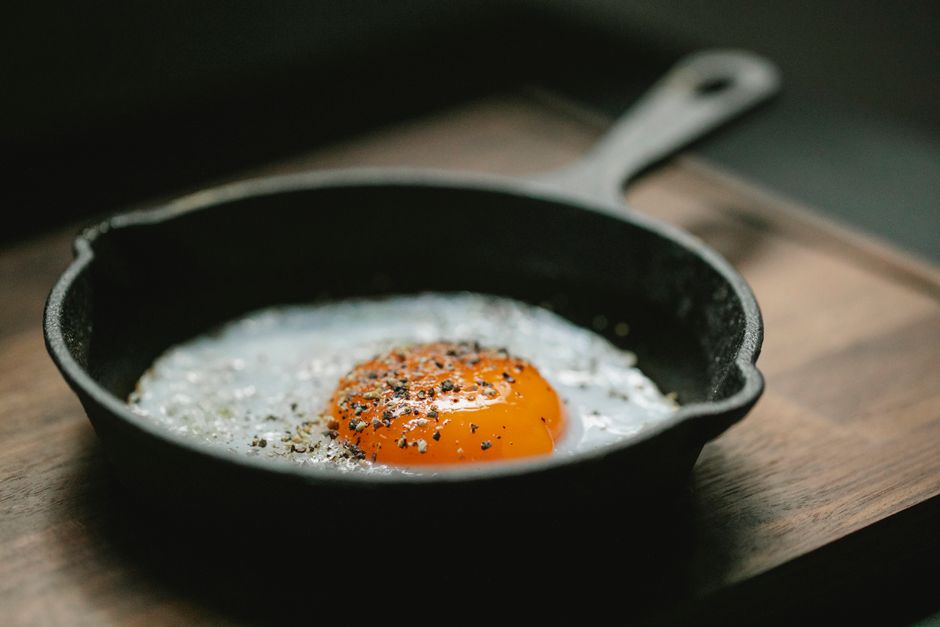
Pan Science Fun
Embark on a culinary adventure to explore the amazing scientific changes that happen right in your kitchen. This challenge invites you to observe, predict, and discover the magic behind cooking simple ingredients.
Our goal: In this spark, your learner will observe and describe physical and chemical changes in food during cooking, formulate predictions about how ingredients will transform under heat and connect real-world cooking experiences to scientific principles.
What You Need
Egg • Pan • Cooking Oil • Spatula • Oil/Butter
and this is just the baseline.
Scan to jump into the app and easily personalize this Spark to match your child's exact learning level and see how Mai will guide this lesson.
Learning Guide
A simple guide to lead you through the kickoff, the core challenge, and everything in between.
Mai’s Tips
- For younger learners, focus purely on observable changes like color and texture. For older learners, introduce terms like 'protein denaturation' or 'Maillard reaction' if applicable to other foods.
- Emphasize safety above all else when working with heat. Always be present and guide hands as needed, letting them take charge of observation and description.
1Introduction 5 min
Welcome your child to the kitchen lab and introduce the idea of being a "Pan Scientist." Start by engaging them with their own experiences around food and cooking. Ask open-ended questions to get them thinking about how food changes. For instance: "What's your favorite cooked food to eat?" or "How is a raw carrot different from a cooked carrot?" Then, broaden the question to the lesson's topic: "What do you think cooking does to food in general?" Encourage them to share any initial thoughts, as there are no wrong answers at this stage. Celebrate their curiosity.
Done when: Student expresses initial thoughts about how cooking changes food.

2Explore & Plan 8 min
Gather the materials: an egg, a pan, cooking oil (or butter), and a spatula (or wooden spoon). Lay them out clearly for your child to see. Direct them to carefully examine the raw egg and the other items. Guide them to make specific predictions about the egg's transformation when cooked. For example: "Look closely at the raw egg. What color is the clear part? What about the yellow yolk?" Then, ask: "What do you predict will happen to the clear part when it cooks? Will it stay clear?" and "What do you think will happen to the yellow yolk? Will it change color or texture?" Also, ask: "How do you think the texture of the egg will feel after it's cooked compared to now?" Encourage detailed observations of the raw ingredients.
Done when: Student has made predictions about the egg's transformation and discussed the materials.

3Discussion 6 min
Before you begin cooking, discuss two key areas: the role of oil and safety. Ask your child: "Why do you think we use oil or butter in the pan when cooking an egg? Is it just for taste, or could there be another scientific reason?" Explain that oil helps to make the pan non-stick, which means it prevents the egg from sticking to the surface, allowing it to cook evenly and be easily removed. Next, discuss stove safety. Ask: "What's the most important thing we need to remember when using the stove?" Emphasize that the stove gets very hot and should always be used with a grown-up's close supervision. You can also ask: "Why do you think we need a spatula for cooking the egg?"
Done when: Student understands basic cooking safety and the role of ingredients/tools.
4Activity 9 min
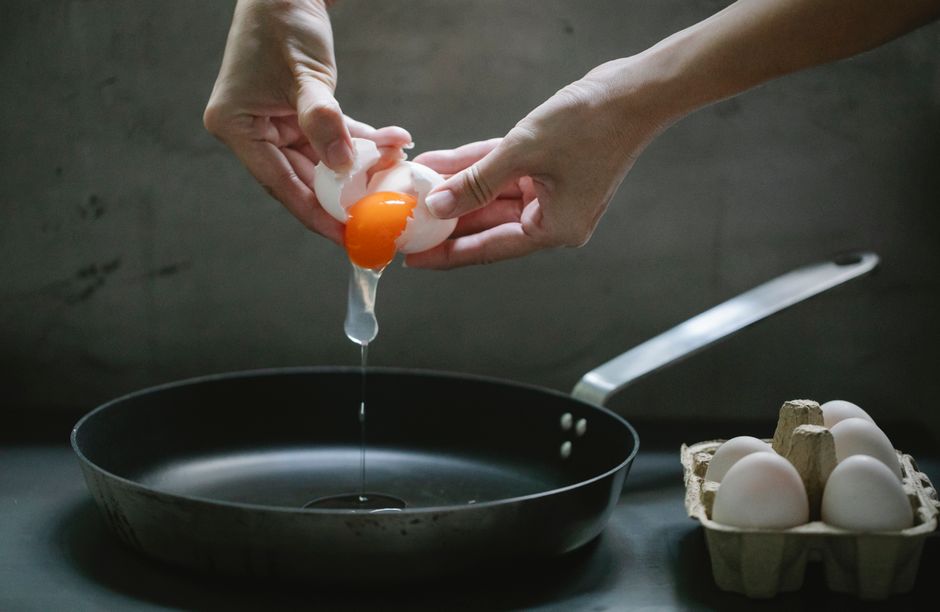
Supervise closely during this stage. First, add a small amount of oil to the pan. Explain heat transfer, which is how the heat from the stove moves to the pan, then to the oil, and finally to the egg, causing it to cook. Turn on the stove and heat the pan and oil. Ask your child: "What do you see happening to the oil as the pan gets hot?" Carefully crack the egg into the pan. Encourage continuous observation at every step. Ask: "What do you see happening to the clear part of the egg right away?" and "How are the colors changing in the pan?" As it cooks, ask: "What's happening to the liquid egg white?" and "Do you see any bubbles forming, and why might that be happening?" If appropriate for their age and skill, let your child handle the spatula for flipping the egg, prioritizing safety above all.
Done when: Student has completed cooking the egg and actively observed the changes.
5Summary 2 min
Encourage your child to reflect on the entire cooking process and the scientific changes they witnessed. Ask them to compare what they observed to their initial predictions: "What was the most surprising transformation you observed while cooking the egg?" and "How did what actually happened compare to your predictions from the beginning?" Celebrate their efforts and discoveries. You can also ask: "What was your favorite part of being a Pan Scientist today?" To connect it to broader concepts, ask: "How does knowing this science help us cook other foods, like vegetables or meat?" This helps them see the real-world application of their scientific observations.
Done when: Student shares one key takeaway or surprising observation from the experiment.
Beyond The Spark
Fuel their curiosity beyond the Spark with bonus extras.
Table Talk
Chefs and food scientists use this understanding of food transformations every day to create delicious and safe meals.
Challenge
Try cooking another simple ingredient like a slice of cheese or a small piece of bread in the pan. Observe and compare the changes. What's similar, and what's different?
Quick Recap Quiz 4 min
Customize this quiz, add questions, or follow your child's lead! Each question has a 'Parent Tip' to help them find the answer without giving it away.
1. What caused the liquid egg white to turn into a solid white when cooked?
- Adding salt
- The heat from the pan
Remind them what the pan provided to the egg!
2. What is one reason we use oil or butter in the pan when frying an egg?
- To prevent the egg from sticking
- To make the egg raw again
Ask them if they've ever tried to cook something in a dry pan.
3. What happened to the texture of the egg as it cooked?
- It became more liquid
- It became firmer and more solid
Have them touch the raw egg (if safe) and then describe the cooked egg.
4. How can observing what happens in a pan help us when cooking other foods?
- It helps us predict changes and cook better meals
- It only works for eggs
Connect it to other foods that change when cooked, like bread to toast or veggies softening.
Loved This Spark?
Scan to jump into the app and explore similar Sparks in our Sparks Hub. New to Mai? Start free with 10 Sparks, no credit card needed.