
Optimal Garden Layout
This challenge invites high schoolers to apply mathematical concepts of measurement, area, and scale to design an optimized garden space. Students will tackle real-world constraints to create an efficient and functional layout.
Our goal: In this spark, your learner will apply geometric principles to design an optimal space based on given constraints, utilize measurement and scale to accurately plan a real-world project and analyze factors like sunlight, accessibility, and plant spacing to make informed design decisions.
What You Need
Measuring Tape • Paper • Pencil • Ruler
and this is just the baseline.
Scan to jump into the app and easily personalize this Spark to match your child's exact learning level and see how Mai will guide this lesson.
Learning Guide
A simple guide to lead you through the kickoff, the core challenge, and everything in between.
Mai’s Tips
- Instead of just observing, ask probing questions like, 'Why did you choose that particular scale?' or 'What's the biggest challenge you foresee in this design, and how might math help you solve it?'
- Encourage them to think beyond just plants: what about water sources, storage, or even a small seating area? How do these elements impact the optimization challenge?
Prep Before Session 10 min
- Gather a measuring tape.
- Gather paper, a pencil, and a ruler.
- Identify a potential space in your home or yard to suggest if your teen struggles to choose one.
1Introduction 5 min
Welcome your teen to the "Optimal Garden Layout Challenge." Begin by discussing the general importance of planning. Ask them: "Why do you think planning is so crucial before you even dig the first hole in a garden?" Also ask: "What kind of practical problems might arise if you just started building without a plan?" Encourage them to think about planning in other areas of life too, not just gardening. Introduce the core concepts for today: Spatial reasoning is understanding and manipulating objects and relationships in space; it's like arranging furniture in a room in your mind. Optimization means finding the best possible way to use something, like making the most of your garden space. The goal is to make the best choices for the layout.
Done: Your teen shares initial thoughts on why planning matters and potential issues without it.
Know Before You Teach
- Good to know: Planning helps avoid wasted time, effort, and resources like buying too many plants or digging in the wrong spot.
- Spatial reasoning is important for many daily tasks, like packing a suitcase efficiently or arranging furniture in a room.
- If they ask: Why is this considered math? Planning involves understanding sizes, shapes, and how things relate to each other in space, which are all fundamental mathematical ideas.
- It's working when: The teen offers an example of good or bad planning from their own experience, even if it's not garden-related.
- If they're stuck: Share a brief story about a time you tried to do something without planning and how it went wrong (e.g., trying to assemble furniture without reading the instructions).
- Easier: Ask them to plan a very simple task, like arranging items on a small shelf, and discuss why they put things where they did.
- Harder: Ask them to think about a complex planning challenge, like organizing a school event, and what specific steps would be needed.
Done when: Student shares a few initial thoughts on the importance of planning and potential problems without it.
2Explore & Plan 8 min
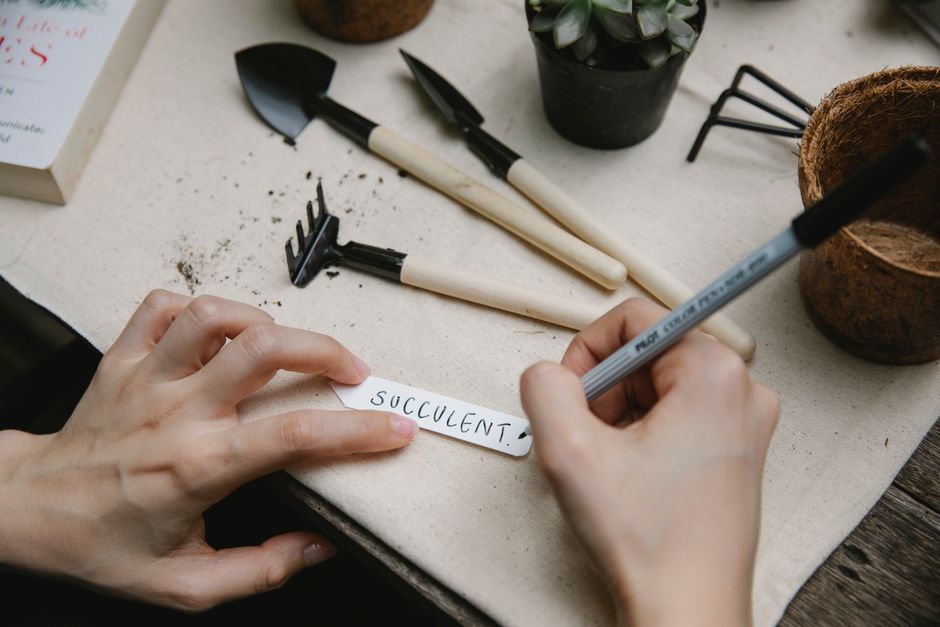
Guide your teen to choose a specific real-world space for their garden design. This could be a patch in the yard, a balcony, or a large container area. Hand them the measuring tape. Have them measure the actual length and width of their chosen space. As they observe the space, ask them: "What are some natural constraints or opportunities you immediately notice about this space?" (e.g., direct sunlight, shade, existing walls, access points). Also ask: "What mathematical tools do you think will be most helpful to tackle this challenge of designing this space?" Ensure they are thinking about physical attributes.
Done: Your teen has chosen a space, identified its dimensions, and noted initial features.
Know Before You Teach
- Good to know: Most garden plants need direct sunlight for at least 6 hours a day; some prefer partial shade.
- Existing features like walls, fences, or trees create fixed boundaries and affect light and access.
- Knowing the dimensions helps determine how much space is available for plants, pathways, and other elements.
- If they ask: What if we don't have a yard or garden space? You can choose a smaller space like a balcony, a large pot, a window box, or even just an imaginary rectangular area on a table to design.
- If they're stuck: Suggest specific elements to look for, such as where the sun hits at different times of day or where water might collect.
- Easier: Provide a pre-selected small, simple rectangular space, like a tabletop or a designated area on the floor, for them to measure.
- Harder: Ask them to consider not just physical objects, but also factors like which direction the prevailing wind comes from, and how that might affect plant choices.
Done when: Student has identified a space and considered its basic dimensions and features.

3Discussion 6 min
Initiate a discussion about the measurements they just took. Ask your teen: "Why is knowing the exact dimensions of your garden space crucial for planning?" Then, introduce the concept of scale: it's a ratio that represents the relationship between the measurements on a drawing or map and the actual measurements of the real object or distance. For example, 1 inch on paper might equal 1 foot in reality. It helps us draw big things accurately on small paper. Also, discuss area (the amount of surface within a boundary, like the total usable ground space) and perimeter (the distance around the outside edge, useful for fencing or pathways). Ask them: "How can thinking about area and perimeter help you optimize your layout for different plant types or pathways?"
Done: Your teen can explain measurement, scale, area, and perimeter as they apply to garden design.
Know Before You Teach
- Good to know: Scale drawings allow you to represent a large real-world area accurately on a much smaller piece of paper.
- Area tells you how much total growing space you have, while perimeter helps you figure out how much fencing or edging you might need.
- It's working when: The teen uses the terms 'area' or 'perimeter' correctly when discussing why these measurements are useful.
- If they're stuck: Show them a simple map or floor plan and ask them how they think that drawing relates to the actual size of the place it represents.
- Easier: Focus only on length and width, and ask how knowing those numbers helps decide how many large or small items could fit.
- Harder: Ask them to explain how using a different scale (e.g., 1 inch = 2 feet instead of 1 inch = 1 foot) would change their drawing.
Done when: Student can explain the concepts of measurement, scale, area, and perimeter in relation to garden planning.
4Activity 9 min
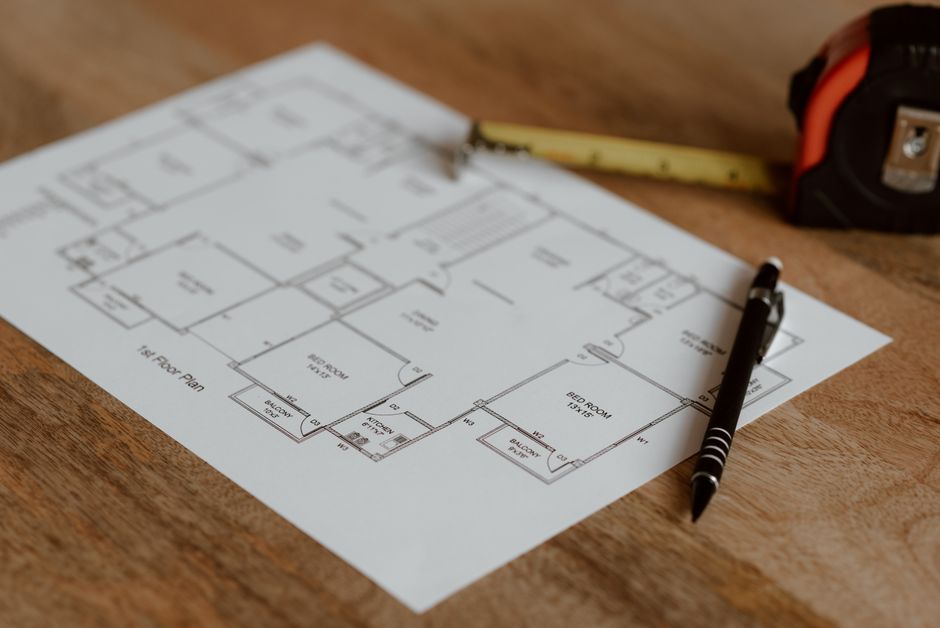
Now, it's time for hands-on design! Gather the materials: a measuring tape, paper, a pencil, and a ruler. Have your teen choose a suitable scale for their drawing, such as 1 inch = 1 foot. Using their measurements and the chosen scale, guide them to draw a scaled representation of their garden space on paper with the ruler and pencil. Once the outline is drawn, instruct them to design the interior layout. Remind them to think about optimizing the space. Ask them to consider different sections for plants, pathways, or other features. Encourage them to maximize useful space while keeping functionality in mind. Be available to help with any scale conversions or measurements if needed.
Done: Your teen has completed a detailed, scaled drawing of their garden layout.
Know Before You Teach
- Good to know: To convert a real measurement to a drawing measurement, you divide the real measurement by the scale factor (e.g., if 1 inch = 1 foot, a 10-foot real length becomes 10 inches on paper).
- It's often easiest to start by drawing the outline of the entire garden space to scale first.
- When optimizing, consider how much space each plant needs and how people will move through pathways.
- If they ask: What if my space isn't a perfect rectangle? You can break irregular shapes down into simpler ones, like combining rectangles and triangles, measuring each part, and drawing them separately.
- If they're stuck: Work through one measurement conversion together, like 'If your garden is 8 feet long and your scale is 1 inch = 1 foot, how many inches will you draw for the length?'
- Easier: Provide graph paper where each square already represents a set unit, like 1 foot, to simplify the scaling process.
- Harder: Ask them to calculate the area of one specific section (like a flower bed or patio) on their scaled drawing using the chosen scale.
Done when: Student has completed their scaled garden layout drawing.
5Summary 2 min
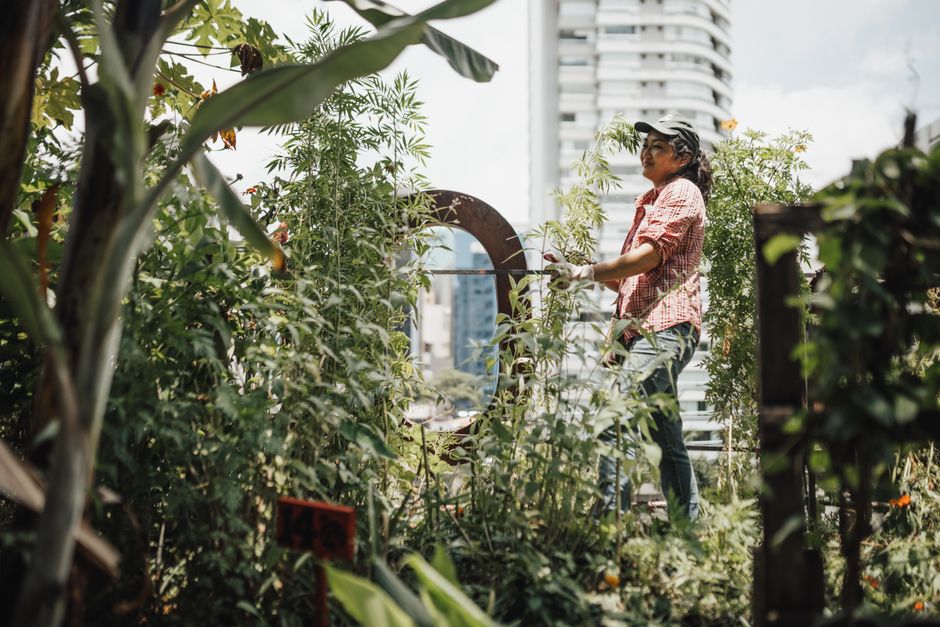
Celebrate your teen's hard work and the design they created. Ask them to reflect on the process: "What was the most challenging part of optimizing your garden layout, and how did using mathematical concepts help you overcome that challenge?" Also, prompt them to think about broader applications: "How might this skill of planning and optimizing translate to other areas of your life or even a future career?" You can mention careers like architecture, urban planning, or engineering.
Done: Your teen shares a key takeaway or connects the planning skills to real-life applications.
Know Before You Teach
- Good to know: Planning and optimization skills are essential in fields such as architecture, urban planning, interior design, engineering, and logistics.
- If they ask: How would an architect use these skills? Architects use these exact skills to design buildings, ensuring that all rooms, hallways, and features fit correctly within the available plot and meet the building's purpose.
- If they're stuck: Prompt them with a specific real-life scenario: 'How might planning a garden be similar to planning your study schedule for exams?'
- Easier: Ask them to identify just one thing they would do differently if they had to design another garden layout.
- Harder: Ask them to explain how they proved their layout was 'optimal' using some of the mathematical ideas from the lesson.
Done when: Student shares one key takeaway or connection to real life.
Beyond The Spark
Fuel their curiosity beyond the Spark with bonus extras.
Table Talk
Landscape architects and urban planners use these exact mathematical principles daily to design functional and beautiful public and private spaces.
Challenge
Research specific plants that thrive in your local climate or sunlight conditions and incorporate their actual spacing requirements into your optimized design. Calculate the potential number of plants you could grow.
Quick Recap Quiz 4 min
Customize this quiz, add questions, or follow your child's lead! Each question has a 'Parent Tip' to help them find the answer without giving it away.
1. Why is using a 'scale' important when designing a large space like a garden on a small piece of paper?
- It makes the drawing look prettier.
- It accurately represents real-world dimensions proportionally.
Remind them that scale helps shrink or enlarge things while keeping their true shape and proportion.
2. What does 'optimizing' a garden layout primarily aim to achieve?
- To make the most efficient use of the available space and resources.
- To plant only the most expensive flowers.
Focus on the idea of 'best use' or 'maximising potential' given limitations.
3. If your garden plot is 10 feet by 5 feet, and you use a scale where 1 inch = 1 foot, what would be the dimensions of your drawing?
- 10 inches by 50 inches.
- 10 inches by 5 inches.
Help them apply the given scale directly to each dimension.
4. Which career path would heavily rely on spatial reasoning and optimization skills like those used in this challenge?
- Architecture or Urban Planning.
- Professional Chef.
Guide them to think about professions that design or plan physical spaces.
Loved This Spark?
Scan to jump into the app and explore similar Sparks in our Sparks Hub. New to Mai? Start free with 10 Sparks, no credit card needed.