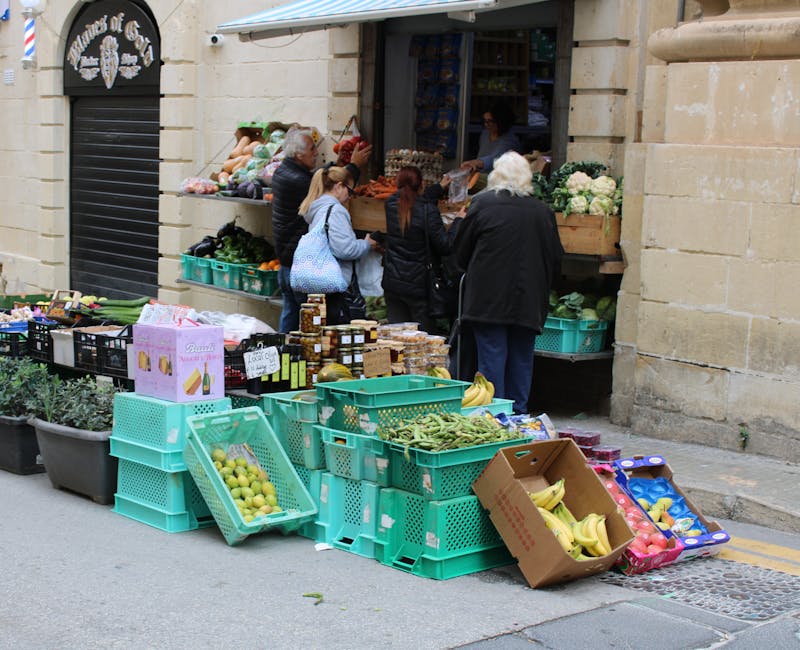
My Market Stand
This lesson challenges learners to design their own market stall, considering what to sell and how to attract customers. It introduces basic economic concepts through hands-on planning and creative problem-solving. Learners will explore community needs and the principles of local commerce.
Our goal: In this spark, your learner will identify potential customer needs and wants within a community, design a functional and appealing market stall layout for a chosen product, practice creative problem-solving and planning using available materials and explain basic concepts related to market appeal and selling.
What You Need
Cardboard • Paper • Markers • Scissors • Tape Or Glue • Small Toy Items
and this is just the baseline.
Scan to jump into the app and easily personalize this Spark to match your child's exact learning level and see how Mai will guide this lesson.
Learning Guide
A simple guide to lead you through the kickoff, the core challenge, and everything in between.
Mai’s Tips
- Encourage improvisation with materials! If they don't have exactly what they need, prompt them to think creatively about substitutes.
- During the building phase, keep asking 'Why?' questions, like 'Why did you choose that color for your sign?' or 'Why is your product placed there?' to encourage deeper design thinking.
1Introduction 5 min
Start by sparking curiosity about markets and shops. Ask them: 'What do you like about markets or stores you've visited?' and 'What do sellers do at a market?' Then, introduce the challenge: Today, you're a market stall designer! Ask: 'What do customers look for when they buy things?' and 'What do you think makes a market stall successful?'
A market is a place where people buy and sell goods. It helps connect sellers (people who offer things) with customers (people who want to buy things), meeting the community’s needs (like food) and wants (like fun games). Understanding these helps a market stall succeed.
Done when they show curiosity about markets and selling.
Done when: Student shows curiosity about markets and selling.

2Explore & Plan 8 min
Help them brainstorm what to sell at their market stall. Ask: 'What kind of things do people in our community need or want to buy?' Guide them to choose 1-2 products – the items they will sell – that are simple to represent with the available materials. Then, lay out the materials and discuss how they could be used to build their stall. Ask: 'Who might buy your product?' and 'How could we use these materials to show off your ideas?'
Done when they have chosen a product idea and brainstormed initial design concepts for their stall.
Done when: Student has chosen a product idea and brainstormed initial design concepts for their stall.

3Discussion 6 min
Encourage them to think like a business owner. Ask: 'Why would people choose to buy from your stall instead of somewhere else?' Prompt them to consider factors like uniqueness and clear presentation. Ask: 'What makes one market stand more appealing than another?' and 'How could you make your stall stand out?'
Market appeal is how attractive a stall is to potential customers. It helps draw people in, unlike a hidden or messy stall.
Done when they can articulate at least one reason why their stall might attract customers.
Done when: Student can articulate at least one reason why their stall might attract customers.

4Activity 9 min
Provide all the materials: Cardboard, Paper, Markers (or Colored Pencils/Crayons), Scissors, Tape or Glue, and Small Toy Items (or Household Objects/Craft Supplies). Supervise them as they construct their miniature market stall. Encourage independent building, but offer assistance with tricky cuts using the Scissors if needed. Remind them to focus on how their stall will communicate their product and attract customers. Ask: 'How will your stall clearly show what you're selling?' and 'What creative elements will you add to make your stall irresistible?'
Done when they have completed the physical activity of building their market stall model.
Done when: Student has completed the physical activity of building their market stall model.

5Summary 2 min
Celebrate their amazing market stall and creativity. Ask: 'What was the most challenging part of bringing your market vision to life?' and 'What did you learn about how businesses work in our community?' Also, ask: 'What would you do differently next time?' An entrepreneur is someone who organizes and operates a business, bringing ideas to life, just like they did today!
Done when they share one key takeaway or a reflection on the process.
Done when: Student shares one key takeaway or a reflection on the process.
Beyond The Spark
Fuel their curiosity beyond the Spark with bonus extras.
Table Talk
Understanding how markets work helps us appreciate the hard work of local businesses and the choices we make as consumers every day.
Challenge
Design a simple 'advertisement' or 'sign' for your market stall, highlighting its best feature or a special offer!
Quick Recap Quiz 4 min
Customize this quiz, add questions, or follow your child's lead! Each question has a 'Parent Tip' to help them find the answer without giving it away.
1. Why do people set up market stalls?
- To show off their art projects to friends.
- To sell things that people in the community want or need.
Remind them about why people visit stores or markets.
2. What helps a market stall attract customers?
- Having a clear display of what's for sale and a friendly setup.
- Hiding all the products so customers have to guess.
Think about what makes a store window appealing.
3. What's a good first step when planning your market stall?
- Start building right away without any plan.
- Think about what customers in your community might want to buy.
Ask: 'Before you make something, what do you need to know?'
4. Why are local markets important for a community?
- They help people get things they need and support local sellers and makers.
- They are only there for loud gatherings and festivals.
Discuss how local markets connect people and products.
Loved This Spark?
Scan to jump into the app and explore similar Sparks in our Sparks Hub. New to Mai? Start free with 10 Sparks, no credit card needed.