Max Area Fencing
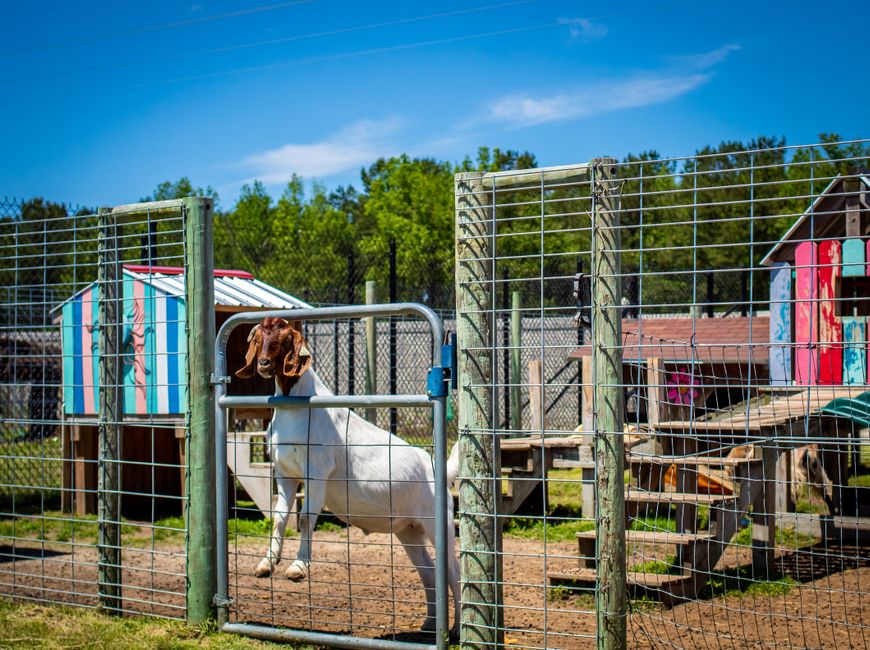
This challenge invites learners to explore geometric optimization by designing the largest possible enclosure using a fixed amount of 'fencing.' It emphasizes critical thinking, spatial reasoning, and practical application of mathematical concepts in real-world design scenarios.
Our goal: In this spark, your learner will compare the areas of different geometric shapes with the same perimeter, formulate hypotheses about which shapes are most efficient in terms of area-to-perimeter ratio and apply measurement and calculation skills to evaluate different design options.
What You Need
String • Ruler • Scissors • Paper • Tape
and this is just the baseline.
Scan to jump into the app and easily personalize this Spark to match your child's exact learning level and see how Mai will guide this lesson.
Learning Guide
A simple guide to lead you through the kickoff, the core challenge, and everything in between.
Mai’s Tips
- Encourage your learner to sketch their ideas and record their measurements neatly. Sometimes drawing it out and seeing the numbers side-by-side helps solidify the learning!
- If they struggle with area formulas for different shapes, provide a quick reference sheet or suggest using graph paper to count squares for an approximation.
Prep Before Session 15 min
- Gather string or yarn, a ruler, scissors, paper, and tape.
- Review the formulas for calculating the area of a square (side x side), rectangle (length x width), triangle (0.5 x base x height), and circle (pi x radius x radius).
1Introduction 5 min
Engage your learner by presenting the challenge. Ask them to imagine they are designers with a fixed amount of fencing, needing to create the largest possible enclosure. Spark their curiosity with these questions:
* "If you had a limited amount of fencing to build an enclosure for an animal, what kind of shapes would you consider?"
* "Do you think every shape made with the same amount of fence would give the animal the same amount of space?"
Encourage them to share any initial ideas or hunches about different shapes and the space they might enclose. The goal is to get them thinking about the central problem without giving away answers.
Done when the student expresses initial ideas and understands the goal of maximizing space with limited fencing.
Know Before You Teach
- Good to know: Different shapes made with the exact same perimeter will enclose different amounts of space.
- If they ask: What's an enclosure? It's simply an area that is completely surrounded by a fence or wall, like a pen for an animal or a garden bed.
- It's working when: The child actively engaging with the questions and offering initial thoughts about shapes or space.
- If they're stuck: Suggest they think about a specific animal, like a dog or a rabbit, and what kind of space that animal might prefer.
- Easier: Limit the initial discussion to just two common shapes, like a square and a circle, to simplify choices.
- Harder: Ask them to imagine why city planners might care about maximizing space in public parks.
Done when: Student expresses initial ideas and understands the goal of maximizing space with limited fencing.
2Explore & Plan 8 min
Work with your learner to establish a clear plan for the activity. First, help them decide on a specific length for the 'fencing' string, such as 36 inches or any easily measurable length. Then, ask:
* "What geometric shapes are you curious to try first with your string?"
Suggest common shapes like a square, rectangle, triangle, or even a circle, assuming they know the area formulas for these shapes. Next, discuss how they will measure the 'space' or Area inside each shape. Area is the amount of surface a two-dimensional shape covers, measured in square units. For example, the area of a room tells you how much carpet you need. Its opposite is `perimeter`, which is the distance around the edge. Ask:
* "How will we measure and compare the space inside each one?"
Finally, facilitate gathering the string, ruler, scissors, paper, and tape.
Done when the student has a plan for creating at least 2-3 shapes with the chosen string length and knows how to measure their areas.
Know Before You Teach
- Good to know: Area is the amount of flat space inside a 2D shape, measured in square units; perimeter is the distance around the outside edge of the shape.
- For this lesson, the length of the string represents the fixed perimeter for all the shapes you will make.
- If they ask: Why can't I just guess? We need to actually measure and calculate the area for different shapes so we can compare them accurately and see which one truly provides the most space.
- If they ask: What's 'optimization'? Optimization is finding the best possible solution to a problem, in this case, finding the shape that gives the maximum area for a given perimeter.
- It's working when: The child clearly articulating at least two different shapes they want to test and how they plan to find their areas.
- If they're stuck: Give them specific options for string length, such as 24 inches or 48 inches, if they are hesitant to choose.
- Easier: Focus on only two very simple shapes, like a square and a rectangle, for which the area formula is straightforward.
- Harder: Challenge them to consider how they would calculate the area of an irregular shape they might imagine, like an L-shape, if they were to try it.
Done when: Student has a plan for creating at least 2-3 shapes with the chosen string length and knows how to measure their areas.

3Discussion 6 min
Prompt your learner to make predictions before they begin constructing shapes. Ask them to consider the relationship between the perimeter (the fixed length of the string) and the area (the space inside) without giving away the answers.
* "Do you think a long, skinny rectangle will give your imaginary pet more or less space than a square with the same perimeter?"
* "What about something round like a circle? Why do you think that might be the case?"
Encourage them to articulate their initial reasoning, drawing on any mathematical ideas they might have about how shapes enclose space. There are no right or wrong answers here, only thoughtful predictions.
Done when the student has made clear predictions about which shape might enclose the most area and can articulate their initial reasoning.
Know Before You Teach
- If they ask: So, is a square better than a rectangle? Think about it: a square is a special kind of rectangle where all sides are equal; how might that make a difference in its efficiency?
- It's working when: The child confidently stating a prediction and giving a brief explanation for their choice, even if it's not mathematically perfect.
- If they're stuck: Ask them to consider which shape feels like it 'hugs' the space most tightly or spreads it out the most.
- Easier: Provide a hint, such as asking, 'Do you think a very stretched-out shape or a more bunched-up shape holds more stuff inside?'
- Harder: Have them draw a quick sketch of their predicted best shape and their predicted worst shape, both with roughly the same perimeter.
Done when: Student has made clear predictions about which shape might enclose the most area and can articulate their initial reasoning.

4Activity 9 min
Guide your learner through the hands-on creation and measurement.
1. Form the first shape: Help them take their chosen length of string and carefully form their first geometric shape on the paper. Use tape to secure the string to hold its form.
2. Measure and calculate: Guide them to accurately measure the dimensions (like length, width, or radius) of the shape. Then, have them calculate its Area – the total space enclosed by the string. Record these findings.
3. Form and measure second shape: Using the exact same length of string, have them form a second, different shape. Secure it, measure its dimensions, calculate its area, and record the results.
Emphasize precision in both measuring with the ruler and calculating the areas. Finally, ask:
* "What do you discover when you compare the areas of your shapes?"
Done when the student has created at least two different shapes with the same perimeter, measured their dimensions, calculated their areas, and compared the results.
Know Before You Teach
- If they ask: My calculation seems very different from my prediction, is that bad? Not at all, sometimes our intuition doesn't match the math, and that's precisely why we do these experiments!
- It's working when: The child carefully measuring and calculating, showing an understanding of how to apply the area formulas to their shapes.
- If they're stuck: Walk them through the measurement and calculation of the first shape step-by-step, providing the formula as needed.
- Harder: Ask them to consider the percentage difference in area between their shapes to quantify the efficiency more precisely.
Done when: Student has created at least two different shapes with the same perimeter, measured their dimensions, and calculated their areas, comparing the results.

5Summary 2 min
Conclude the lesson by celebrating your learner's efforts and discoveries. Ask open-ended questions to encourage reflection on their findings.
* "What did you find out about maximizing space with a limited boundary?"
* "Which shape gave your imaginary pet the most room, and why do you think that specific shape was the most efficient?"
* "How might this principle apply in the real world, maybe to a garden layout or even a city park?"
Prompt them to connect their mathematical observations to practical applications, such as designing efficient spaces or using materials wisely. This helps solidify the relevance of optimization principles.
Done when the student shares one key takeaway from their findings and connects it to a real-world idea.
Know Before You Teach
- Good to know: This concept, called isoperimetric inequality, has practical implications for efficient design in various fields.
- If they ask: So a circle is always the best? Yes, mathematically, a perfect circle will always give you the most area for any given perimeter.
- If they ask: Why is this important? Understanding this helps people design things like efficient packaging, maximizing space in buildings, or even planning land use for agriculture or animal enclosures.
- It's working when: The child expressing a clear understanding that certain shapes are more efficient at enclosing space than others, and offering a real-world example.
- If they're stuck: Give them a real-world scenario, like 'Imagine you're designing a dog park with a set amount of fence; what shape would you choose and why?'
- Easier: Provide a few examples of real-world applications and ask them to pick which one makes the most sense to them.
- Harder: Challenge them to think about why nature might favor more spherical or rounded shapes, like water droplets or bubbles.
Done when: Student shares one key takeaway from their findings and connects it to a real-world idea.
Beyond The Spark
Fuel their curiosity beyond the Spark with bonus extras.
Table Talk
Architects, engineers, and city planners use optimization principles to design structures and spaces that maximize utility with limited resources.
Challenge
What if your pet enclosure needed to lean against an existing wall, so you only needed fencing for three sides? How would that change your optimal design?
Quick Recap Quiz 4 min
Customize this quiz, add questions, or follow your child's lead! Each question has a 'Parent Tip' to help them find the answer without giving it away.
1. What geometric shape generally encloses the largest area for a fixed perimeter?
- A square
- A circle
The most 'round' shape is usually the most efficient.
2. If you have a perimeter of 24 units, which of these rectangular shapes would enclose more area?
- A 6x6 square (Area 36)
- A 2x10 rectangle (Area 20)
Consider how 'stretched out' or 'compact' a shape is.
3. Why is optimizing area with a fixed perimeter important in real-world construction?
- To make buildings look more decorative
- To make the most efficient use of expensive materials or land
Think about the cost of building materials or land.
4. What soft skill was primarily strengthened during this challenge?
- Critical thinking and problem-solving
- Memorizing multiplication tables
We were trying to figure out the best solution to a specific problem.
Loved This Spark?
Scan to jump into the app and explore similar Sparks in our Sparks Hub. New to Mai? Start free with 10 Sparks, no credit card needed.