Make Diwali Shine
Explore the meaning behind Diwali, the Festival of Lights, by designing and crafting a symbolic light decoration. This activity encourages creativity and understanding of cultural traditions through hands-on making.
Our goal: Learners will understand the significance of light in cultural celebrations, particularly Diwali, recognizing how it symbolizes abstract concepts like good triumphing over darkness. They will apply this understanding by designing and constructing their own decorative light element using everyday materials.
What You Need
Paper • Scissors • Glue • Markers • Aluminum foil
and this is just the baseline.
Scan to jump into the app and easily personalize this Spark to match your child's exact learning level and see how Mai will guide this lesson.
Learning Guide
A simple guide to lead you through the kickoff, the core challenge, and everything in between.
Mai’s Tips
- Symbolic Connection: The true learning here isn't just making a craft, but connecting the physical light to its symbolic meaning. If the child is only focused on the craft, gently steer them back to 'what does this light represent?'
- Darkness as a Metaphor: Children often interpret 'darkness' literally. The nuance to watch for is if they understand 'darkness' can also mean problems, sadness, or not knowing something. If they're stuck on it just being night, ask: 'Can a difficult problem feel like a dark cloud?'
- Simplify if Stuck: If the concept of symbolism is too abstract, simplify. Focus on feelings: 'Does this light make you feel happy or sad? Peaceful or worried? Why?' This builds a foundation for later abstract understanding.
- Material Flexibility: Encourage using whatever paper or decorative items are easily on hand. The goal is creativity and understanding, not perfection of materials. Allow them to substitute or add things they find.
1Breakfast Brightness 5 min
Start by drawing attention to light sources present at the breakfast table or in the kitchen. Engage both younger and older children in identifying lights and discussing their purpose or feeling.
- Look at your toast! It was made with heat, which often comes with light. What else in our kitchen gives off light?
- How does the light from the window feel different from the light from the ceiling lamp? What mood does each create?
Know Before You Teach
- Good to know: Light is essential for vision and can also influence mood and atmosphere.
- Different light sources (natural vs. artificial) create different effects.
- If they ask: Why do some lights feel warmer than others? Some lights give off a more orange or yellow glow, which often feels cozier and warmer than bright white or blue light.
- If they're stuck: Ask 'Which light helps you see your food best?' or 'Which light makes you feel most awake?'
- Easier: Focus only on identifying light sources and whether they are 'bright' or 'dim'.
- Harder: Ask them to describe the temperature, color, and brightness of different lights and how those qualities affect the room's mood.
Done when: Child identifies several light sources and shares one thought about how light makes them feel or helps them.
2Explore & Plan: Festival Lights 8 min
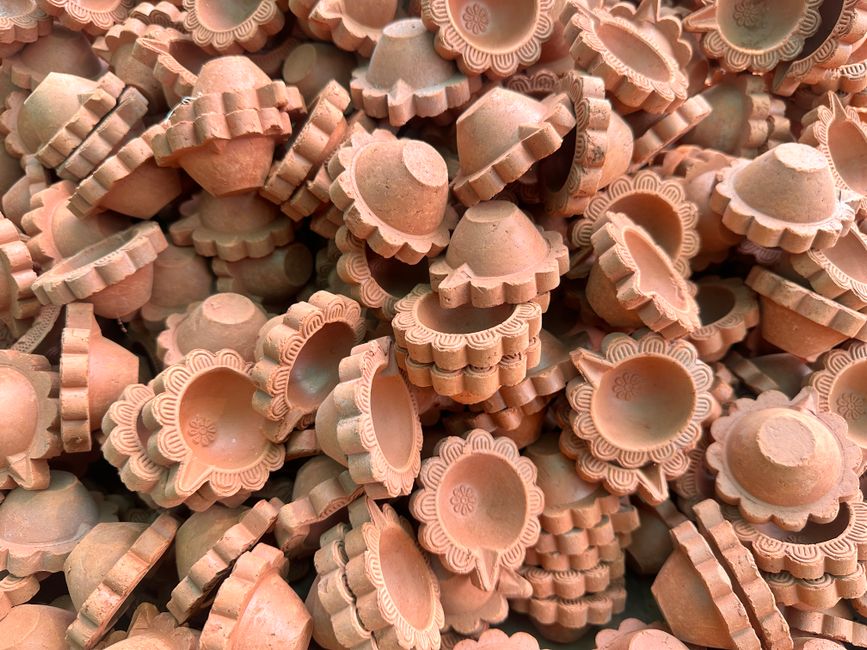
Introduce Diwali as the Festival of Lights, where light is used to celebrate. Have the children think about what kind of light they would create for a special celebration and plan their design using the provided materials.
- Imagine a huge party, a festival! What kind of lights would make it feel really special?
- Diwali is the Festival of Lights. People light special lamps. What kind of special lamp would you like to make today?
- Here are our materials: paper, scissors, glue, markers, foil. What can you create with these to make a beautiful light? Younger children can draw simple light shapes. Older children can sketch a detailed design.
Know Before You Teach
- Good to know: Diwali is a major Hindu festival celebrated over five days, also observed by Jains, Sikhs, and some Buddhists.
- It symbolizes the victory of light over darkness, good over evil, and knowledge over ignorance.
- If they ask: What kind of lights do people use in Diwali? People use traditional oil lamps called diyas, candles, fairy lights, lanterns, and even fireworks to light up their homes and streets.
- Key words: Diwali: A special festival, often called the Festival of Lights, celebrated in India and by people of Indian origin all over the world.
- If they're stuck: Suggest simple shapes: 'Would you like to make a pointy star light, or a round lantern light?'
- Easier: Provide pre-cut paper shapes and ask the child to arrange and glue them to create a light.
- Harder: Challenge them to think about how different shapes and colors of light might make people feel during a celebration.
Done when: Child has a basic idea or sketch for their light creation and has identified which materials they want to use.
3Discussion: Light's Deeper Meaning 6 min
Explain that in Diwali, light has a symbolic meaning beyond just seeing. It represents good triumphing over darkness, or knowledge over ignorance. Help children connect this abstract idea to concrete examples.
- When we light up for a festival like Diwali, what do you think that light might mean, besides just helping us see?
- We often say light helps us see. What does 'darkness' mean when we talk about overcoming it? Is it just when the sun goes down, or something else?
- How can light feel like 'good' or 'hope' in our lives? Can you think of a time when a little light, even a small one, made a big difference?
Know Before You Teach
- Good to know: Symbolism is when an object or idea represents something else.
- If they ask: What is 'ignorance'? Ignorance means not knowing something important, like not understanding how something works or why people do certain things.
- It's working when: Child making a connection between 'darkness' and a problem or negative feeling, not just night time.
- If they're stuck: Ask 'Can being lost feel like a dark situation?' or 'If you don't know the answer to a question, does that feel a little bit like darkness?'
- Easier: Focus on the simple idea that light means 'good things' and darkness means 'bad things' without going into abstract concepts like knowledge vs. ignorance.
- Harder: Ask them if they can think of other things that are symbolic, like a green light meaning 'go' or a thumbs-up meaning 'good job'.
Done when: Student can explain in their own words that light in Diwali represents good winning over something bad, and can give one example of what 'darkness' might mean metaphorically.
4Activity: Crafting Our Light 9 min
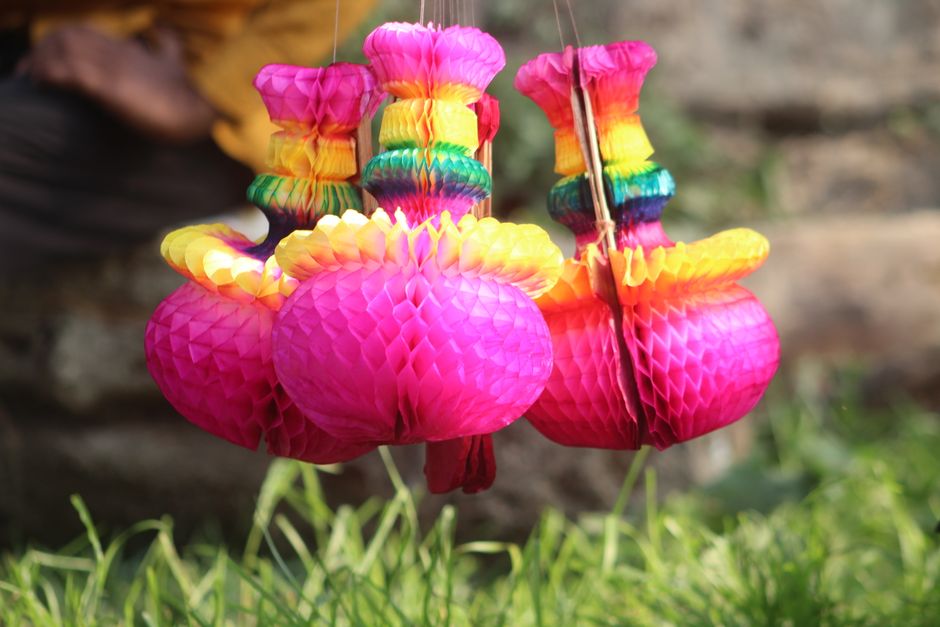
Guide the child in creating their chosen light decoration. Encourage them to lead the process, offering help with cutting, folding, or gluing as needed. Ensure safe use of scissors. Younger children can focus on simple shapes and decorating, while older children can attempt more intricate designs and precise cuts.
- Now it’s time to build! How will you use the paper, scissors, and glue to make your light creation?
- How can you use the shiny foil to make your light look extra special and bright?
- What colors or patterns will you add with the markers to make your light feel joyful or hopeful?
Know Before You Teach
- Good to know: Paper crafts can involve various techniques like cutting, folding (origami-like), gluing, and layering to create 3D forms.
- Aluminum foil adds reflectivity and can mimic the sparkle of light.
- If they ask: How can I make my light stand up? You could fold a small 'foot' on the bottom, or glue two pieces together to make it sturdy, or even roll paper into a tube to make a stand.
- It's working when: Child actively experimenting with materials and adapting their initial plan as they build.
- If they're stuck: Suggest a simple technique: 'How about we cut strips and curl them?' or 'What if you fold it in half and cut a shape from the fold?'
- Easier: Pre-cut all shapes and let the child focus on gluing and decorating them onto a base paper.
- Harder: Challenge them to create a 3D effect with folds or to incorporate a specific pattern that symbolizes something to them.
Done when: Student has completed their paper light decoration.

5Summary: Our Festival of Lights 2 min
Invite the child to reflect on their finished light and the process of making it. Connect their feelings about their creation to the meaning of Diwali.
- Look at the beautiful light you made! How does it make you feel now that it's finished?
- What was your favorite part of making your light, and why?
- If your light could send a message, what do you think it would say?
Know Before You Teach
- Good to know: Reflection helps consolidate learning and makes it more personal.
- Connecting abstract concepts to personal creations reinforces understanding.
- If they ask: Can I keep my light in my room? Absolutely! It's a wonderful reminder of the light and hope we talked about today.
- It's working when: Child articulating a personal feeling or thought connected to their creation or the lesson's theme.
- If they're stuck: Ask 'What makes your light special to you?' or 'What is the brightest part of your light?'
- Easier: Ask 'Is your light happy or cozy?' and let them pick one adjective.
- Harder: Ask them to explain how their specific design choices (colors, shapes) reflect the ideas of light over darkness.
Done when: Student shares one key takeaway about light, Diwali, or their creation.
Beyond The Spark
Fuel their curiosity beyond the Spark with bonus extras.
Table Talk
Designers and artists often use light to create mood, convey messages, and celebrate events in public spaces and private homes.
Did You Know?
The word 'Diwali' means 'rows of lighted lamps'!
Challenge
Create a whole 'Festival of Lights' display by making several different light decorations and arranging them together in a small, cozy space.
Quick Recap Quiz 4 min
Customize this quiz, add questions, or follow your child's lead! Each question has a 'Parent Tip' to help them find the answer without giving it away.
1. Diwali is known as the Festival of...
- Sweets
- Lights
Remind them of the lights they just made and saw in the lesson.
2. In Diwali, light often represents...
- Good winning over darkness
- The end of winter
Revisit the discussion about how light can be a symbol for positive things.
3. Which feeling is usually associated with bright lights during a celebration?
- Sadness or fear
- Joy or hope
Ask them how they feel when they see colorful lights or fireworks.
4. What does creating a special light make us think about?
- How we can bring brightness and positive feelings to others.
- Only about seeing better in the dark.
Encourage them to think about the broader impact of light and celebrations.
Loved This Spark?
Scan to jump into the app and explore similar Sparks in our Sparks Hub. New to Mai? Start free with 10 Sparks, no credit card needed.