
Make a Snow Globe That Snows Slowly
Explore the magic of snow globes by building your own and discovering why the "snow" falls so slowly. Race the snow through different liquids to see how a liquid's thickness changes how fast things fall, then add a festive touch to your favorite jar.
Our goal: Learners will construct their own snow globes and observe how particles move through different liquids. They will understand that liquid thickness, or viscosity, directly affects how fast objects fall, allowing them to explain the magic of a slow-falling snow globe.
What You Need
Clear plastic jars with lids • Water • Granulated sugar • Cooking oil • Corn syrup or honey (optional) • Glitter • Small waterproof decorations • Spoon • Measuring cups/spoons • Timer • Worksheet (printed or plain paper)
and this is just the baseline.
Scan to jump into the app and easily personalize this Spark to match your child's exact learning level and see how Mai will guide this lesson.
Learning Guide
A simple guide to lead you through the kickoff, the core challenge, and everything in between.
Mai’s Tips
- Safety first: Use plastic jars, not glass. These jars are for looking, not tasting: nobody drinks the liquids. The grown-up pours the oil and syrup and wipes up spills right away so no one slips.
- Dissolve the sugar: Stir until the sugar has fully dissolved before adding glitter. Sugar grains that haven't dissolved fall fast and get mixed up with the snow.
- Glitter type: Fine glitter works best. Big, heavy glitter falls fast even in thick liquids, which makes the differences harder to see.
- Explaining viscosity: If the idea isn't landing, pour water and then honey or syrup. How hard it is to pour, and how fast it pours, shows the difference in thickness.
1Introduction: The Mystery of Slow Snow 5 min
Show a real snow globe if you have one, or a picture. Shake it and let your child watch. Ask what they think makes the snow fall so slowly.
Know Before You Teach
- Good to know: Snow globes often use water mixed with glycerin or corn syrup to increase the liquid's thickness, making the 'snow' fall slower.
- The 'snow' is usually made of very light, non-absorbent materials like plastic glitter or fine plastic flakes.
- If they're stuck: Shake a snow globe vigorously yourself and exaggerate your awe at the slow fall.
- Easier: Focus only on the 'magic' of the slow fall and ask, 'Isn't that cool?'
- Harder: Ask, 'Do you think the shape of the snow also makes a difference in how it falls?'
Done when: Child expresses curiosity about snow globes and offers initial ideas about why snow falls slowly.

2Explore & Plan: Our Snow Globe Race 8 min
Gather everything on a clear table. Stir 1/4 cup of sugar into one jar of warm tap water now, so it has dissolved by race time. Introduce the Snow Race Chart (or draw columns on paper: Liquid, Prediction, Time). Have your child predict which liquid will make the snow fall slowest, and say why. Younger children can plan their snow scene on the Snow Globe Design Page.
Know Before You Teach
- Good to know: Sugar water is only a little thicker than plain water, so its snow falls only a little slower.
- Cooking oil is much thicker than water, so the oil jar wins the three-jar race clearly.
- Corn syrup and honey are thicker still. If you add the fourth jar, it will win.
- If they ask: Will the oil mix with the water? No, oil and water don't mix! They'll stay separate, but we'll still see how easily the glitter falls through each of them.
- It's working when: Child makes a clear prediction and provides a simple reason, even if it's incorrect.
- If they're stuck: Suggest they guess for just one liquid first, then the others. 'What about the sugar water?'
- Easier: Focus on drawing their favorite items for the snow globe scene. Help them circle one liquid on the chart that they 'think will win'.
- Harder: Ask, 'On a scale of 1 to 10, how thick do you think each liquid is? Make a prediction for each.'
Done when: Your child has circled the jar they think will win the slow race.

3Discussion: The Secret of Thickness 6 min
Before the race, do a quick pour test: a spoonful of water, then a spoonful of oil. Which pours slower? Introduce viscosity: how thick or sticky a liquid is. A liquid with high viscosity, like honey, resists things moving through it. A liquid with low viscosity, like water, lets things move easily. Ask your child to check their race prediction against this idea.
Know Before You Teach
- Good to know: Viscosity is a fluid's resistance to flow. High viscosity means it flows slowly (e.g., honey); low viscosity means it flows easily (e.g., water).
- Temperature can affect viscosity: heating a liquid usually lowers its viscosity (makes it thinner), while cooling it usually increases viscosity (makes it thicker).
- It's working when: Your child pointing to the oil jar and saying "that one is thicker."
- If they're stuck: Provide extreme examples: 'Think about trying to run through water versus trying to run through thick mud. Which one is harder?'
- Easier: Ages 4 to 6: use the words "thick" and "sticky." Ask, "Which one poured slowest?"
- Harder: Ask, 'Can you think of a liquid that has very low viscosity, even lower than water? What about a liquid with very, very high viscosity?'
Done when: Your child can say what viscosity means in their own words and which liquid they now expect to be slowest.
4Activity: Building Our Snow Globes 9 min
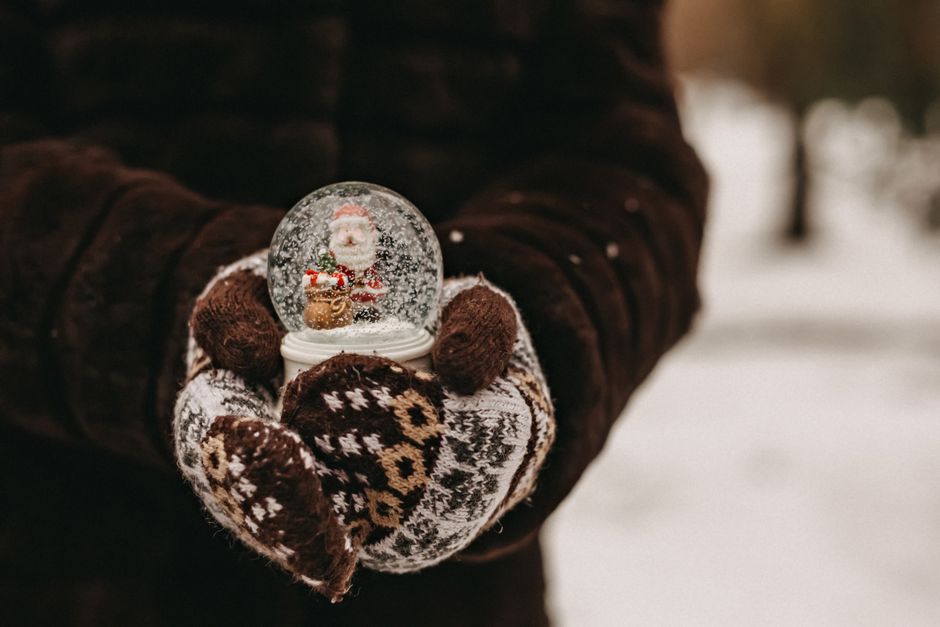
Fill one jar with plain water and one with cooking oil; the sugar water jar is ready from Stage 2. If you have corn syrup or honey, fill a fourth jar. Add a pinch of the same glitter or foil to each jar and close the lids tightly. Shake all the jars together and watch the snow settle. Older kids can time each jar and record it on the chart. The oil jar will win the three-jar race clearly; sugar water is only a little slower than plain water. The corn syrup or honey jar, if you made one, will win overall. Finish by dropping one small waterproof decoration into your favorite jar.
Know Before You Teach
- Good to know: To ensure consistency, use roughly the same amount of 'snow' in each jar.
- Shaking all jars at the exact same moment provides the most accurate comparison.
- It's working when: Child carefully observes the falling 'snow' in each jar and notices differences.
- If they're stuck: If the difference is hard to see, shake harder and watch the oil jar closely. Make sure the sugar has dissolved.
- Easier: Ages 4 to 6: focus on shaking and watching. Skip the timer and just point to the slowest snow.
- Harder: Have them repeat the experiment 2-3 times for each liquid and calculate the average fall time to account for human error or inconsistent shakes.
Done when: Your child has shaken the jars and pointed to the one where the snow fell slowest.

5Summary: My Slowest Snow Globe 2 min
Talk about the results: which snow was slowest, and was that a surprise? Link viscosity to things they know, like ketchup or syrup. Celebrate their science and their snow globe.
Know Before You Teach
- Good to know: Viscosity matters every day, from how honey pours to how motor oil protects an engine.
- Christmas crafts are a fun way to learn science.
- It's working when: Child can articulate which liquid worked best for slow snow and why.
- If they're stuck: Prompt them: 'What was the most surprising thing? Was it what you expected?'
- Harder: Ask, 'If we wanted to make a snow globe where the snow never stopped moving, what kind of liquid would we need? Why?'
Done when: Student shares one key takeaway about viscosity or their favorite part of the activity.
Beyond The Spark
Fuel their curiosity beyond the Spark with bonus extras.
Table Talk
Understanding viscosity is crucial for engineers designing everything from paints and glues to engine oils and food products.
Did You Know?
Erwin Perzy of Vienna was trying to make a surgeon's lamp brighter around 1900, when he accidentally invented the snow globe.
Challenge
Does more sugar make the snow fall slower? Stir extra sugar into the sugar jar and race it again. Then decorate the rest of your jars to make a whole snowy village.
Quick Recap Quiz 4 min
Customize this quiz, add questions, or follow your child's lead! Each question has a 'Parent Tip' to help them find the answer without giving it away.
1. What made the snow fall slowly in our snow globes?
- The jar was too small.
- The liquid was thick or 'sticky'.
Think about the pour test. Which liquid poured slowest?
2. What is the science word for how thick or sticky a liquid is?
- Viscosity
- Density
Look back at the new word from the pour test.
3. If you want snow to fall even slower in a snow globe, what kind of liquid should you use?
- A very thin liquid, like water.
- A very thick liquid, like syrup.
Think about which jar won the slow race.
4. Why might a painter choose a thicker paint for a specific art project?
- Thicker paint drips less and stays where it's put.
- Thicker paint dries faster.
Think about how a thick liquid moves when you tip it.
Loved This Spark?
Scan to jump into the app and explore similar Sparks in our Sparks Hub. New to Mai? Start free with 10 Sparks, no credit card needed.