
Invisible Wire Challenge
This Spark challenges families to explore the incredible thinness of wires inside modern computer chips. Children will compare a human hair to increasingly smaller scales, imagining pathways for electricity in everyday objects.
Our goal: Children will learn to compare incredibly tiny sizes by using a human hair as a reference point. They will discover what a nanometer is and understand just how small the wires are inside computer chips, appreciating the amazing engineering behind modern technology.
What You Need
Aluminum foil • Paper • Scissors • Pencil or marker • Human hair • Table or flat surface
and this is just the baseline.
Scan to jump into the app and easily personalize this Spark to match your child's exact learning level and see how Mai will guide this lesson.
Learning Guide
A simple guide to lead you through the kickoff, the core challenge, and everything in between.
Mai’s Tips
- Conceptual Shift: This Spark shifts from physical circuit building to conceptual understanding of scale. The goal isn't to make electricity flow, but to grasp how incredibly tiny parts of technology are. Don't worry if they can't make something truly 'nanometer' thin; the comparison to hair is the key.
- Scale is Hard: Young children struggle with abstract scales like 'nanometer' or '1,000 times smaller.' Focus their attention on the direct comparison of their thin foil strip to the hair. For older kids, push the 'how many times smaller' question and encourage them to articulate the vastness of the difference.
- Visualizing Tiny: If the concept of 'nanometer' isn't landing, use a simpler analogy. 'Imagine drawing a line on this table, and then zooming in so much that the pencil lead itself looks like a highway – a nanometer would be like a tiny crumb on that highway.' Keep connecting it back to the hair as the tangible reference point.
- Hair Collection: Make sure to have a single strand of human hair ready before starting. It's the central reference point for the entire comparison, and finding one mid-activity can break the flow.
1Breakfast Table Connects 5 min
Begin by sitting at the breakfast table. Point to an everyday appliance nearby, like a toaster, lamp, or even a radio. Ask the children to think about how it gets power. Younger children can simply point to the cord; older children can discuss what might be hidden in the walls. Let them wonder about the hidden pathways.
Know Before You Teach
- Good to know: Electricity travels through conductors, most commonly wires made of metal like copper.
- These wires are hidden inside walls, appliances, and devices.
- If they ask: How does electricity get into the wire? Electricity flows from a power source, like an outlet, into the wire, which acts like a tiny road for it.
- It's working when: Child shows curiosity about what's hidden inside walls or appliances.
- If they're stuck: Ask them to trace the path of a visible cord from an appliance to the wall outlet.
- Easier: Focus only on the visible cord and ask 'What's inside this black plastic?'
- Harder: Ask 'What materials do you think are good at letting electricity travel, and what materials block it?'
Done when: Child guesses or describes how electricity might travel through wires to an appliance.

2Explore & Plan Our Paths 8 min
Gather the aluminum foil, paper, scissors, and a pencil. Challenge the children: 'We're going to try to make the thinnest possible path for electricity. How would you try to make something thinner than a human hair with these materials?' Encourage them to share their ideas before starting. Younger children can think about any thin line; older children can consider how to make it super precise. Have them retrieve a single human hair for comparison.
Know Before You Teach
- Good to know: Aluminum foil is a good conductor of electricity, though not as good as copper.
- Paper is an insulator, meaning it doesn't conduct electricity well.
- If they ask: Why do we use foil and not paper for the path? Foil is metal, and metals are good at letting electricity move through them. Paper is not.
- It's working when: Child actively engages in planning and making predictions about material suitability.
- If they're stuck: Suggest trying to cut a really thin strip of paper first, then foil, to see which is easier to make thin.
- Easier: Focus on making any thin strip and don't worry about comparing to the hair yet.
- Harder: Ask 'How could we measure our path to know if it's truly thinner than the hair?' (e.g., using a ruler or magnifying glass).
Done when: Child proposes a method to create a thin path and has the materials ready.

3The Super-Small Scale 6 min
First, ask the children to describe their imagined thinnest path. Then, introduce the concept of a nanometer. Explain that: a nanometer is a unit of measurement for incredibly small things, equal to one billionth of a meter. We recognize it by understanding its scale: a human hair is about 80,000 to 100,000 nanometers thick, while computer chip wires are only around 14 nanometers wide. Ask: 'If a human hair is so much thicker, what does that tell us about how tiny computer wires are?'
Know Before You Teach
- Good to know: Wires in modern microchips can be as thin as 14 nanometers.
- If they ask: What's the smallest thing ever? Things get even smaller than nanometers, like atoms and subatomic particles, which scientists study using very special tools.
- Key words: nanometer: An incredibly tiny unit of measurement, used for things too small to see, like parts inside computer chips.
- It's working when: Child shows a sense of awe or surprise at the vast difference in scale.
- If they're stuck: Use the analogy: 'If your hair was a huge tree trunk, a nanometer would be like a tiny insect on that trunk.'
- Easier: Just focus on 'much, much, much thinner' without using the exact nanometer numbers.
- Harder: Ask 'If a hair is 100,000 nm and a wire is 10 nm, how many times thinner is the wire?' (10,000 times).
Done when: Child understands that a nanometer measures extremely small things and can state that computer wires are much thinner than a human hair.
4Crafting Micro-Paths 9 min
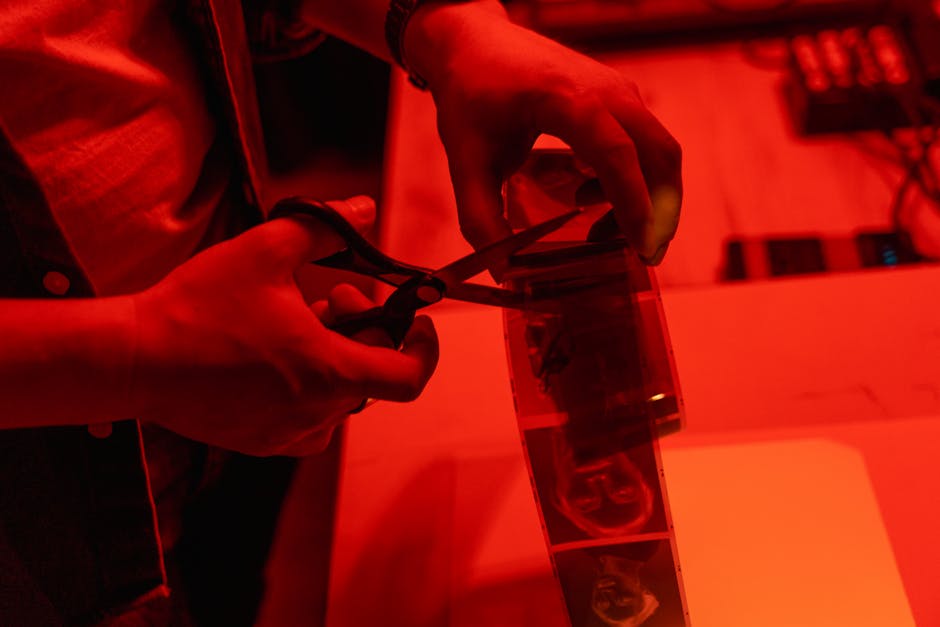
Have the children use the scissors to cut the thinnest possible strips of aluminum foil, or draw the thinnest lines on paper with a pencil. Encourage experimentation. Then, have them carefully place the human hair next to their thinnest creation. Discuss the difference. For younger children, praise their effort in cutting/drawing thin lines. For older children, ask them to quantify the difference and consider the precision needed for chip manufacturing.
Know Before You Teach
- Good to know: The precision required to manufacture microchips is immense.
- Even the sharpest household scissors cannot cut a material to nanometer thickness.
- If they ask: How do they make such tiny wires? Scientists use very advanced tools and processes, often involving light or chemicals, to 'etch' these tiny patterns onto materials.
- Easier: Focus on the fine motor skill of cutting thin strips, rather than the exact comparison.
- Harder: Challenge them to draw a line that looks as thin as possible, then examine it with a magnifying glass to see its true width.
Done when: Child has created a very thin path and compared it to a human hair, expressing amazement at the difference.
5Tiny Worlds, Big Ideas 2 min
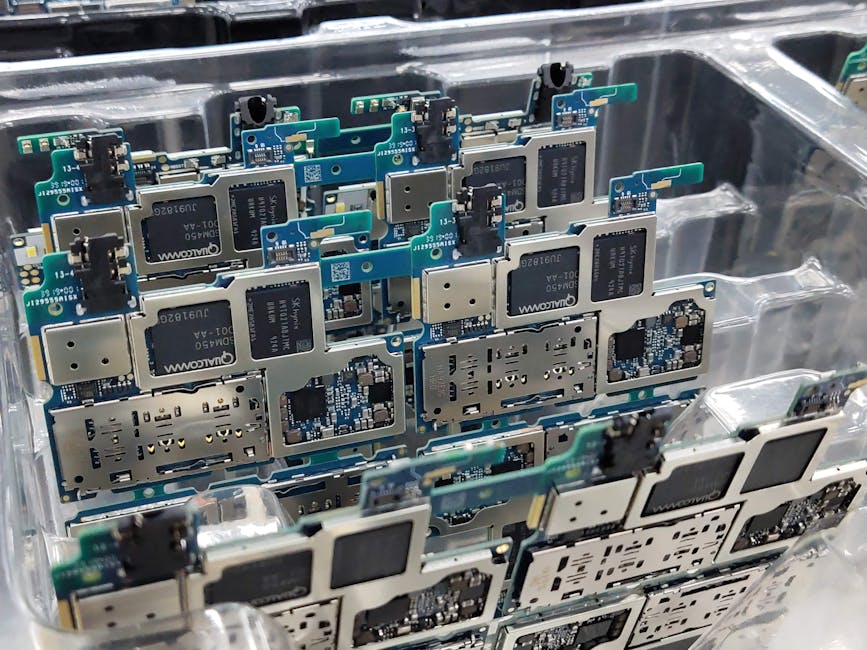
End the Spark by asking reflection questions. Ask them: 'What surprised you most about how small computer wires are?' or 'How do you think engineers manage to make things so tiny?' Listen to their thoughts and celebrate their understanding of super-small scales.
Know Before You Teach
- Good to know: Miniaturization allows for smaller, more powerful, and energy-efficient electronic devices.
- This technology is crucial for everything from smartphones to medical implants.
- If they ask: What else has tiny wires? Almost all modern electronics, from smartwatches and tablets to cars and even some kitchen appliances, rely on microchips with these tiny wires.
- It's working when: Child articulates a new understanding of scale or the complexity of technology.
- If they're stuck: Remind them of the initial question: 'How thin is a wire inside?' and ask if they have a new answer.
- Easier: Ask 'What was one new thing you saw today?'
- Harder: Ask 'How do you think this ability to make tiny things has changed the world since your grandparents were young?'
Done when: Child shares one key takeaway about the thinness of computer wires or the concept of nanometers.
Beyond The Spark
Fuel their curiosity beyond the Spark with bonus extras.
Table Talk
The ability to create extremely small wires and components is essential for making powerful yet tiny electronics, from smartphones to medical devices.
Did You Know?
Did you know the wires inside computer chips are only 14 nanometers wide? That's about 7,000 times thinner than a human hair!
Challenge
Research what a 'microscope' is and how it helps scientists see extremely small things. Can you draw what a human hair might look like under a very powerful microscope?
Quick Recap Quiz 4 min
Customize this quiz, add questions, or follow your child's lead! Each question has a 'Parent Tip' to help them find the answer without giving it away.
1. What unit do scientists use to measure extremely tiny things, like computer wires?
- Kilometers
- Nanometers
Remind them of the super-small unit we discussed for measuring things too tiny to see.
2. How does the thickness of a wire inside a computer chip compare to a human hair?
- Much thinner
- Much thicker
Think back to our comparison: which one was measured in many thousands of nanometers, and which was just a few?
3. Why is it important for wires inside computers to be so incredibly thin?
- To make computers much bigger
- To fit many parts in a small space
Consider how small modern devices like phones and smartwatches are. What does tiny wires allow?
4. If you made a path with foil, how would it compare to a real computer wire?
- Still much thicker
- About the same thickness
Even the thinnest foil strip is still visible to your eye, but computer wires aren't. What does that mean?
Loved This Spark?
Scan to jump into the app and explore similar Sparks in our Sparks Hub. New to Mai? Start free with 10 Sparks, no credit card needed.