How NORAD Tracks Santa
Discover the surprising start of NORAD's Santa tracking. Children trace Santa's journey across a world map, learn how time zones bring midnight to each place at a different moment and predict when Santa reaches different places, including home.
Our goal: Learners will understand the fun story behind NORAD's Santa tracking program. They will also be able to trace Santa's journey across the world map, figuring out how time zones affect his arrival and predicting when he'll reach different places, including their own home.
What You Need
Printable World Map with Time Zones • Pencils • Markers or Crayons • Clock or Watch
and this is just the baseline.
Scan to jump into the app and easily personalize this Spark to match your child's exact learning level and see how Mai will guide this lesson.
Learning Guide
A simple guide to lead you through the kickoff, the core challenge, and everything in between.
Mai’s Tips
- Facilitate, don't instruct: The goal is for the child to discover and deduce. When calculating times, resist the urge to give the answer. Instead, ask guiding questions like, 'If that city is three time zones east of us, does that mean it's three hours earlier or later there?'
- Mind the misconception: Children often think Christmas Day starts everywhere at the same moment. Santa visits each place at local midnight, when December 24 turns into December 25. Gently steer them toward local time with questions. The map is key here.
- Simplify if stuck: If the time calculations are too complex, simplify. Instead of precise hours, ask if it's 'day or night' or 'earlier or later' than their current time. Focus on the eastward/westward movement and its effect on time.
- Map matters: The quality and clarity of the time zone map are crucial. A map that clearly delineates zones and includes key cities will greatly enhance the activity. If drawing one, keep it simple but ensure the zones are distinct.
1Introduction 5 min
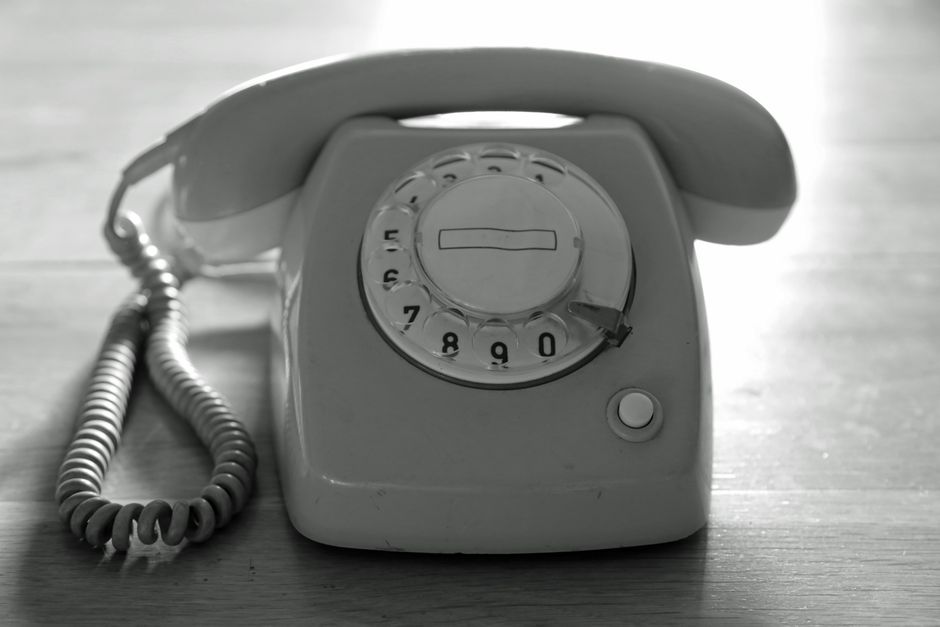
Start the Spark with a puzzle: how did a wrong phone number in 1955 start the tradition of tracking Santa's flight? Let your child guess freely, however wild. The comic in Stage 2 shows what really happened.
Know Before You Teach
- Good to know: The NORAD Tracks Santa tradition started in 1955.
- A Sears newspaper ad printed a phone number wrong, and children's calls reached CONAD, the command that came before NORAD.
- If they ask: What is NORAD? NORAD stands for North American Aerospace Defense Command. They are responsible for monitoring and defending the airspace of North America.
- It's working when: Child shows curiosity about the unusual start of a tradition.
- If they're stuck: Give a hint: the phone number was printed in a newspaper ad for a store.
- Easier: Focus on the idea of a 'mistake that became a tradition' rather than dates or names.
- Harder: Ask them to imagine what it would be like to be Colonel Shoup receiving those calls and what decision they would make.
Done when: Student has offered at least one guess or theory about the question.

2Explore & Plan 8 min
Read the comic together. Then lay out the world map. Point out the International Date Line in the Pacific Ocean. Midnight comes there first, so that's where Santa starts. He travels west from there. Ask how the lines on the map might help him.
Know Before You Teach
- Good to know: Colonel Harry Shoup, the commanding officer at CONAD, played along and told children where Santa was.
- If they ask: What is the International Date Line? It's an imaginary line on Earth that separates two calendar days. Cross it going west and it becomes the next day; going east, the day before. It's where midnight comes first, so it's where Santa starts.
- Key words: International Date Line: An imaginary line on the map where one day ends and the next day begins.
- Key words: CONAD: The old name for NORAD, the defense command that first tracked Santa.
- If they're stuck: Help them find the International Date Line in the Pacific Ocean. Explain it's like the start line for Santa's night.
- Easier: Ages 4 to 6: point to the International Date Line together and show that Santa starts there and flies west.
- Harder: Challenge them to explain why Santa wouldn't start in, say, Europe or the North Pole based on the time zones.
Done when: Your child can say who answered the calls (or point to him in the comic) and has found the International Date Line on the map.

3Discussion 6 min
Explain time zones simply: an invisible wave of midnight moves over the Earth from east to west. Santa visits each place at local midnight, when December 24 turns into December 25. Use the map to show how one place reaches midnight while another is still in the afternoon.
- If it's midnight here, what time might it be far away?
- Why doesn't everyone celebrate at the same moment?
For grown-ups: A time zone is a region that uses the same standard time for legal, business and everyday purposes. Each zone is set a whole number of hours (sometimes a half or quarter hour) from Coordinated Universal Time (UTC). Zones roughly follow 15-degree slices of longitude, but borders bend them. No need to share this with your child unless they ask.
Know Before You Teach
- Good to know: Time zones allow different parts of the world to experience the same time of day (e.g., noon) at different clock times.
- Key words: Time Zone: A section of the Earth that has the same local time.
- It's working when: Child can articulate that different places have different times, and this helps Santa.
- If they're stuck: Use a simple analogy: 'Imagine a line of people doing the wave at a stadium. The wave starts at one end and moves to the other, but each person does it at their own turn, not all at once. Time zones are like that for midnight!'
- Easier: Ages 4 to 6: focus only on "earlier" or "later" as Santa moves, not on exact hours.
- Harder: Ask why, if everyone changed their clocks to one 'world time,' it might be confusing for daily life.
Done when: Your child can say that different places reach midnight at different times.

4Activity 9 min
Guide your child to mark Santa's route on the map, moving west from the International Date Line. Pick a few cities and work out what time it is at home when it's midnight there. Start with Tokyo. In December, Tokyo is this many hours ahead of US time, which puts Tokyo's midnight at this home time:
- New York (Eastern): 14 hours, so 10 AM on December 24
- Chicago (Central): 15 hours, so 9 AM on December 24
- Denver (Mountain): 16 hours, so 8 AM on December 24
- Los Angeles (Pacific): 17 hours, so 7 AM on December 24
- Anchorage (Alaska): 18 hours, so 6 AM on December 24
- Honolulu (Hawaii): 19 hours, so 5 AM on December 24
Know Before You Teach
- Good to know: Going west across time zones, the local time gets earlier.
- To find home time for a faraway midnight, subtract the number of hours that place is ahead of you.
- Tokyo does not change its clocks in summer, so these December gaps are standard-time gaps.
- If they ask: Is it always 1 hour difference between time zones? Mostly, yes, but some countries use half-hour or even quarter-hour differences, and some have political boundaries that make time zones irregular. But for our map today, we'll mostly see hour-long jumps.
- If they're stuck: Work through Tokyo together using the table. Count back the hours on a clock face or on your fingers.
- Easier: Ages 4 to 6: mark the countries Santa visits and say whether it's day or night at home when he's there.
- Harder: Find a city where December 25 is already ending while it's just beginning somewhere else, and work out the gap.
Done when: Your child has marked Santa's path on the map and said whether it is day or night at home when Santa reaches Tokyo.

5Summary 2 min
Celebrate your child's map and time zone work. Ask what surprised them, and who else needs time zones, like pilots or people calling family far away. On December 24, open noradsanta.org to follow Santa live.
Know Before You Teach
- Good to know: The story of NORAD tracking Santa highlights how unexpected events can lead to cherished traditions.
- If they ask: Does NORAD still use radar to track Santa? Yes! NORAD says it uses radar, satellites, Santa Cams and fighter jets to follow him.
- It's working when: Child connects the Spark to a real-world application or expresses a personal insight.
- If they're stuck: Prompt with specific questions: 'What was the trickiest part of tracking Santa?' or 'What did you find easiest to understand about time zones?'
- Easier: Ask what their favorite part of plotting Santa's route was.
- Harder: Ask how understanding time zones could be important for someone who travels a lot for work or has family in another country.
Done when: Student shares one key takeaway or insight from the Spark.
Beyond The Spark
Fuel their curiosity beyond the Spark with bonus extras.
Table Talk
Time zones matter for travel, for meetings across the world and for calling family far away. On December 24, open noradsanta.org to follow Santa live.
Did You Know?
A newspaper ad printed one phone number wrong, and children called the wrong place: a military command.
Challenge
Research other unique Christmas or holiday traditions from around the world. How do these traditions connect to the local time of celebration?
Quick Recap Quiz 4 min
Customize this quiz, add questions, or follow your child's lead! Each question has a 'Parent Tip' to help them find the answer without giving it away.
1. How did NORAD's tradition of tracking Santa begin?
- A pilot reported seeing Santa's sleigh on radar.
- A wrong phone number sent calls to a military command.
Think back to the comic. Who did the children reach when they called?
2. Where does Santa make his first stop?
- In London, where world time is measured from
- Near the International Date Line, where midnight comes first
- In New York, the biggest city in the US
Look at the map. Where did you mark Santa's starting point?
3. Why does Santa travel from east to west across the world?
- It's the shortest route for him to visit everyone quickly.
- To reach each place at its own midnight, as midnight moves west
Recall the 'wave of midnight' metaphor and how it moves across time zones.
4. It's midnight in Tokyo, when December 24 turns into December 25. You live in New York, and Tokyo is 14 hours ahead. What time is it in New York?
- 10 AM on December 24
- 2 PM on December 25
- 10 PM on December 24
Count back on a clock, one hour for each hour New York is behind.
Loved This Spark?
Scan to jump into the app and explore similar Sparks in our Sparks Hub. New to Mai? Start free with 10 Sparks, no credit card needed.