
How Artists Drew Santa
Explore how artists have pictured Santa Claus through history. From "a right jolly old elf" to the familiar red-suited gift-giver, discover how his look changed over time, then design your very own Santa for today. Print the worksheet before you start.
Our goal: Learners will understand that popular characters like Santa Claus evolve over time, shaped by different artists and cultural ideas. They will observe and compare various historical depictions, recognizing how these influences change a character's imagery. Finally, they will apply this knowledge to create their own unique Santa, making intentional design choices.
What You Need
Printed worksheet • Paper • Drawing supplies • Scissors
and this is just the baseline.
Scan to jump into the app and easily personalize this Spark to match your child's exact learning level and see how Mai will guide this lesson.
Learning Guide
A simple guide to lead you through the kickoff, the core challenge, and everything in between.
Mai’s Tips
- Keep the magic: We are talking about how artists pictured Santa, not whether he is real. If your child believes in Santa, keep the magic: artists are still drawing him.
- Reasoning first: When children are ordering the Santa pictures, encourage them to commit to an order and explain why they chose it, even if it's wrong. The learning comes from testing their idea, not just getting the right answer.
- Look for nuances: Many people think a soda company's 1930s ads gave Santa his red suit. Those ads made the red suit even more famous, but artists were drawing him in red decades earlier, as the dates on the pictures show.
- Simplify if stuck: If a younger child is overwhelmed, use just two very different Santas (the 1821 one and the 1901 one). Ask "What's different? What's the same?" instead of ordering all four. For older kids, ask why each artist might have made their choices.
- Highlight agency: For the drawing, stress that there's no "right" way to draw Santa. The goal is to make choices on purpose and explain them, rather than copy. This builds artistic confidence and careful thinking.
For The Grown-Up
- A common mix-up: Children might believe that iconic characters like Santa have always looked the same and their image is fixed, or that one specific event (like a major advertisement) created their entire look.
- Try this: After they arrange the Santa pictures, ask them why they put them in that order and what changed. Then, reveal the real timeline and discuss how each artist built upon or altered previous interpretations, showing that the image evolved gradually over time rather than staying static or changing in one sudden leap.
- Explain it like this: Thinking about how artists drew Santa over time is like watching a favorite recipe get passed down through a family. Each cook adds their own special ingredient or twist, and over the years, the dish changes and gets better, but it's still recognizably the same family favorite.
- A big question to ask: If you drew Santa Claus all in blue with short, spiky hair, would he still be Santa? Why or why not?
Prep Before Session 5 min
- Print the 'How Artists Drew Santa' worksheet from your activity pack.
1Introduction 5 min
Start the Spark by asking about Santa's look. Let your child share their ideas freely, without correcting them; the goal is to bring out what they already picture.
- Santa didn't always wear a red suit. How did artists picture him over the years?
- What does your Santa look like in your imagination?
Know Before You Teach
- Good to know: Santa's look has not always been the same; it has changed a lot over time.
- Early pictures showed him in different colors and sizes, with different moods.
- If they ask: Was Santa always called Santa Claus? He's had many names! In some traditions, he's known as Saint Nicholas, Father Christmas or Kris Kringle.
- It's working when: Children offering varied descriptions of Santa, showing they have an internal image of him.
- If they're stuck: Ask them to describe a Santa they saw recently (e.g., on a card, in a movie).
- Harder: Ask them to think about why Santa might be imagined differently in different places.
Done when: Children have shared their initial thoughts on Santa's appearance and how it might have changed.

2Explore & Plan 8 min
Hand over the printed worksheet and have your child cut out the four Santa pictures. Encourage them to look closely at details and use them as clues to guess which picture is oldest. Have them lay the pictures in order and explain their thinking. Don't reveal the real order yet; the answer key is in Stage 3.
- What details do you notice in each Santa picture?
- Do you see anything that looks old-fashioned or modern?
- Which Santa do you think is the oldest, and why?
Know Before You Teach
- Good to know: The 1823 poem "A Visit from St. Nicholas" calls Santa "a right jolly old elf" and "a little old driver, so lively and quick."
- Thomas Nast's first Santa (Harper's Weekly, 1863) helped make him a round, bearded figure.
- It's working when: Your child noticing changes in clothing, body shape or beard between the pictures.
- If they're stuck: Point out one significant detail in two different pictures (e.g., 'Look at his coat in this one compared to that one!') and ask what's different.
- Easier: Ages 4 to 6: ask your child to pick their favorite Santa and say why, or sort the pictures into "old-looking" and "new-looking" piles.
- Harder: Ask an older child to identify specific historical clues (e.g., clothing styles, printing quality) that hint at the pictures' age.
Done when: Your child has put the pictures in an order (or into "old" and "new" piles) and said why.

3Discussion 6 min
Reveal the real order of the pictures and read out each date and artist. Explain that artists build on each other's ideas to create a character everyone recognizes. The big idea: a character's "iconography," the set of symbols that tells you who it is, changes over time.
Answer key, oldest to newest:
1. 1821. "Old Santeclaus," from the little New York picture book The Children's Friend. Artist unknown. A small Santa in a fur hat, in a sleigh pulled by one reindeer.
2. 1863. Thomas Nast, Harper's Weekly, January 3, 1863 ("Santa Claus in Camp"). Santa in a stars-and-stripes jacket visits soldiers.
3. 1881. Nast again, in the same magazine on January 1, 1881 ("Merry Old Santa Claus"). A round, bearded Santa with his arms full of toys.
4. 1901. Cover of Puck magazine, Christmas 1901. Santa in a red suit with white fur, surrounded by children. Red, about 30 years before the famous soda ads.
- What surprises you about the real order?
- Why did the beard stay in every picture?
- If you drew Santa all in blue, would he still be Santa?
Grown-up Crib Sheet: Iconography
Iconography is the set of visual clues (like Santa's red suit, white beard or sack of toys) that makes a character instantly recognizable, even without words. Artists and audiences build this shared picture language over time. The word can also mean the deeper meanings behind symbols, which change across cultures; that deeper meaning isn't needed for this Spark.
Know Before You Teach
- Good to know: Artists build on past ideas, and cultural influences shape popular imagery over time.
- Key words: Iconography: The special visual symbols, like colors or clothes, that artists use to show who a character is, so everyone can recognize them instantly.
- If they're stuck: Compare the 1821 Santa with the 1881 one and ask: "What did the artists add to make Santa bigger and rounder?"
- Easier: Ages 4 to 6: focus on the idea that artists changed Santa's look because the stories about him changed too.
- Harder: Ask an older child how movies and TV keep shaping Santa's look today.
Done when: Your child can say one way Santa's look changed over time.
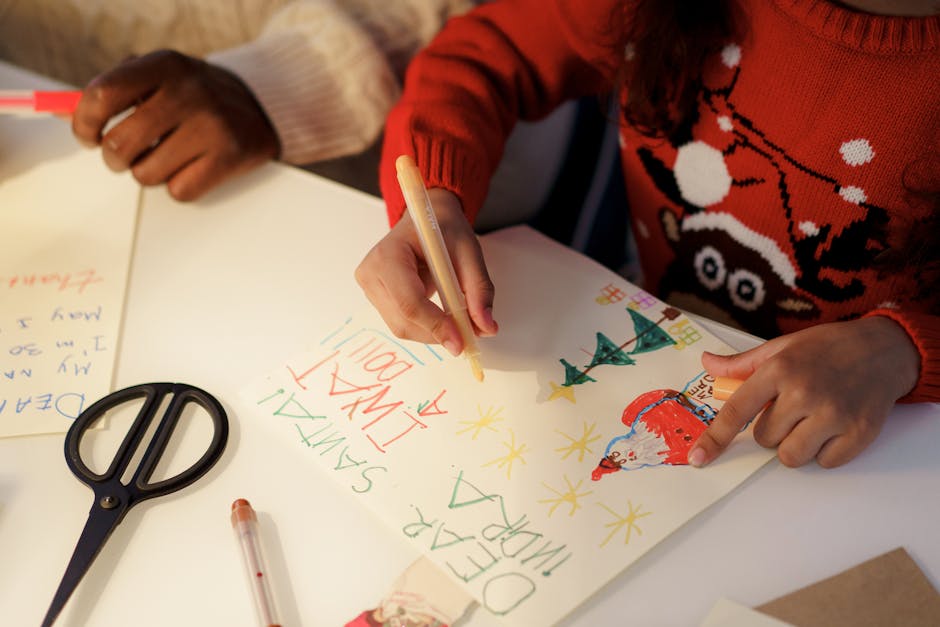
4Activity 9 min
Challenge your child to draw their own Santa for today, in the drawing frame on the worksheet or on blank paper. Encourage them to choose on purpose and say why they picked certain colors, clothes or expressions.
- What kind of Santa would be perfect for kids today?
- What colors or clothes will your Santa wear?
- What expression will your Santa have, and why?
Know Before You Teach
- Good to know: Every artistic choice says something about a character.
- Artists add their own ideas while building on tradition.
- If they ask: Can I make my Santa totally different, like purple hair? Absolutely! It's your Santa for today. Just be ready to tell us why you chose purple hair – what does it say about your Santa?
- It's working when: Children actively making design decisions (e.g., choosing colors, adding details) and being able to explain them.
- If they're stuck: Suggest thinking about Santa's job or personality. 'What kind of outfit would be best for delivering presents all over the world?'
- Easier: Ages 4 to 6: draw just a few key features (hat, beard, coat) and choose the colors.
- Harder: Encourage an older child to add details that reflect modern life or their personal interests, and to write down their explanations for each choice on the lines provided.
Done when: Your child has drawn a Santa for today (even a simple one) and named one choice they made.

5Summary 2 min
Have your child share their finished Santa and describe the choices they made. Talk briefly about how a character's look changes when new artists draw it.
- Tell us about your Santa! What did you choose and why?
- What surprised you most about how Santa's look changed?
- How do artists help us all imagine a character the same way?
Know Before You Teach
- Good to know: Artists contribute to the cultural understanding and visual representation of figures.
- Individual creativity can add to and evolve shared iconography.
- If they ask: Could my Santa become famous? Well, all the famous Santas started with an artist's idea! Who knows what great ideas you might inspire in others?
- If they're stuck: Ask, 'What's one thing you're most proud of in your drawing?' or 'What's one new thing you learned today about how pictures change?'
- Easier: Have a younger child point to their favorite part of their drawing and say why.
Done when: Children share their drawings and can articulate one key takeaway about how characters like Santa evolve through art.
Beyond The Spark
Fuel their curiosity beyond the Spark with bonus extras.
Table Talk
Designers and marketers constantly evolve the 'look' of brands and mascots to stay relevant and connect with new audiences, just like artists did with Santa.
Did You Know?
Before red won, artists drew Santa in other colors too. An 1864 picture showed him in yellow, and a 1902 book cover showed him in green!
Challenge
Research another iconic character (e.g., Uncle Sam, Mickey Mouse, Winnie the Pooh) and create a timeline of their visual evolution, just like we did for Santa.
Quick Recap Quiz 4 min
Customize this quiz, add questions, or follow your child's lead! Each question has a 'Parent Tip' to help them find the answer without giving it away.
1. How does the 1823 poem "A Visit from St. Nicholas" describe Santa?
- As a tall bishop in a long robe
- As "a right jolly old elf"
Look back at the poem lines in Stage 2. How big was the sleigh?
2. Who was one of the first famous artists to draw Santa with a long white beard and a round belly, in the 1860s?
- Thomas Nast
- Clement Clarke Moore
Look at the names on pictures 2 and 3.
3. When did artists start drawing Santa in a red suit?
- Only after the 1930s soda ads
- Decades before the 1930s soda ads
Look at the dates on the pictures.
4. When artists draw characters like Santa, what do we call the collection of visual symbols (like his suit color or beard) that help us instantly recognize him?
- Iconography
- Color theory
Look back at the new word from Stage 3.
Loved This Spark?
Scan to jump into the app and explore similar Sparks in our Sparks Hub. New to Mai? Start free with 10 Sparks, no credit card needed.