Hidden Letter Hunt
Become word detectives and crack the code of English spelling! This Spark challenges learners to discover words containing 'silent letters' – letters that are written but not spoken. Through exploration and a hands-on word safari, children will learn why these tricky letters exist and how they help us understand the English language.
Our goal: Learners will understand why some letters are written but not spoken in English words. They will be able to identify silent letters in common words and use this knowledge to help decode new and unfamiliar words.
What You Need
Paper • Pen/marker • Book/magazine • Butter knife
and this is just the baseline.
Scan to jump into the app and easily personalize this Spark to match your child's exact learning level and see how Mai will guide this lesson.
Learning Guide
A simple guide to lead you through the kickoff, the core challenge, and everything in between.
Mai’s Tips
- Discovery First: For 'Why do we have silent letters?', always let your child guess first. Their initial theories, even if incorrect, are valuable starting points for understanding. The Spark is built on them testing their theories, not being told the answer.
- Common Confusion: Children often assume a one-to-one correspondence between letters and sounds. When a letter doesn't make a sound, it can be confusing. Help them test this by trying to pronounce words like 'knife' or 'walk' with all letters sounded out. It highlights the problem vividly.
- Simplify: If the concept of 'silent letters' is tricky, focus on just one or two common examples (like 'k' in 'kn') and really explore those before introducing more variety. You can even stick to just identifying the silent letter, rather than explaining the 'why' in depth.
- No Pre-Correction: If a child tries to pronounce a silent letter, don't immediately correct them. Instead, ask, "Does that sound right to your ear?" or "What happens if we try it without that sound?" This fosters self-correction and deeper learning.
1Breakfast Table Mysteries 3 min
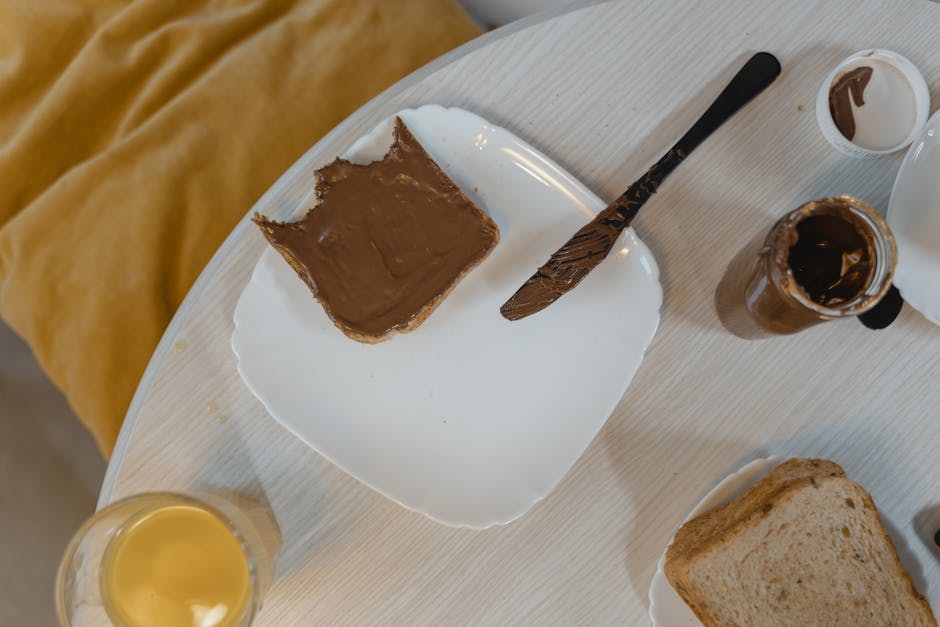
Point to a butter knife (or name it if not present) and have the child say 'knife' aloud. Focus their attention on how the word sounds versus how it's spelled.
- Ask them: "When you say 'knife,' do you hear a sound for every single letter?"
- Ask them: "Which letter do you see that you don't hear?"
Younger children can just identify the letters. Older children can try to say the 'k' sound and notice how it changes the word.
Know Before You Teach
- Good to know: The word 'knife' has a silent 'k'. Many 'kn-' words (like 'know', 'knot') follow this pattern.
- English spelling can be tricky because it doesn't always have a one-to-one sound-to-letter correspondence.
- If they ask: Why is it there if you don't say it? Sometimes it's left over from old English, or it helps us know the word's history, even if we don't say it anymore.
- Key words: silent letter: A letter that is written but not spoken in a word.
- It's working when: Child notices a discrepancy between how a word is spelled and how it sounds.
- If they're stuck: Suggest other 'kn-' words like 'know' or 'knee' to see if they can find the pattern.
- Easier: Focus only on 'k' as a silent letter. You can even just point it out directly.
- Harder: Ask them to think of other letters that sometimes seem 'quiet' in words they know.
Done when: Child identifies that the 'k' in 'knife' is not making a sound.

2Explore & Plan: The Sound & Letter Puzzle 7 min
Gather paper/index cards and writing tools. Explain that English has around 44 sounds but only 26 letters, so sometimes letters are silent or combine to make those sounds.
- Ask them: "If we only have 26 letters, but lots more sounds, how do you think we make all those different sounds?"
- Ask them: "What are some other words you can think of that have letters you don't hear when you say them?"
Younger children can help organize the materials. Older children can brainstorm and start writing down suspected 'silent letter' words.
Know Before You Teach
- Good to know: English has approximately 44 distinct sounds (phonemes).
- To make up for the difference, English uses combinations of letters (like 'ch', 'th') and silent letters.
- If they ask: Why don't we just invent more letters? That's a great idea! But changing an entire language is very hard. We've just learned to work with the letters we have.
- It's working when: Child demonstrates curiosity about the spelling and sounds of words.
- If they're stuck: Provide a few examples of words with silent letters (e.g., 'ghost', 'walk') to spark brainstorming.
- Easier: Focus on the idea that some letters team up to make sounds, and some just sit quietly.
- Harder: Challenge them to think of sounds that require more than one letter to spell (e.g., 'sh', 'th', 'ph').
Done when: Child understands the need for a 'system' (like silent letters) given sounds vs. letters, and has some words noted.

3Discussion: Unveiling Silent Letters 8 min
After hearing their observations, introduce the term 'silent letter'. Explain that it's a letter written but not spoken. Provide simple rules for recognition and examples.
Silent letter: A letter in a word that is written but doesn't make any sound when you pronounce the word out loud.
How to recognize it: The word sounds the same with or without that letter's sound.
Examples: 'know' (k), 'write' (w), 'listen' (t). Contrast: 'cat' (all letters heard).
Why: They help create enough sounds in English, and sometimes show a word's history.
- Ask them: "Can you think of another word with a silent letter?"
- Ask them: "What happens if you try to make the sound of a silent letter, like the 't' in 'listen'?"
Younger children can repeat the definition. Older children can offer more examples or discuss why they might exist.
Know Before You Teach
- Good to know: Silent letters are common in English, often due to historical linguistic changes or to differentiate homophones (words that sound alike but have different meanings and spellings, like 'knight' and 'night').
- Common silent letter patterns include 'kn' (knee), 'wr' (write), 'gh' (light), 'mb' (thumb), 't' (listen), 's' (island).
- Harder: Discuss how silent letters can sometimes help us tell words apart, giving 'knight'/'night' as an example.
Done when: Student can explain what a silent letter is in their own words and give an example not previously mentioned by the parent.

4Silent Letter Safari: The Hunt Is On! 9 min
Have children find words with silent letters from a book, magazine, or their own ideas. They should write each word on a piece of paper and mark out the silent letter.
- For younger children, write words for them and have them point to the silent letter to cross out.
- For older children, have them write their own words and identify the silent letters themselves. Encourage them to find words with silent letters at the beginning, middle, and end.
- Ask them: "How does finding the silent letter change how you read the word?"
- Ask them: "Does the word still make sense even without that letter making a sound?"
Observe and offer guidance, but let them lead the discovery.
Know Before You Teach
- If they ask: Is this letter silent or just part of another sound? That's a great question! If it's part of another sound (like 'sh' in 'ship'), then both letters work together. If it truly makes no sound at all, then it's silent.
- It's working when: Child experiments with word pronunciation and articulates their reasoning for identifying a silent letter.
- If they're stuck: Provide a short list of words known to have silent letters (e.g., 'walk', 'ghost', 'thumb') and ask them to pick one to investigate.
Done when: Student has identified and marked silent letters in at least 3-5 different words.

5Detective Debrief: The Power of Silent Letters 3 min
Celebrate their discoveries. Recap what silent letters are and why they're important for English spelling, sharing that over half of English words contain at least one.
- Ask them: "What was the most interesting thing you learned about silent letters today?"
- Ask them: "How will knowing about silent letters help you when you read a new word or try to spell a tricky one?"
Younger children can show their favorite word with a silent letter. Older children can articulate how silent letters help bridge the 26-letter, 44-sound gap.
Know Before You Teach
- If they ask: Are there silent letters in other languages too? Yes! Many languages have letters that are sometimes silent. French, for example, has quite a few, especially at the ends of words.
- It's working when: Child connects their new knowledge to their reading or writing experiences.
- Harder: Ask them to explain how silent letters are an example of English trying to 'fit' its many sounds into a smaller alphabet.
Done when: Student shares one key takeaway about silent letters or names a word with a silent letter.
Beyond The Spark
Fuel their curiosity beyond the Spark with bonus extras.
Table Talk
Understanding silent letters helps authors, journalists, and editors communicate clearly and maintain the historical integrity of words.
Did You Know?
Over half the words in the dictionary hide at least one silent letter!
Challenge
Create a 'Silent Letter Word Search' for someone else to solve, hiding words with silent letters and only providing clues for the pronounceable parts.
Quick Recap Quiz 4 min
Customize this quiz, add questions, or follow your child's lead! Each question has a 'Parent Tip' to help them find the answer without giving it away.
1. What is a silent letter?
- A letter that's written but not spoken.
- A letter that's difficult to spell.
Remind them of words like 'knife' where a letter is there but quiet.
2. Which letter is silent in the word 'write'?
- The 'r'
- The 'w'
Have them try saying 'r-ite' vs 'w-rite' to hear the difference.
3. Why do English words have silent letters?
- To make words longer.
- Because English has more sounds than letters.
Remember our discussion about 26 letters trying to make 44 sounds.
4. How can knowing about silent letters help you when reading?
- It helps you sound out unfamiliar words correctly.
- It helps you remember your favorite words.
Think about encountering 'knight' for the first time; how does knowing about the silent 'k' help?
Loved This Spark?
Scan to jump into the app and explore similar Sparks in our Sparks Hub. New to Mai? Start free with 10 Sparks, no credit card needed.