
Hanukkah Oil Science
Discover the amazing properties of oil, like how it behaves with water and why some things float while others sink. This hands-on activity connects the science of liquids to the Hanukkah story of the miraculous oil.
Our goal: Learners will understand why oil and water don't mix and how density affects if an object floats or sinks. They will connect these scientific properties to the Hanukkah story, appreciating the miracle of the oil's longevity.
What You Need
Water • Cooking oil • Small household objects • Spoon • Paper towels • Clear glass
and this is just the baseline.
Scan to jump into the app and easily personalize this Spark to match your child's exact learning level and see how Mai will guide this lesson.
Learning Guide
A simple guide to lead you through the kickoff, the core challenge, and everything in between.
Mai’s Tips
- Mess alert:
- Focus on why:
- Simplifying density:
- Hanukkah connection:
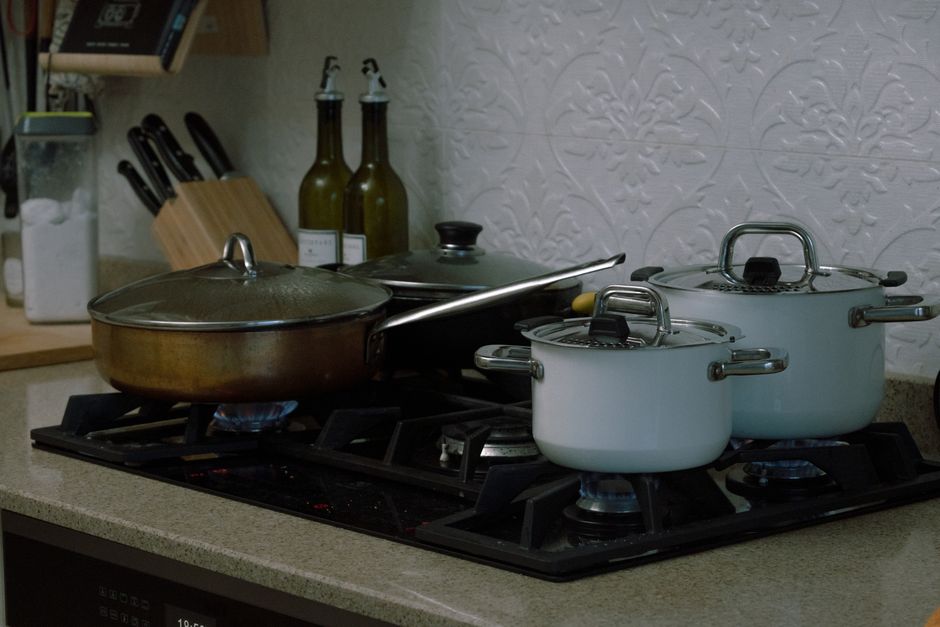
1Breakfast Table Wonders 3 min
Start with an everyday observation at the breakfast table. Have the child take a small piece of cereal, a crumb, or a small fruit slice and gently place it in their glass of water or juice. Discuss what happens.
Know Before You Teach
- Good to know: Different objects have different densities.
- Objects less dense than water float; objects denser than water sink.
- If they ask: Why does my cereal float? It floats because it's lighter or has more air trapped in it than the water it's pushing aside, making it less dense.
- If they're stuck: Try with another small object like a coin, which will clearly sink, to provide a contrast.
- Easier: Focus only on whether it goes up or down, not on 'why'.
- Harder: Ask them to predict which part of the cereal might sink first or if it will change over time.
Done when: The child observes an object floating or sinking and shares their initial thoughts.
2Explore & Plan: Oil and Water 8 min
Gather the clear glasses, water, cooking oil, and small objects. Have the child predict what will happen when oil and water are combined.
Know Before You Teach
- Good to know: Oil and water are immiscible, meaning they don't mix.
- If they ask: Will it be like mixing juice and water? Juice and water mix because they are very similar. Oil and water are quite different, so we'll see if that changes how they behave!
- If they're stuck: Ask them to describe what oil feels like compared to water – does that give them a clue?
- Easier: Just ask for a prediction (mix or separate) without asking for a reason.
- Harder: Ask if they can think of any other liquids that don't mix, or that do mix.
Done when: The child has gathered materials and clearly stated a prediction about oil and water mixing.

3Uncovering Liquid Secrets 6 min
First, have the child pour water into a glass, then carefully add an equal amount of oil on top. Discuss their observations, then introduce the concepts of immiscibility and density in simple terms, connecting them to the Hanukkah story.
Know Before You Teach
- Good to know: The Hanukkah miracle involved a small cruse of oil that lasted beyond its natural capacity.
- If they ask: What happens if I shake it? If you shake it, the oil and water will break into tiny droplets, but if you let it sit, they will separate again because they are immiscible.
- Key words: density: how much 'stuff' is packed into a certain space; it makes things float or sink
- If they're stuck: Use the metaphor of a crowded vs. empty elevator for density. 'Imagine an elevator packed with people (dense) and another with just one person (less dense).' Which one is harder to push around?
- Easier: Focus on the observation ('they don't mix') and simply say 'oil is lighter than water' instead of 'less dense'.
- Harder: Ask them how immiscibility and density might be useful in real-world situations, like cooking or cleaning up an oil spill.
Done when: Student can explain in their own words why oil and water separate, and what density means in relation to floating/sinking.

4Building a Density Tower 9 min
Guide the child through creating a layered liquid 'tower' and testing objects. Encourage predictions and observations.
Know Before You Teach
- Good to know: Objects will settle at different levels based on their density relative to the liquids they are in.
- If they ask: Why did the raisin stop in the middle? It stopped there because it's denser than the oil, so it sank through that, but it's less dense than the water, so it floats on top of the water layer.
- It's working when: Child making predictions before testing objects and observing closely where objects settle.
- If they're stuck: Try dropping an object very slowly to observe its descent. If they're struggling with predictions, simplify the choices to 'float on oil', 'sink in oil but float on water', or 'sink in water'.
- Easier: Limit the number of objects to test and focus on clear 'float on oil' or 'sink to bottom' examples.
- Harder: Challenge them to find an object that floats on water but sinks in oil, or vice versa, and explain why. They might need a different liquid like rubbing alcohol to achieve this (requires supervision).
Done when: The child has successfully layered oil and water, and tested at least 3-4 objects, observing where they settle.
5Reflecting on the Miracle 4 min
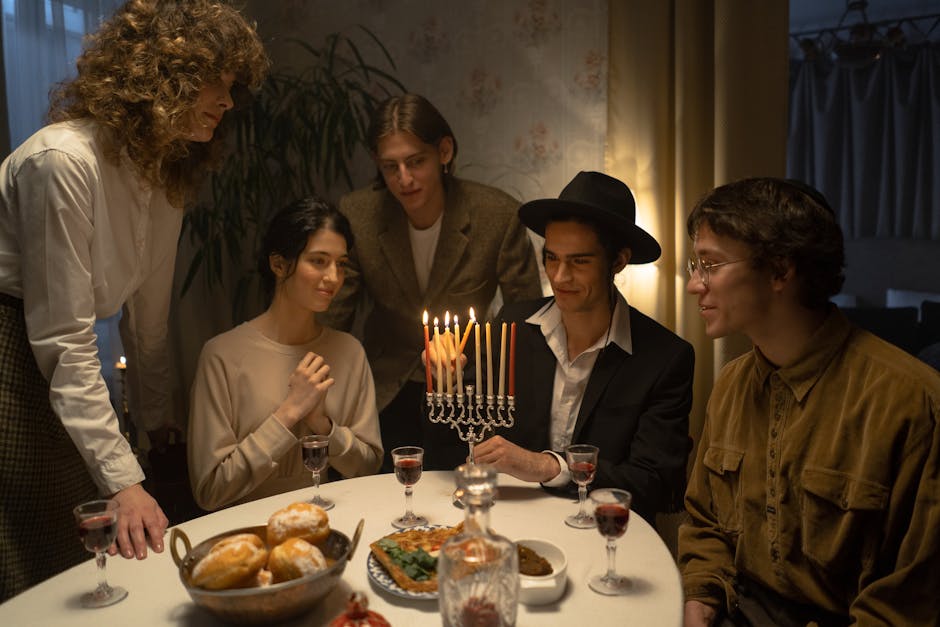
Have the child reflect on their discoveries and connect them back to the Hanukkah story.
Know Before You Teach
- Good to know: The unique physical properties of oil, like its immiscibility and density, highlight its distinct nature.
- Understanding these properties adds a scientific dimension to appreciating the story of the Hanukkah oil miracle.
- If they're stuck: Revisit a specific observation from the activity and ask how it might connect to the idea of oil being special.
- Easier: Ask what their favorite part of the experiment was.
- Harder: Ask them to imagine they were trying to hide oil in a container of water – how would its properties make that difficult or easy?
Done when: Student shares one key takeaway about oil, density, or immiscibility, and makes a connection to Hanukkah.
Beyond The Spark
Fuel their curiosity beyond the Spark with bonus extras.
Table Talk
Understanding density and how liquids behave is essential in fields like oceanography, chemistry, and even cooking, where separating oil from water (like in salad dressing) is a daily task.
Did You Know?
Did you know that oil doesn't evaporate as quickly as water, which is why it burns longer?
Challenge
Try to find an object that floats on water but sinks in oil, or vice versa, and explain why. Then, try to create a three-layer liquid tower using a third liquid like corn syrup or rubbing alcohol (with supervision).
Quick Recap Quiz 4 min
Customize this quiz, add questions, or follow your child's lead! Each question has a 'Parent Tip' to help them find the answer without giving it away.
1. When oil and water are put together, what do they usually do?
- Mix completely
- Form separate layers
Remind them of the experiment in the glass. Did the oil disappear into the water?
2. If an object floats, it means it is...
- Less dense than the liquid
- Heavier than the liquid
Think about how much 'stuff' is packed into the object compared to the liquid around it.
3. Why is the special oil in the Hanukkah story interesting to us as scientists?
- It tastes good to eat
- It has unique properties like not mixing with water
Focus on the physical behaviors we observed in our experiment.
4. What does 'immiscible' mean for two liquids?
- They do not mix together
- They both smell good
Recall what happened when we tried to combine the oil and water.
Loved This Spark?
Scan to jump into the app and explore similar Sparks in our Sparks Hub. New to Mai? Start free with 10 Sparks, no credit card needed.