
Grow a Super Seed
This lesson challenges young learners to become 'plant helpers' by understanding and providing what a seed needs to grow. It emphasizes hands-on planting, observation, and the responsibility of nurturing living things.
Our goal: In this spark, your learner will identify basic needs of plants (water, soil, sunlight), demonstrate how to plant a seed in soil and understand that plants need care and patience to grow.
What You Need
Small Seed • Pot/Cup • Potting Soil • Water
and this is just the baseline.
Scan to jump into the app and easily personalize this Spark to match your child's exact learning level and see how Mai will guide this lesson.
Learning Guide
A simple guide to lead you through the kickoff, the core challenge, and everything in between.
Mai’s Tips
- Encourage patience: Remind the child that growing plants takes time and regular care, connecting it to other things that need patience like learning to ride a bike.
- Turn it into a daily habit: Suggest making checking and watering the plant a small daily chore for the child, fostering responsibility and observation skills.
Prep Before Session 15 min
- Get a small seed (e.g., bean, pea, or radish, as they sprout quickly).
- Find a small pot or cup, ideally with a drainage hole at the bottom.
- Obtain clean potting soil, enough to fill the pot.
- Have a small amount of water ready, perhaps in a watering can or cup.
- Identify a warm, sunny spot indoors where the planted seed can sit for observation.
1Introduction 5 min
Show the child the small seed. Engage them by asking what they think it needs to grow into a plant. Encourage any ideas they share. Ask: "Do you think it needs food like we do?" or "Does it need a bed?" A "seed" is a tiny, baby plant in a protective shell, waiting for the right conditions to start growing. It's the beginning of a plant's life. Done when the child shares at least one idea about plant needs.
Know Before You Teach
- Good to know: Not all seeds look the same; they come in many shapes and sizes, just like plants do.
- Seeds need three main things to wake up and start growing: warmth, water, and air.
- If they ask: Why is it so small? It's just a baby plant, like how you were a tiny baby once, hidden safely inside its shell.
- It's working when: Child points to the seed or mimics planting it.
- If they're stuck: If the child isn't responding, show them a picture of a full-grown plant and ask, 'How do you think this big plant started?'
- Easier: Instead of asking open-ended questions, offer two choices: 'Do you think it needs water or a toy car to grow?'
- Harder: Ask the child to guess what kind of plant the seed will grow into based on its size or shape.
Done when: Student shares at least one idea about plant needs, even if it's incorrect.

2Explore & Plan 8 min
Help the child gather the materials for planting: the small seed (which is already present), a pot or cup, some potting soil, and water. Discuss the purpose of each item. Ask: "Why do you think the seed needs soil?" and "What will the water do?" Explain that "soil" is like a cozy bed and food for the plant, where its roots can live and find nutrients. "Water" is essential for plants, like a drink for us, helping them absorb nutrients and grow. Done when all materials are gathered and the child can identify their use for planting.
Know Before You Teach
- Good to know: Water helps the plant drink up nutrients from the soil, like how we drink to help our body use food.
- Pots need small holes at the bottom so extra water can drain out, otherwise, the roots might get too wet and not be able to breathe.
- If they ask: Can we use dirt from outside? For our little seed, special potting soil is best because it's clean and has just the right food for baby plants.
- It's working when: Child identifies the purpose of at least one item (e.g., points to soil and says 'for roots').
- If they're stuck: If the child struggles to explain the purpose of an item, demonstrate: 'See how the soil feels? It's soft for the roots!'
- Easier: Have the materials pre-selected and just ask the child to name them, instead of gathering them.
- Harder: Ask the child to predict what might happen if the plant didn't have soil or water.
Done when: Materials are gathered and the child can identify them for planting.

3Discussion 6 min
Review the items gathered (seed, pot, soil, water). Guide the conversation towards what else plants need, beyond water and soil. Ask: "Where do plants get energy?" or "Do they grow well in a dark cupboard or by a sunny window?" Explain that "sunlight" is the light from the sun, which plants use to make their own food and energy, helping them grow big and strong. It's the opposite of darkness. Done when the child recognizes that plants need sunlight.
Know Before You Teach
- Good to know: Sunlight is very important because it gives plants the energy to make their own food, just like we get energy from eating.
- Plants can't move to find food, so they use sunlight, water, and air to make it right where they are.
- Air is also important for plants; they breathe in a gas called carbon dioxide, which they use to make their food with sunlight and water.
- It's working when: Child points towards a window or the sun when asked about energy for plants.
- If they're stuck: If the child is confused about sunlight, point to a plant in a sunny spot and one in a dark corner, asking which one looks healthier.
- Easier: Just focus on sunlight, asking 'Does this plant need sunshine?' and accepting a yes/no answer.
- Harder: Ask the child to think about how plants breathe, introducing the idea of air being a need for them.
Done when: Student recognizes that plants need sunlight in addition to water and soil.
4Activity 9 min
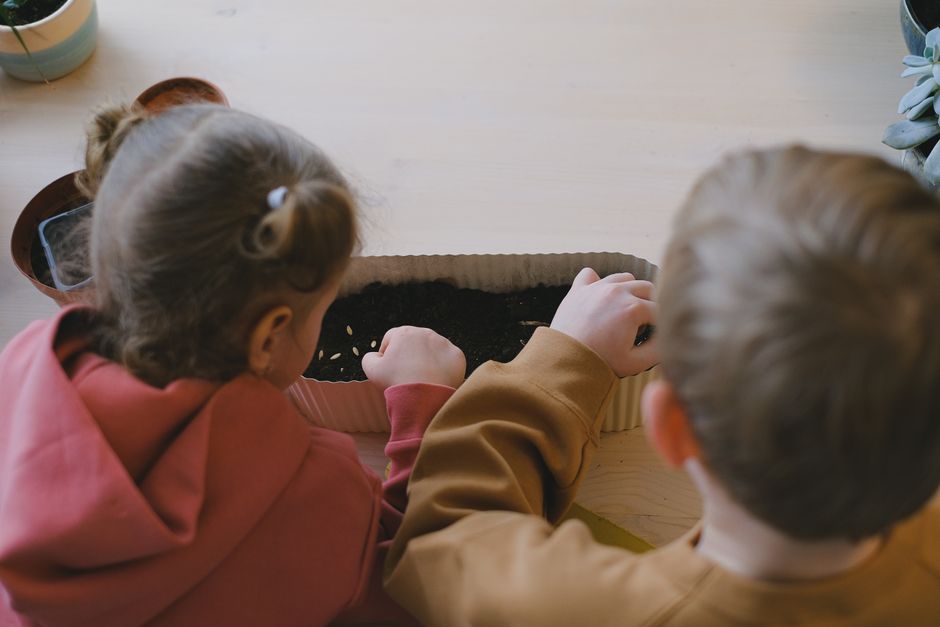
Supervise as the child plants the seed. First, have them put potting soil into the pot or cup, almost to the top. Next, guide them to make a small hole in the middle of the soil with a finger. Gently place the tiny seed into the hole. Then, cover the seed with a little more soil, like tucking it into a bed. Give the seed a tiny drink of water – remind them not to over-water, just a little sip. Finally, help them find a sunny spot for the pot. Ensure the soil is clean potting soil. Done when the seed is planted and watered.
Know Before You Teach
- Good to know: Seeds should be planted at a depth about two to three times their own size for best growth.
- Too much water can make the seed rot because its roots can't breathe.
- If they ask: Can I put all the soil in? Let's leave some room at the top so we can tuck our seed in gently later.
- It's working when: Child carefully handles the seed and soil, following instructions.
- If they're stuck: If the child is hesitant to touch the soil, demonstrate by gently patting it first.
- Easier: Pre-fill the pot mostly with soil and just have the child make the hole and place the seed.
- Harder: Ask the child to decide how deep the seed should be planted based on its size, providing guidance if needed.
Done when: Student has successfully planted the seed and given it water.

5Summary 2 min
Celebrate the child's effort in planting the seed, reinforcing that they are an amazing plant helper. Encourage ongoing observation and care for their planted seed in the coming days. Reinforce the concept of patience and responsibility for living things. Ask: "What was your favorite part of helping the seed today?" or "What do you think our seed will look like when it starts to grow?" Done when the child shares one thought or feeling about the activity or their planted seed.
Know Before You Teach
- Good to know: Taking care of a plant means checking its soil regularly to see if it needs a little water.
- Observing the plant each day helps us see tiny changes as it grows.
- Even small actions, like watering a plant, are important responsibilities for living things.
- If they ask: When will it grow? It might take a few days or even a week, but we'll watch it every day to see!
- It's working when: Child verbalizes an emotion (e.g., 'fun', 'happy') or a specific detail about the planting process.
- If they're stuck: If the child can't think of a favorite part, prompt with 'Did you like putting in the soil or giving it water?'
- Easier: Simply ask 'Was that fun?' and accept a simple 'yes' or 'no'.
- Harder: Ask the child to draw a picture of what they imagine their plant will look like when it's grown.
Done when: Student shares one thought or feeling about the activity or their planted seed.
Beyond The Spark
Fuel their curiosity beyond the Spark with bonus extras.
Table Talk
Farmers and gardeners use this same knowledge to grow the food we eat every day!
Challenge
Decorate the plant pot with paint or stickers, then draw a picture of what they think the plant will look like when it grows.
Quick Recap Quiz 4 min
Customize this quiz, add questions, or follow your child's lead! Each question has a 'Parent Tip' to help them find the answer without giving it away.
1. What does a tiny seed need to drink to grow big?
- Toy car
- Water
Remind them what we gave the seed after we put it in the soil.
2. Where does a plant like to put its roots?
- In the soil
- In a book
Ask them where we put our seed to make its cozy bed.
3. What kind of light do plants love to help them grow?
- Dark closet
- Bright sunshine
Ask where we put our planted seed to help it get energy.
4. Why is it good for us to have plants around?
- They give us yummy food and fresh air!
- They just sit there and do nothing.
Talk about fruits, vegetables, and the air we breathe from plants.
Loved This Spark?
Scan to jump into the app and explore similar Sparks in our Sparks Hub. New to Mai? Start free with 10 Sparks, no credit card needed.