
Food Journey Detectives
Become food detectives and embark on a fascinating journey to discover the original homes of our favorite foods. This Spark connects everyday breakfast items to the diverse global origins of Thanksgiving's traditional feast, fostering gratitude for our interconnected world.
Our goal: Learners will become food detectives, identifying the diverse geographic origins of common breakfast and Thanksgiving foods. They will understand that many ingredients travel long distances and appreciate the rich global interconnectedness reflected in our daily meals and holiday traditions.
What You Need
Breakfast items • Paper • Drawing supplies • Common breakfast items • Markers/crayons
and this is just the baseline.
Scan to jump into the app and easily personalize this Spark to match your child's exact learning level and see how Mai will guide this lesson.
Learning Guide
A simple guide to lead you through the kickoff, the core challenge, and everything in between.
Mai’s Tips
- Allergy alert: If using actual food, always be mindful of any allergies in your group. You can use pictures of food items instead of real ones if needed.
- Beyond local: Children often assume food comes from 'the store' or 'the farm down the road.' The key nuance here is distinguishing between where a specific item was grown (which might be local) and its species' original geographical origin. This Spark focuses on the species' original home.
- Simplify it: For younger children, focus on just two main regions (e.g., 'here' and 'far away') and fewer food items. Instead of drawing a map, simply put food items into two piles representing their broad origins. For older children, introduce concepts like domestication and ancient trade routes.
- Thanksgiving focus: While starting with breakfast items, explicitly connect back to Thanksgiving foods. This helps reinforce the holiday theme and shows how diverse ingredients contribute to our traditions.
1Breakfast Table Start 5 min
Begin by observing items on the breakfast table. Engage the children by asking about the origins of familiar foods, prompting initial guesses and sparking curiosity.
- What do you have for breakfast today?
- Where do you think this [point to an item, e.g., orange] originally came from?
- Do you think it grew right outside our door, or did it travel a long way?
Know Before You Teach
- Good to know: Many common foods originate from specific regions around the world.
- Children often have a limited understanding of food supply chains beyond the local store.
- If they ask: Does it grow here now? Sometimes! But 'origin' is about where it grew first or naturally before people shared it around the world.
- It's working when: Curiosity and engagement with the question, even if guesses are far off.
- If they're stuck: Suggest thinking about where the weather might be different, or where something feels 'exotic' or 'local'.
- Easier: Focus on just one very familiar item and ask if it's 'from here' or 'from far away'.
- Harder: Ask them to hypothesize what kind of climate a food might have come from (e.g., 'cold place' or 'hot place').
Done when: Children have chosen a few breakfast items to investigate and offered initial guesses about their origins.

2Explore & Plan: Mapping Our Food 8 min
Have children gather the selected breakfast items. Together, draw a very simple outline of the continents on a large piece of paper. Facilitate a discussion about how they might represent the food's origins on this 'map'.
- If we wanted to show where our food started, what kind of picture or drawing could we make?
- How could we use this big paper to draw a map of the world?
- What do you think would be on our map?
Know Before You Teach
- Good to know: Visualizing origins on a map helps make the concept concrete.
- A simple, hand-drawn map is sufficient; accuracy is less important than conceptual understanding.
- It's working when: Enthusiasm for the 'map' activity and ideas on how to represent food.
- If they're stuck: Offer to draw the basic continental outlines together, letting them fill in details or suggest symbols.
- Easier: Simply point to a globe or an existing map if drawing feels daunting.
- Harder: Ask them to think about what continents they would definitely include for popular foods.
Done when: A simple world map is drawn (or mentally agreed upon), and children have discussed how to place their chosen food items.
3Discussion: The Story of Food Origins 6 min
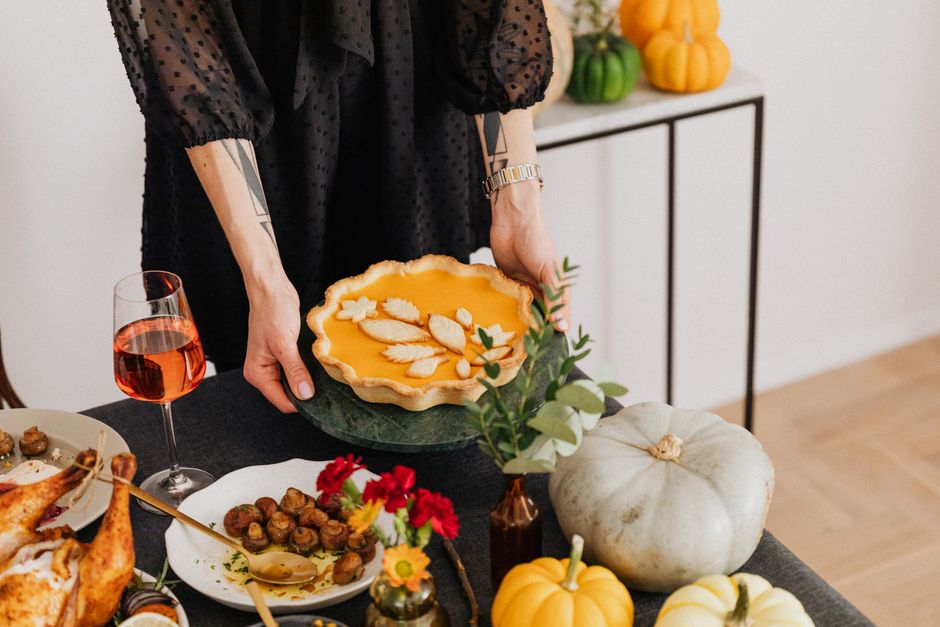
Listen to the children's thoughts first. Guide them to understand that food origins are about where plants/animals first evolved or were domesticated. Then, introduce the concept of 'food origin' as explained by Mai. A food's origin is the place in the world where it first grew naturally or was first raised by humans. For example, tomatoes and potatoes have their origin in South America.
- Which of our breakfast foods do you think might have their origin here where we live?
- Which ones do you think came from much farther away?
- What other Thanksgiving foods do you think might have interesting origins?
Know Before You Teach
- Good to know: The concept of 'food origin' refers to the original geographic area of domestication or wild growth.
- Many Thanksgiving foods (corn, turkey, cranberries, pumpkins) are indigenous to North America.
- Other common foods (wheat, apples, coffee, sugar, many fruits) originated elsewhere and were introduced to new regions.
- If they ask: So, like, where did humans come from? That's a great question, but for another time! Today we're focusing on where our food started its journey.
- It's working when: Children attempting to connect the definition of 'food origin' to the foods they discussed.
- If they're stuck: Provide a clear example like 'chocolate' (origin: Central/South America) and ask them to think about why it started there.
- Easier: Focus on just 2-3 key examples of 'food origin' and whether it's 'near' or 'far'.
Done when: Student can explain the core concept of 'food origin' in their own words, without reciting the examples they were given, and apply it to a case that was not mentioned.
4Activity: Plotting the Global Feast 9 min
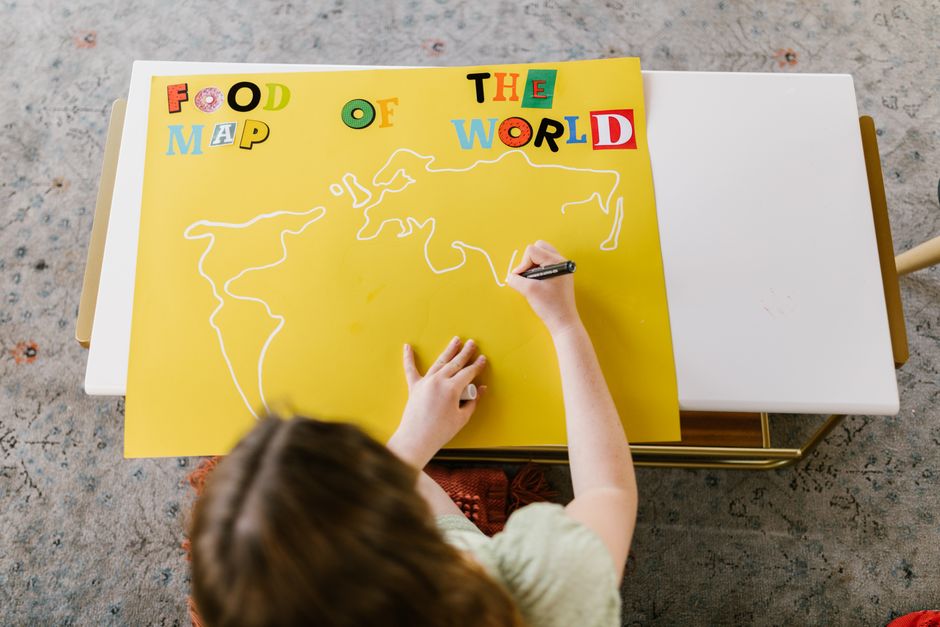
Help children research (or reveal) the origins of 2-3 breakfast items and 2-3 traditional Thanksgiving foods. Have them place pictures or draw symbols of these foods on their map in their original regions. Younger children can draw simple pictures; older children can add labels or draw arrows for trade routes.
- What did you discover about where [Food Item] really came from?
- What surprised you the most about the journey of our food?
Know Before You Teach
- Good to know: Potatoes originated in the Andes region of South America.
- Wheat (for bread/stuffing) originated in the Middle East.
- If they ask: How did they find out where food came from? Scientists like botanists and archaeologists study ancient seeds, plants, and even old stories to figure out where foods first grew.
- It's working when: Accurate placement of food items on the map, or enthusiastic discussion of their origins.
- If they're stuck: Provide a simple hint for one item, e.g., 'Think about where wild turkeys are from'.
- Easier: Provide pre-drawn or printed images of foods to place, instead of requiring them to draw.
- Harder: Challenge them to think about how these foods traveled (e.g., explorers, trade, migration) and mark a 'travel route' on the map.
Done when: Children have successfully identified and marked the origins of at least 5 food items on their map (or discussed their origins if not physically mapping).

5Summary: A World of Gratitude 2 min
Encourage reflection on the interconnectedness revealed by the food origins. Ask open-ended questions about how this new understanding changes their perspective on Thanksgiving and gratitude.
- How does seeing all these different places on our map make you feel about the food we eat?
- What part of this food journey story was most interesting to you?
Know Before You Teach
- Good to know: Thanksgiving celebrations often include foods from diverse global origins.
- Understanding food origins can deepen appreciation for cultural exchange and global agriculture.
- Gratitude can extend to the natural world and human efforts that bring food to our tables.
- If they ask: So are all our foods from somewhere else? No! Many foods also have origins right here. But it's cool to see how much of our food has traveled.
- It's working when: A genuine reflection on the global nature of food and a sense of appreciation.
- If they're stuck: Point to the map and pick out one food's journey, asking, 'Isn't it amazing that this came all the way from X?'
- Easier: Ask them to name just one food and one place it came from that surprised them.
- Harder: Ask them to consider what might happen if one country only ate foods from its own origin.
Done when: Student shares one key takeaway about food origins, global connections, or gratitude.
Beyond The Spark
Fuel their curiosity beyond the Spark with bonus extras.
Table Talk
Understanding food origins helps us appreciate global trade, diverse cultures, and the environmental impact of where our food is grown and transported.
Did You Know?
The 'Irish' potato and the 'Italian' tomato both originally came from South America!
Challenge
Research another 3-5 Thanksgiving foods (like green beans, sweet potatoes, or pecans) and add them to your global food map, including how they traveled.
Quick Recap Quiz 4 min
Customize this quiz, add questions, or follow your child's lead! Each question has a 'Parent Tip' to help them find the answer without giving it away.
1. What does a food's 'origin' mean?
- Where you bought it
- Where it first grew naturally
Remind them about corn's very first home, not just where it grows now.
2. Where did potatoes originally come from?
- South America
- North America
Recall the example mentioned about the Andes mountains.
3. What's a food that started in North America?
- Apples
- Corn
Think about traditional Thanksgiving foods.
4. Why do many foods have origins far from where we live?
- People moved them around the world.
- They grow everywhere naturally.
Discuss how humans helped spread crops from their original homes.
Loved This Spark?
Scan to jump into the app and explore similar Sparks in our Sparks Hub. New to Mai? Start free with 10 Sparks, no credit card needed.