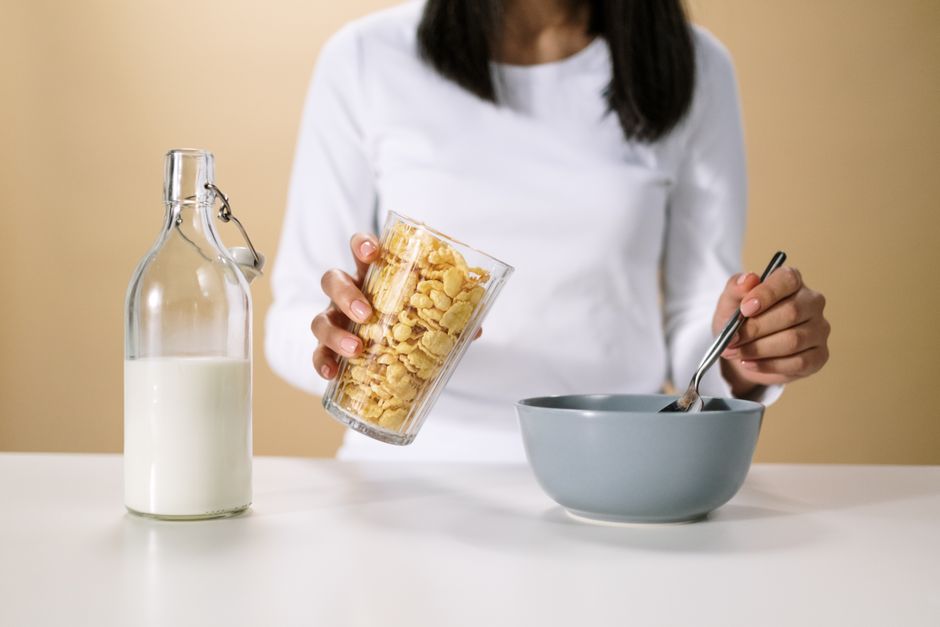
Equal Groups Fun
Explore the foundational concepts of multiplication and division through hands-on activities with everyday objects. This lesson challenges children to make and break equal groups, discovering how these operations are connected ways to organize numbers.
Our goal: Learners will understand that multiplication means putting equal groups together and division means splitting into equal groups. They will use everyday objects to build and break apart these groups, discovering how these two math ideas are connected like opposites. This will help them see how numbers work.
What You Need
Cereal (e.g., O-shaped, puffed rice) • Small toys or blocks • Beans (dry) • Small plates or bowls (at least 5) • Tray or large placemat
and this is just the baseline.
Scan to jump into the app and easily personalize this Spark to match your child's exact learning level and see how Mai will guide this lesson.
Learning Guide
A simple guide to lead you through the kickoff, the core challenge, and everything in between.
Mai’s Tips
- Non-linear learning: It's okay if they struggle or make 'mistakes' while arranging. This is where the learning happens. Resist the urge to show them the 'right' way immediately. Instead, ask 'What happens if you try it this way?' or 'What did you notice when you put them like that?'
- Focus on the 'why': The goal isn't just to get the right answer (e.g., 12 divided by 3 is 4) but for them to understand why it's 4, by seeing 4 items in each of 3 groups. Emphasize the physical evidence they create with the manipulatives.
- Simplify or extend: If a younger child is overwhelmed, start with very small numbers (e.g., 6-8 items) and only 2-3 groups. For an older child, introduce prime numbers (e.g., 7 or 11 items) and ask why they can only make one type of array (1x7 or 7x1), leading to a discussion about prime and composite numbers implicitly.
- Scattering alert: Small items like cereal or beans are prone to rolling away. Doing this activity on a tray or large placemat can save a lot of cleanup and frustration.
For The Grown-Up
- A common mix-up: Children often learn multiplication as 'repeated addition' and division as 'repeated subtraction,' treating them as distinct calculations. This can prevent them from understanding their fundamental relationship as inverse operations and how they both describe ways of organizing quantities into equal groups.
- Try this: Have them build an array (e.g., 3 rows of 4 blocks). Ask: 'How many blocks did you use in total? How did you figure that out?' (multiplication). Then, ask: 'If you started with all 12 blocks and wanted to make 3 rows, how many would be in each row? What about 4 rows?' (division). Point out that it's the same physical arrangement, just approached with a different question, demonstrating their inverse relationship.
- A big question to ask: Is it always fair to share everything equally, or are there times when sharing unequally makes more sense?
1Breakfast Challenge: Sharing Bites 3 min
Start with breakfast items. Ask the child to consider how to share a small quantity equally. For younger children, allow them to physically share a few items (e.g., 6 grapes or blueberries) between two 'people' (e.g., their plate and your plate). For older children, pose a slightly more complex sharing problem, perhaps involving more people or a prime number of items to prompt discussion about remainders (but don't introduce the term yet).
Know Before You Teach
- Good to know: This stage introduces the idea of 'equal sharing' which is the essence of division.
- Children often start with one-to-one correspondence for sharing, which is a good foundation.
- If they ask: What if it doesn't divide equally? That's a great observation! Sometimes things don't divide perfectly, and we call what's left over a 'remainder'. We'll explore that more another time, but for now, let's try to find things that can be shared perfectly.
- It's working when: The child attempting to distribute items one by one or in small batches to ensure equality.
- If they're stuck: Suggest they physically move the items: 'Try actually moving them one by one to each plate and see what happens.'
- Easier: Use only 2 recipients and a small, easily divisible number of items (e.g., 4 or 6).
- Harder: Ask them to find out if 7 items can be shared equally among 3 people, prompting them to explain why or why not.
Done when: Student has thought about sharing and proposed a way to distribute items.

2Explore & Plan: Building with Equal Groups 7 min
Have the child gather a pile of manipulatives. Challenge them to arrange a specific total number of items (e.g., 12, 15, or 20) into various equal groups or rectangular arrays. Guide them with questions about equality and different arrangements. Younger children can focus on simple groupings. Older children can try to find all possible rectangular arrays for a number.
Know Before You Teach
- Good to know: Arrays are a visual representation of multiplication (rows x columns) and also illustrate division (total / rows = columns).
- Exploring multiple arrangements for the same number helps build number sense and understanding of factors.
- If they ask: What's an array? An array is when you arrange things in neat rows and columns, like a checkerboard or a tray of muffins, where every row has the same number of items and every column has the same number of items.
- It's working when: The child trying different rectangular formations and noticing if items are left out or if groups are unequal.
- If they're stuck: Suggest they start with just two rows, then try three. 'What if we try to make two perfectly even rows?'
- Easier: Focus on making just one type of equal group (e.g., all groups of 3) or one simple array (e.g., 2 rows of 4).
- Harder: Challenge them to list all possible arrays for a given number (e.g., for 18, find 1x18, 2x9, 3x6, etc., and their inverses).
Done when: Student has explored different ways to group or arrange a set of objects equally and can describe their arrangements.

3Discussion: What are we doing? 8 min
After the hands-on grouping, guide the discussion to name the concepts. Explain multiplication as combining equal groups for a total, and division as sharing a total into equal groups or finding how many equal groups can be made. Use their own arrangements as examples. Introduce the vocabulary directly, then ask questions to check understanding and apply it to a new scenario.
Know Before You Teach
- Good to know: Connecting the abstract terms to the concrete actions they just performed helps solidify the concepts.
- If they ask: Why is it important to know these words? Knowing these words helps us talk about and understand math problems clearly, and it helps us see how numbers are connected when we're organizing or sharing things.
- It's working when: The child using their hands or pointing to their arrangements as they explain the terms, showing they've made the connection.
- If they're stuck: Revisit a specific arrangement they made: 'You just showed me 3 rows of 4 blocks. That's multiplication. Can you tell me what you did?'
- Easier: Focus on defining just one term (multiplication) using their favorite arrangement, then circle back to division later.
- Harder: Ask them to create a small 'word problem' using multiplication or division based on their own arrangements.
Done when: Student can explain multiplication and division in their own words and see their connection, even if they don't use formal definitions.

4Activity: The Array Challenge 9 min
Provide a new challenge. Ask the child to select a number of items (e.g., 24) and build all possible rectangular arrays. Then, provide another number (e.g., 18) and ask them to share it equally onto 2, 3, or 6 plates. Observe and ask questions about how they are solving the challenge. Supervise the handling of small items to prevent scattering.
Know Before You Teach
- Good to know: Providing specific numbers allows them to apply the newly learned concepts directly.
- The inverse relationship becomes clearer when they use the same items to show both operations.
- If they ask: Can I use a calculator? Not for this challenge! The goal here is to see and do the math with your hands, not just to find the answer. The calculator tells you the answer, but your hands show you how and why.
- It's working when: The child systematically trying different group sizes or array shapes, and verbally connecting their actions to multiplication/division.
- If they're stuck: Suggest they start with only two plates for sharing, or one row for an array. 'Let's try to share them with just two plates first, and see what happens.'
- Harder: Ask them to record their multiplication and division sentences for each array or sharing task they complete.
Done when: Student has successfully built at least two different arrays for a chosen number and demonstrated sharing a different number of items into equal groups, describing their results.

5Summary: Math in the Real World 3 min
Conclude with reflection questions. Encourage the child to think about how multiplication and division are used in everyday life. Celebrate their effort in discovering these concepts through hands-on play. For younger children, focus on simple sharing scenarios. For older children, prompt them to think about planning or organizing larger quantities.
Know Before You Teach
- Good to know: Reflection helps consolidate learning by requiring retrieval and metacognition.
- Connecting math to real-world applications motivates continued learning and shows relevance.
- Encouraging them to teach someone else reinforces their understanding and ability to articulate concepts.
- If they ask: When would I ever use this? Imagine you're sorting your LEGO bricks into color groups, or helping decide how many slices of pizza each person gets at a party. You're using multiplication and division to organize and share!
- It's working when: The child offering specific examples of how they might use multiplication or division outside the activity, rather than just repeating definitions.
- If they're stuck: Give a specific scenario: 'What if you were sorting all your toy cars? How could multiplication or division help you?'
- Easier: Focus on just one question: 'What was your favorite part of building with numbers today?'
Done when: Student shares one key takeaway about multiplication or division and provides a real-world example.
Beyond The Spark
Fuel their curiosity beyond the Spark with bonus extras.
Table Talk
Organizing your toys into bins, sharing snacks fairly with friends, or even planning how many cookies to bake for a party all use multiplication and division.
Did You Know?
Did you know the multiplication sign 'x' was invented by a mathematician named William Oughtred over 400 years ago?
Challenge
Choose a number like 30 or 60. How many different ways can you share it equally? What numbers divide into it perfectly? Can you make a chart of all the arrays you found?
Quick Recap Quiz 4 min
Customize this quiz, add questions, or follow your child's lead! Each question has a 'Parent Tip' to help them find the answer without giving it away.
1. When you put 4 groups of 3 apples together, what math operation are you using?
- Division
- Multiplication
Remind them multiplication is about combining equal groups.
2. If you have 10 cookies and share them equally with 5 friends, what math operation helps you find out how many each friend gets?
- Division
- Addition
Sharing equally is a key sign of division.
3. You made 2 rows of 5 blocks. You then took the total 10 blocks and split them into 2 equal piles. What does this show about multiplication and division?
- They are completely different.
- They are related, like opposites.
Help them see that the same numbers and physical arrangement can be used for both operations, just from different starting points.
4. Which job would definitely use multiplication or division?
- A baker figuring out how many cupcakes to make for 6 parties.
- A storyteller making up a new tale.
Connect to planning and distributing quantities in real-world professions.
Loved This Spark?
Scan to jump into the app and explore similar Sparks in our Sparks Hub. New to Mai? Start free with 10 Sparks, no credit card needed.