
Earth's Secret Layers
This lesson uses everyday objects to explore the Earth's layers, temperature, and pressure deep within. Families will discover why digging to the other side of the Earth is an incredible, almost impossible, challenge.
Our goal: Learners will understand the Earth is made of different layers and how temperature and pressure change as you go deeper. They will be able to identify these layers and explain why it's practically impossible for a human to actually dig to the other side of the planet.
What You Need
Apple or orange • Spoon or toothpick • Small bowl • Warm water • Ice cube • Sponge
and this is just the baseline.
Scan to jump into the app and easily personalize this Spark to match your child's exact learning level and see how Mai will guide this lesson.
Learning Guide
A simple guide to lead you through the kickoff, the core challenge, and everything in between.
Mai’s Tips
- Analogy Focus: The fruit analogy is critical here. Encourage children to constantly compare what they see in the fruit to the Earth. If they get stuck, ask, 'What part of our apple was like the Earth's crust?'
- Misconception Alert: Children often visualize digging as going 'down' in a straight line relative to their body, even on a sphere. The idea of digging 'through' to the other side implies passing the center. During Stage 3, you might gently ask, 'If you kept digging in a straight line, what would happen when you got to the very middle of the Earth?'
- Simplifying Extremes: If the concepts of extreme heat and pressure are too abstract, simplify. For heat, 'It's hotter than any oven!' For pressure, 'It's like having all the buildings in a city piled on top of you!'
- Safety Check: Ensure warm water used in Stage 4 is only comfortably warm, never hot, especially for younger children. Test it on your own skin first.
1Breakfast Table Dig 5 min
Place the fruit on the table. Start by asking children to observe it and wonder about what's inside, linking it to the Earth. This stage is about sparking curiosity and linking a familiar object to the big question.
- Younger children (4-7): Focus on the physical fruit. Ask: "What do you see on the outside of this fruit? Do you think it's the same all the way through, or different inside?"
- Older children (8-18): Encourage more abstract thinking. Ask: "If you were tiny and could dig a tunnel through this whole fruit, what would you pass through? Do you think digging through the Earth would be similar or different?"
Know Before You Teach
- Good to know: The Earth is not uniform throughout; it has distinct layers.
- Children's initial theories about what's inside the Earth often reflect their daily experiences (dirt, rocks, water).
- If they ask: Is the Earth hollow inside? No, the Earth is very solid and dense all the way through, just like our fruit is solid.
- It's working when: Child shows curiosity about the inside of the fruit or Earth.
- If they're stuck: If they don't engage, try a different fruit or ask if they've ever seen a cut-open fruit like an avocado or peach with a big pit inside.
- Easier: Just focus on the fruit: 'What's inside? Is it all the same?'
- Harder: Ask: 'If this fruit were the Earth, and you wanted to dig to the very center, how would you start?'
Done when: Child has made an initial guess about digging through the fruit, linking it to the idea of digging through Earth.

2Explore & Plan: The Grand Dig 8 min
Have children gently 'dig' into the fruit using a spoon or toothpick, observing its parts. Then, shift the discussion to Earth. Ask them to predict what they would encounter if they dug straight down through the Earth, focusing on materials, sensations, and challenges. Do not correct their ideas.
- Younger children (4-7): Focus on sensory predictions. Ask: "If you dig deep into the Earth, what colors do you think you'd see? Would it feel hot or cold? What would you wear?"
- Older children (8-18): Encourage more scientific predictions. Ask: "What kind of rocks or materials do you expect to find as you go deeper? How do you think the temperature and pressure would change? What are the biggest obstacles to digging all the way through?"
Know Before You Teach
- Good to know: Temperature and pressure are key factors that change dramatically with depth.
- If they ask: Will I find dinosaurs if I dig deep enough? Dinosaurs lived on the surface of the Earth long ago, and their bones are usually found in the top layers of soil and rock, not deep inside the Earth.
- It's working when: Child makes predictions about finding different materials or feeling different temperatures.
- If they're stuck: Suggest specific categories: 'Would it be hot or cold? Hard or soft? Wet or dry?'
- Easier: Focus on very simple predictions for digging through the fruit: 'What's under the skin? What's in the middle?'
- Harder: Ask: 'What would happen if your tunnel hit water? Or very hot rock? How would you keep digging?'
Done when: Child has shared predictions about what they might find and feel when digging deep into Earth.
3Discussion: Earth's Incredible Layers 6 min
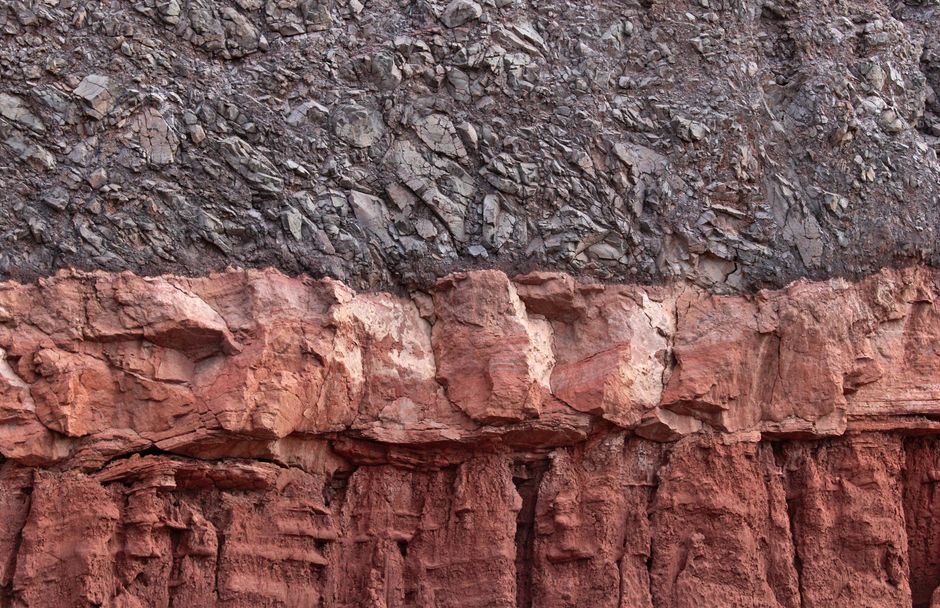
First, have them describe the layers they found in their fruit model. Then, introduce the Earth's layers: Crust, Mantle, and Core. The Crust is the thin, solid outer layer we live on, like the fruit skin. The Mantle is a thick layer of very hot, dense rock that flows very slowly, like the fruit flesh. The Core is Earth's very hot, dense center, made mostly of iron and nickel, like the fruit's pit. Explain that temperature and pressure increase dramatically as you go deeper. Finally, state clearly that due to extreme heat and pressure, humans cannot practically dig to the other side of the Earth.
- Younger children (4-7): Keep it simple. Ask: "What was the skin, the middle, and the seed of your fruit? Earth has parts like that too!"
- Older children (8-18): Discuss the properties of each layer. Ask: "What does 'pressure' mean when you're deep underground? How might heat affect digging?"
Know Before You Teach
- Good to know: The crust is thin and solid. The mantle is thick and made of very hot, flowing rock. The core is the super-hot, dense center.
- If they ask: Is the middle of the Earth lava? The outer part of the core is liquid metal, but it's much hotter and denser than the lava we see from volcanoes, which comes from the mantle.
- Key words: Crust: The thin, solid outer layer of the Earth, like the skin of an apple.
- Key words: Mantle: The thick layer of very hot, dense rock inside the Earth, under the crust, like the flesh of an apple.
- Key words: Core: The very hot, dense center of the Earth, like the pit of an apple.
- It's working when: Child can point to parts of the fruit and name the corresponding Earth layer.
- If they're stuck: Revisit the fruit: 'Show me the part of the fruit that's like the crust.'
- Easier: Focus only on 'skin, middle, and seed' of the fruit and briefly mention Earth has similar parts.
- Harder: Discuss what 'dense' means in relation to the core, and why it's so heavy.
Done when: Student can name the three main Earth layers and describe generally how temperature and pressure change with depth.

4Activity: Feel the Earth's Extremes 9 min
Guide children through a sensory exploration to simulate Earth's internal conditions. Have them feel an ice cube to represent the surface/crust, then warm water for the mantle, and finally squeeze a sponge or their hands together for pressure at the core. Discuss how these sensations relate to the challenges of deep Earth exploration.
- Younger children (4-7): Focus on the sensations. Ask: "How does the ice feel? How does the warm water feel? What happens when you squeeze hard? Which part of Earth is like this?"
- Older children (8-18): Connect sensations to scientific concepts. Ask: "How would extreme heat and pressure make it hard to dig or survive? What kind of special equipment would you need for these conditions?"
Know Before You Teach
- Good to know: The Earth's interior experiences extreme temperatures and pressures that are inhospitable to human life and current technology.
- The outer core is liquid, and the inner core is solid, despite extreme heat, due to immense pressure.
- If they ask: How hot is the Earth's core? The center of the Earth is as hot as the surface of the sun, about 5,000 to 6,000 degrees Celsius!
- It's working when: Child connects the sensations (cold, warm, squeeze) to the idea of temperature and pressure inside Earth.
- If they're stuck: Ask 'How would you feel if it was this hot/cold/squeezed?'
- Easier: Just let them feel and describe the sensations without deep scientific explanation.
Done when: Student has participated in the sensory exploration and connected the sensations to Earth's internal conditions.
5Summary: An Impossible Journey? 2 min
Ask children to recall what they learned about Earth's layers, temperature, and pressure. Prompt them to use these facts to answer the original question. Reinforce that while direct digging isn't possible, scientists use other clever ways to learn about our planet's interior.
- Younger children (4-7): Ask: "Was it too hot, too squishy, or too hard to dig all the way through Earth?"
- Older children (8-18): Ask: "Based on what we felt and learned, what are the top three reasons a human can't dig to the other side of Earth?"
Know Before You Teach
- Good to know: Scientific methods like seismology (studying earthquake waves) are used to understand Earth's interior.
- If they ask: What's the deepest hole ever dug by humans? The deepest hole ever dug was in Russia, about 12 kilometers deep, which is still only a tiny scratch on the Earth's crust.
- It's working when: Child uses terms like 'hot', 'pressure', or 'layers' to explain why the dig is impossible.
- If they're stuck: Prompt them: 'Think about how hot it gets. Could a person survive that?'
- Harder: Ask: 'If we could invent a super-strong, super-cool machine, what would be the absolute biggest problem it would face at the very center?'
Done when: Student can explain in their own words why digging to the other side of the Earth is not practically possible for humans.
Beyond The Spark
Fuel their curiosity beyond the Spark with bonus extras.
Table Talk
Geologists and geophysicists study seismic waves from earthquakes to 'see' inside the Earth, much like doctors use X-rays to see inside our bodies.
Did You Know?
Did you know the Earth's inner core is as hot as the surface of the sun?
Challenge
Imagine you are an engineer designing a machine to dig through the Earth. What materials would it be made of, and what special features would it need to withstand the conditions we discussed?
Quick Recap Quiz 4 min
Customize this quiz, add questions, or follow your child's lead! Each question has a 'Parent Tip' to help them find the answer without giving it away.
1. What is the outermost layer of the Earth, where we live?
- The Mantle
- The Crust
Remind them it's like the skin of an apple or the Earth's surface.
2. What happens to the temperature as you dig deeper into the Earth?
- It gets much hotter.
- It stays the same or gets colder.
Ask them to recall how the warm water felt compared to the ice.
3. Why is it so hard to dig all the way to the center of the Earth?
- There are too many rocks to move.
- It's too hot and there's too much pressure.
Connect back to the sensory activity: the warm water and the squeeze.
4. If you could dig through the Earth, what would you find at the very center?
- A super hot, dense core of metal.
- An empty space or giant cave.
Remind them of the fruit's pit or seed, but imagine it incredibly hot and heavy.
Loved This Spark?
Scan to jump into the app and explore similar Sparks in our Sparks Hub. New to Mai? Start free with 10 Sparks, no credit card needed.