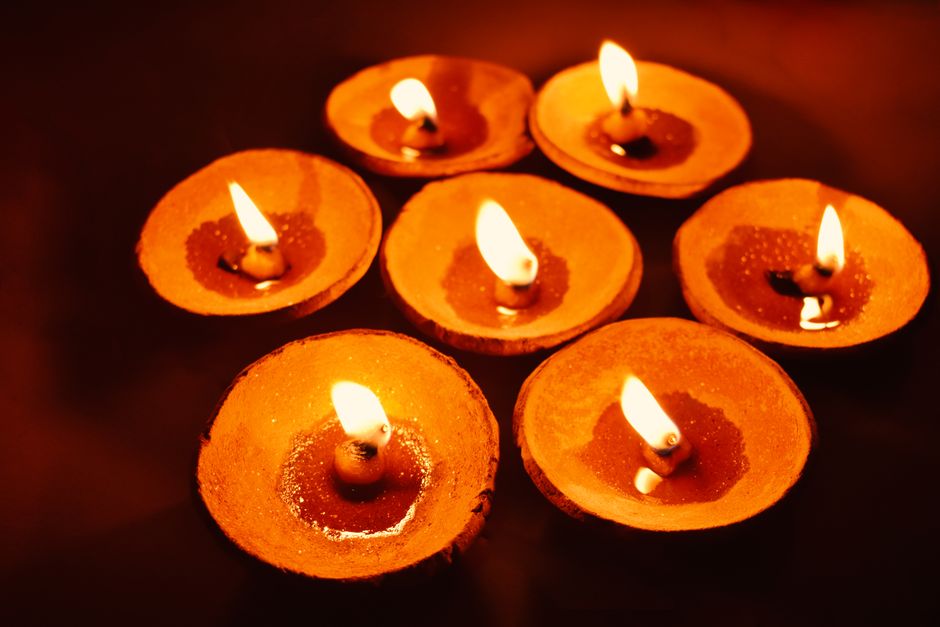
Diwali Rangoli Challenge
Diwali, the Festival of Lights, celebrates the triumph of good over evil and light over darkness. In this challenge, families will explore the vibrant art of Rangoli, traditional floor decorations made to welcome prosperity. By designing and creating their own Rangoli, children will learn about the symbolism of light and color during this joyful festival.
Our goal: Children will understand the deep symbolism of light and darkness during Diwali, appreciating its cultural importance. They will then apply this knowledge to design and create their own vibrant Rangoli pattern, connecting art to festive traditions.
What You Need
Uncooked rice • Food coloring • Small bowls • Plates/trays/cardboard • Pencil/chalk • Spoons/funnels • Newspapers/tablecloth • Colored sand/rice
and this is just the baseline.
Scan to jump into the app and easily personalize this Spark to match your child's exact learning level and see how Mai will guide this lesson.
Learning Guide
A simple guide to lead you through the kickoff, the core challenge, and everything in between.
Mai’s Tips
- The step of dyeing rice is crucial for active learning. It's not just about getting colored materials, but about the child physically transforming plain rice into vibrant hues, connecting their effort to the colorful outcome. Don't pre-dye the rice; let them experience the mixing.
- Children might focus only on making a 'pretty picture' without grasping the deeper meaning of Rangoli as a welcoming symbol or light over darkness. Gently guide them by asking about the purpose of such art at a festival, rather than just its appearance.
- If the concept of 'light triumphing over darkness' is abstract, simplify it to 'good things winning against bad things.' Use simple examples like 'a smile making someone feel better' or 'sharing toys making playtime happy,' then link it back to Diwali's celebration of positivity.
- Food coloring can stain. Prepare the workspace with newspaper or an old cloth to ensure any spills are easily contained. This prevents frustration and keeps the focus on the creative process.
For The Grown-Up
- Try this: Ask them what they think the bright colors and designs are for, beyond just looking nice. If they say 'just to be pretty,' prompt them to consider why someone would make something beautiful outside their home, on the ground, specifically for a festival that celebrates light.
- Explain it like this: Think of Rangoli like a cheerful, colorful hug you leave at your doorstep to welcome happiness and good fortune, just as a light guides you through the dark.
- A big question to ask: If light always triumphs over darkness, does that mean darkness isn't important at all, or does it serve a purpose?
Prep Before Session 15 min
- Gather 1 cup plain white rice per child.
- Collect 3-4 different food colorings.
- Set out small bowls (one per color) for mixing rice.
- Provide a plate or tray (like a paper plate or serving tray) for each child's Rangoli.
- Get a pencil or chalk for sketching designs.
1Introduction 5 min
Begin by asking your child about celebrations they know that use lights or special decorations. Share that today you will learn about Diwali, the Festival of Lights. Ask: 'What does light make you feel or think of?' 'Why do people use lights for special occasions?'
Know Before You Teach
- Good to know: Diwali is a major festival celebrated by Hindus, Jains, Sikhs, and some Buddhists, though the specific stories for celebration vary.
- The word 'Diwali' comes from the Sanskrit word 'Deepavali,' which means 'rows of lighted lamps'.
- If they ask: Is Diwali like Christmas? Both are celebrations with lights and decorations, but Diwali is celebrated by different people for different reasons and has its own special stories.
- Key words: Diwali: A very old festival, or celebration, of lights and happiness.
- Key words: Festival: A special time for celebration, often with traditions and parties.
- It's working when: Child naming a specific celebration (e.g., Christmas, birthday, New Year) that uses lights or special decorations.
- If they're stuck: Offer an example of a celebration with lights, 'We use lights on our Christmas tree, don't we?'
- Easier: Provide two picture cards of different celebrations with lights and ask, 'Which of these uses lights?'
- Harder: Besides light, what other senses (like sound or smell) are part of celebrations you know?
Done when: Children share an experience with lights/decorations and express initial thoughts on their meaning.

2Explore & Plan 8 min
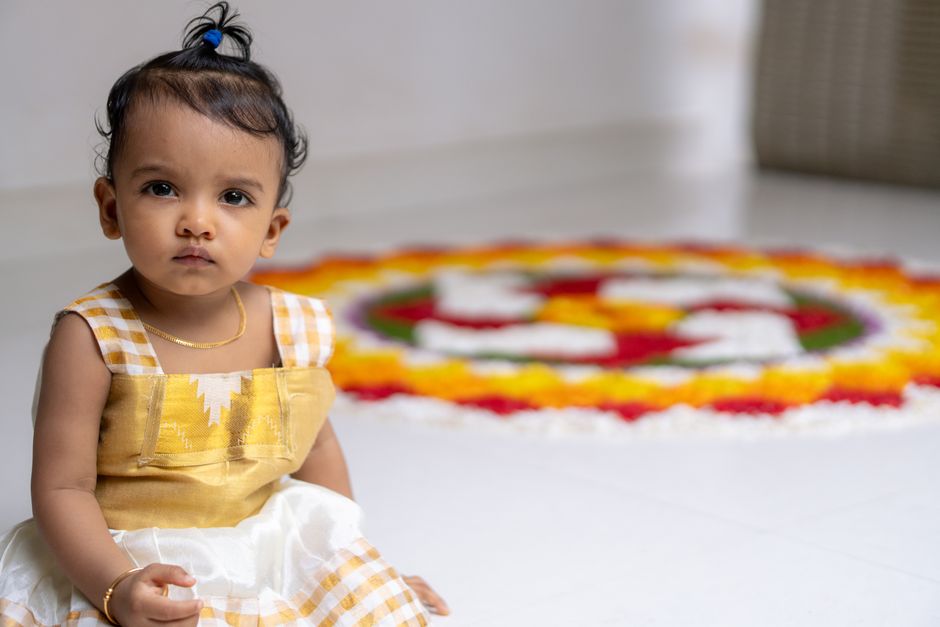
Explain that Rangoli are traditional patterns made on the floor during Diwali to welcome good fortune and positive energy. Have your child help gather materials: rice, food coloring, bowls for mixing, plates, and a pencil. If dyeing rice, show them how to put rice in a bowl, add a few drops of food coloring, and mix until evenly coated. Spread the colored rice on paper to dry if needed, or put it directly into separate small bowls. Encourage them to think about what shapes or patterns they like and what colors feel joyful. Ask: 'What kind of design would make our space feel welcoming?' 'Which colors feel happiest to you?'
Know Before You Teach
- Good to know: Rangoli designs can be simple geometric shapes, floral patterns, or depictions of deities, and they are believed to invite positive energy and blessings into homes.
- The patterns are usually made on the floor at the entrance of a home or in the living area to welcome good fortune.
- Historically, natural materials like powdered rice, colored sand, flower petals, or even spices were used for Rangoli.
- If they ask: Why is it made on the floor? It's a way to decorate and invite good things right into your home, from the outside in.
- Key words: Traditional: Something that has been done in a special way for a very long time.
- It's working when: Child actively participating in gathering materials or expressing a specific color preference for the rice.
- If they're stuck: Suggest picking just two colors to start, 'Which two colors would make you smile the most?'
- Easier: Pre-select 2-3 colors of food coloring and have only those available.
- Harder: Ask them to think about how different colors might represent different feelings or wishes (e.g., green for growth, yellow for happiness).
Done when: Children have a basic idea for their Rangoli design and materials are ready.

3Discussion 8 min
Explain that Diwali celebrates the triumph of light over darkness. This means good, hope, and knowledge overcoming evil, sadness, or challenges.
Light Triumphs Over Darkness: This idea means that good things like kindness, hope, and knowledge always win against bad things like anger, sadness, or not knowing.
How to Recognize It: Think of a lamp making a dark room bright, or a happy thought chasing away a sad one.
Examples: A hero winning against a monster in a story, or learning something new that makes a confusing topic clear. It’s not just a physical light, but about feeling bright and positive.
Why: Light helps us see and feel safe, warm, and happy. Symbolically, it guides us and fills us with good feelings.
Ask: 'What do you think "light triumphing over darkness" means when we're talking about feelings or ideas, not just actual light?' 'Can you tell me about a time when a "light" (like a good idea or a kind action) helped overcome a "darkness" (like a problem or sadness)?'
Know Before You Teach
- Good to know: Different stories are associated with Diwali across India, but they all share this common theme, such as Rama's return to Ayodhya or Krishna's victory over Narakasura.
- Key words: Triumph: To win or be very successful, especially after a challenge.
- Key words: Symbolism: When something represents or stands for an idea or feeling, like a heart symbolizes love.
- It's working when: Child providing a simple example of good winning over something challenging in their own words.
- If they're stuck: Ask, 'Can you think of a time when someone helped you feel better when you were sad? That helper was like a 'light'!'
- Easier: Give a simple scenario: 'Imagine you're scared of a monster under your bed. What would make you feel better: a nightlight, a grown-up, or a brave thought?'
- Harder: Can a 'darkness' ever lead to a new 'light' or learning?
Done when: Student can explain 'light triumphing over darkness' in their own words, connecting it to positive outcomes or qualities.
4Activity 20 min
Provide the plate or tray for the Rangoli. Allow your child to sketch a design with a pencil or chalk, or encourage a free-form approach. Guide them in carefully applying the colored rice to create their pattern. Emphasize that it's about expression and symbolism, not perfection. Supervise to minimize mess, suggesting they work over newspaper. Encourage them to try different techniques for applying the rice, like using fingers or a spoon. Let them know it's done when they feel their Rangoli shows their celebratory spirit.
Know Before You Teach
- Good to know: Different regions in India have distinct Rangoli styles and patterns; some use dots and lines, others freehand motifs, often incorporating elements like flowers, peacocks, or geometric designs.
- Rangoli is an ephemeral art form, meaning it's not meant to last forever, symbolizing the temporary nature of life and the beauty of creation in the moment.
- If they ask: What if I mess up? Rangoli is about putting good energy into it, not being perfect. You can always smooth out the rice or try a new shape!
- It's working when: Child experimenting with different ways to apply the rice (e.g., pinching, sprinkling, using a spoon).
- If they're stuck: Suggest a specific starting shape, 'What if you start with a big circle in the middle?'
- Easier: Provide a simple template, like a star or circle cut-out, they can fill in with rice.
- Harder: Challenge them to use at least three different colors in a repeating pattern within their design.
Done when: The Rangoli pattern is completed to the child's satisfaction.

5Summary 4 min
Admire their finished Rangoli together, highlighting their effort and creativity. Ask: 'What was the most interesting part of making your Rangoli?' 'What new thing did you learn about Diwali or the idea of light today?' Finish by discussing where they might display their art as a symbol of welcoming light and good fortune.
Know Before You Teach
- Good to know: The act of sharing and discussing their artwork helps children internalize the cultural context and their own creative expression.
- If they ask: Can we make another one? We can save any leftover colored rice and try another design soon, or use what we learned to make a new kind of art!
- It's working when: Child making a connection between their art and the idea of welcoming good feelings or light, without prompting.
- If they're stuck: Rephrase the questions: 'What good feeling does your colorful Rangoli make you think of?' or 'What's one thing you'll remember about Diwali?'
- Easier: Ask them to point to their favorite color in their Rangoli and say why they chose it.
- Harder: How does making something beautiful with your hands, like this Rangoli, connect to the idea of celebrating light over darkness?
Done when: Student shares one key takeaway about Rangoli or Diwali.
Beyond The Spark
Fuel their curiosity beyond the Spark with bonus extras.
Table Talk
Architects and urban planners use design principles like symmetry and pattern to create beautiful and functional spaces, much like Rangoli artists.
Did You Know?
Did you know some Rangoli artists create huge, intricate patterns entirely freehand, using only their fingers and colored powder?
Challenge
Create a new Rangoli pattern using only natural materials found outdoors, like leaves, flower petals, or small stones.
Quick Recap Quiz 4 min
Customize this quiz, add questions, or follow your child's lead! Each question has a 'Parent Tip' to help them find the answer without giving it away.
1. What do people celebrate during Diwali?
- The end of winter
- Light triumphing over darkness
Remind them of the 'Festival of Lights' and what light means symbolically.
2. What are Rangoli patterns made for during Diwali?
- To welcome good fortune and positive energy
- To keep birds away from food
Recall the discussion about Rangoli being like 'welcoming mats'.
3. When we say 'light triumphs over darkness,' what does 'darkness' represent?
- Evil, sadness, or challenges
- The nighttime sky
Ask them to think about what 'light' (like hope or good deeds) helps overcome.
4. What is Rangoli typically made from?
- Colored rice or sand
- Paint on canvas
Think back to the materials used in the activity itself.
Loved This Spark?
Scan to jump into the app and explore similar Sparks in our Sparks Hub. New to Mai? Start free with 10 Sparks, no credit card needed.