
Diwali: Light & Symbols
Explore the vibrant traditions and deep meanings behind Diwali, the Festival of Lights. Discover how communities celebrate light triumphing over darkness and create your own symbols of hope and joy.
Our goal: Learners will understand the rich traditions and core values of Diwali, recognizing its key elements and why they are celebrated. They will grasp the power of symbolism by seeing how Diwali uses light to represent deeper meanings. Finally, they will apply this understanding to create their own unique symbol of a positive idea.
What You Need
Device with internet access • Paper • Crayons or markers
and this is just the baseline.
Scan to jump into the app and easily personalize this Spark to match your child's exact learning level and see how Mai will guide this lesson.
Learning Guide
A simple guide to lead you through the kickoff, the core challenge, and everything in between.
Mai’s Tips
- The core idea here is that learning is active. Instead of just telling them about Diwali, the stages encourage observing the image, discussing the meaning of what they see, and then creating their own meaningful symbol. This active engagement makes the concept of symbolism 'stick' much better than just hearing a definition.
- Be sure to give the child time to fully observe the image in Stage 2 without interruption. Parents often want to jump in and explain. Letting them lead their own observation allows for genuine sense-making and stronger connections later when symbolism is introduced.
- If the concept of symbolism isn't landing in Stage 3, try simpler, more concrete analogies. For example: 'A red traffic light doesn't say 'stop,' but it's a symbol that means stop!' Or 'When you give a thumbs up, it doesn't say 'good job,' but it's a symbol that means good job!' Then, tie it back to the Diwali lamp meaning hope.
- A common pitfall is to focus on the 'correct' artistic outcome for the symbol in Stage 4. The learning isn't in the drawing skill, but in the child's reasoning behind their design choices. If they struggle with drawing, encourage them to describe their idea verbally, or focus on just 1-2 elements. The goal is conceptual transfer, not art class.
For The Grown-Up
- Explain it like this: Symbolism is like a secret code where one thing stands for a big idea, just like a smiley face emoji stands for happiness!
- A big question to ask: If light always symbolizes good, what could darkness symbolize that is not evil or bad?
1Introduction 5 min
Start by setting a positive and curious tone. Ask open-ended questions about celebrations and feelings of joy or hope to connect with their personal experiences. This hooks them into the broader theme of light and positive emotions, which are central to Diwali.
Done when: Student engages in conversation about celebrations and positive feelings.
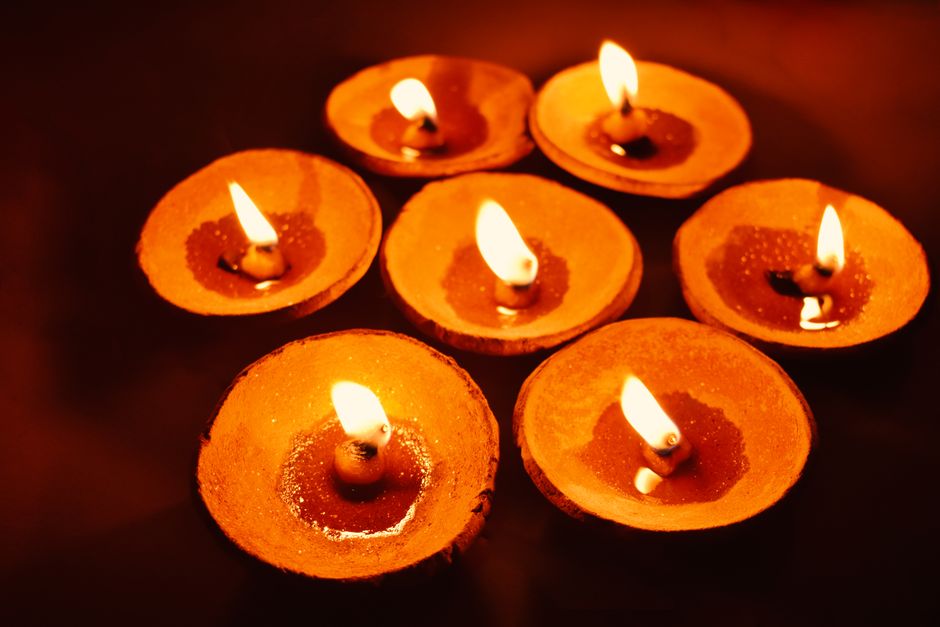
2Visual Learning 8 min
Present the Diwali image and guide the child through an observational process. Encourage them to notice details, colors, and overall atmosphere before you introduce too much information. This builds curiosity and active looking.
Done when: Student actively observes and describes details in the Diwali image.

3Discussion 6 min
First, ask the child what they think 'symbolism' means, letting them formulate their own hypothesis. Then, clearly define symbolism using the provided explanation, connecting it directly to Diwali examples. Follow up with questions that help them apply this new concept to new situations.
Done when: Student can explain symbolism in their own words and identify symbolic elements in the Diwali celebration.
4Design Your Own Symbol of Light 9 min
Provide the necessary materials and clearly state the challenge: to design a symbol for a chosen positive concept. Guide them with questions about their ideas, encouraging independent thought and creative choices in their design. Focus on their reasoning, not the artistic outcome.
Done when: Student has drawn a unique symbol and can explain what it represents and why they chose its elements.

5Summary 2 min
Conclude the lesson by asking reflection questions that encourage the child to articulate what they learned and share their creative work. Celebrate their understanding and participation.
Done when: Student shares one key takeaway about Diwali or symbolism, and explains their designed symbol.
Beyond The Spark
Fuel their curiosity beyond the Spark with bonus extras.
Table Talk
Understanding symbolism helps people in marketing, art, and even international relations communicate complex ideas with a single image or action.
Did You Know?
Did you know that Diwali isn't just one day? It's actually a five-day festival, with each day having special traditions and meanings!
Challenge
Invent a short story about your symbol and how it helps someone discover the idea it represents. Or, research another 'festival of light' from a different culture!
Quick Recap Quiz 4 min
Customize this quiz, add questions, or follow your child's lead! Each question has a 'Parent Tip' to help them find the answer without giving it away.
1. What is Diwali primarily known as?
- Festival of Colors
- Festival of Lights
Diwali celebrates light overcoming darkness. Think about the 'diya' lamps!
2. What does a 'symbol' do?
- It means exactly what it looks like.
- It stands for a bigger idea or feeling.
Remember how a small lamp can mean big ideas like hope?
3. If a diya (lamp) symbolizes good triumphing over darkness, what might darkness symbolize in this context?
- Evil or ignorance
- Nighttime or sleep
If light represents goodness and knowledge, its opposite would represent what they defeat.
4. Why do people use symbols in celebrations like Diwali?
- To help remember and share important ideas.
- To make things look prettier.
Symbols give deeper meaning to the celebrations and traditions.
Loved This Spark?
Scan to jump into the app and explore similar Sparks in our Sparks Hub. New to Mai? Start free with 10 Sparks, no credit card needed.