
Design Your Sustainable Micro-Community
This lesson challenges students to apply principles of sustainable design by creating a physical model of a micro-community. Learners will explore critical social, economic, and environmental factors that shape livable urban spaces, fostering critical thinking about our shared future.
Our goal: In this spark, your learner will analyze key principles of sustainable urban design and community planning, apply design principles to create a functional and environmentally conscious micro-community model and evaluate trade-offs and potential impacts of design choices on community well-being and the environment.
What You Need
Cardboard • Scissors • Tape Or Glue • Markers • Paper • Pencil
and this is just the baseline.
Scan to jump into the app and easily personalize this Spark to match your child's exact learning level and see how Mai will guide this lesson.
Learning Guide
A simple guide to lead you through the kickoff, the core challenge, and everything in between.
Mai’s Tips
- If your child seems overwhelmed, suggest they focus on just one aspect of their community first, like transportation or housing, before integrating other elements.
- Encourage your child to 'think out loud' about why they are making certain design choices, helping them articulate their reasoning and critical thinking process.
Prep Before Session 15 min
- Gather cardboard, scissors, tape or glue, markers, paper, and pencils.
- Read through the entire lesson plan to understand the flow and key concepts.
- Set up a clear, flat workspace where the student can comfortably sketch and build their model.
1Introduction 5 min
Encourage brainstorming about what makes a place livable and what 'sustainable' means. Prompt them to think about how these concepts relate to the future of communities. A "sustainable community" is one that meets its current needs without compromising the ability of future generations to meet theirs, balancing environmental health, social equity, and economic vitality. For example, using renewable energy and local food sources. This approach is vital for ensuring long-term well-being for everyone.
Ask them:
* "What does 'ideal' mean to you when thinking about where people live?"
* "What comes to mind when we talk about a 'sustainable' community?"
* "Why is a 'sustainable' community important for the future?"
* "What makes a place truly livable for everyone?"
Done: Student has shared initial thoughts on what makes an ideal and sustainable community.
Know Before You Teach
- Good to know: A truly sustainable community balances environmental health (like clean air), social equity (everyone has fair access), and economic vitality (jobs and local businesses).
- Livability factors often include access to necessities like food and water, good transportation, safe environments, green spaces, and opportunities for social connection.
- A micro-community is a smaller, often self-contained unit within a larger area, sometimes designed to be walkable or to foster strong local interaction.
- If they ask: Are there any real sustainable communities? Yes, many cities and towns around the world are working to become more sustainable, like Vauban in Germany or some eco-villages, using things like solar power and community gardens.
- If they ask: What's the biggest challenge to making a community sustainable? It's often balancing different needs, like providing enough housing without destroying natural habitats, or creating jobs without causing pollution.
- Key words: micro-community: a smaller, more focused community that often prioritizes local resources and close-knit living within a larger city or region.
- It's working when: Student mentions at least one environmental, social, or economic aspect when discussing sustainability or livability.
- If they're stuck: Suggest they think about a place they've visited or seen that felt really good to be in, and what made it that way.
- Easier: Provide three categories (e.g., 'things for nature,' 'things for people,' 'things for jobs') and ask them to brainstorm one idea for each category.
- Harder: Ask them to identify one global challenge (like climate change or inequality) and explain how their ideal community would specifically address it.
Done when: Student has shared initial thoughts on what makes an 'ideal' and 'sustainable' community.
2Explore & Plan 8 min
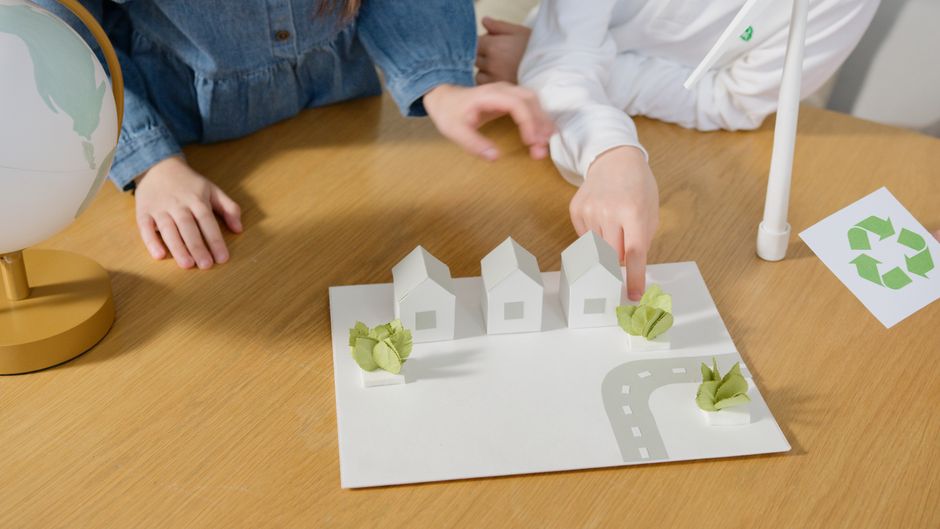
Help them gather the specified materials: cardboard, scissors, tape or glue, markers, paper, and a pencil. Encourage them to sketch out their ideas on paper before building, considering the layout and how different parts of their community will relate to each other. Offer guidance by asking clarifying questions.
Ask them:
* "What essential features would your community absolutely need?"
* "How will you arrange these elements to work together efficiently and harmoniously?"
* "Where will people get food in your community?"
* "How will people travel around your community?"
Done: Student has verbally outlined main design ideas and sketched a basic plan for their micro-community.
Know Before You Teach
- Good to know: Effective community planning considers how different elements, like housing, green spaces, and businesses, will interact and support each other.
- Urban planners often use 'zoning' to designate specific areas for different uses, such as residential, commercial, or industrial, to manage growth and impact.
- The infrastructure of a community includes essential systems like roads, water supply, electricity, internet, and waste management.
- If they ask: Do I have to draw everything perfectly? No, the sketch is just a plan. Focus on getting your ideas down and showing where things will be, not on artistic perfection.
- If they ask: What if I don't know where to put something? Think about how people would use it. For example, if it's a park, maybe it should be near homes. If it's a market, maybe it needs good transport access.
- It's working when: Student draws distinct areas or sections for different community functions on their sketch.
- If they're stuck: Suggest they start by placing the most important feature first, like homes, and then add things around it.
- Easier: Provide a pre-drawn outline of a community grid or shape, and ask them to fill in key features.
- Harder: Challenge them to incorporate specific measurements or scale into their sketch, even if approximate, to think about space more precisely.
Done when: Student has verbally outlined their main design ideas and sketched a basic plan for their micro-community.

3Discussion 6 min
Allow the student to answer first. If they seem stuck, gently guide them by prompting them to think about potential conflicts or different viewpoints within a community. Explain that a "trade-off" occurs when gaining one benefit means giving up another; for example, more green space might mean less room for housing. Understanding trade-offs is crucial in design because resources and space are limited, and every decision has consequences.
Ask them:
* "If you add more green space, where does that land come from?"
* "How might your transportation choices affect different residents?"
* "What challenges might make your community fair and accessible?"
* "What might happen if environmental protection conflicts with economic development?"
Done: Student can articulate at least one trade-off or challenge in their design and discuss its implications.
Know Before You Teach
- Good to know: Trade-offs often require balancing competing values, such as environmental protection against economic development, or privacy against community interaction.
- Understanding trade-offs helps designers make more informed decisions by considering both the positive and negative consequences of each choice.
- If they ask: Is there always a perfect solution? Rarely, especially in complex systems like communities. Often, it's about finding the best possible balance that serves the most people and the environment.
- If they ask: What's the difference between a problem and a trade-off? A problem is usually something you want to fix completely. A trade-off is a choice between two good things, where picking one means you can't have as much of the other.
- It's working when: Student mentions two conflicting aspects of their design or two different groups of people who might be affected differently.
- If they're stuck: Ask them to consider one specific choice they made (e.g., a large park) and who might benefit most from it, then who might be inconvenienced by it.
- Easier: Present two clear options, like 'more roads for cars' vs. 'more bike paths,' and ask them to pick one and explain the single biggest pro and con.
- Harder: Challenge them to identify a 'wicked problem' in urban design (like affordable housing or traffic congestion) and discuss how their community tries to mitigate it, acknowledging inevitable trade-offs.
Done when: Student can articulate at least one trade-off or challenge in their design and discuss its implications.
4Activity 9 min
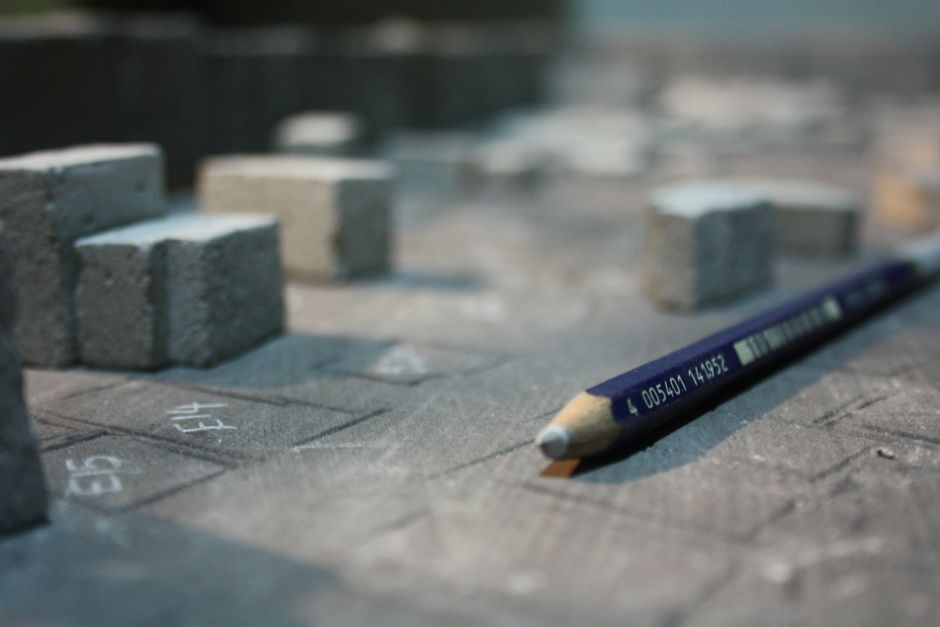
Provide them with the specified materials: cardboard, scissors, tape or glue, and markers. Ensure they have a clear workspace. Offer assistance if they are having difficulty with cutting or assembly, but make sure the student makes all the design decisions. Encourage them to be creative with how they use the materials, even if the model isn't 'perfect.' Remember to supervise the safe use of scissors.
Ask them:
* "How can you use these materials to represent your planned zones and structures?"
* "What's a creative way you could show a green space or a food source?"
* "How do you want to connect different parts of your community?"
* "What's the most important feature you want to build first?"
Done: Student has completed a physical model representing their sustainable micro-community design.
Know Before You Teach
- Good to know: Physical models help visualize how different parts of a design fit together in three dimensions, making abstract ideas more concrete.
- Models don't need to be perfectly realistic; their purpose is to represent ideas and relationships, so creative use of simple materials is encouraged.
- Using recycled materials like cardboard for models aligns with sustainable practices by reusing resources and reducing waste.
- If they ask: Can I change my plan now? Yes, designing is an iterative process. It's common to discover new ideas or challenges as you build. Just be ready to explain why you made the change!
- It's working when: Student uses materials to represent at least two different types of features (e.g., a building and a green space).
- If they're stuck: Suggest they start by building just one or two key elements they are most excited about, like a central park or a community building.
- Easier: Provide pre-cut shapes of buildings and natural elements for them to arrange and glue down.
- Harder: Challenge them to incorporate a movable part or an interactive element into their model, like a removable roof or a sliding door, to show function.
Done when: Student has completed a physical model representing their sustainable micro-community design.

5Summary 2 min
Celebrate their effort and the completed model. Ask them to walk you through their design and explain the choices they made. Focus on what they learned during the process and how they might apply this kind of thinking in other situations. This stage helps them connect their creative work to real-world roles like urban planners and architects.
Ask them:
* "What was the most interesting part of bringing your design to life?"
* "What was the most challenging part of bringing your design to life?"
* "How does this connect to real urban planners or architects?"
* "How might you apply this design thinking in other areas?"
Done: Student shares one key takeaway or insight from the lesson and connects it to real-world applications.
Know Before You Teach
- Good to know: Urban planners focus on the bigger picture of how cities and communities are laid out, including transportation, housing, and public services.
- Architects design individual buildings, thinking about their structure, appearance, and how people will use the spaces inside.
- Many professionals, including urban planners, architects, and landscape architects, collaborate to create sustainable and livable communities.
- If they ask: What's the difference between an urban planner and an architect? An urban planner designs the overall city or community, deciding where different zones like housing or parks go. An architect designs specific buildings within those zones.
- It's working when: Student identifies a specific part of their design and explains the 'why' behind it, linking it to sustainability or livability.
- If they're stuck: Ask them to imagine showing their community to someone else and what they would most want that person to notice or understand.
- Easier: Ask them to name just one thing they liked about designing their community.
- Harder: Challenge them to propose one policy or rule their community would need to implement to ensure its long-term sustainability.
Done when: Student shares one key takeaway or insight from the lesson and connects it to real-world applications.
Beyond The Spark
Fuel their curiosity beyond the Spark with bonus extras.
Table Talk
Urban planners and policymakers use these very principles to design the cities and towns we live in, making decisions that affect millions of lives and the environment.
Challenge
Add a specific social problem to your micro-community (e.g., limited freshwater access, a diverse population with varied needs, an aging population) and adapt your design to solve it.
Quick Recap Quiz 4 min
Customize this quiz, add questions, or follow your child's lead! Each question has a 'Parent Tip' to help them find the answer without giving it away.
1. What does 'sustainable' mean for a community?
- It focuses only on economic growth.
- It meets current needs without harming future generations' ability to meet theirs.
Remind them that sustainability balances environment, economy, and society, now and for the future.
2. Which of these is a key benefit of green spaces in urban planning?
- They improve air quality and provide recreation for residents.
- They are primarily used for commercial development.
Ask: 'What do you do in a park? How does nature help a city?'
3. When designing a community, what is a 'trade-off'?
- A plan that has no compromises or difficult decisions.
- A decision where gaining one benefit means giving up another.
Prompt them to think about 'If I add this, what might I have to reduce or remove?'
4. Why is it important to consider different types of transportation in a sustainable community?
- To reduce reliance on cars and promote environmental health and accessibility for all.
- To ensure everyone owns a car, regardless of need.
Ask: 'How do different people get around? What's good for the environment?'
Loved This Spark?
Scan to jump into the app and explore similar Sparks in our Sparks Hub. New to Mai? Start free with 10 Sparks, no credit card needed.