
Design Your Mini Park
This challenge invites learners to design a miniature park or garden using specific area and perimeter measurements. It's a hands-on project that connects geometry to real-world design, encouraging measurement, calculation, and creative problem-solving.
Our goal: In this spark, your learner will calculate the area of rectangles and squares using appropriate units, determine the perimeter of rectangles and squares using given dimensions and apply understanding of area and perimeter to design a space with specific constraints.
What You Need
Paper • Ruler • Pencil • String
and this is just the baseline.
Scan to jump into the app and easily personalize this Spark to match your child's exact learning level and see how Mai will guide this lesson.
Learning Guide
A simple guide to lead you through the kickoff, the core challenge, and everything in between.
Mai’s Tips
- Encourage the use of estimation before precise measurement. Ask, 'How long do you think this side is?' before they measure.
- If the child struggles with calculations, suggest drawing a grid on their paper to visually count square units for area, and counting units along the edges for perimeter.
1Introduction 5 min
Welcome your child to the park design challenge, emphasizing how math is used in everyday designs. Engage them by asking about their personal experiences with parks.
Guiding Questions:
* 'What kinds of things do you think a park designer needs to think about when planning a space?'
* 'What's your favorite part of a park?'
* 'What makes a park feel spacious?'
Encourage them to brainstorm freely about features and layout. The goal is to spark initial ideas related to size and overall design without needing precise answers yet.
Done when your child has shared some initial ideas about park features and the overall challenge.
Done when: Student has expressed initial ideas about park features and the challenge.
2Explore & Plan 8 min
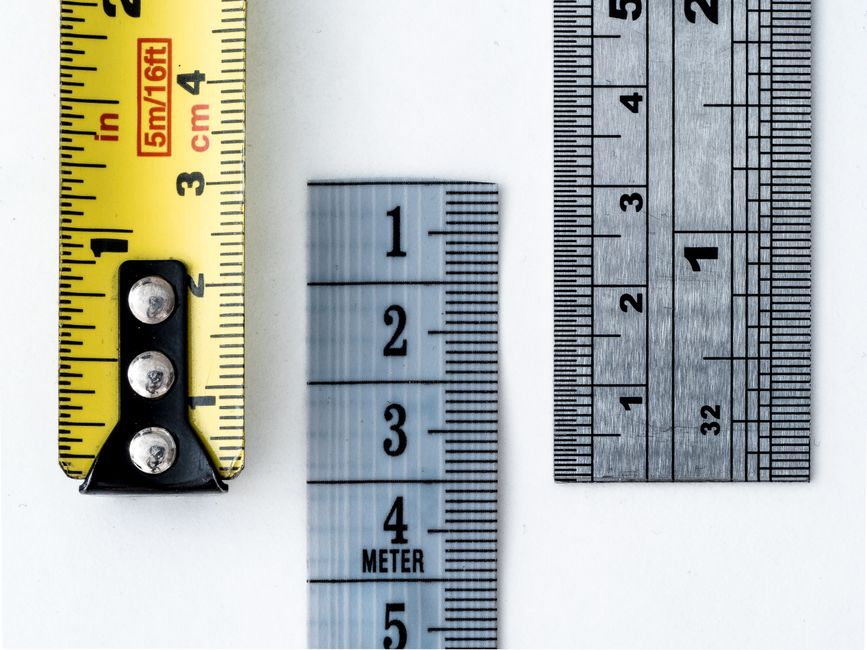
First, help your child gather all the materials listed for the activity. Introduce the two key math ideas for today: Area and Perimeter.
Area is the space inside a shape, like how much grass covers a park. It's measured in square units. Its opposite is perimeter. Knowing the area helps you fill a space.
Perimeter is the distance around the outside of a shape, like a fence around a garden. It's measured in linear units. Its opposite is area. Knowing the perimeter helps you border a space.
Guiding Questions:
* 'What do you remember about these words: Area and Perimeter?'
* 'How do you think we might measure the 'space inside' something or the 'distance around' it with our materials?'
* 'How could we use the ruler to find the distance around this paper?'
* 'What does 'square units' mean if we're talking about the space something takes up?'
Encourage exploration and predictions about how to measure with the tools, without needing direct definitions yet.
Done when your child has discussed their initial understanding of area and perimeter, and how the materials might be used for measurement.
Done when: Student has discussed initial understanding of area/perimeter and how materials might be used for measurement.

3Discussion 6 min
Solidify your child's understanding of Area and Perimeter. Let them explain in their own words before offering examples.
Guiding Questions:
* 'Why do you think it's important for someone designing a park to know both the area and the perimeter?'
* 'Can you think of a time when knowing the 'space inside' would be more important than knowing the 'distance around', or vice versa?'
If your child struggles, guide them with real-world scenarios:
* 'If you want to buy grass seeds, would you need to know the area or perimeter?'
* 'If you want to put a fence around a garden, which would you need?'
Done when your child can explain the core concepts of area and perimeter in their own words and provide examples of their real-world application.
Done when: Student can explain the core concepts of area and perimeter in their own words.
4Activity 9 min
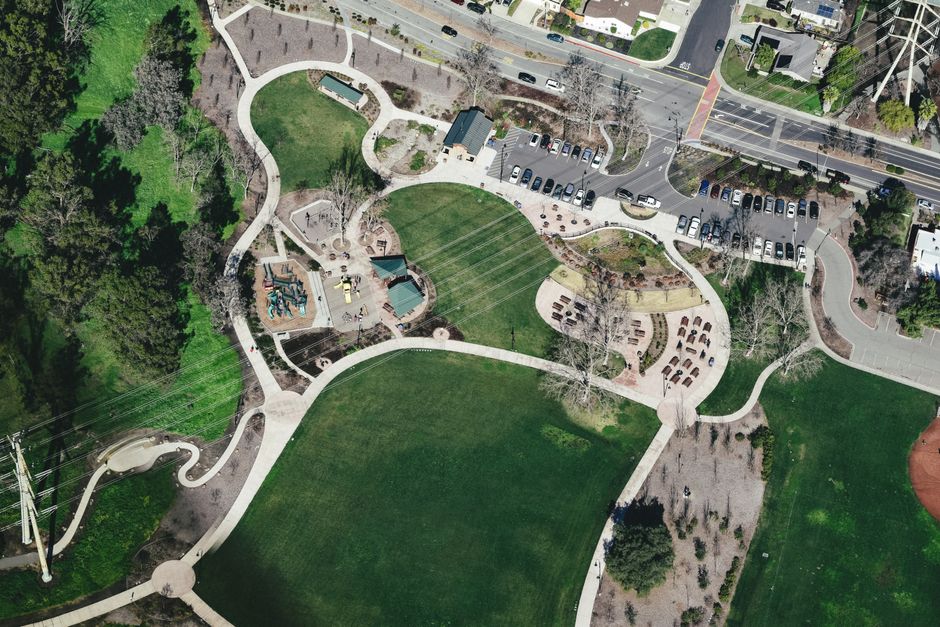
Guide your child through designing their miniature park. Emphasize that they should lead the measuring, drawing, and calculating.
The challenge is:
1. Lay out the paper for their park plot.
2. Measure and draw a main rectangular grassy area with an area of exactly 40 square units.
3. Calculate its perimeter.
4. Design and draw at least two more features (like a pond or flower bed). Each must have a different area and perimeter than the grassy area.
5. Use the string to outline the perimeter of the main grassy area and the other features.
6. Decorate the park with small objects, ensuring everything fits within the measured areas.
Guiding Questions:
* 'How will you make sure the area is exactly 40 square units?'
* 'What steps will you take to calculate the perimeter of that shape?'
Encourage them to double-check all measurements and calculations.
Done when your child has physically designed, measured, calculated, and decorated their miniature park according to all the requirements.
Done when: Student has completed the physical activity of designing, measuring, and decorating their miniature park according to the requirements.

5Summary 2 min
Celebrate your child's efforts and the amazing miniature park they designed! Praise their use of math in a real-world challenge.
Guiding Questions:
* 'What was the most surprising thing you learned about designing with math today?'
* 'How do you think knowing about area and perimeter could help people in their everyday lives?'
Connect their park design to bigger concepts like city planning or architecture. Reinforce that math is everywhere, even in creative design.
Done when your child has shared a key takeaway or reflection about the lesson.
Done when: Student shares one key takeaway or reflection about the lesson.
Beyond The Spark
Fuel their curiosity beyond the Spark with bonus extras.
Table Talk
Architects, interior designers, city planners, and even farmers use area and perimeter to design spaces, build structures, and plan land use.
Challenge
Design another section of your park, like a swimming pool area or a picnic spot, but this time, you must keep the perimeter exactly 30 units and see how many different rectangular areas you can create with that perimeter.
Quick Recap Quiz 4 min
Customize this quiz, add questions, or follow your child's lead! Each question has a 'Parent Tip' to help them find the answer without giving it away.
1. What does 'area' tell us about a shape?
- The distance around its outside
- The amount of space inside it
Remind them to think about 'A' for Area, like 'Amount' of space.
2. If you want to put a fence around your garden, what mathematical measurement do you need?
- Perimeter
- Area
Think about 'P' for Perimeter, like 'Path' or 'Putting a fence' around.
3. A rectangle has a length of 5 units and a width of 4 units. What is its area?
- 18 square units
- 20 square units
Recall that Area = Length × Width.
4. Why is it useful for a carpet installer to know the area of a room?
- To know how much carpet to buy
- To know how long the baseboards should be
Connect carpet to covering the 'space inside' the room.
Loved This Spark?
Scan to jump into the app and explore similar Sparks in our Sparks Hub. New to Mai? Start free with 10 Sparks, no credit card needed.