
Design a Sustainable Hub
This challenge explores the principles of urban planning and sustainable development by tasking learners with designing a functional and eco-friendly community hub. It encourages critical thinking about societal needs, resource management, and the impact of design on quality of life.
Our goal: In this spark, your learner will analyze the components of a sustainable community, design a functional community space considering social and environmental factors and articulate the societal impact of urban planning decisions.
What You Need
Cardboard • Paper • Scissors • Tape • Markers
and this is just the baseline.
Scan to jump into the app and easily personalize this Spark to match your child's exact learning level and see how Mai will guide this lesson.
Learning Guide
A simple guide to lead you through the kickoff, the core challenge, and everything in between.
Mai’s Tips
- When your learner is brainstorming, suggest they think about different user groups (kids, seniors, artists, entrepreneurs) and how the hub could meet diverse needs.
- If your learner gets stuck during the building phase, instead of offering solutions, ask 'What's the next small step you could take?' or 'What part of your plan do you feel most confident starting with?'
Prep Before Session 15 min
- Gather cardboard, paper, scissors, tape, and markers.
- Read through the entire lesson plan to understand the flow and key concepts.
1Introduction 5 min
Begin by inviting your learner to think about community spaces they encounter. Ask them to share their initial thoughts on what makes these spaces great, or not so great. Use open-ended questions to encourage reflection on personal preferences and observations. Guiding Questions: 'What public spaces do you like or dislike, and why?' 'What makes a place feel welcoming to everyone?' 'What activities would you want to do in a perfect community space?' Encourage them to consider various examples, from parks to libraries. Done: The learner has shared initial ideas about community spaces and their personal preferences.
Know Before You Teach
- Good to know: Urban planning is about designing and managing the physical growth and development of cities and towns.
- Good urban design considers how people use spaces and how those spaces connect to each other.
- Public spaces can range from small local parks to large city squares or even digital community platforms.
- If they ask: Why are we talking about this? Because understanding what makes spaces work for people is the first step in designing better ones, especially sustainable ones for the future.
- It's working when: The learner describing specific features or feelings associated with a space (e.g., 'I like the quiet corner in the library,' 'The park felt unsafe at night').
- If they're stuck: Show them a picture of a well-known community space (like a bustling city square or a quiet park) and ask them what they notice first.
- Easier: Provide a list of different types of community spaces (e.g., park, library, sports center, mall) and ask them to pick one they like or dislike.
- Harder: Ask them to consider how a community space might serve different age groups or people with different needs (e.g., someone in a wheelchair, a parent with a toddler).
Done when: Student shares initial ideas about community spaces and their personal preferences.
2Explore & Plan 8 min
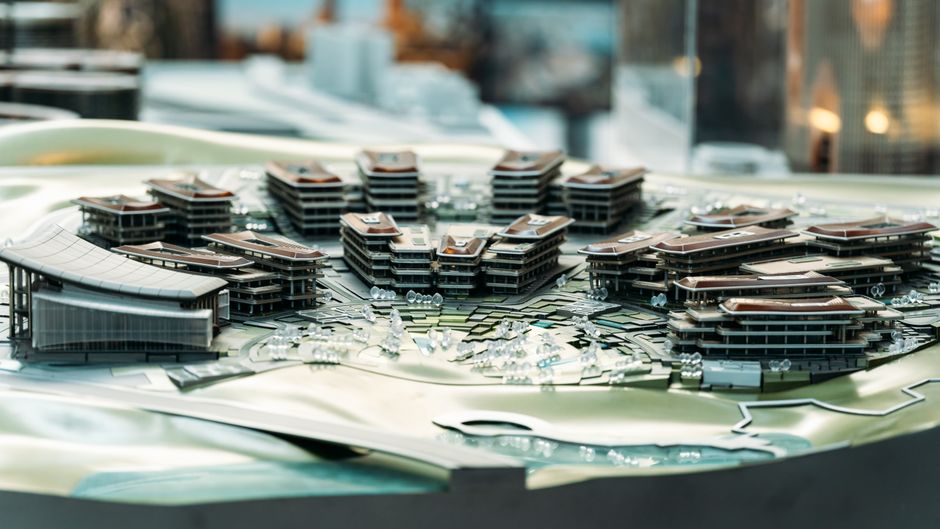
Facilitate a brainstorming session on creating a 'sustainable community hub'. First, define "sustainable": "Sustainable" means meeting current needs without harming the ability of future generations to meet theirs. In design, it means using resources wisely, minimizing waste, and having a positive impact on both people and the planet. For example, a building using solar panels is sustainable; one that wastes energy is not. It’s important because it ensures long-term well-being for everyone. Guiding Questions: 'What functions could your community hub have, like a library or garden?' 'How can you integrate sustainability, such as solar panels or green spaces?' 'How will your hub serve both people and the planet?' Encourage them to sketch a rough plan or list features. Done: The learner has brainstormed and outlined key features for their sustainable community hub, considering both social and environmental aspects.
Know Before You Teach
- Good to know: Sustainable development aims to balance economic growth, social equity, and environmental protection.
- Examples of sustainable features in buildings include green roofs, permeable pavements for rainwater, and natural ventilation systems.
- A 'hub' implies a central place where different activities and people come together, often serving multiple purposes.
- Key words: community hub: A central place designed to bring people together and offer various services or activities for the local neighborhood.
- It's working when: The learner suggesting a feature and then linking it to a sustainability aspect (e.g., 'A garden... so people can grow food, which is sustainable').
- If they're stuck: Suggest they think about a problem their local community faces (e.g., lack of green space, nowhere for teens to hang out) and how a hub could address it.
- Easier: Give them a pre-defined list of functions (e.g., cafe, library, playground) and sustainable features (e.g., solar panels, recycled materials) to choose from.
- Harder: Ask them to consider how the hub's design could adapt to future changes, such as climate change or evolving community needs.
Done when: Student has brainstormed and outlined key features for their sustainable community hub, considering both social and environmental aspects.

3Discussion 6 min
Guide a discussion on the social and environmental impacts of their design choices. Emphasize that designing spaces shapes how people live, work, and interact. Guiding Questions: 'Who is your community hub for, and how does your design serve them?' 'How does your hub encourage interaction or well-being among users?' 'What compromises might need to be made to balance sustainability with community needs?' 'How might your design choices affect the people who use it?' Discuss potential challenges in balancing these aspects. Done: The learner can explain the potential social and environmental impacts of their design choices for the hub.
Know Before You Teach
- Good to know: Social sustainability means creating places that promote well-being, equity, and a sense of belonging for all community members.
- Environmental impact refers to how a project affects the natural world, including air quality, water resources, and biodiversity.
- Design choices can indirectly influence social behaviors, like encouraging walking or discouraging loitering.
- If they ask: What are some common compromises in design? Often, designers might have to balance cost, speed of construction, and ideal sustainable features, or find a middle ground between different community groups' needs.
- It's working when: The learner connecting a specific design feature to a positive or negative consequence for people or the environment (e.g., 'Big windows would save energy, but might make it too hot in summer').
- If they're stuck: Ask them to imagine two very different people using their hub (e.g., a young child and an elderly person) and describe how their experience might differ.
- Easier: Present them with a simple scenario: 'If your hub only had stairs, who would that affect?' to prompt thinking about accessibility.
- Harder: Challenge them to consider how their hub could foster a sense of identity or pride for the community it serves.
Done when: Student can explain the potential social and environmental impacts of their design choices.

4Activity 9 min
Provide the learner with cardboard, paper, scissors, tape, and markers. Ensure a clear workspace for construction. Have the learner begin constructing their sustainable community hub model, using the materials provided. Support them by asking clarifying questions about their design as they build, rather than giving instructions. Guiding Questions: 'How will people enter or move through this space?' 'What function does this part of your model serve?' 'How does this feature contribute to sustainability?' Let them lead the construction process independently. Done: The learner has completed a physical model or detailed drawing of their sustainable community hub.
Know Before You Teach
- Good to know: Architects and urban designers often use models or detailed drawings to visualize and test their ideas before construction.
- A scale model represents a real object at a reduced size, helping to understand proportions and spatial relationships.
- Using readily available materials like cardboard encourages creative problem-solving and resourcefulness, a principle often linked to sustainability.
- If they ask: Does it have to be perfect? No, the goal is to clearly show your ideas and how different parts of your hub connect, not to make a perfect replica.
- It's working when: The learner actively shaping materials to represent a specific design idea from their plan (e.g., cutting out shapes for windows, defining distinct areas).
- If they're stuck: Suggest they start with the largest or most important feature of their hub and build around that, or focus on one specific area first.
- Easier: Ask them to draw a detailed bird's-eye view (top-down) plan instead of building a 3D model, focusing on layout.
- Harder: Introduce a constraint, such as 'your hub must be built on a sloped piece of land' or 'it must incorporate an existing natural feature like a large tree.'
Done when: Student has completed a physical model or detailed drawing of their sustainable community hub.

5Summary 2 min
Celebrate the learner's effort and creativity in designing their hub. Encourage them to share their final design and explain their choices. Ask them to reflect on the process and what they learned from the challenge. Guiding Questions: 'What was the most challenging part of designing your sustainable community hub?' 'What's one thing you learned today about how communities are shaped?' 'If you had more time or resources, what would you add or change about your design?' Connect their learning to real-world examples of urban development. Done: The learner shares one key takeaway or insight gained from the challenge.
Know Before You Teach
- Good to know: Urban development refers to the process of growth and change in urban areas, including infrastructure, housing, and public spaces.
- Many cities worldwide are actively working on sustainable urban planning projects to address climate change and improve residents' quality of life.
- Design thinking involves understanding users' needs, challenging assumptions, and creating innovative solutions to problems.
- If they ask: Are there any real places like this? Yes, many cities are building sustainable community centers; we can look up examples like the Bullitt Center in Seattle or community hubs in Copenhagen.
- It's working when: The learner clearly articulating a new understanding or a challenge they faced, using terms like 'compromise' or 'impact.'
- If they're stuck: Ask them what surprised them the most during the design or building process.
- Easier: Ask them to simply point to their favorite part of their design and explain why it's their favorite.
- Harder: Ask them to identify one global challenge (e.g., food scarcity, loneliness, climate change) and explain how their hub, if scaled up or replicated, could contribute to a solution.
Done when: Student shares one key takeaway or insight gained from the challenge.
Beyond The Spark
Fuel their curiosity beyond the Spark with bonus extras.
Table Talk
Urban planning is a critical field that shapes our cities, influences social equity, and directly impacts environmental health, offering diverse career paths from architecture to public policy.
Challenge
Research a real-world example of a sustainable community development project. How does it compare to your design? What would you incorporate from it, or what would you do differently?
Quick Recap Quiz 4 min
Customize this quiz, add questions, or follow your child's lead! Each question has a 'Parent Tip' to help them find the answer without giving it away.
1. Which of these is a key aspect of a sustainable community hub?
- Focusing only on maximizing profit for businesses.
- Balancing social well-being with environmental protection.
Remind them that 'sustainable' means meeting present needs without compromising future generations.
2. Why is it important to consider diverse community needs when designing public spaces?
- To ensure the space is welcoming and functional for everyone.
- To make the design process more complicated and challenging.
Ask: 'What happens if a space only caters to one type of person?'
3. What is a common challenge in urban planning related to sustainability?
- Having too many available resources to use.
- Balancing economic growth with environmental conservation.
Discuss how developers often prioritize immediate financial gains over long-term ecological health.
4. How can designing green spaces within a community hub benefit its residents?
- Improves air quality and provides areas for relaxation.
- Increases traffic congestion and noise pollution.
Connect it to concepts of well-being, mental health, and biodiversity.
Loved This Spark?
Scan to jump into the app and explore similar Sparks in our Sparks Hub. New to Mai? Start free with 10 Sparks, no credit card needed.