
Design a Super-Camouflage Creature!
Explore the incredible world of animal adaptations by focusing on camouflage, a true 'superpower' for survival. Learners will design and build their own camouflaged creature, understanding how animals blend into their environment to survive.
Our goal: In this spark, your learner will identify and describe the purpose of camouflage in animals, design and construct a model creature using principles of camouflage and explain how specific adaptations like camouflage help animals survive in their natural habitats.
What You Need
Cardboard • Natural Items • Fabric Scraps • Tape • Scissors
and this is just the baseline.
Scan to jump into the app and easily personalize this Spark to match your child's exact learning level and see how Mai will guide this lesson.
Learning Guide
A simple guide to lead you through the kickoff, the core challenge, and everything in between.
Mai’s Tips
- When gathering materials, encourage your child to look for a variety of textures, not just colors, as texture can also help camouflage an animal.
- To scale the activity for older learners, challenge them to research specific camouflaged animals (like cuttlefish or arctic foxes) and try to mimic those adaptations.
1Introduction 5 min
Start by sparking curiosity about animal abilities. Ask your child to share their ideas about 'animal superpowers.' Encourage any answers, then gently guide them towards physical traits or behaviors animals use to survive. This isn't about specific superpowers like flying, but everyday abilities. Ask: "What kind of 'superpowers' do you think animals might have?" Then, prompt further with: "What does a squirrel do to find food?" or "How does a chameleon hide?"
Done: Your child has shared a few ideas about animal abilities or survival strategies.
Done when: Student shares a few ideas about animal abilities or survival strategies.

2Explore & Plan 8 min
Introduce the term 'camouflage.' This is a special ability animals have to blend in with their surroundings, making them hard to see. It helps them hide from danger or sneak up on food. Ask: "What do you think 'camouflage' means?" Once they have a sense of it, help your child choose a specific environment where an animal might hide, like a 'grassy patch' or a 'wooden floor.' Then, assist them in gathering natural items or fabric scraps that match the colors and textures of that chosen spot. Ask: "What colors and textures would work best in your chosen spot?"
Done: Your child has identified an environment and started selecting materials that match its colors and textures.
Done when: Student identifies an environment and starts selecting materials that match its colors and textures.
3Discussion 6 min
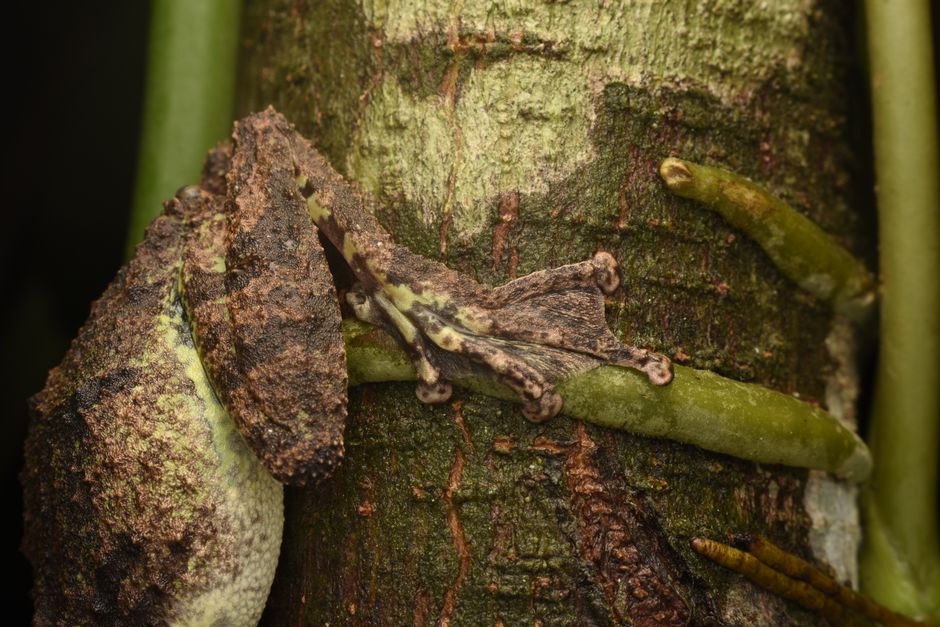
Now that you've gathered materials, delve deeper into the purpose of camouflage. Lead with open-ended questions to encourage critical thinking. Ask: "Who uses camouflage? Why?" Guide them to understand that both prey (animals that get hunted) and predators (animals that hunt) use it. Then ask: "What would happen if an animal didn't camouflage well?" Reinforce that camouflage is a 'superpower' because it helps animals survive by either avoiding danger or catching food. Ask: "How does being invisible help animals survive?"
Done: Your child understands that camouflage is for hiding and helps animals survive by avoiding danger or catching food.
Done when: Student understands that camouflage is for hiding and helps animals survive by avoiding danger or catching food.
4Activity 9 min
It's time to build! Give your child a piece of cardboard, scissors (supervise closely, or help with cutting if needed), and tape. Have them cut out a simple animal shape from the cardboard. Then, have them use the natural items and fabric scraps they gathered to cover their creature, making it blend into their chosen environment. Let them take the lead in designing their camouflaged creature. Once built, place the creature in its chosen 'habitat' to test how well it hides. Challenge them to make it almost disappear!
Done: Your child has created and placed their camouflaged creature in its chosen environment.
Done when: Student has created and placed their camouflaged creature in its chosen environment.

5Summary 2 min
Celebrate your child's effort and creativity in designing their super-camouflaged creature! Guide a final reflection on what they learned. Ask: "What makes your creature's camouflage so effective in its environment?" Encourage them to think about the colors, textures, and patterns they used. Then, broaden the reflection: "What was the trickiest part of making your creature disappear?" and "How has your understanding of animals changed now that you know about camouflage?"
Done: Your child shares one key observation about their creature's camouflage or a new understanding of animal adaptations.
Done when: Student shares one key observation about their creature's camouflage or a new understanding of animal adaptations.
Beyond The Spark
Fuel their curiosity beyond the Spark with bonus extras.
Table Talk
The science of camouflage inspires engineers and designers to create better military gear, buildings, and even fashion.
Challenge
Create a second creature designed to hide in a completely different environment, thinking about how its camouflage would change.
Quick Recap Quiz 4 min
Customize this quiz, add questions, or follow your child's lead! Each question has a 'Parent Tip' to help them find the answer without giving it away.
1. What is the main purpose of camouflage?
- To fly faster
- To blend in and hide
Remind them of their camouflaged creature and what they were trying to achieve.
2. Which animal is famous for changing its skin color to hide?
- A chameleon
- An elephant
Think about animals that are well-known for their amazing hiding abilities.
3. If an animal lives in a snowy forest, what color might its fur be to hide?
- Bright orange
- White or light grey
Ask what color the snow is, and what color would match it best.
4. Why is being able to blend in important for an animal to survive?
- It helps them avoid predators or catch prey.
- It helps them learn new tricks.
Discuss how camouflage helps animals either stay safe or find food to live.
Loved This Spark?
Scan to jump into the app and explore similar Sparks in our Sparks Hub. New to Mai? Start free with 10 Sparks, no credit card needed.